
Understanding how your mind works is the foundation of every improvement. The best psychology books decode decision-making, motivation, emotions, and the invisible biases that shape your life — giving you the self-awareness to think and act more clearly.
Top 10 Psychology Books
Our highest-rated picks — based on depth, practicality, and lasting impact.
Latest Summaries
Recently published reviews in this topic.

All Psychology Book Reviews
Every psychology book we’ve reviewed, newest first.
All Psychology Book Reviews
How to Stop Worrying and Start Living Summary & Review: Time-Tested Methods for Conquering Worry
Dale Carnegie's 1948 classic distilled into the Willis Carrier formula, day-tight compartments, and a 7-day plan for turning chronic worry into calm, decisive action.
Read Review
Complex PTSD Summary & Review: Healing the Wounds Childhood Left Behind
Complex PTSD by Pete Walker explains why chronic childhood trauma creates the 4Fs — fight, flight, freeze, fawn — and how grief work and...
Read Review
The Chimp Paradox Summary & Review: How to Manage the Brain That Reacts Before You Think
Dr. Steve Peters' Chimp Paradox explains why your emotional brain reacts five times faster than your rational one — and gives four practical techniques...
Read Review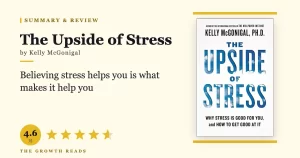
The Upside of Stress Summary & Review: Why Feeling Stressed Can Be Good for You
Kelly McGonigal's The Upside of Stress shows why believing stress is harmful is more dangerous than stress itself — and how a 10-second mindset...
Read Review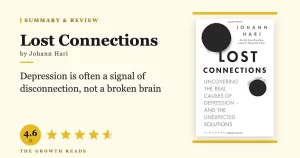
Lost Connections Summary & Review: Depression Isn’t All in Your Head
Depression and anxiety are often signals of disconnection, not broken brain chemistry. Johann Hari's research-backed guide to the 9 real causes and 7 reconnections.
Read Review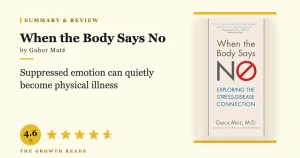
When the Body Says No Summary & Review: How Suppressed Emotion Makes You Sick
Gabor Maté's case that chronic self-suppression is a real risk factor for physical illness — the Type C pattern, the Seven A's of Healing,...
Read Review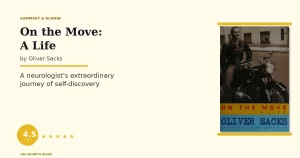
On the Move Summary & Review: A Neurologist’s Extraordinary Life of Curiosity and Courage
Oliver Sacks’ memoir traces his journey from wartime London to Muscle Beach to the forefront of neurology. A story of identity, empathy, and radical...
Read Review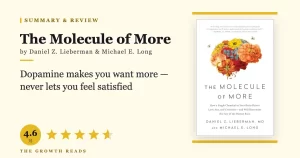
The Molecule of More Summary & Review: Why You Never Feel Satisfied
Dopamine doesn't want you happy, it wants you to want more. Our deep-dive summary of The Molecule of More breaks down desire, love, and...
Read Review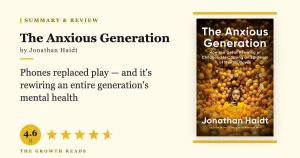
The Anxious Generation Summary & Review: How Phones Rewired Childhood
Jonathan Haidt's The Anxious Generation traces the sharp rise in teen anxiety and depression to the shift from play-based to phone-based childhood. Here's the...
Read Review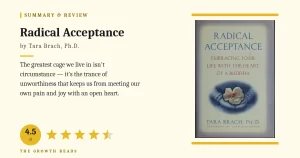
Radical Acceptance Summary and Review
★★★★★ 4.5/5 — Brach blends Buddhist mindfulness with Western psychology into a practical case that meeting our pain with clear awareness and compassion, rather...
Read Review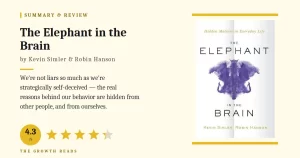
The Elephant in the Brain Summary and Review
★★★★☆ 4.3/5 — A sharp, uncomfortable case that self-deception is strategic, and that many of our most familiar institutions run on hidden status motives...
Read Review
The Confidence Gap Summary and Review
★★★★☆ 4.2/5 — Harris applies Acceptance and Commitment Therapy directly to fear and self-doubt, arguing confidence is built through action, not felt in advance...
Read ReviewHow We Select & Review Psychology Books
Our editorial process for this topic.
Psychology publishing is enormous, and a lot of it recycles the same handful of ideas with new packaging. Before a book earns a spot in this library, we ask three questions: does it explain the underlying mechanism (not just describe a phenomenon), does it hold up against the current research rather than outdated pop-psych claims, and does it give readers something they can actually apply — a mental model, a habit, a way of noticing their own thinking differently?
We favor books grounded in real research — from academic psychologists like Daniel Kahneman and Angela Duckworth to clinicians and journalists who synthesize the science responsibly, like Johann Hari and Bessel van der Kolk. We’re wary of books that lean entirely on anecdote or borrow scientific-sounding language without the evidence to back it up, and we say so plainly in the review when a book’s claims run ahead of the research.
Every summary on this site is written after reading the full book, not a excerpt or a review of reviews. We pull out the book’s central argument, the practical techniques it offers, and — where it matters — where the science is genuinely settled versus still contested. New psychology titles are added as they’re published; older, foundational books (Viktor Frankl, Robert Cialdini) stay because their core insights haven’t dated, even if some of their examples have.
The Growth Reads is reader-supported — some links on this page are Amazon affiliate links, which cost you nothing extra but help fund the site. Our recommendations are never influenced by affiliate relationships; a book earns its place here on the strength of its ideas, not its commission rate. Reviews are written and maintained by The Growth Reads editorial team.
Frequently Asked Questions
What is the best psychology book to start with?
Thinking, Fast and Slow by Daniel Kahneman is the most commonly recommended starting point — it’s the foundational text on how the mind actually makes decisions, and most other popular psychology books build on ideas it introduced. If you want something more immediately practical, Mindset by Carol Dweck is a shorter, easier entry point.
Are psychology books backed by real science, or just self-help with extra steps?
It varies a lot by book, which is exactly why we vet each one before adding it. Some (Thinking, Fast and Slow, Influence, Emotional Intelligence) are written by researchers summarizing decades of peer-reviewed work. Others blend research with personal narrative or philosophy and should be read as informed perspective rather than settled science — we flag this distinction in each review.
What’s the difference between a psychology book and a self-help book?
The line is blurry, but psychology books generally explain *why* the mind works a certain way — the mechanism — while self-help books focus on *what to do about it*. Many of the books on this list do both: they explain the research, then translate it into a practical framework.
Which psychology book do therapists and researchers actually recommend?
Man’s Search for Meaning (Viktor Frankl) and Emotional Intelligence (Daniel Goleman) show up most often on clinician reading lists — both are grounded in real clinical and research experience rather than pop-psych trends.
Is 12 Rules for Life a psychology book?
It’s a mix of psychology, philosophy, and self-help, written by a clinical psychologist. It draws on psychological research but is also heavily opinion- and narrative-driven — we categorize it here because of its author’s background and its influence on how people think about behavior, not because it’s a strict research summary.
How many psychology books should I read to understand the basics?
Three to five well-chosen books cover most of the essential ground: one on decision-making (Thinking, Fast and Slow), one on motivation/mindset (Mindset or Grit), one on emotional intelligence or relationships (Emotional Intelligence or Influence), and one on meaning or resilience (Man’s Search for Meaning). After that, most new psychology books are refining or applying the same core ideas.
What psychology book should I read to understand cognitive biases?
Thinking, Fast and Slow is the definitive book here — it’s literally the source of most of the cognitive-bias vocabulary (anchoring, availability heuristic, loss aversion) used in later books. Predictably Irrational by Dan Ariely is a more accessible, story-driven alternative covering similar ground.
Are older psychology books like Man’s Search for Meaning still worth reading?
Yes — books grounded in observations about human meaning, resilience, and motivation tend to age well, since they’re describing enduring aspects of human psychology rather than citing studies that can be superseded. We keep a book on this list as long as its core argument still holds up, updating the review if newer research adds important context.
What’s a good short psychology book if I don’t have much time?
The Courage to Be Disliked is written as a dialogue and reads quickly despite covering substantial ground on Adlerian psychology. Man’s Search for Meaning is also short — under 200 pages — and is one of the most-read psychology-adjacent books ever published.
How often is this list updated?
We add new psychology titles as we finish reviewing them and periodically re-check our existing rankings against new research and reader feedback. Check the full ranked list for the most current Top 20.
Explore Other Topics
Browse All Psychology Summaries
We’ve reviewed 59 psychology books — each with key takeaways, practical lessons, and honest ratings.