
Leadership isn’t a title — it’s ownership, clarity, and the discipline to go first. We read and scored the most influential leadership books — these 20 are the ones that actually change how you lead, from battlefield accountability to research-backed culture building. Every title was ranked with the same transparent 5-point rubric: lasting impact, evidence quality, practical application, writing, and reader consensus. Each links to a free in-depth summary with a plan to apply it. Whether you’re a first-time manager or a founder scaling past the first hundred people, start here.
The 21 Best Leadership Books, Ranked
Counting down from #20 to our #1 pick. Each book links to a free, in-depth summary.
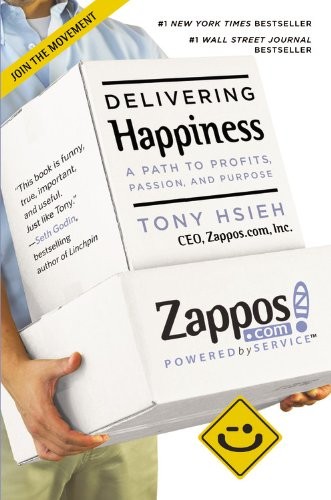
Delivering Happiness
Tony Hsieh
★★★★★4.5/5
Tony Hsieh’s memoir-meets-framework traces his path from a childhood worm farm through selling LinkExchange to Microsoft for $265 million, and into building Zappos into a $1.2 billion Amazon acquisition — almost entirely on the strength of its culture. The ten core values, WOW-level customer service, and closing framework on the four levels of happiness make the case that profits, passion, and purpose aren’t competing goals but the natural output of getting culture right. It reads faster than most leadership books because it’s a story first, a playbook second.
Best for: Founders and managers building or repairing team culture, and service leaders who want proof that WOW-level customer experience pays for itself
“Chase the vision, not the money; the money will end up following you.”
The Infinite Game
Simon Sinek
★★★★☆3.5/5
A compelling case for why leaders must stop playing to win and start playing to keep the game going. Sinek applies James Carse’s concept of finite and infinite games to business leadership, arguing that organizations obsessed with quarterly wins eventually exhaust themselves. The five practices — advance a Just Cause, build trusting teams, study worthy rivals, prepare for existential flexibility, and demonstrate the courage to lead — provide a concrete framework for sustainable leadership. The ethical fading concept alone is worth the read for any leader worried about culture drift.
Best for: CEOs, founders, and team leads frustrated by short-term corporate thinking who want a framework for long-term resilience
“The purpose of the infinite game is not to win, but to keep playing.”
The 21 Irrefutable Laws of Leadership
John C. Maxwell
★★★★☆3.8/5
The most comprehensive leadership framework in print — 21 principles that cover every dimension of influence, from personal credibility to organizational legacy. Maxwell distills decades of leadership practice into laws like the Lid (your leadership sets the ceiling on everyone’s effectiveness) and the Law of Legacy (the ultimate test is what happens after you leave). Each comes with case studies and self-assessment tools. The 5 Levels of Leadership model — Position, Permission, Production, People Development, Pinnacle — gives leaders a clear ladder for measuring their growth with every person they lead.
Best for: New and mid-career leaders who want a systematic, principle-based framework for building influence at every level
“Leadership is influence, nothing more, nothing less.”
Built to Last
Jim Collins & Jerry I. Porras
★★★★☆3.9/5
The definitive research on what makes visionary companies endure for generations — clock building over time telling, BHAGs over incremental goals, and the genius of the AND over the tyranny of OR. Collins and Porras spent six years comparing eighteen visionary companies to matched competitors and discovered that lasting greatness comes from organizational architecture, not brilliant founders or a single great idea. The framework — preserve the core while stimulating progress, set Big Hairy Audacious Goals, and grow leaders from within — remains the gold standard for building enduring organizations.
Best for: Founders, CEOs, and organizational leaders who want to build institutions that thrive for decades beyond their tenure
“Preserve the core and stimulate progress.”
Primal Leadership
Daniel Goleman, Richard Boyatzis & Annie McKee
★★★★☆4.0/5
Leadership is emotional first — your mood literally changes your team’s brain chemistry. Goleman and co-authors show that emotionally intelligent leaders create “resonance” that amplifies performance, while emotionally unskilled leaders create “dissonance” that drains it. The book provides six deployable leadership styles, four EI domains with specific competencies, and a five-step self-directed learning process for building emotional intelligence at any career stage. It’s the missing chapter in most leadership training: the one about how you actually make people feel.
Best for: Managers who sense that something beyond strategy separates good leaders from great ones
“Great leaders move us. They ignite our passion and inspire the best in us.”
Principles
Ray Dalio
★★★★☆4.2/5
A systematic guide to decision-making from the founder of the world’s largest hedge fund — covering the 5-Step Process, radical transparency, and idea meritocracy. Dalio distills forty years of running Bridgewater Associates into explicit principles for life and work. The core insight: most situations are recurring patterns that reward pre-made decision rules rather than fresh judgment every time. Pain plus reflection equals progress, and the idea meritocracy — where the best argument wins regardless of rank — is the single hardest and most valuable habit in the book.
Best for: Leaders, managers, and entrepreneurs who want a repeatable system for better decisions and transparent cultures
“Pain plus reflection equals progress.”
Drive
Daniel H. Pink
★★★★☆4.3/5
Daniel Pink synthesizes decades of behavioral science to argue that for creative, judgment-heavy work, external rewards backfire — carrots and sticks narrow focus and crowd out the intrinsic motivation people actually need to do their best thinking. What drives sustainable high performance instead is autonomy (self-direction over task, time, technique, and team), mastery (the itch to keep getting better at something that matters), and purpose (a cause bigger than the next quarterly number). It’s a paradigm shift for anyone who manages, motivates, or evaluates other people’s work.
Best for: Leaders, managers, and anyone who wants to understand what truly drives performance
“Control leads to compliance; autonomy leads to engagement.”
Ego Is the Enemy
Ryan Holiday
★★★★☆4.3/5
The stoic case that your biggest obstacle is in the mirror, not the market. Across three stages — aspiration, success, and failure — Holiday shows how ego blinds ambitious people at exactly the moments they can least afford it: chasing the title before doing the work, believing your own press after a win, and blaming everyone else after a loss. Drawing on figures from George Marshall to Katharine Graham, the book makes humility and quiet discipline look like the actual competitive advantage, not the consolation prize for people who didn’t make it.
Best for: High achievers whose confidence sometimes curdles into arrogance
“Ego is the enemy of what you want and of what you have.”
The Hard Thing About Hard Things
Ben Horowitz
★★★★☆4.3/5
The most brutally honest leadership memoir in Silicon Valley — a survival manual for when there are no good options. Horowitz draws on his experience nearly bankrupting Loudcloud and pivoting it into Opsware (sold for $1.6 billion) to share the raw reality of building a company in crisis. The book covers his Wartime vs. Peacetime CEO framework, “The Struggle” every founder faces, and practical guidance on firing friends and building culture under extreme pressure. It is not a step-by-step playbook — it is a field guide for leaders already deep in the fight.
Best for: Founders, startup executives, and anyone leading through crisis or rapid growth
“There’s no recipe for really complicated, dynamic situations.”
Dare to Lead
Brené Brown
★★★★☆4.3/5
A research-backed guide to leading with vulnerability, building BRAVING trust, and replacing self-protective armor with genuine courage. Brown distills two decades of research into four learnable skill sets for brave leadership. The BRAVING trust framework gives you a concrete way to diagnose and repair broken trust, while the armored-vs-daring inventory reveals the self-protective habits that silently undermine your leadership. The book proves that vulnerability is not weakness — it is the single most accurate predictor of innovation, creativity, and belonging in organizations.
Best for: Managers, executives, HR leaders, and high-achievers who need to learn a different kind of strength
“Vulnerability is the birthplace of innovation, creativity, and change.”
Leaders Eat Last
Simon Sinek
★★★★☆4.2/5
A biology-backed manifesto showing that the best leaders protect their people first, creating a Circle of Safety where teams naturally cooperate and outperform. Sinek draws on neuroscience and military case studies to explain why some teams pull together while others fracture. His chemical framework reveals how dopamine-driven cultures breed burnout while oxytocin-driven cultures build lasting loyalty. The book transforms leadership from an abstract concept into a daily practice of service, sacrifice, and putting your people before yourself — starting with the simple act of eating last.
Best for: Team leaders, managers, founders, and anyone building or repairing workplace culture
“Leadership is not a license to do less; it is a responsibility to do more.”

Start With Why
Simon Sinek
★★★★★4.4/5
The Golden Circle — why, how, what — explains why some leaders and brands inspire fierce loyalty while others just transact. Sinek builds the case from neuroscience: decisions rooted in the limbic brain (why) drive behavior more reliably than decisions aimed at the neocortex (what). The examples, from Apple to the Wright Brothers, are almost too tidy, but the underlying discipline — get painfully specific about your why before you ever pitch your how or what — genuinely changes how you write a mission statement, run a hiring conversation, or announce a hard pivot to your team.
Best for: Founders, marketers, and anyone leading change who needs people to buy in before they buy anything
“People don’t buy what you do; they buy why you do it.”
The Culture Code
Daniel Coyle
★★★★★4.4/5
A deeply researched playbook for building team cultures where people feel safe, trust each other, and rally around shared purpose. Coyle spent four years embedded with Navy SEALs, Pixar, and the San Antonio Spurs to distill what elite teams share into three skills: build safety through belonging cues, share vulnerability to create trust, and establish purpose through constant reinforcement. The Vulnerability Loop — where leaders model weakness first to unlock candor — is one of the most actionable leadership concepts published in the last decade.
Best for: Managers, founders, and coaches who want to understand exactly why some teams click and others do not
“Vulnerability doesn’t come after trust — it precedes it.”
Multipliers
Liz Wiseman
★★★★★4.4/5
Reveals why some leaders double their team’s output while others — often with the best intentions — cut it in half. Based on research across 150 leaders in 35 companies on four continents, Wiseman identifies five disciplines that separate “Multipliers,” who extract 2x capability from their people, from “Diminishers,” who accidentally starve it. The most useful insight for anyone reading defensively: most Diminishers don’t know they’re doing it, and Wiseman’s 30-day challenge gives you a concrete way to start closing the gap this month, not someday.
Best for: Mid-level managers and executives who want more from their teams without adding headcount
“Some leaders drain intelligence and capability from the people around them. Others amplify it.”
Creativity, Inc.
Ed Catmull
★★★★★4.5/5
The definitive insider account of how Pixar built and sustained a culture of creative excellence — with the Braintrust, the Hungry Beast vs. the Ugly Baby, and a philosophy of failure as investment. Ed Catmull co-founded Pixar, led both Pixar and Disney Animation, and spent 35 years solving one problem: how do you build an organization where creative people do their best work? His answer centers on candid peer feedback without authority, protecting fragile new ideas from the production machine, and dismantling the fear that causes people to hide problems until they’re too big to fix.
Best for: Leaders of creative teams, product managers, startup founders, and anyone whose organization depends on original thinking
“Give a good idea to a mediocre team, and they will screw it up. Give a mediocre idea to a great team, and they will either fix it or throw it away and come up with something better.”
Turn the Ship Around!
L. David Marquet
★★★★★4.5/5
A Navy captain’s true story of replacing top-down command with a leader-leader model that took the worst submarine crew in the fleet from last to first. Marquet pushed decision-making authority down to the people closest to the information, replacing “Permission to…” with “I intend to…” across his entire crew. The leader-leader model rests on three pillars — Control, Competence, and Clarity — and produces organizations that thrive even after the leader leaves. Santa Fe went on to produce more future submarine commanders than any boat in fleet history.
Best for: Leaders who want teams that think independently instead of waiting for orders
“Leadership is communicating to people their worth and potential so clearly that they come to see it in themselves.”
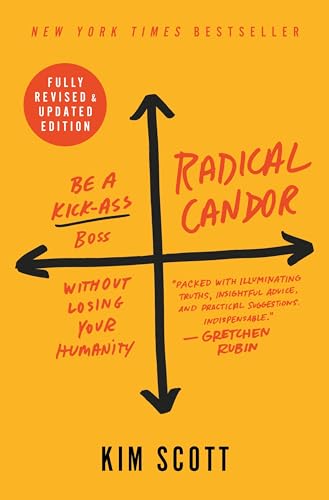
Radical Candor
Kim Scott
★★★★★4.5/5
The definitive framework for giving feedback that is both caring and direct, built from experience leading teams at Google and Apple. Scott maps all feedback along two axes — Care Personally and Challenge Directly — creating a simple 2×2 matrix that reveals why most managers fail at feedback. The most common trap is Ruinous Empathy: being so afraid of hurting feelings that you withhold the honest guidance people need to grow. The book provides a step-by-step system for building a candor culture, starting with soliciting criticism yourself before giving it to anyone else.
Best for: Managers and team leads who want to give honest feedback without damaging relationships
“Radical Candor is Caring Personally while Challenging Directly, at the same time.”
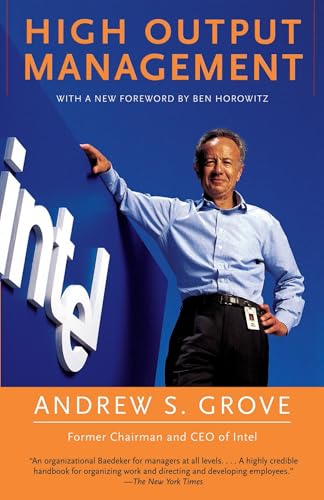
High Output Management
Andrew S. Grove
★★★★★4.7/5
The definitive, no-nonsense guide to management as a production process — required reading across Silicon Valley. Andrew Grove, the former CEO of Intel, distills three decades of building one of the world’s most competitive companies into a rigorous, engineering-minded framework for management. He treats a manager’s job as a production process — one-on-ones, meetings, and decisions are all activities that can be optimized for leverage, the ratio of output to effort. Less inspirational than most leadership books, and far more actionable: task-relevant maturity, running effective one-on-ones, and diagnosing broken processes before they cost you a quarter.
Best for: New and experienced managers who want a systems-level framework for running teams and meetings, not motivational theory
“Let chaos reign, then rein in chaos.”
The Five Dysfunctions of a Team
Patrick Lencioni
★★★★★4.7/5
A leadership fable that diagnoses why capable teams underperform: a pyramid running from absence of trust, through fear of conflict, lack of commitment, and avoidance of accountability, up to inattention to results. What separates it from a hundred other team books is how directly it pairs the diagnosis with runnable exercises — the Personal Histories Exercise, mining for conflict on purpose, a single thematic goal — that any team lead can bring to their very next meeting. If your team’s meetings feel smooth but decisions never stick, this is the book that tells you why.
Best for: Managers and executives leading an intact team of 4–15 people where meetings feel unusually smooth but decisions don’t stick
“Not finance. Not strategy. Not technology. It is teamwork that remains the ultimate competitive advantage.”
Good to Great
Jim Collins
★★★★★4.7/5
The research-backed case that greatness is a matter of discipline, not circumstance or charisma. Collins studied 11 companies that leapt from average to sustained market-beating performance and stayed there for 15+ years, then matched each against a comparison company that never made the leap. The result is a repeatable pattern — Level 5 Leadership, first who then what, the Hedgehog Concept, and a culture of discipline — that applies just as well to a team or a career as to a Fortune 500 company. Few business books have aged this well.
Best for: Leaders making people, focus, or culture decisions who want a research-backed framework, not just anecdotes
“Good is the enemy of great.”
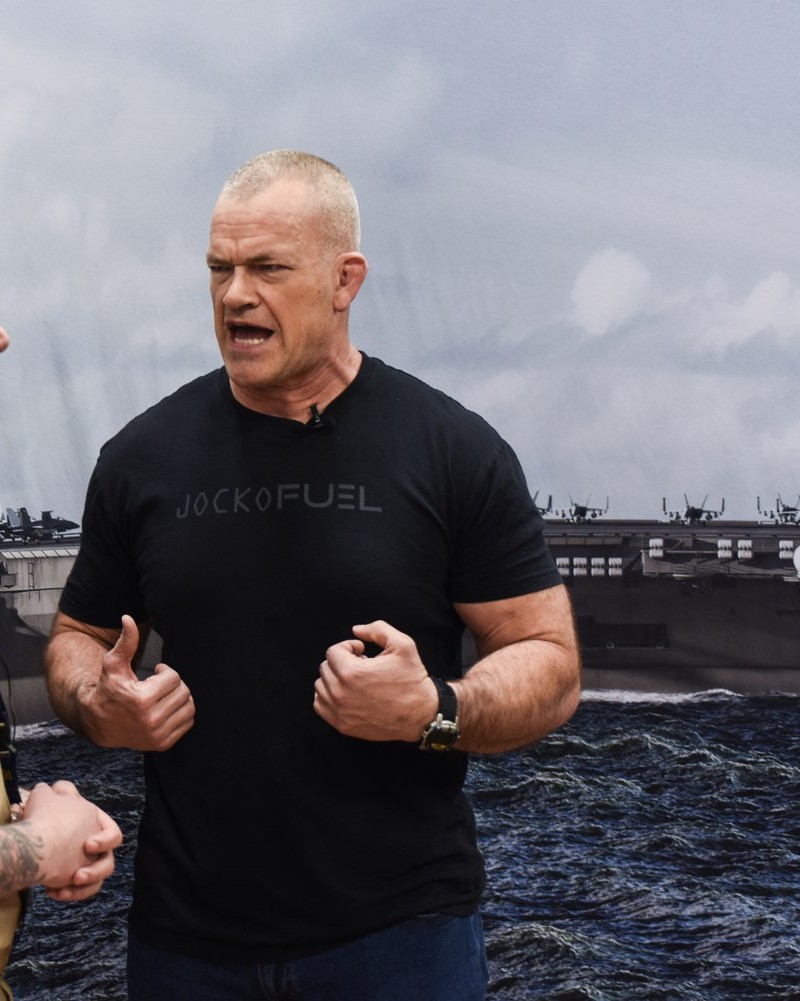
Extreme Ownership
Jocko Willink & Leif Babin
★★★★☆4.3/5
Navy SEAL leadership distilled into one brutal, liberating principle: everything in your world is your responsibility, including your boss’s decisions and your team’s failures. Willink and Babin pair combat stories from Ramadi with direct business translations — cover and move, keep plans simple, prioritize and execute, decentralize command — so the lesson never stays abstract. No other book on this list makes the case for ownership this viscerally, or this repeatably: it’s the one idea that changes how a leader responds within seconds of the next thing going wrong, which is exactly why it tops this list.
Best for: Managers who catch themselves blaming their team, their boss, or their circumstances
“There are no bad teams, only bad leaders.”
How to Choose Your First Leadership Book
Not sure where to begin? Match the book to your current situation — one book applied beats ten books skimmed.
Still unsure? Preview any book with our free in-depth summaries — test-drive the ideas in fifteen minutes before committing to three hundred pages.
Recommended Reading Paths
Not sure where to start? Pick the path that matches where you are right now.
🌱 The New Manager’s Path
Just started managing people? Read these five in order — each one builds the layer the next one needs.
🚀 The Executive & Scale-Up Path
Running the whole show, or about to? These five tackle crisis, systems, and the decisions only you can make.
🤝 The Team Culture Path
Trying to build a team people don’t want to leave? Start here — safety, purpose, and honest feedback, in that order.
More Top-Rated Books
High-scoring books just outside the top 20 — each links to our full summary and review.
 The 7 Habits of Highly Effective People
Stephen R. Covey
★★★★★ 4.5
 First, Break All the Rules
Marcus Buckingham & Curt Coffman
★★★★★ 4.5
 Shoe Dog
Phil Knight
★★★★★ 4.6
 The Ideal Team Player
Patrick Lencioni
★★★★★ 4.5
 Zero to One
Peter Thiel
★★★★★ 4.4
 No Rules Rules
Reed Hastings & Erin Meyer
★★★★★ 4.4
 Team of Teams
Stanley McChrystal
★★★★★ 4.4
 The Lean Startup
Eric Ries
★★★★☆ 4.2
 The 48 Laws of Power
Robert Greene
★★★★☆ 4.1
 Tribes
Seth Godin
★★★★☆ 4.1
 The Coaching Habit
Michael Bungay Stanier
★★★★☆ 4.1
 Measure What Matters
John Doerr
★★★★☆ 4.0
 The Culture Map
Erin Meyer
★★★★★ 4.6
 Crucial Accountability
Kerry Patterson et al.
★★★★★ 4.5
 Wooden on Leadership
John Wooden & Steve Jamison
★★★★★ 4.7
 Never Split the Difference
Chris Voss
★★★★★ 4.7
 Traction
Gino Wickman
★★★★★ 4.6
 The Prince
Niccolò Machiavelli
★★★★★ 4.6
Browse All Leadership Summaries →
The Authors Behind These Books
The practitioners, researchers, and operators who shaped modern leadership thinking.





Best Books by Category
Ready to go deeper on one area? Each category page ranks the best books on that topic — all with free summaries.
How We Rank: The 5-Point Rubric
Every book on The Growth Reads is evaluated against five weighted criteria. This isn’t a popularity contest — it’s a rubric designed to surface the leadership books that actually change how you lead teams and make decisions.
Lasting Impact
Does this book change how you lead months and years after reading, or just during a motivated weekend?
Evidence Quality
Is the advice grounded in research, real organizational case studies, and verifiable outcomes — or just anecdotes and assertions?
Practical Application
Can you apply the ideas in your next one-on-one or team meeting, or does it require a complete organizational overhaul?
Writing & Originality
Is it well-written and engaging, and does it bring something genuinely new to how we think about leading people?
External Consensus
How do other leaders, reviewers, and the broader reading community rate this book?
We re-evaluate rankings annually as new books publish and older ones prove their staying power. Every book listed here has a free in-depth summary on our site, so you can preview the ideas before committing to the full read. Read the full methodology →
Frequently Asked Questions
What is the #1 best leadership book of all time?
Based on our five-criteria rubric — lasting impact, evidence quality, practical application, writing originality, and expert consensus — Extreme Ownership by Jocko Willink and Leif Babin is the #1 best leadership book of all time. Its core shift, that everything in your world is your responsibility, including your boss’s decisions and your team’s failures, changes how a leader responds within seconds of the next thing going wrong. That combination of a battle-tested mindset and immediate applicability is why it holds the top spot over higher-rated but narrower books on this list. Read our full Extreme Ownership summary →
What leadership books do CEOs and founders actually read?
Founders and CEOs tend to gravitate toward leadership books that were written by people who actually ran something, not theorists. The most commonly recommended titles include Good to Great by Jim Collins (the research-backed case for disciplined leadership), High Output Management by Andrew Grove (Intel’s former CEO on management as a production process), The Hard Thing About Hard Things by Ben Horowitz (the unglamorous reality of running a company in crisis), and Principles by Ray Dalio (Bridgewater’s decision-making system). Many also cite Zero to One by Peter Thiel for its contrarian take on building something genuinely new.
Is Start With Why a leadership book or a marketing book?
Both, and that overlap is exactly why it belongs on this list. Simon Sinek wrote the Golden Circle — why, how, what — as a framework for inspiring loyalty, and it works identically whether you’re pitching a product or leading a team through change. The leadership application is the harder one: getting your own team painfully specific about why before you ever announce how or what is the part most managers skip, and it’s the part that determines whether people actually buy in or just comply. Read our full Start With Why summary →
What is the best leadership book for a brand-new manager?
For someone managing people for the first time, start with The Making of a Manager by Julie Zhuo — it’s written specifically for that transition, from someone who lived it at Facebook. Follow it with Radical Candor by Kim Scott for a concrete feedback framework, and Extreme Ownership by Jocko Willink and Leif Babin for the mindset that will save you the first time a project goes sideways under your watch. All three are short enough to finish in your first month.
How many leadership books should I read?
Quality beats quantity. We recommend reading 3–5 leadership books deeply rather than skimming a dozen. Start with one book on mindset (Extreme Ownership), one on your team’s dynamics (The Five Dysfunctions of a Team or The Culture Code), and one on decision-making or systems (Good to Great or High Output Management). The point is not accumulating frameworks — it is applying one for 30 days before you move to the next. Our reading paths above are built for exactly that pace.
What leadership book should I start with?
Extreme Ownership by Jocko Willink and Leif Babin is the best first leadership book for most people. It is direct, memorable, and immediately testable — you can apply the ownership mindset the very next time something goes wrong on your team. If you manage people day to day rather than lead a whole organization, Radical Candor by Kim Scott or The Making of a Manager by Julie Zhuo are gentler, more tactical starting points.
Are leadership books actually worth reading, or is it all the same advice?
The good ones are worth reading, but the value is entirely in the application, not the reading. A handful of ideas on this list — ownership over blame, Care Personally while Challenging Directly, belonging cues that build psychological safety — will change a specific meeting or conversation the same week you read them. The trap is treating leadership books as a substitute for the harder work of actually having the conversation. Our advice: read one, apply it for 30 days in your next one-on-ones, then decide if you need another.
Extreme Ownership vs. Good to Great — which should I read first?
They solve different problems. Extreme Ownership is about your mindset as an individual leader — taking responsibility for outcomes you don’t fully control. Good to Great is about the system: what separates companies (and by extension, teams) that sustain excellence from those that have a good year and fade. Read Extreme Ownership first if you are new to leading people and need the internal shift. Read Good to Great first if you already lead a team and are trying to figure out what to build, not how to show up.
What leadership books does Bill Gates recommend?
Bill Gates has publicly praised The Hard Thing About Hard Things by Ben Horowitz for its unusually honest account of the decisions that don’t have good answers, and has recommended Business Adventures by John Brooks alongside more traditional leadership reading. His annual GatesNotes lists frequently feature books on decision-making and organizational systems that overlap with titles on this ranking, including work by Andrew Grove, whose management philosophy at Intel shaped a generation of Silicon Valley leaders.
What is the best short leadership book?
Extreme Ownership by Jocko Willink and Leif Babin reads fast for its length because every principle is anchored to a specific combat story. For something even shorter, Ego Is the Enemy by Ryan Holiday moves through three life stages — aspiration, success, failure — in under 250 pages of short, punchy chapters. And Start With Why by Simon Sinek delivers its entire Golden Circle framework in a single sitting. Read our Extreme Ownership summary →
How we analyze books: Every book on The Growth Reads is read cover to cover, summarized in 3,000–4,000 words of original analysis, and rated against our five-criteria rubric (lasting impact, evidence quality, practical application, writing & originality, external consensus). Rankings are reviewed annually. We never use AI-generated summaries — every word is human-curated.
Read the full methodology →
All Leadership Book Summaries on The Growth Reads
61 in-depth summaries & reviews
Blue Ocean Strategy Summary & Review: How to Create Markets Instead of Fighting Over Them
Built to Last Summary & Review: The Blueprint for Companies That Endure
Creativity, Inc. Summary & Review: Pixar’s Playbook for Creative Leadership
Crucial Accountability Summary & Review: How to Hold Anyone Accountable Without a Blowup
Dare to Lead Summary & Review: Build Courage That Transforms Teams
Drive Summary & Review: The Surprising Truth About Motivation
Ego Is the Enemy Summary & Review: How Humility Beats Arrogance
Extreme Ownership Summary & Review: How U.S. Navy SEALs Lead and Win
First, Break All the Rules Summary & Review: What Great Managers Do Differently
Good to Great Summary & Review: Why Some Companies Make the Leap
High Output Management Summary & Review: Andy Grove’s Playbook for Multiplying Your Impact
It’s Your Ship Summary & Review: Build a Crew That Owns the Outcome
Leaders Eat Last Summary & Review: Build a Team That Has Your Back
Leadership and Self-Deception Summary & Review: Get Out of the Box
Leadership Is Language Summary & Review: The Power of What You Say
Leading Change Summary & Review: The 8-Step Transformation Process
Measure What Matters Summary & Review: The Goal-Setting System Behind Google’s Explosive Growth
Multipliers Summary & Review: How the Best Leaders Make Everyone Smarter
Never Split the Difference Summary & Review: The FBI Negotiator’s Playbook for Getting What You Want
No Rules Rules Summary & Review: Netflix’s Radical Culture Playbook
On Becoming a Leader Summary and Review
Primal Leadership Summary & Review: Lead With Emotional Intelligence
Principles Summary & Review: How to Make Better Decisions in Life and Work
Radical Candor Summary & Review: Be a Great Boss Without Losing Your Humanity
Servant Leadership Summary and Review
Shoe Dog Summary & Review: The Raw Truth Behind Building Nike
Start With Why Summary & Review: How Great Leaders Inspire Action
Team of Rivals Summary and Review
Team of Teams Summary & Review: Leading in Complexity
The 5 Levels of Leadership Summary & Review: Build Real Influence, Not Just Authority
The Advantage Summary and Review
The Art of War Summary & Review: Timeless Strategy for Modern Leaders
The Coaching Habit Summary & Review: Say Less, Ask More, Lead Better
The Culture Code Summary & Review: Build Teams That Thrive
The Culture Map Summary & Review: Decode Any Culture Before It Costs You a Deal
The Dichotomy of Leadership Summary & Review: Balance Every Principle or Fail
The First 90 Days Summary & Review: Master Every Leadership Transition
The Five Dysfunctions of a Team Summary & Review: Build a Team That Actually Trusts Each Other
The Hard Thing About Hard Things Summary & Review: A CEO Survival Manual for the Hardest Decisions
The Ideal Team Player Summary & Review: Hire for Humility, Hunger, and People Smarts
The Infinite Game Summary & Review: Lead Beyond the Finish Line
The Innovator’s Dilemma Summary & Review: Why Great Companies Fail When They Do Everything Right
The Leadership Challenge Summary and Review
The Lean Startup Summary & Review: Build, Measure, Learn
The Making of a Manager Summary & Review: Your First Leadership Playbook
The Motive Summary & Review: Why You Lead Matters Most
The New One Minute Manager Summary & Review: Three Simple Secrets to Effective Leadership
The No Asshole Rule Summary and Review
The Ride of a Lifetime Summary & Review: Leadership Lessons from Disney’s Greatest CEO
The Score Takes Care of Itself Summary and Review
Think Again Summary & Review: Master the Art of Rethinking
Tribal Leadership Summary & Review: Upgrade Your Team from Stage 3 to Stage 4
Tribes Summary & Review: How to Lead a Movement Without Permission
Turn the Ship Around Summary & Review: How to Build Teams That Think for Themselves
Unreasonable Hospitality Summary & Review: Give People More Than They Expect
Who Moved My Cheese? Summary & Review: Navigate Change Before It Breaks You
Wooden on Leadership Summary & Review: The Pyramid of Success Framework
Zero to One Summary & Review: How to Build Companies That Create the Future

22
The Power of Moments
★★★★☆ — A practical guide to engineering experiences that people carry with them for years.
The Heath brothers identify four elements of defining moments — Elevation, Pride, Insight, and Connection — and show how any leader, educator, or coach can create them deliberately. Using case studies from hospitals, schools, and companies, they demonstrate that most organizations obsess over fixing negatives while ignoring the peaks that make experiences truly unforgettable.
Best for: Leaders, managers, educators, and coaches who design experiences for others.