
Leadership
The 33 Strategies of War Summary & Review: Win the Campaign, Not the Skirmish
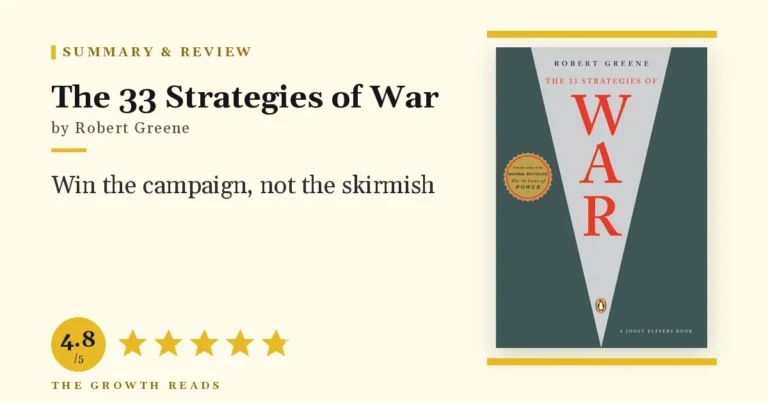
The 33 Strategies of War summary: Greene’s campaign guide to polarity, death-ground, and grand strategy — pick the hinge, then end the…
Read Summary →
"The historian of power and psychology, mapping the rules most people pretend don't exist."
Robert Greene is the author of The 48 Laws of Power and The Laws of Human Nature, two of the most widely read books on strategy, influence, and psychology of the past three decades. Drawing on centuries of history, from ancient courts to modern boardrooms, The 48 Laws of Power distills recurring patterns of how power is gained, held, and lost into 48 blunt, often provocative laws — teaching readers to recognize these dynamics whether or not they choose to use them. The Laws of Human Nature takes a more introspective turn, using history and psychology to expose the irrational, often unconscious drivers behind human behavior — envy, narcissism, conformity, aggression — with the goal of helping readers master their own nature rather than being blindly ruled by it. Greene's writing style is dense with historical case studies and deliberately unsentimental, treating power and psychology as forces to be studied clearly rather than moralized about.
Our in-depth summaries and reviews of his work
The 33 Strategies of War summary: Greene’s campaign guide to polarity, death-ground, and grand strategy — pick the hinge, then end the…
Read Summary →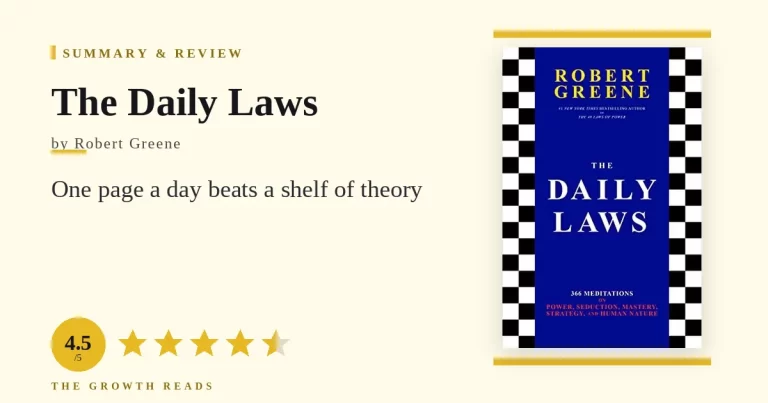
The Daily Laws summary: Robert Greene turns mastery, power, and human nature into 366 daily pages you can spend. Key takeaways, a…
Read Summary →
The Art of Seduction summary and review: Robert Greene’s nine types and four-phase map of how attraction is created, plus a 7-day…
Read Summary →
Ryan Holiday distills 2,000 years of Stoic philosophy into 366 daily meditations. Our full summary covers key frameworks, a 7-day action plan,…
Read Summary →
Robert Greene reveals the universal path to mastery through apprenticeship, mentorship, and creative experimentation. Lessons from Da Vinci, Darwin, Einstein. Rated 4.4/5.
Read Summary →
Robert Greene’s guide to understanding hidden forces driving human behavior. 18 laws covering irrationality, narcissism, envy, and more — with a 7-day…
Read Summary →
Power is a game with rules you can learn to see. Our full 48 Laws of Power summary covers Robert Greene's key…
Read Summary →In The 48 Laws of Power, Greene argues that across history, power has been gained and lost according to consistent, learnable patterns — regardless of era, culture, or field.
One of Greene's central laws: the more you say while trying to impress people, the more common and less in control you appear — restraint projects more power than explanation.
In The Laws of Human Nature, Greene argues most people vastly overestimate how much conscious control they have over their own behavior, and that self-mastery starts with recognizing the irrational drivers beneath the surface.
In The Art of Seduction, Greene argues that the hold which lasts is the one the other person feels they chose — attention and mystery outlast a push.
In The Daily Laws, Greene argues modern life pulls you into illusion and tactical hell; one spent page a day is a practice for seeing what is actually happening in your work, in power games, and in yourself.
In The 33 Strategies of War, Greene argues most people waste force on the last war and the wrong front. Name the opponent, hit the center of gravity, then end the fight.
Cheap exits leak attention. Close one door — a date, a visible draft — so the work that only exists after commitment can start.
"When you show yourself to the world and display your talents, you naturally stir all kinds of resentment, envy, and other manifestations of insecurity... you cannot spend your life worrying about the petty feelings of others."— The 48 Laws of Power
"Do not leave your reputation to chance or gossip; it is your life's artwork, and you must craft it, hone it, and display it with the care of an artist."— The 48 Laws of Power
"You like to imagine yourself in control of your fate, consciously planning the course of your life as best you can. But you are largely unaware of how deeply your emotions dominate you."— The Laws of Human Nature
"Learn to question yourself: Why this anger or resentment? Where does this incessant need for attention come from? Under such scrutiny, your emotions will lose their hold on you."— The Laws of Human Nature
"Seduction never causes pain or creates misunderstanding; it gives pleasure."— The Art of Seduction
"You must constantly ask yourself: What would excite me? What would actually engage my imagination?"— The Daily Laws
"Life is endless battle and conflict, and you cannot fight effectively unless you can identify your enemies."— The 33 Strategies of War
"Do not fight the last war."— The 33 Strategies of War
The 33 Strategies of War summary: Greene’s campaign guide to polarity, death-ground, and grand strategy — pick the hinge, then end the fight cleanly this week.
The Daily Laws summary: Robert Greene turns mastery, power, and human nature into 366 daily pages you can spend. Key takeaways, a 7-day apply plan, and FAQs.
The Art of Seduction summary and review: Robert Greene’s nine types and four-phase map of how attraction is created, plus a 7-day plan to become more magnetic.
Ryan Holiday distills 2,000 years of Stoic philosophy into 366 daily meditations. Our full summary covers key frameworks, a 7-day action plan, and who this book is best for.
Robert Greene reveals the universal path to mastery through apprenticeship, mentorship, and creative experimentation. Lessons from Da Vinci, Darwin, Einstein. Rated 4.4/5.
Robert Greene’s guide to understanding hidden forces driving human behavior. 18 laws covering irrationality, narcissism, envy, and more — with a 7-day application plan.
Power is a game with rules you can learn to see. Our full 48 Laws of Power summary covers Robert Greene's key laws, the ethics of using them, FAQs and a 7-day plan.
