
Productivity isn’t about doing more — it’s about doing what matters with less friction. The best productivity books don’t just teach time management; they rewire how you think about work, energy, and focus.
✍️ Key Authors
🆕 Latest Summaries
⏰ Time Management Books
📚 All Books
🔍 How We Select
❓ FAQ
Top 10 Productivity Books
Our highest-rated picks — based on depth, practicality, and lasting impact.
Key Authors in Productivity
The writers shaping how we think about productivity.
Latest Summaries
Recently published reviews in this topic.
⏰ Best Time Management Books
Looking for books specifically about managing your time? We ranked the 20 best time management books of all time — from GTD to Deep Work to Eat That Frog! — each with a free summary and action plan.
All Productivity Book Reviews
Every productivity book we’ve reviewed, newest first.
All Productivity Book Reviews
The Unicorn Project Summary & Review: Give Developers a Local Path
The Unicorn Project summary: Gene Kim's developer-side sequel to The Phoenix Project. Five ideals so a change does not wait on a ticket queue...
Read Review
Work the System Summary & Review: Document the Machine Once
Work the System summary: Sam Carpenter’s three documents that turn firefighting into a machine you can improve — plus a TGR 7-day start.
Read Review
Upstream Summary & Review: Stop Fighting the Same Fire
Upstream summary: Dan Heath's playbook for solving problems before they happen. Name one repeating fire, put an owner on prevention, and score the quiet...
Read Review
The Presentation Secrets of Steve Jobs Summary & Review: Turn Slides Into a Keynote
The Presentation Secrets of Steve Jobs summary: Carmine Gallo's 18 scenes for a three-act keynote — story first, slides last, and one jolt the...
Read Review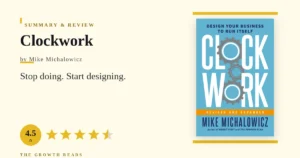
Clockwork Summary & Review: Design a Business That Runs Without You
Clockwork summary: Mike Michalowicz’s 4D mix, Queen Bee Role, and seven-stage plan to design a business that keeps its promise without you in the...
Read Review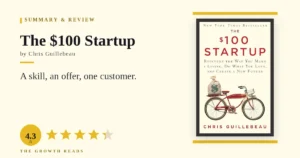
The $100 Startup Summary & Review: Start With a Skill You Have
The $100 Startup summary: Chris Guillebeau's playbook for a tiny offer from a skill you already have. Write the sentence, talk to ten humans,...
Read Review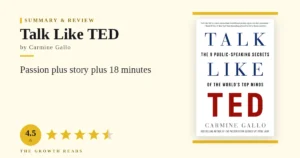
Talk Like TED Summary & Review: Make Ideas Travel in 18 Minutes
Talk Like TED summary: Carmine Gallo's nine speaking secrets — passion, story, and 18 minutes — so your next idea actually sticks.
Read Review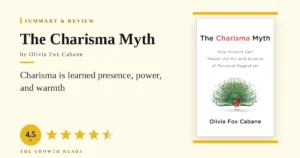
The Charisma Myth Summary & Review: Charisma Is a Learnable Skill
The Charisma Myth summary: Olivia Fox Cabane’s playbook for loading presence, power, and warmth — four styles, mental-state drills, and a 7-day plan to...
Read Review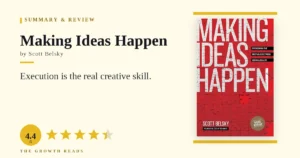
Making Ideas Happen Summary & Review: Ship the Next Action
Making Ideas Happen summary: Scott Belsky's Action Method turns ideas into next actions. Capture the pile, reduce the work, and ship one piece this...
Read Review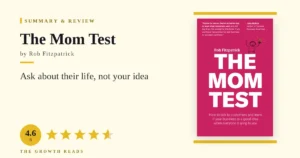
The Mom Test Summary & Review: Ask About Their Life, Not Your Idea
The Mom Test summary: stop asking if they like your idea. Ask about their life, collect past-tense facts, and only trust time, reputation, or...
Read Review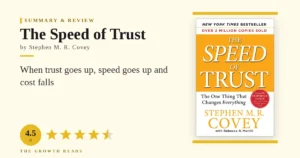
The Speed of Trust Summary & Review: Cut the Hidden Tax
The Speed of Trust summary: Stephen M. R. Covey’s playbook for cutting the hidden tax — four cores of credibility, 13 behaviors, and a...
Read Review
Living with a SEAL Summary & Review: Stop Negotiating the Extra Mile
Living with a SEAL summary: Jesse Itzler moved a Navy SEAL into his house for 31 days. Keep one rule after the camp —...
Read ReviewHow We Select & Review Productivity Books
Our editorial process for this topic.
The productivity category is crowded with books that repackage the same handful of ideas — a to-do list system, a morning routine, a motivational push. Before a book earns a spot in this library, we ask whether it offers a genuinely distinct framework (not just a rebranded version of GTD or habit-stacking), whether its advice is backed by evidence or real-world results rather than pure anecdote, and whether a reader could actually put it into practice this week, not just feel inspired for a day.
We favor books that hold up to scrutiny — Cal Newport’s research-grounded case for deep focus, James Clear’s synthesis of habit-formation research, David Allen’s battle-tested GTD system — over books that lean entirely on motivational language without a concrete method behind it. When a book’s central claim runs ahead of the evidence, or when its advice mostly repeats an earlier, better book, we say so directly in the review rather than padding the list.
Every summary on this site is written after reading the full book, not a skim or a summary of summaries. We pull out the book’s actual system or framework, note what’s genuinely new versus what it borrows from earlier work, and flag when a book’s advice might not suit every kind of work or working style. New productivity titles are added as they’re published; older classics (Getting Things Done, The 7 Habits of Highly Effective People) stay on the list because their core systems still hold up, even as specific tools and technology have changed.
The Growth Reads is reader-supported — some links on this page are Amazon affiliate links, which cost you nothing extra but help fund the site. Our recommendations are never influenced by affiliate relationships; a book earns its place here on the strength of its ideas, not its commission rate. Reviews are written and maintained by The Growth Reads editorial team.
Frequently Asked Questions
What is the best productivity book to start with?
Atomic Habits by James Clear is the most commonly recommended starting point — its habit-formation framework is simple to apply immediately and most other productivity books build on ideas it popularized. If you specifically struggle with focus rather than habits, Deep Work by Cal Newport is a strong alternative starting point.
What productivity books do CEOs and executives actually read?
Deep Work, Essentialism, and The 7 Habits of Highly Effective People show up most often on executive reading lists — all three focus on prioritization and focus rather than tactical time-management tricks, which tends to matter more at senior levels.
Is Atomic Habits a productivity book or a self-help book?
It’s both, which is common in this category — it’s grounded in behavioral psychology research (making it a legitimate productivity/psychology book) but is written and marketed as practical self-help. We include it here because its core framework is directly about building productive routines.
What’s the best productivity book for students?
Getting Things Done and Eat That Frog! are the most directly applicable for students — both give simple, concrete systems for managing a long list of competing deadlines, which is the core productivity challenge of school.
How many productivity books should I actually read?
Two or three is usually enough to build a working system: one on habits (Atomic Habits), one on focus/prioritization (Deep Work or Essentialism), and one on task/project management (Getting Things Done). Reading more than that tends to produce diminishing returns — most later productivity books repeat these same core ideas.
What productivity book should I read if I’m always busy but never getting anything done?
Essentialism by Greg McKeown addresses this specific problem directly — being busy with the wrong things rather than doing too little. Essentialism, The ONE Thing (Gary Keller), and Deep Work all attack this same problem of misdirected effort from different angles.
Are productivity books worth reading, or is it all common sense?
The best ones aren’t common sense — Atomic Habits’ identity-based habit framework and Deep Work’s argument about attention residue are genuinely research-backed insights, not restated common knowledge. The weaker end of the genre does lean on repackaged common sense, which is exactly the kind of book we filter out during selection.
Getting Things Done vs. The 7 Habits of Highly Effective People — which should I read first?
Getting Things Done gives you a tactical system for managing tasks and reducing mental clutter; The 7 Habits is more about long-term principles and prioritization. If you’re overwhelmed right now, start with Getting Things Done. If you’re reasonably organized but want better long-term direction, start with The 7 Habits.
What productivity books does the productivity/tech world recommend?
Deep Work and Atomic Habits are the two most frequently cited in tech and knowledge-work circles specifically, since both directly address the attention-fragmentation problems common in digital-first jobs.
What’s a good short productivity book if I don’t have much time?
Eat That Frog! is one of the shortest, most direct books in the category — it’s built around a single core idea (do your hardest task first) and reads in a couple of hours. Essentialism is also relatively short for the depth of its argument.
Explore Other Topics
Browse All Productivity Summaries
We’ve reviewed 61 productivity books — each with key takeaways, practical lessons, and honest ratings.