

Good Energy in one minute
⭐⭐⭐⭐ 4.2/5
One-liner: A Stanford surgeon turns the medical system inside out — showing that nearly every chronic disease traces back to broken mitochondria, and that six lifestyle pillars can fix them.
Best for: Anyone dealing with unexplained fatigue, brain fog, weight resistance, or chronic symptoms who suspects the healthcare system is treating symptoms instead of root causes.
Reading time: ~7 hours (384 pages)
Difficulty to apply: Moderate — the dietary and lifestyle changes are significant but introduced progressively.
The modern healthcare system is failing us — not because doctors are incompetent, but because the system is designed to treat symptoms rather than root causes. That is the central argument of Good Energy, and Casey Means backs it up with both her Stanford medical training and her decision to leave surgery because she realised she was treating the downstream effects of metabolic dysfunction rather than preventing it. The book makes a compelling case that conditions as seemingly different as depression, infertility, Alzheimer’s, cancer, and type 2 diabetes share a common upstream cause: broken mitochondria and disrupted cellular energy production. Means then lays out a practical framework — built around food, sleep, movement, stress management, light exposure, and toxin avoidance — that addresses the root cause rather than the symptoms. The result is one of the most comprehensive and actionable health books of the last decade.
Key takeaways
- Metabolic dysfunction is the root epidemic: 93% of American adults show markers of poor metabolic health. This single upstream problem drives the majority of chronic diseases that dominate modern medicine.
- Mitochondria are the key: These tiny organelles produce the energy (ATP) every cell needs to function. When they break down, cells malfunction — and that malfunction manifests as whatever disease you happen to be genetically predisposed to.
- The healthcare system profits from dysfunction: Means argues that the $4.1 trillion US healthcare industry is structured around managing chronic disease, not preventing it. Prevention does not generate recurring revenue.
- Biomarkers reveal the truth early: Five inexpensive blood tests — fasting glucose, triglycerides, HDL cholesterol, waist circumference, and blood pressure — can tell you whether your metabolism is functioning properly long before symptoms appear.
- Ultra-processed food is the primary driver: The modern Western diet, dominated by refined grains, seed oils, and added sugars, systematically damages mitochondria and triggers chronic inflammation.
- Sleep is non-negotiable for metabolic health: Even one night of poor sleep measurably increases insulin resistance, cortisol, and inflammatory markers — effects that compound over time.
- Movement is medicine — but not the kind you think: Intense exercise matters less than consistent daily movement. Walking, taking the stairs, and breaking up sitting time have outsized metabolic benefits.
- Chronic stress destroys mitochondria: Sustained cortisol elevation literally damages the energy-producing machinery of your cells, creating a vicious cycle of fatigue and dysfunction.
- Light exposure is an underrated health lever: Morning sunlight sets circadian rhythms that regulate every metabolic process, while nighttime blue light exposure disrupts them.
- You are not broken — your environment is: Means reframes chronic disease not as personal failure but as the predictable consequence of living in an environment designed to maximise corporate profit at the expense of human biology.
What is Good Energy about?
Good Energy by Casey Means is about the metabolic crisis underlying most chronic diseases and how to fix it. The book explains that mitochondrial dysfunction — caused by processed food, poor sleep, sedentary living, chronic stress, and environmental toxins — is the shared root cause of conditions from diabetes to depression, and provides a six-pillar lifestyle framework to restore cellular health.
About the author
Casey Means, MD is a Stanford-trained head and neck surgeon who left her surgical career after recognising that most of the conditions she treated — chronic sinusitis, thyroid disease, ear infections — were downstream effects of metabolic dysfunction that could have been prevented. She co-founded Levels, a metabolic health technology company that uses continuous glucose monitors to help people understand how food affects their biology in real time. Her brother Calley Means, who co-authored the book, is a former food and pharmaceutical industry consultant who brings an insider perspective on how corporate incentives shape public health policy. Together, they combine clinical expertise with systems-level analysis to explain why the healthcare system perpetuates the very diseases it claims to treat. Explore all Casey Means book summaries →
Key concepts at a glance
| Concept | What it means | Use it when |
|---|---|---|
| Good Energy / Bad Energy | Cells with healthy mitochondria produce good energy; damaged mitochondria produce bad energy that drives disease | You want to understand why you feel chronically fatigued despite normal lab results |
| The Metabolic Spectrum | Metabolic dysfunction exists on a spectrum from optimal to disease — most people are somewhere in the unhealthy middle | You want to assess where you currently stand |
| The Five Biomarkers | Fasting glucose, triglycerides, HDL, waist circumference, and blood pressure — five cheap tests that reveal metabolic health | You want to take a baseline measurement before making changes |
| Mitochondrial Dysfunction | When mitochondria cannot efficiently convert food into ATP, every cellular process suffers | You want the scientific mechanism behind chronic fatigue and disease |
| The Six Pillars | Food, sleep, movement, stress, light, and toxins — the lifestyle inputs that determine mitochondrial health | You want a structured framework for lifestyle change |
| Ultra-Processed Food | Industrially manufactured food products that damage gut lining, spike blood sugar, and trigger inflammation | You want to understand why your diet matters beyond calories |
| Circadian Alignment | Synchronising your sleep, eating, and light exposure with natural light-dark cycles | You sleep enough hours but still wake up tired |
| Environmental Toxins | Endocrine disruptors in plastics, pesticides, and personal care products that interfere with metabolic signalling | You want to reduce your toxic load without becoming paranoid |
Part 1: The metabolic crisis hiding in plain sight
Means opens with a startling statistic: 93% of American adults have at least one marker of metabolic dysfunction. This is not a fringe health concern — it is the norm. Yet most people have never heard the term “metabolic health,” and most doctors never test for it in routine check-ups. The system is designed to wait until metabolic dysfunction manifests as a named disease — diabetes, heart disease, cancer, Alzheimer’s — and then treat that disease with drugs or surgery.
The problem, Means argues, is that these seemingly different diseases share a common upstream mechanism: mitochondrial dysfunction. Mitochondria are the organelles inside every cell that convert food into usable energy (ATP). When they work well, cells function well — you think clearly, move easily, sleep deeply, and maintain a stable weight. When they break down, cells malfunction. Which specific disease appears depends on your genetics and which organ systems are most vulnerable, but the root cause is the same.
Means draws on her experience as a surgeon to illustrate how the medical system handles this backwards. She treated patients with chronic sinusitis using surgery — opening blocked sinuses — while the real question was why the sinuses were chronically inflamed in the first place. The answer, she eventually realised, was almost always related to diet, gut health, and systemic inflammation. Surgery addressed the symptom; it did nothing for the cause.
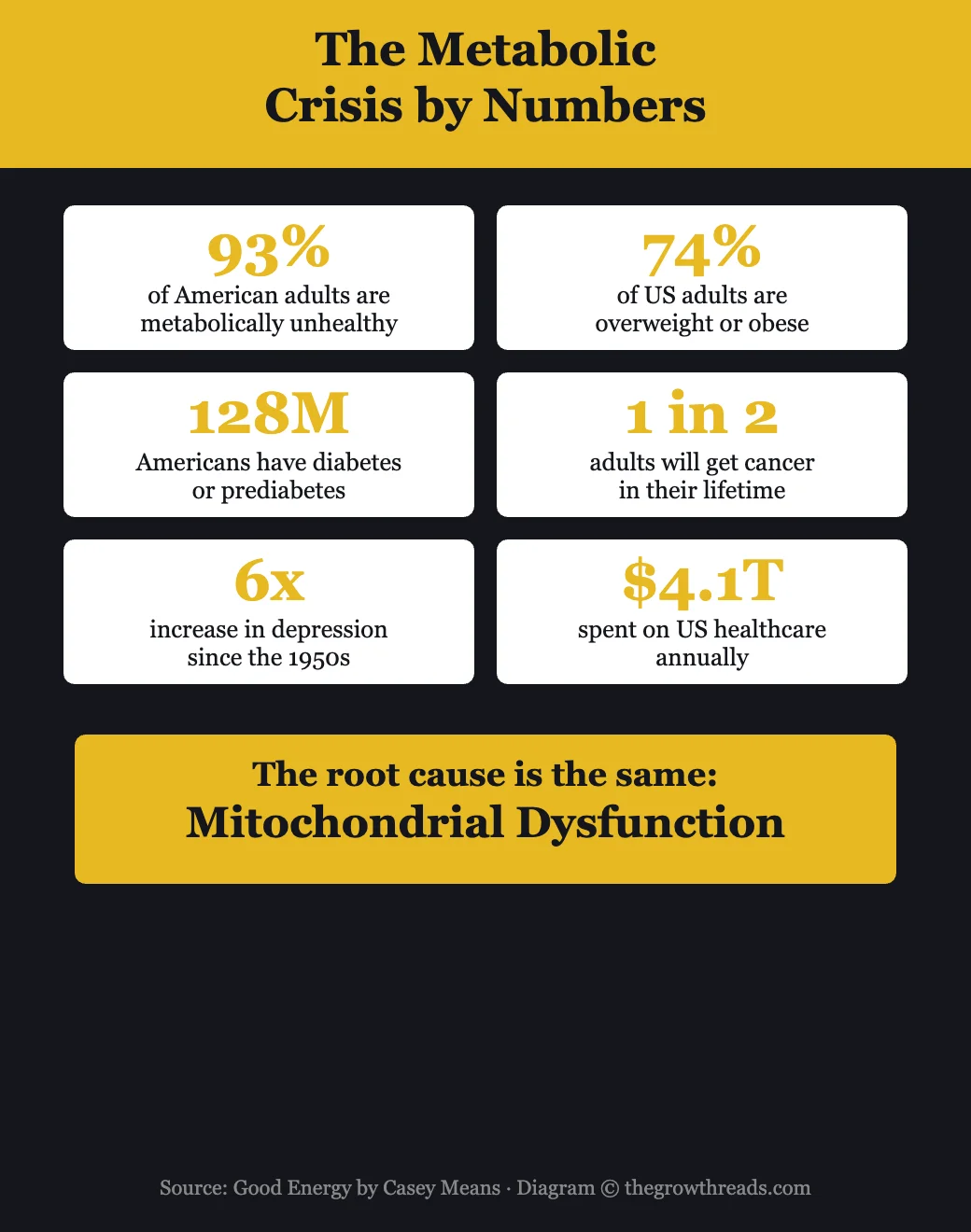
TGR Note: Means’s 93% statistic comes from a widely cited 2018 study in Metabolic Syndrome and Related Disorders. The framing is strikingly similar to what Peter Attia argues in Outlive — that modern medicine excels at acute care (infections, trauma, emergencies) but is structurally incapable of addressing the slow-burn chronic diseases that actually kill most people. Where Attia focuses on longevity through exercise and early intervention, Means focuses on metabolic health through mitochondrial repair. The two books complement each other well.
Part 2: Understanding your body’s energy system
The book’s scientific core is a clear and accessible explanation of how mitochondria work — and how modern life systematically damages them. Means explains that mitochondria evolved to process whole foods, respond to natural light-dark cycles, recover during deep sleep, and adapt to physical stress. The modern environment delivers the opposite: ultra-processed food, artificial light at all hours, chronic sleep deprivation, and sedentary living.
The damage is measurable. Means introduces five biomarkers that reveal metabolic health without expensive testing: fasting glucose (ideally under 86 mg/dL), triglycerides (under 100), HDL cholesterol (over 60 for women, over 40 for men), waist circumference (under 35 inches for women, under 40 for men), and blood pressure (under 120/80). Most adults fail at least one of these markers, and many fail several — yet their doctors tell them they are “normal” because they have not yet crossed the clinical threshold for a named disease.
This is what Means calls the “metabolic spectrum.” You are not simply healthy or diabetic — you exist somewhere on a continuum from optimal function to complete dysfunction. The medical system only intervenes when you reach the far end of that spectrum. Means wants you to intervene at the beginning, when reversal is easy and inexpensive.
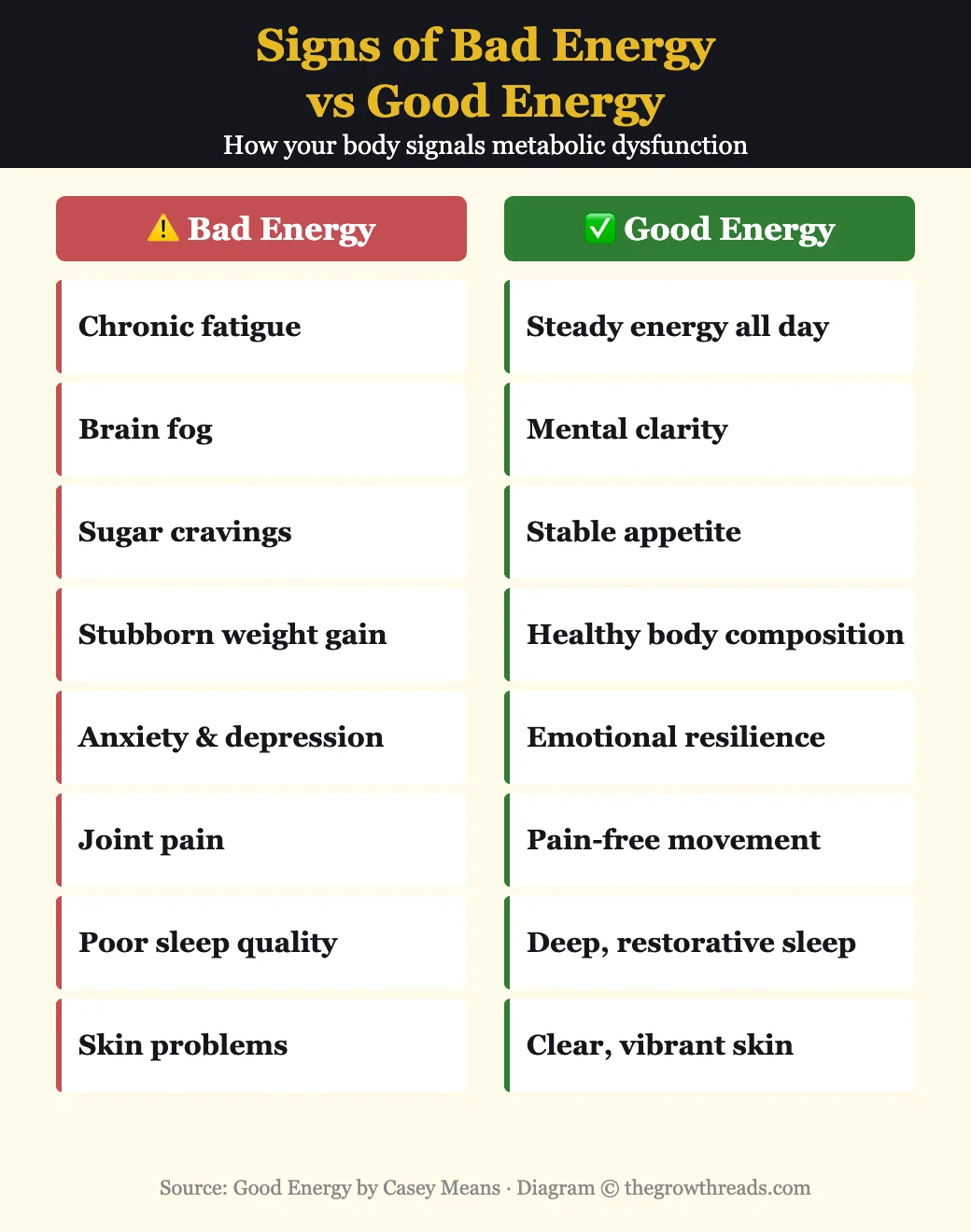
TGR Note: Means’s biomarker approach echoes Jessie Inchauspe’s work in Glucose Revolution, which focuses specifically on blood sugar spikes as a driver of fatigue, cravings, and inflammation. Where Inchauspe offers ten “glucose hacks” for immediate symptom relief, Means provides the deeper mechanistic explanation of why those hacks work at the cellular level. Reading both gives you the quick wins and the long-term understanding.
Part 3: The six pillars of good energy
The practical heart of the book lays out six pillars that determine mitochondrial health. Means is careful to explain that these are not independent variables — they interact in reinforcing loops. Poor sleep increases cortisol, which drives sugar cravings, which spikes glucose, which disrupts sleep further. Conversely, fixing one pillar often creates a positive cascade that makes the others easier.
Food receives the most attention. Means advocates for whole, unprocessed foods — primarily vegetables, quality proteins, healthy fats, nuts, seeds, and fermented foods — while eliminating refined grains, added sugars, and industrial seed oils. She explains the mechanisms clearly: ultra-processed food spikes blood glucose, triggers insulin resistance, damages the gut microbiome, and starves mitochondria of the micronutrients they need to produce ATP. This is not a calorie-counting approach. It is a food-quality approach grounded in cellular biology.
Sleep is presented as the recovery window that mitochondria require for repair. Means cites research showing that even one night of sleep deprivation measurably increases insulin resistance — the metabolic equivalent of eating a poor diet. She recommends 7–9 hours of sleep in a cool, dark room, with no screens for the final hour before bed and a consistent wake time that aligns with sunrise.
Movement is reframed around mitochondrial biogenesis — the process by which cells create new mitochondria in response to physical demand. Means emphasises that daily walking (8,000+ steps), regular strength training, and simply breaking up prolonged sitting matter more than occasional intense workouts. The goal is to signal your mitochondria that they need to grow and multiply, not to burn calories.
Stress management focuses on the cortisol-mitochondria connection. Chronic stress elevates cortisol, which literally damages mitochondrial membranes and impairs ATP production. Means recommends time in nature, breathwork, cold exposure, and setting boundaries as practical stress-reduction strategies — not as self-care luxuries but as biological necessities.
Light exposure is Means’s most underappreciated pillar. Morning sunlight exposure (within the first hour of waking) sets circadian rhythms that regulate insulin sensitivity, cortisol patterns, melatonin production, and mitochondrial function throughout the day. Nighttime blue light from screens disrupts these rhythms and impairs the metabolic processes that depend on them.
Toxin avoidance rounds out the framework. Means highlights endocrine disruptors in plastics (BPA, phthalates), pesticides (glyphosate), and personal care products (parabens, fragrances) that interfere with hormonal signalling and mitochondrial function. Her recommendations are practical rather than alarmist: switch to glass containers, buy organic for the Dirty Dozen, and choose fragrance-free personal care products.
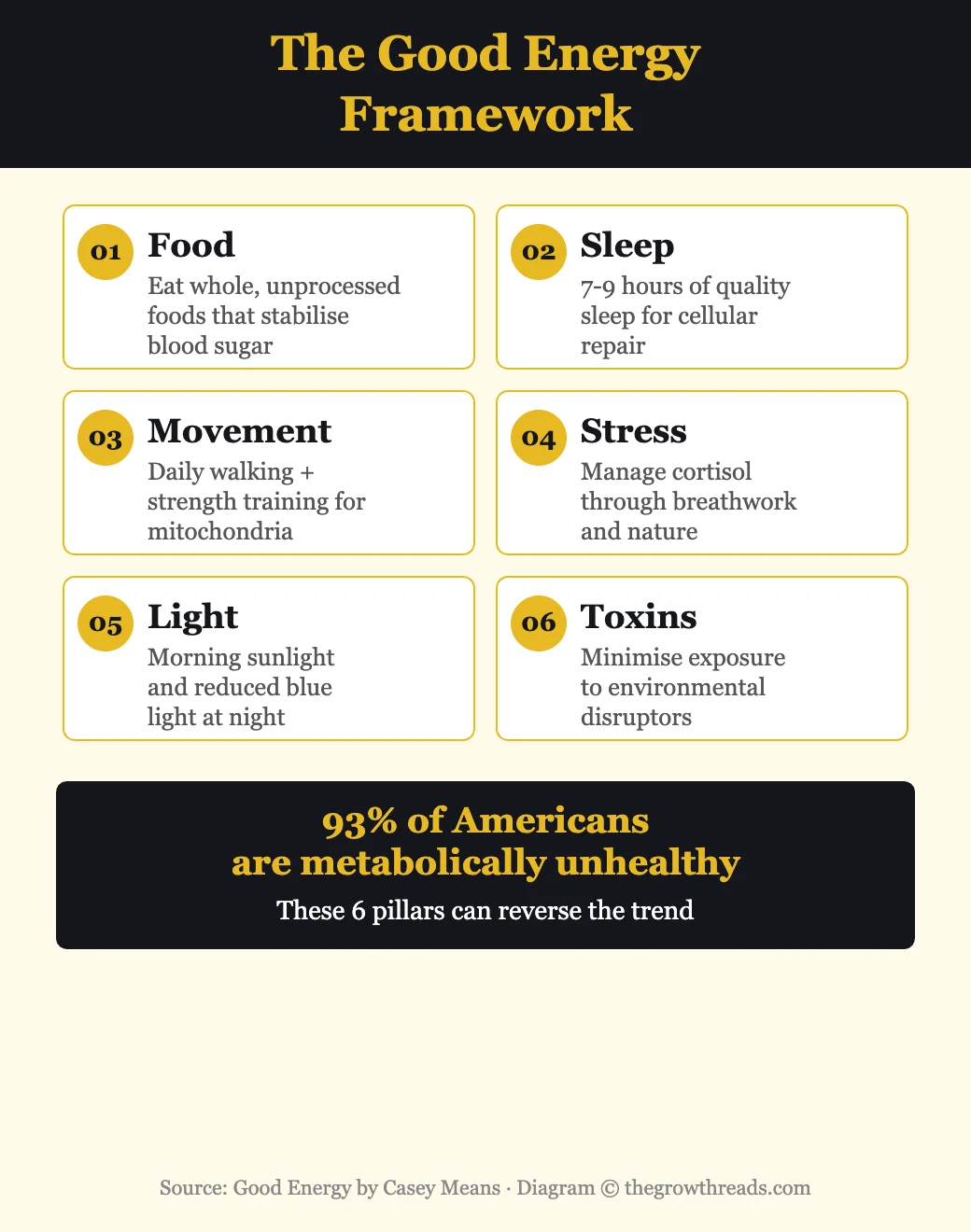
TGR Note: Means’s six pillars align remarkably well with the frameworks in several other health books on the site. Matthew Walker’s Why We Sleep goes deeper on the sleep pillar. Daniel Lieberman’s Exercised provides the evolutionary context for why daily movement matters more than gym sessions. And James Nestor’s Breath adds a breathing dimension that complements the stress management pillar. Good Energy is the unifying framework that connects them all through the lens of mitochondrial health.
Part 4: Reclaiming your health from a broken system
The final section shifts from individual biology to systemic analysis. Means and her brother Calley — a former consultant to food and pharmaceutical companies — explain the financial incentives that keep the healthcare system focused on treatment rather than prevention. Hospitals generate revenue from procedures. Pharmaceutical companies generate revenue from chronic prescriptions. Food companies generate revenue from addictive, shelf-stable, nutrient-poor products. Prevention threatens every one of these revenue streams.
The Means siblings are not conspiracy theorists. They are careful to attribute the problem to incentive structures rather than malice. But the conclusion is sobering: the institutions you trust to protect your health are financially incentivised to manage your disease, not cure it. The only person with a genuine incentive to prevent your illness is you.
The book ends with a call to personal agency. Means argues that understanding your own metabolic health — through the five biomarkers, a continuous glucose monitor, and attentive observation of your energy levels — gives you the information you need to make decisions that serve your biology rather than someone else’s balance sheet. The six pillars are not complicated. They are ancient biological requirements that modern life has systematically undermined. Restoring them is not a radical act — it is a return to normal.
TGR Note: The systemic critique in Good Energy pairs well with Michael Pollan’s In Defense of Food, which dissects the food industry’s role in creating nutritional confusion. Where Pollan famously concludes “Eat food. Not too much. Mostly plants,” Means goes further by explaining why this advice works at the mitochondrial level and adding five non-food pillars that Pollan does not address.
Who is Good Energy best for — and who should read something else first?
Good Energy is ideal for anyone experiencing persistent fatigue, brain fog, weight resistance, or mood instability who suspects their doctor is missing something. It is also a strong pick for health-conscious readers who want to understand the unified mechanism behind conditions that medicine usually treats separately. If you want one book that connects the dots between nutrition, sleep, movement, stress, light, and chronic disease, this is currently the best available.
If you are looking for a purely practical “what to eat” guide without the science, start with Glucose Revolution for quick dietary hacks or How Not to Die for a plant-forward approach. If you want the longevity lens specifically, read Outlive by Peter Attia. Then come back to Good Energy for the metabolic framework that unifies them all.
Questions to reflect on
- When did you last feel genuinely energetic — not caffeinated, but truly alive — and what was different about your lifestyle at that time?
- Which of the five biomarkers (fasting glucose, triglycerides, HDL, waist circumference, blood pressure) do you know your numbers for, and which have you never checked?
- What percentage of the food you ate yesterday came from a package with more than five ingredients?
- How much morning sunlight do you get in the first hour after waking, and how much screen time do you get in the hour before bed?
- If the healthcare system is incentivised to manage disease rather than prevent it, what would it look like to take full ownership of your metabolic health?
🔥 Ready to reclaim your metabolic health?
Learn the six pillars that fix your mitochondria and unlock the energy your body was designed to produce.
How to apply Good Energy (7-day plan)
- Day 1 — Test your biomarkers: Schedule a blood test for fasting glucose, triglycerides, and HDL cholesterol. Measure your waist circumference and blood pressure at home. Write all five numbers down.
- Day 2 — Audit your pantry: Check every packaged food in your kitchen for added sugars, refined seed oils (canola, soybean, sunflower), and ingredient lists longer than five items. Remove or plan to replace the worst offenders.
- Day 3 — Start the morning sunlight habit: Within 30 minutes of waking, spend 10 minutes outside in natural light — no sunglasses. In the evening, dim screens or use blue-light blocking glasses after 8pm.
- Day 4 — Add a daily walk: Walk for 30 minutes after your largest meal. This is one of the most effective ways to blunt post-meal glucose spikes and support mitochondrial biogenesis.
- Day 5 — Upgrade one meal: Replace your most processed daily meal with whole foods: quality protein, non-starchy vegetables, healthy fat (olive oil, avocado, nuts), and optional whole grains or legumes.
- Day 6 — Optimise your sleep environment: Set your bedroom temperature to 18–19°C (65–67°F), remove all light sources, and commit to a consistent bedtime. No screens for the final 60 minutes.
- Day 7 — Add one stress-reduction practice: Choose one: a 5-minute breathwork session (box breathing: 4 seconds in, 4 hold, 4 out, 4 hold), 20 minutes in nature, or a cold shower (30–90 seconds). Do it daily going forward.
Frequently asked questions
Is Good Energy backed by scientific evidence?
Yes. Means cites hundreds of peer-reviewed studies throughout the book, and the core thesis — that mitochondrial dysfunction drives chronic disease — is well-established in medical literature. The six pillars (food, sleep, movement, stress, light, toxins) each have robust research support. Where Means goes beyond the current medical consensus is in arguing that these lifestyle interventions should be the first-line treatment for chronic disease, ahead of pharmaceutical intervention. That position is gaining traction in functional and integrative medicine but remains controversial in mainstream practice.
Do I need a continuous glucose monitor to benefit from this book?
No. While Means co-founded Levels (a CGM company) and clearly believes in the technology, the book’s recommendations stand entirely on their own without one. The five basic biomarkers she recommends are available through any standard blood test. A CGM is useful for learning how specific foods affect your blood sugar in real time, but the dietary principles — eat whole foods, minimise refined carbohydrates and seed oils, eat protein and fibre before carbohydrates — work whether or not you are tracking glucose data.
What are the five metabolic biomarkers?
Means identifies five inexpensive tests that reveal metabolic health: fasting glucose (optimal under 86 mg/dL), triglycerides (under 100 mg/dL), HDL cholesterol (above 60 for women, above 40 for men), waist circumference (under 35 inches for women, under 40 for men), and blood pressure (under 120/80). If you meet all five optimal ranges, you are metabolically healthy. Most American adults fail at least one. These tests are available through any primary care physician and typically cost very little out of pocket.
How is Good Energy different from Outlive by Peter Attia?
Both books argue that modern medicine fails at preventing chronic disease, but they approach the problem from different angles. Attia focuses on longevity and lifespan extension, with heavy emphasis on exercise prescription (especially zone 2 cardio and strength training) and early screening for cancer and cardiovascular disease. Means focuses on metabolic health and mitochondrial function, with a broader lifestyle framework that includes light exposure and toxin avoidance alongside diet and exercise. Attia is more clinical and data-driven; Means is more accessible and systems-oriented. They complement each other well — Attia for the “what to do” and Means for the “why it works at the cellular level.”
What diet does Good Energy recommend?
Means advocates for a whole-foods approach rather than a named diet. The core principles: eat primarily vegetables, quality proteins (grass-fed meat, wild fish, pasture-raised eggs), healthy fats (olive oil, avocado, nuts, coconut), fermented foods (sauerkraut, kimchi, yoghurt), and some whole grains or legumes. She recommends eliminating refined sugars, refined grains (white bread, pasta), and industrial seed oils (canola, soybean, sunflower, safflower). The approach is closer to a Mediterranean or ancestral diet than to veganism or keto, though she respects individual variation and encourages testing your own responses.
Is Casey Means qualified to write this book?
Means holds an MD from Stanford University School of Medicine and completed a residency in head and neck surgery. She is board-eligible in otolaryngology. She left her surgical career specifically because she wanted to address root causes of disease rather than perform procedures on their downstream effects. She co-founded Levels, a metabolic health company, and has published research on metabolic health. Her co-author Calley Means brings complementary expertise as a former food and pharma industry consultant who saw firsthand how corporate incentives shape health policy. Together, their credentials combine clinical medicine with industry insider knowledge.
Can the Good Energy framework help with mental health?
Yes, and Means makes a compelling case for it. She explains that the brain consumes about 20% of the body’s energy despite being only 2% of its mass — making it disproportionately affected by mitochondrial dysfunction. Depression, anxiety, brain fog, and cognitive decline all have metabolic underpinnings. Research she cites shows that blood sugar instability correlates with mood swings, that poor sleep increases depression risk, and that exercise is as effective as antidepressants for mild to moderate depression. The book’s framework treats mental health as a metabolic issue, not purely a neurochemical one — an increasingly supported position in psychiatric research.
Related summaries
- Outlive by Peter Attia — the longevity-focused complement to metabolic health
- Glucose Revolution by Jessie Inchauspe — quick glucose hacks for immediate energy improvements
- Why We Sleep by Matthew Walker — the deep dive on sleep’s role in metabolic health
- How Not to Die by Michael Greger — plant-based nutrition for disease prevention
📚 Explore all Health books: Best Health & Wellness Books
This book discusses health and medical topics. The information presented is for educational purposes and should not replace professional medical advice. Consult your healthcare provider before making significant changes to your diet or lifestyle.