

★★★★☆ 4.4/5 — The definitive case for index investing, updated across thirteen editions.
Best for: New and intermediate investors who want to understand why simple, low-cost index funds beat most professional stock pickers.
Reading time: ~9 hrs (432 pages) · This summary: ~18 min
Difficulty to apply: Low — the core strategy (buy broad index funds and hold) is one of the simplest in all of finance.
Links below may earn us a commission at no extra cost to you.
A Random Walk Down Wall Street in one minute
Markets are far more efficient than most investors and fund managers want to admit, and trying to outsmart them is almost always a losing game. Burton Malkiel walks through every major investing strategy and shows why none of them consistently beats a simple index fund over the long run. First published in 1973, the book has been updated thirteen times and its central thesis has only grown stronger. The practical takeaway: buy diversified, low-cost index funds, rebalance occasionally, and let compound interest do the heavy lifting.
Key takeaways
- Markets are largely efficient: Stock prices generally reflect all available information, making it extremely difficult to consistently find mispriced securities.
- Past performance does not predict future results: Chart patterns and technical indicators have no reliable predictive power over future stock prices.
- Most active managers underperform indexes: Over any 20-year period, roughly 90% of actively managed funds fail to beat a simple S&P 500 index fund after fees.
- Costs are the silent killer: A 1% annual fee difference can cost you hundreds of thousands over a lifetime of investing.
- Bubbles are a recurring feature: From tulip mania to cryptocurrency, irrational exuberance follows predictable psychological patterns.
- Diversification is the only free lunch: Spreading investments across asset classes reduces risk without reducing expected returns.
- Dollar-cost averaging reduces timing risk: Investing fixed amounts at regular intervals removes the impossible task of guessing market tops and bottoms.
- Asset allocation matters more than stock picking: The split between stocks, bonds, and cash determines roughly 90% of your portfolio returns.
- Rebalancing enforces discipline: Periodically adjusting back to target allocations forces you to sell high and buy low.
- Time in the market beats timing the market: Staying invested through downturns produces far better results than jumping in and out.
What is A Random Walk Down Wall Street about?
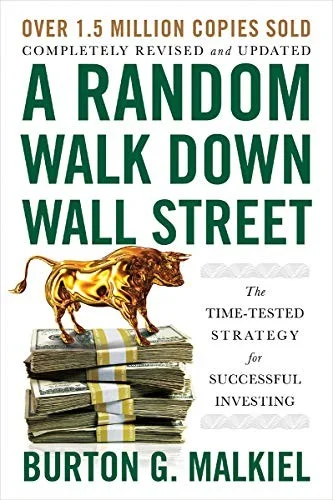
A Random Walk Down Wall Street is an investing classic by Princeton economist Burton Malkiel that argues stock prices move in unpredictable patterns, making it nearly impossible to consistently beat the market through active trading. It makes the case for passive index investing as the most rational strategy for building long-term wealth.
About the author
Burton Gordon Malkiel is the Chemical Bank Chairman’s Professor of Economics Emeritus at Princeton University. Before academia, he served on the Council of Economic Advisers under President Ford and as a director of the Vanguard Group for nearly 30 years. His first-hand experience on Wall Street gave him the credibility to challenge the industry from the inside. The first edition was published in 1973 and has sold over 1.5 million copies worldwide. Explore all Burton Malkiel book summaries →
Key concepts at a glance
| Concept | What it means | Use it when |
|---|---|---|
| Random Walk Theory | Stock prices move unpredictably; past movements do not indicate future direction | Tempted to trade based on chart patterns |
| Efficient Market Hypothesis | Prices already reflect all publicly available information | Wondering if you can find undervalued stocks |
| Castle-in-the-Air Theory | Investors buy based on crowd psychology, not intrinsic value | Understanding why bubbles form |
| Firm-Foundation Theory | Every asset has an intrinsic value based on fundamentals | Evaluating whether a stock is fairly priced |
| Dollar-Cost Averaging | Investing the same amount at regular intervals | Building a portfolio without timing the market |
| Life-Cycle Investing | Adjusting allocation based on age and risk capacity | Deciding how much to hold in stocks vs bonds |
| Rebalancing | Periodically returning to your target asset mix | Your portfolio has drifted from target |
Part 1 — Bubbles, manias, and the madness of crowds
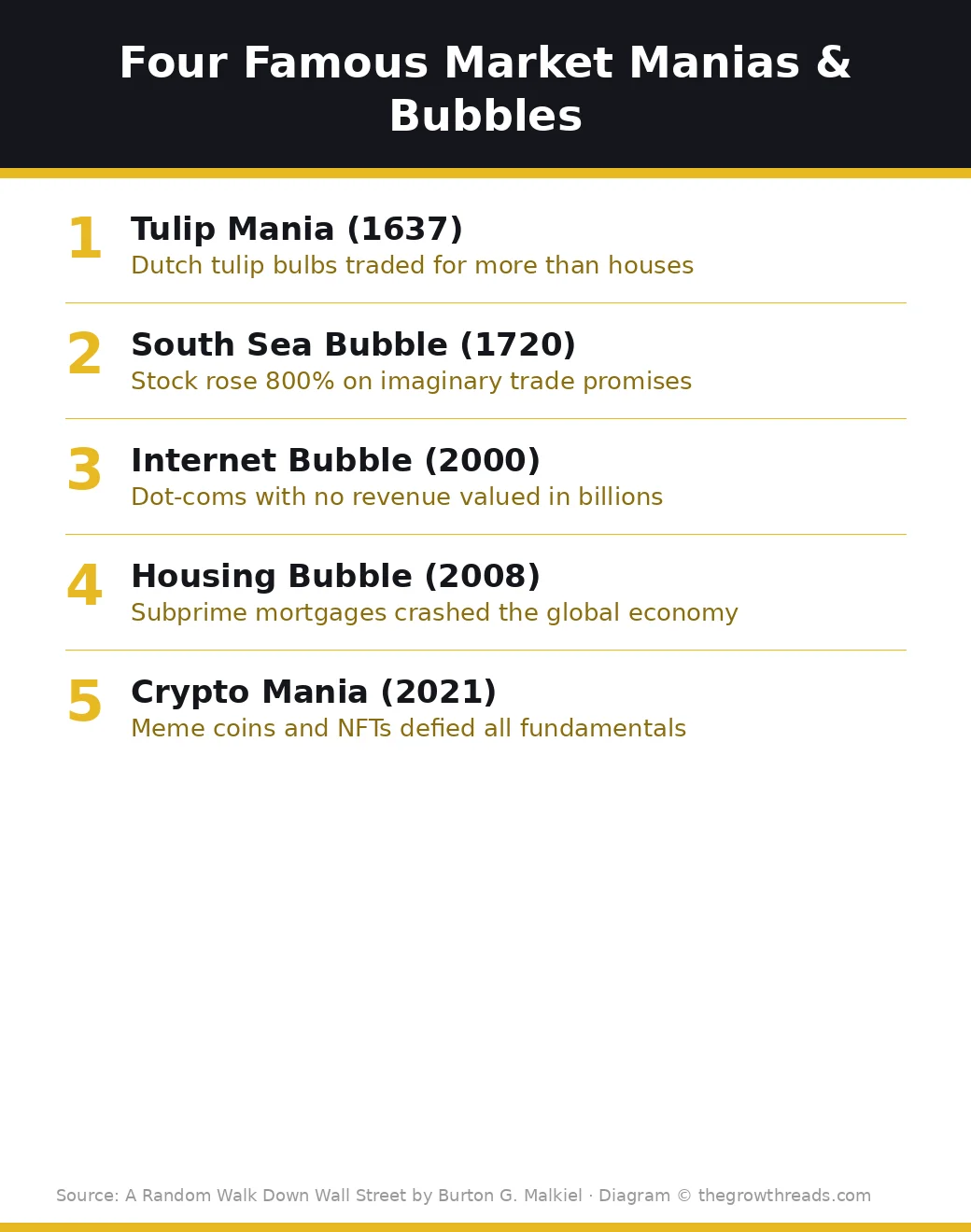
Malkiel opens with a historical tour of speculative bubbles, from the Dutch tulip mania of 1637 to the dot-com crash of 2000. His purpose is not merely entertainment — he uses each episode to demonstrate that investors are systematically irrational. Tulip bulbs traded for more than the price of houses. South Sea Company stock rose 800% on promises of imaginary trade routes. In the late 1990s, companies with no revenue commanded billion-dollar valuations simply because they had a dot-com name.
The pattern is always the same: genuine innovation creates real excitement, early investors profit, latecomers pile in from fear of missing out, prices detach from rational valuation, and the bubble bursts. Malkiel argues these episodes are a permanent feature of markets. Understanding them will not help you predict the next bubble, but it can prevent you from getting swept up in one.
Part 2 — Why stock pickers and chart readers lose
The heart of the book is Malkiel’s systematic demolition of two dominant investing schools: technical analysis (reading charts) and fundamental analysis (studying financial statements). He presents decades of academic evidence showing that neither consistently beats a simple index over the long run.
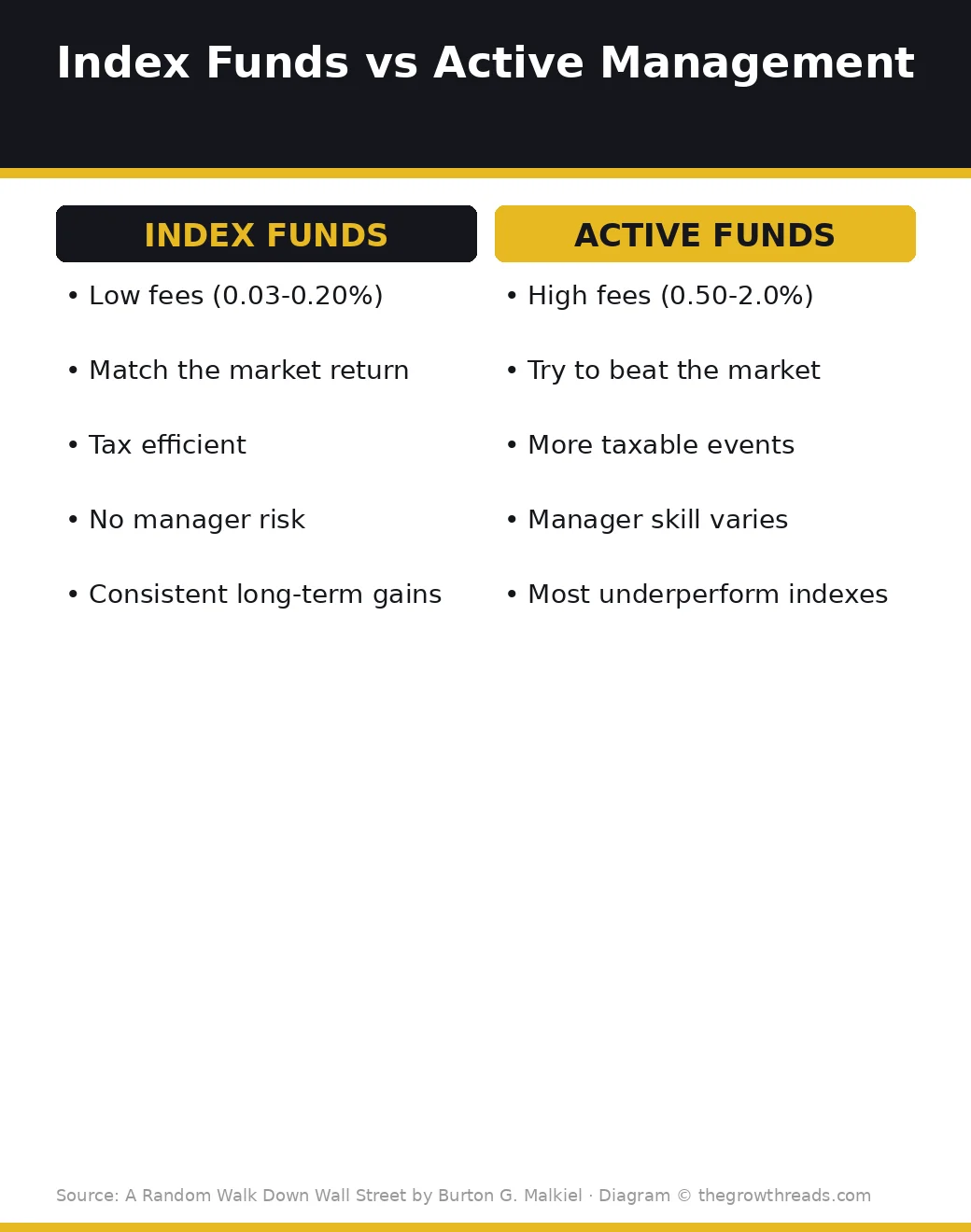
Technical analysts believe patterns in past prices predict future prices. Malkiel cites study after study showing stock prices follow a random walk — yesterday’s movement tells you nothing useful about tomorrow’s. Fundamental analysts fare slightly better in theory, but Malkiel argues that for every Buffett, thousands of professionals consistently underperform. After fees, taxes, and trading costs, roughly 90% of actively managed mutual funds underperform their benchmark over a 20-year period.
Part 3 — Behavioral finance and the emotions that cost you money
Malkiel dedicates a substantial section to behavioral finance. He covers overconfidence (most investors believe they are above average), loss aversion (losses hurt twice as much as gains feel good), herd behavior, and anchoring (fixating on the price you paid). Even if you intellectually understand index funds are rational, your brain is wired to do the opposite — sell when markets crash and buy when they soar.
His answer: build a system. Automatic contributions, automatic rebalancing, minimal portfolio checking. The system protects you from your own worst instincts.
Part 4 — The practical playbook: how to actually invest
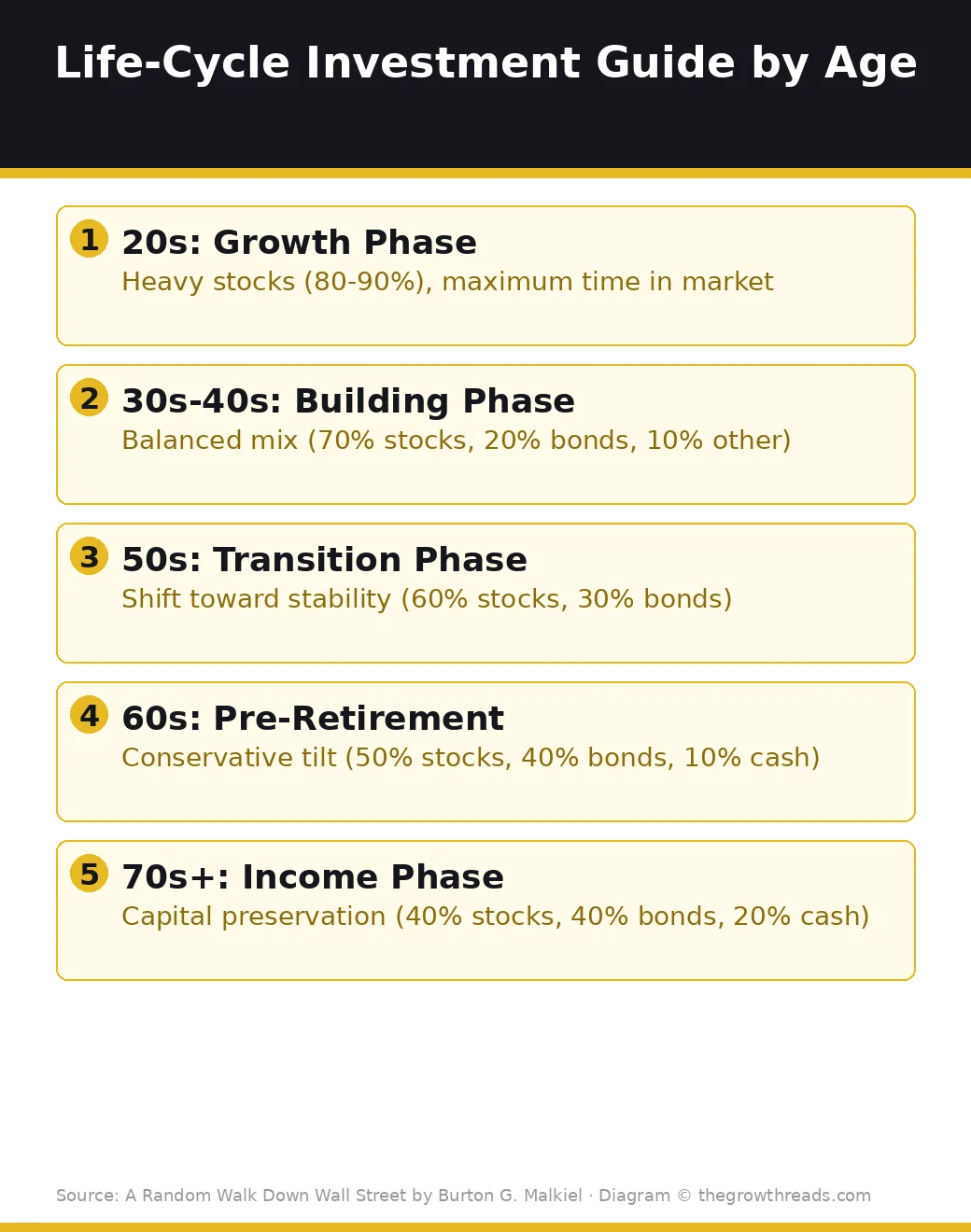
Malkiel’s concrete strategy rests on four pillars. First, build a portfolio of broad-market index funds — total U.S. stock market, international stock, and bond index. Second, set your allocation based on age, shifting from stocks toward bonds as you approach retirement. Third, dollar-cost average by investing consistently. Fourth, rebalance annually.
He provides specific recommendations: a person in their twenties should hold 80-90% stocks; someone in their sixties should hold about 50% stocks with more bonds and cash. The exact percentages matter less than having a plan and sticking to it through market cycles.
Who is A Random Walk Down Wall Street best for — and who should read something else first?
This book is perfect for anyone who wants a rigorous, evidence-based investing foundation. If you are new and overwhelmed by conflicting advice, Malkiel gives you the clearest signal: buy index funds. If you already invest actively, it will challenge you to evaluate whether your returns justify your fees. For a shorter, more conversational version of the same thesis, start with The Simple Path to Wealth by JL Collins.
Questions to reflect on
- What percentage of your invested assets are in low-cost index funds, and what total annual fee are you paying?
- When did you last make a trade based on emotion — fear, greed, or a hot tip — and what was the outcome?
- Does your current asset allocation match your age and risk tolerance?
- If you have an active fund manager, have you compared their after-fee returns to a comparable index over 10 years?
- What system do you have to prevent panic-selling during the next market crash?
Ready to stop guessing and start investing rationally?
Get the investing classic that has converted millions of stock pickers into index fund believers.
How to apply A Random Walk Down Wall Street (7-day plan)
- Day 1 — Calculate your real costs: Log in to every investment account. Write down expense ratios and advisory fees for each. Add them up.
- Day 2 — Set your target allocation: Based on age and risk tolerance, decide your stocks/bonds/cash split. Write it down as your Investment Policy Statement.
- Day 3 — Research three index funds: Look up a total U.S. stock market, total international, and bond index fund. Pick the cheapest in each category.
- Day 4 — Set up automatic contributions: Configure your brokerage to auto-invest a fixed monthly amount into your chosen index funds.
- Day 5 — Audit your active funds: Compare each actively managed fund’s 10-year after-fee return to its benchmark index. Plan your exit from underperformers.
- Day 6 — Schedule annual rebalancing: Set a calendar reminder to check your portfolio against target allocation once per year and rebalance if any category drifts more than 5%.
- Day 7 — Delete the noise: Unsubscribe from stock-picking newsletters, mute financial news alerts, and remove trading apps from your phone home screen.
Frequently asked questions
Is A Random Walk Down Wall Street still relevant in 2026?
More relevant than ever. The core thesis — that most active managers fail to beat index funds after fees — has only grown stronger with each decade. The thirteenth edition incorporates data on cryptocurrency, meme stocks, and zero-commission trading. Every major trend since 1973 has reinforced Malkiel’s argument because it is based on economic logic and empirical data rather than market fads.
What is the random walk theory in simple terms?
Stock price changes are unpredictable from day to day — like a person taking random steps in random directions. Looking at past prices or chart patterns cannot reliably predict where a stock will go next. In practical terms, nobody can consistently time the market, which is why a buy-and-hold index fund strategy tends to outperform active trading over the long run.
Does Malkiel say you should never buy individual stocks?
Not exactly. He acknowledges some people enjoy stock picking and does not say beating the market is impossible. What he says is that for most people most of the time, the odds are heavily against them. If you want to pick stocks, limit it to 5-10% of your portfolio and treat it as entertainment money. The core of your wealth-building should be in diversified index funds.
What is the best strategy according to A Random Walk Down Wall Street?
Buy broad-market, low-cost index funds covering U.S. stocks, international stocks, and bonds. Set your allocation based on age — heavier on stocks when young, shifting to bonds approaching retirement. Dollar-cost average by investing fixed amounts at regular intervals. Rebalance annually. This captures market returns, minimizes fees, and removes emotional decision-making.
How is this different from The Intelligent Investor?
Benjamin Graham’s The Intelligent Investor teaches value investing — finding stocks trading below intrinsic worth. Malkiel argues this approach rarely works in practice because the market is too efficient. The Intelligent Investor is the bible of stock picking; A Random Walk is the case against stock picking. Both are classics pointing in opposite directions. Malkiel’s data-driven case for indexing has a stronger empirical track record over time.
Is this book good for beginners?
Yes, with one caveat: at 432 pages and heavily academic in places, it can feel dense for a complete beginner. For a gentler entry point, start with I Will Teach You to Be Rich or The Simple Path to Wealth, then return to Malkiel for the deeper evidence and academic foundation.
Does A Random Walk Down Wall Street cover cryptocurrency?
The latest editions address cryptocurrency directly. Malkiel treats Bitcoin and other digital assets as the newest chapter in a long history of speculative manias. He acknowledges blockchain technology may have real value but warns cryptocurrency prices exhibit the same bubble patterns he documents throughout the book. He suggests treating crypto, if at all, as a tiny speculative allocation rather than a core portfolio holding.
Related summaries
- The Simple Path to Wealth Summary — JL Collins on the simplest investing strategy
- The Psychology of Money Summary — Morgan Housel on why behavior matters more than knowledge
- The Intelligent Investor Summary — Benjamin Graham on value investing
- Best Money Books — Our complete ranked guide