
Money
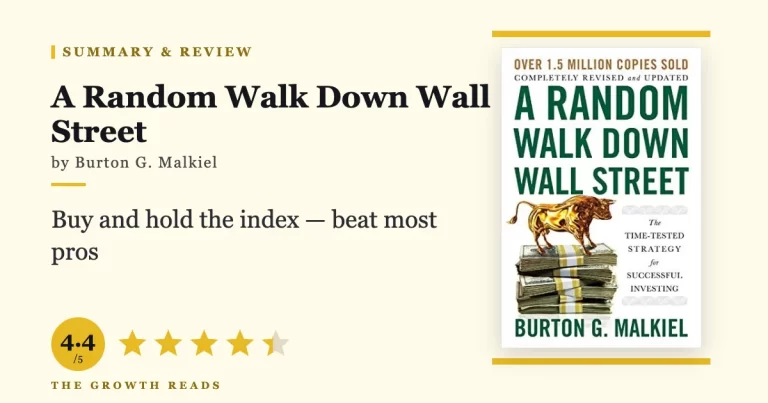
A Random Walk Down Wall Street Summary & Review: The Evidence-Based Case for Index Investing
Deep summary and review of A Random Walk Down Wall Street by Burton G. Malkiel.
Read Summary →"Put time on your side. Start saving early and save regularly. Live modestly and don't touch the money that's been set aside."
Burton Malkiel is an economist and Princeton professor emeritus whose 1973 book A Random Walk Down Wall Street became one of the best-selling investing books of all time. Drawing on efficient-market theory, Malkiel argues that consistently beating the market through stock-picking or timing is nearly impossible for professionals and amateurs alike, making low-cost index investing the most reliable path to long-term wealth.
Our in-depth summaries and reviews of his work
Deep summary and review of A Random Walk Down Wall Street by Burton G. Malkiel.
Read Summary →Malkiel's efficient-market argument holds that stock prices already reflect available information, meaning few professional investors consistently outperform a simple market index over the long run.
Starting early and saving regularly compounds far more reliably than trying to predict short-term market swings — the discipline of consistent saving matters more than any individual stock pick.
Malkiel warns that the real danger to investors isn't slow, steady growth — it's the temptation to chase quick riches through speculation, which reliably erodes wealth built over years.
"It is not hard to make money in the market. What is hard to avoid is the alluring temptation to throw your money away on short, get-rich-quick speculative binges. It is an obvious lesson, but one frequently ignored."— A Random Walk Down Wall Street
"Put time on your side. Start saving early and save regularly. Live modestly and don't touch the money that's been set aside."— A Random Walk Down Wall Street
"I view investing as a method of purchasing assets to gain profit in the form of reasonably predictable income (dividends, interest, or rentals) and/or appreciation over the long term."— A Random Walk Down Wall Street
"There are four factors that create irrational market behavior: overconfidence, biased judgments, herd mentality, and loss aversion."— A Random Walk Down Wall Street
Deep summary and review of A Random Walk Down Wall Street by Burton G. Malkiel.