

★★★★★ (4.7/5) — Robert Sapolsky turns dense endocrinology into a genuinely enjoyable read, and cracks open exactly why worry can be as damaging to your body as an actual predator.
Best for: Anyone who wants to understand the real biology behind their stress symptoms instead of just being told to “relax.”
Reading time: ~14 min summary (book: ~14–16 hrs)
Difficulty to apply: Moderate — the science is dense, but the coping principles are simple
Why Zebras Don’t Get Ulcers in one minute
A zebra’s stress response is a small masterpiece of engineering: it switches on hard during a chase and switches off the moment the lion is gone. Humans carry almost the exact same biological hardware, but we fire it for very different reasons — a tense email, a mortgage payment, an argument we replay at 2 a.m. Robert Sapolsky, a Stanford neuroscientist who spent decades studying wild baboons in Kenya, shows that the stress response evolved to handle short physical emergencies, not years of psychological worry. When that response stays switched on, it slowly rewires the cardiovascular system, the gut, the immune system, and the brain. That chronic activation — not the stressor itself — is what quietly makes us sick.
Key takeaways
- Stress is supposed to be temporary: it’s a burst of cortisol and adrenaline built to help you survive an acute physical crisis, then shut back off.
- Chronic activation is the real damage: the stress response itself isn’t the problem — leaving it switched on for months or years is.
- Humans stress about things that aren’t happening: we’re the only animal that can turn a memory or an anticipated event into a full physiological stress response.
- Cortisol reprioritizes the body: it raises blood pressure and blood sugar while suppressing digestion, immunity, growth, and reproduction — useful for a minute, costly for a decade.
- Stress rarely causes disease directly: it makes the body more vulnerable to disease processes that are already underway.
- Psychology determines the damage: how much a stressor hurts you depends more on how you interpret it than on how objectively severe it is.
- Five levers control the impact: control, predictability, outlets for frustration, social support, and whether things feel like they’re improving or worsening.
- The hippocampus takes the hit: chronic glucocorticoid exposure impairs the brain region most responsible for memory and mood regulation.
- Exercise is stress “used correctly”: it completes the physical stress-response loop the body evolved for, which is why it reliably lowers chronic stress.
- You can’t remove stress, but you can change its power: reframing, control, and connection all measurably change how much a stressor costs your body.
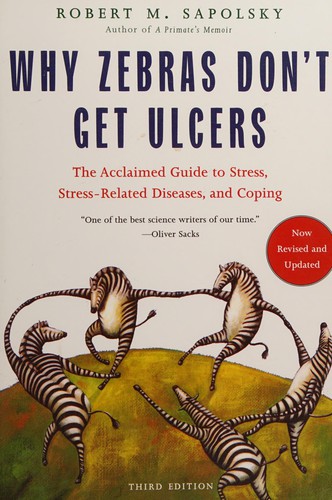
What is Why Zebras Don’t Get Ulcers about?
Why Zebras Don’t Get Ulcers is Stanford neuroscientist Robert Sapolsky’s guide to the biology of stress: why a system built for zebras outrunning lions backfires when humans aim it at psychological worry instead, and how that mismatch drives heart disease, ulcers, immune dysfunction, depression, and faster aging.
About the author
Robert M. Sapolsky is a professor of biology, neurology, and neurosurgery at Stanford University and a long-time research associate with the Institute of Primate Research at Kenya’s National Museum. For more than three decades he split his year between a Stanford lab and the Serengeti, where he tracked a troop of wild baboons to study how social rank and chronic stress shape long-term health — fieldwork that anchors much of this book. He’s also the author of Behave, A Primate’s Memoir, and Determined, and holds a MacArthur “genius” grant for his work bridging neuroscience and endocrinology. Sapolsky is known for making dense science genuinely readable, mixing rigorous research with self-deprecating humor from a scientist who, by his own admission, often finds baboons easier to understand than people. Explore all Robert Sapolsky book summaries →
Key concepts at a glance
| Concept | What it means | Use it when |
|---|---|---|
| Acute stress | A short, real physical threat that triggers and then resolves the stress response | You need a genuine burst of focus or energy for an immediate challenge |
| Chronic stress | The stress response stays switched on for weeks, months, or years | You notice you’re “stressed” about things that aren’t actually happening right now |
| Glucocorticoids (cortisol) | Stress hormones that mobilize energy but suppress long-term body maintenance | Explaining why constant stress leaves you tired, sick, or foggy |
| Allostatic load | The cumulative wear on the body from repeated stress-response activation | Understanding why years of low-grade stress add up to real disease risk |
| Sense of control | Believing you can influence a stressor reduces its physiological cost | Redesigning a stressful situation to include one small, real choice |
| Predictability | Knowing when and how a stressor will happen softens its impact | Reducing anxiety around recurring stressors like bills or appointments |
| Outlets for frustration | Physical or emotional release channels that drain stress hormones | You feel keyed up with nowhere for that energy to go |
| Social support | Trusted relationships that measurably buffer the body’s stress response | Facing a hard period alone versus with people who genuinely have your back |
Part 1: What Stress Really Is
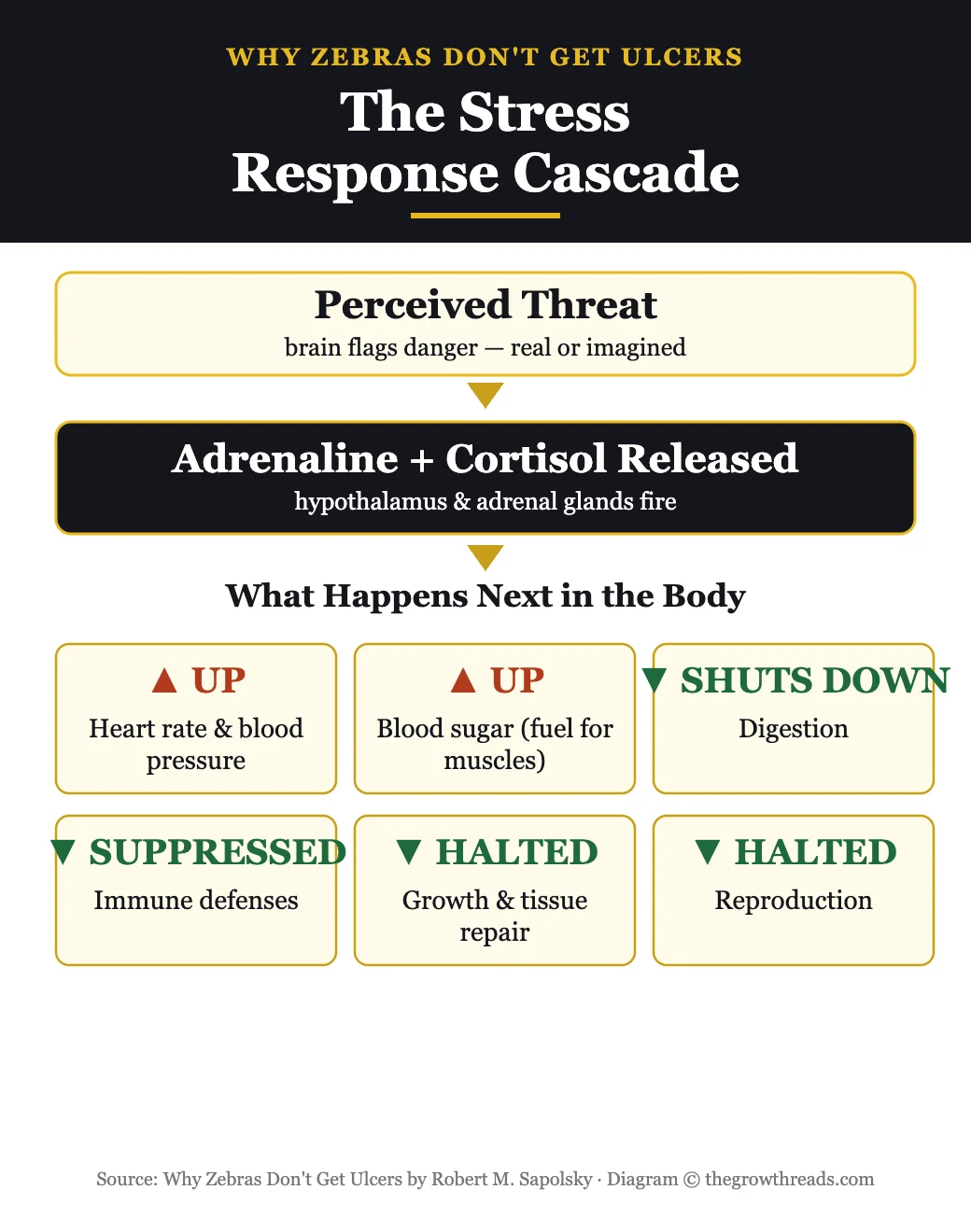
Sapolsky starts where the title does: a zebra, a lion, and a chase. For those ninety seconds, the zebra’s body does something remarkable. The hypothalamus signals the adrenal glands, which flood the bloodstream with adrenaline and, seconds later, cortisol. Heart rate spikes. Blood pressure rises. Stored fat and sugar pour into the bloodstream as usable fuel. Blood is diverted away from the gut and skin and toward the large muscles that need to run. This is the sympathetic nervous system and the HPA axis (hypothalamus–pituitary–adrenal axis) doing exactly what millions of years of evolution built them to do: turn a resting body into a sprinting one, instantly.
The elegant part isn’t the activation — it’s the shutoff. Once the lion gives up or the zebra escapes, cortisol levels fall, the parasympathetic nervous system takes back over, and the body returns to baseline within minutes. The zebra doesn’t lie awake replaying the chase. It doesn’t worry about next week’s lion. The stress response did its job and switched off.
Humans have the identical machinery, and that’s precisely the problem this book spends 500-plus pages unpacking. We are cognitively sophisticated enough to trigger the same cascade — elevated cortisol, redirected blood flow, suppressed digestion — from a memory, a prediction, or a status anxiety that has no physical component at all. Sapolsky’s central, almost uncomfortable point is that this is a uniquely human failure mode: we’re the only species that can turn an abstraction into a physiological emergency.
Sapolsky didn’t arrive at this from a lab alone. For roughly three decades he tracked a single troop of wild baboons in Kenya, drawing blood samples to measure stress hormones under real social conditions. That fieldwork produced one of the book’s most quoted findings: an individual baboon’s cortisol levels tracked its social rank and, more precisely, how much control and predictability it had within the troop — low-ranking males with no stable allies showed chronically elevated stress hormones even when nothing acutely dangerous was happening. It’s a primate-level preview of the human findings that fill the rest of the book.
TGR Note: If Sapolsky’s focus is the biology of stress, The Body Keeps the Score picks up almost exactly where this leaves off — showing what happens when the stress isn’t a lion or a deadline, but trauma the body never fully discharges. Reading them back to back gives you both the mechanism and the healing path.
Part 2: How Chronic Stress Breaks the Body
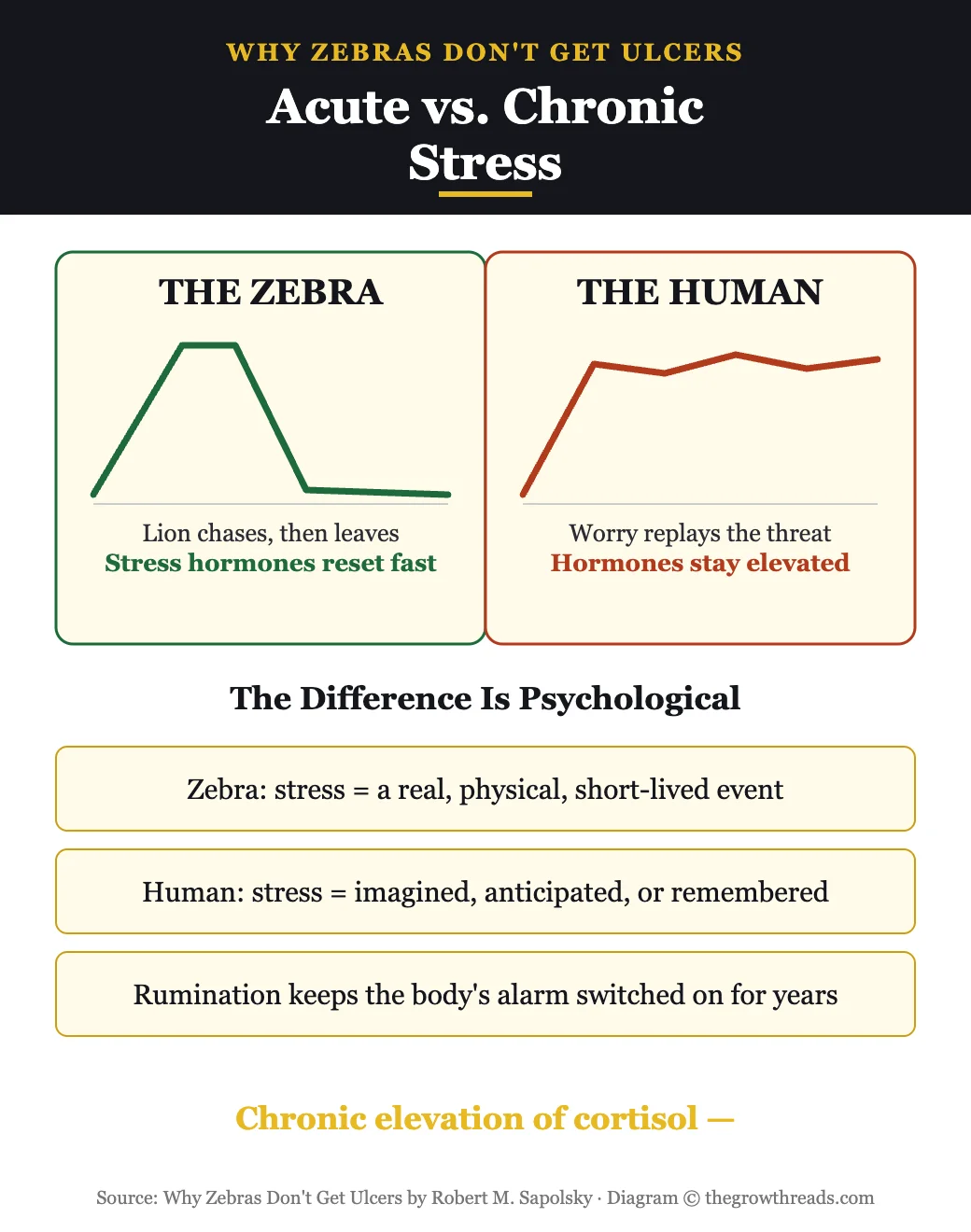
The bulk of the book walks through body system after body system, and the pattern repeats: everything the stress response temporarily boosts or suppresses becomes a liability when the “temporary” stretches into months or years.
Cardiovascular system: the acute stress response raises blood pressure to move blood to the muscles faster. Repeated over years, that repeated pressure spike damages artery walls, accelerates plaque buildup, and is one of the more well-established links between chronic stress and heart disease.
Digestion: stress diverts blood away from the gut, which is fine for a few minutes and disruptive for a lifestyle. Sapolsky details how chronic stress alters gut motility, worsens conditions like irritable bowel syndrome, and — despite the book’s title — can absolutely contribute to ulcer risk by increasing susceptibility even though the direct H. pylori mechanism was the bigger discovery of the 1980s.
Metabolism: cortisol tells the body to mobilize stored energy and, over time, to store more of it centrally (visceral fat) in anticipation of future emergencies. Chronically elevated cortisol is tied to insulin resistance, making chronic stress a genuine — if underappreciated — contributor to metabolic disease.
Immune function: a short burst of cortisol actually sharpens certain immune responses. Sustained cortisol does the opposite, suppressing immune surveillance and slowing wound healing, which is part of why chronically stressed people report getting sick more often and recovering more slowly.
Growth and reproduction: both are expensive, long-horizon biological investments, and the stress response treats them as expendable. Chronic stress can suppress growth hormone in children and disrupt reproductive hormone cycles in adults — the body’s blunt logic being that a crisis is the wrong time to grow or reproduce.
Pain perception: acute stress can actually blunt pain — a useful adaptation if you’re a zebra that needs to keep running despite an injury. Chronic stress does the opposite over time, and Sapolsky links sustained cortisol exposure to heightened pain sensitivity and slower recovery, one more example of a short-term adaptation turning into a long-term cost.
TGR Note: This system-by-system damage is exactly why Sapolsky’s research keeps showing up in longevity science. If this section resonates, Outlive makes the connection explicit — building a long-term health strategy that treats chronic stress reduction as seriously as diet and exercise.
Part 3: Stress and the Mind
The most striking chapters, for many readers, aren’t about the heart or the gut — they’re about the brain. The hippocampus, the structure most responsible for forming new memories and helping regulate mood, is dense with cortisol receptors, which makes it unusually sensitive to chronic stress. Sapolsky’s own research documented measurable hippocampal changes in chronically stressed animals, and he connects this to human findings on memory problems, brain fog, and mood disorders under sustained stress.
He’s careful and precise about depression: it isn’t simply “too much stress,” but chronic stress is a well-documented risk amplifier, partly through its effects on the same neurochemical systems that mood-regulating medications target. The same logic extends to anxiety, where a nervous system primed by chronic cortisol exposure becomes more reactive to future stressors — a genuinely vicious cycle, since anxiety about stress is itself a stressor.
Sleep gets its own careful treatment, since it’s both a casualty of chronic stress and one of the fastest ways stress compounds itself: elevated cortisol disrupts sleep architecture, and poor sleep in turn blunts the body’s ability to regulate cortisol the next day.
Sapolsky also addresses aging directly. Chronic stress appears to accelerate several biological aging markers, likely through the same sustained cortisol exposure that damages the cardiovascular and immune systems elsewhere in the book — a thread that ties the whole book together: stress isn’t a single disease, it’s a multiplier on nearly every disease process the body can have.
There’s also a cognitive angle that’s easy to miss: chronic stress doesn’t just affect mood, it changes how you think. Sustained cortisol exposure shifts decision-making away from the more deliberate, planning-oriented prefrontal cortex and toward faster, more reactive circuits better suited to physical emergencies than nuanced choices. That’s a plausible biological explanation for why people under chronic stress often report feeling less patient, more impulsive, and worse at exactly the kind of long-term thinking that would help them manage the stress in the first place.
TGR Note: Since sleep and stress feed each other so directly, Why We Sleep is the natural companion here — and if you want a different lens on finding meaning through hard periods rather than just managing their biology, Man’s Search for Meaning pairs surprisingly well with this section.
Part 4: What Actually Reduces Stress
The final section is where the book turns from diagnosis to intervention, and Sapolsky is refreshingly honest that most popular stress-relief advice is either unproven or wildly oversold. What actually holds up across decades of research are a handful of psychological factors that change how much a given stressor costs the body — regardless of the stressor itself.
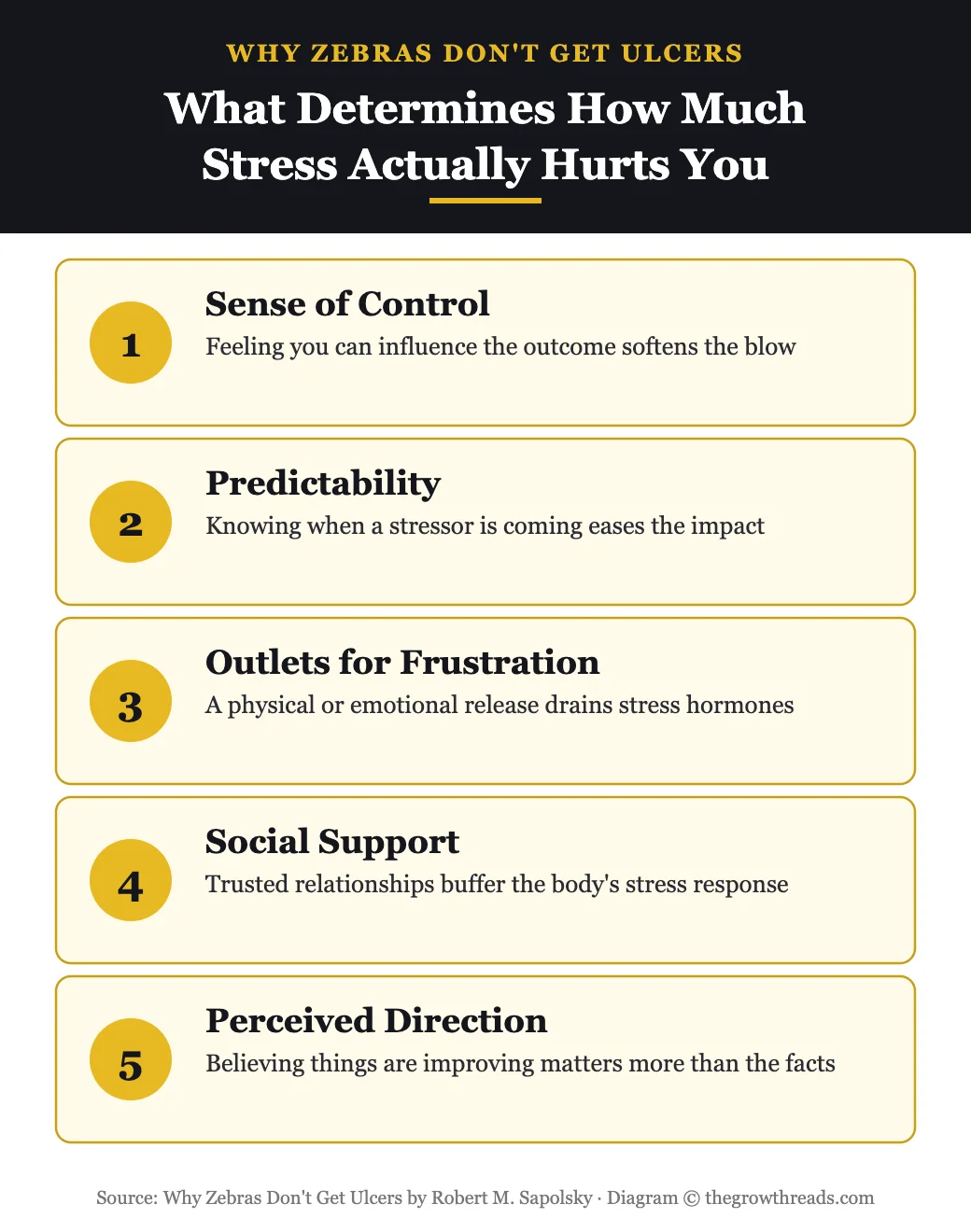
Beyond those five levers, Sapolsky is unusually direct about what actually works day to day: regular aerobic exercise, because it lets the body complete the physical stress cycle it evolved for; strong social bonds, which show up again and again in stress research as one of the most powerful buffers available; and any practice — meditation, structured relaxation, even simple routine — that increases a felt sense of predictability and control over daily life. None of this is exotic. What makes the chapter valuable is that it explains, mechanistically, why these ordinary habits work rather than just asserting that they do.
One of the book’s more sobering arguments is that the five psychological levers aren’t evenly distributed. Sapolsky connects his baboon research on rank and stress hormones directly to human socioeconomic status: lower control over one’s schedule, less predictability in income or housing, fewer outlets, and thinner social safety nets all compound, which is part of why chronic stress and its downstream diseases track so closely with socioeconomic inequality. It’s a reminder that “just reduce your stress” is easier advice to give than to follow, and that some of the most effective interventions are structural, not just personal.
TGR Note: If you want a technique-first way to put the exercise and control principles into practice immediately, Breath is a good next step. For building any of these into a lasting daily practice, The Power of Habit is the natural follow-up.
Who is Why Zebras Don’t Get Ulcers best for — and who should read something else first?
This book is best for readers who want the “why” before the “what to do” — people who find behavior change easier once they understand the mechanism underneath it. It rewards patience with dense physiology in exchange for a genuinely durable mental model of stress.
If you’re dealing specifically with trauma rather than everyday chronic stress, start with The Body Keeps the Score instead. If sleep is your primary issue, Why We Sleep goes deeper on that single system. And if you want practical techniques before the underlying science, Breath is a faster, more applied entry point.
Questions to reflect on
- What is something you’re “stressed” about right now that isn’t actually happening in this moment?
- Which of the five psychological levers — control, predictability, outlets, social support, perceived trend — is weakest for you right now?
- Where in your body do you first notice stress showing up?
- What’s one real physical or emotional outlet you could build into this week?
- If a trusted friend described your current stress load, would they call it acute or chronic?
🔥 Ready to understand your own stress response?
Grab a copy of Why Zebras Don’t Get Ulcers and see your body’s stress signals differently for good.
How to apply Why Zebras Don’t Get Ulcers (7-day plan)
- Day 1 — Name your stressors: List every current source of stress and mark each “acute” (real, present, physical) or “chronic” (worry, anticipation, rumination).
- Day 2 — Add one point of control: Pick one recurring chronic stressor and find a single small, real choice you can make inside it.
- Day 3 — Build predictability: Put a fixed time on your calendar for one thing you keep dreading unpredictably — bills, a hard conversation, a workout.
- Day 4 — Create a physical outlet: Schedule 20 minutes of movement today, specifically to burn off stress hormones your body has already produced.
- Day 5 — Reach out: Call or message one person in your support network — not to solve anything, just to connect.
- Day 6 — Catch the rumination: Notice one moment your mind replays a past event or rehearses a future one, and gently redirect to the present.
- Day 7 — Review your allostatic load: Look back at the week and note which stressors you can reduce, reframe, or simply stop carrying.
Frequently asked questions
Is Why Zebras Don’t Get Ulcers hard to read?
It’s denser than a typical pop-science bestseller, since Sapolsky doesn’t shy away from real endocrinology and neuroscience. That said, his writing style is famously conversational and often funny, which makes the science go down more easily than the subject matter suggests. Readers who want a lighter, more anecdote-driven take on stress may want to start with a shorter, more applied book first, but anyone willing to slow down for the science sections will find it genuinely rewarding and well worth the effort.
Is the science still accurate, given the book’s age?
The third edition (2004) updated the original 1994 text, and the core physiology — the HPA axis, cortisol’s effects, and the acute-versus-chronic stress distinction — remains well-supported by current research. Some specific findings, like early gut-microbiome connections, have been extended by newer studies the book couldn’t have covered, and a few statistics have been refined since publication. The foundational framework, however, is still the standard reference point that later stress research builds on.
Does the book offer practical solutions, or is it just biology?
It’s roughly 80% mechanism and 20% application, and that ratio is intentional — Sapolsky’s argument is that understanding why stress management techniques work makes you more likely to actually use them. The final section does cover concrete levers: control, predictability, outlets for frustration, social support, and exercise, all explained through the same physiological lens used throughout the book rather than as a generic self-help list.
Who is Robert Sapolsky?
Robert Sapolsky is a Stanford professor of biology and neurology who spent over three decades studying wild baboon troops in Kenya to understand how social stress and rank affect long-term health. He’s also the author of Behave, A Primate’s Memoir, and Determined, and holds a MacArthur “genius” grant. His combination of rigorous field research and approachable writing has made him one of the most widely read voices connecting neuroscience to everyday life.
How is this different from Why We Sleep or The Body Keeps the Score?
Why We Sleep focuses specifically on sleep physiology, using stress as one contributing factor rather than the central subject. The Body Keeps the Score focuses on trauma and its lasting imprint on the nervous system. Why Zebras Don’t Get Ulcers is broader: it’s the general biology of everyday chronic stress across nearly every body system, making it a useful foundation before narrowing into either of those more specialized books.
Can stress really cause disease, or does it just feel that way?
Sapolsky is careful on this point: stress rarely causes disease outright. Instead, it makes the body more vulnerable to disease processes that are already present or developing — weakening immune defenses, raising blood pressure, and disrupting metabolic regulation. That’s a meaningful distinction: managing stress won’t guarantee protection from illness, but the research is clear that chronic stress measurably raises risk across cardiovascular, metabolic, and immune conditions. This is general health information, not medical advice for a specific condition.
What’s one practical takeaway from the book?
If you take just one idea from the book, make it this: your stress response cares about how you interpret a situation as much as what actually happens. Adding even a small amount of control or predictability to a stressful situation measurably changes its physiological cost. Practically, that means restructuring a recurring stressor — a dreaded meeting, a bill, a hard conversation — so it happens at a predictable time and includes one small choice you actually control.
Related summaries
- The Body Keeps the Score — how trauma reshapes the brain and body, a natural next read
- Why We Sleep — the other half of the stress-recovery equation
- Breath — a practical, technique-first companion to Sapolsky’s biology
- Outlive — for the long-game view of stress and longevity
See all our best health books →
How we analyze books: Every TGR summary is built from a full read of the book, cross-checked against the author’s interviews and published research, then structured into a practical, apply-it-this-week format. Read our full methodology.