

★★★★☆ 4.2 / 5
One-liner: A cardiologist’s provocative case that modern wheat — not fat — is the root cause of America’s obesity and chronic disease epidemic.
Best for: Anyone struggling with stubborn belly fat, blood sugar issues, or unexplained inflammation who wants a science-backed dietary reset.
Reading time: ~6 hours (292 pages)
Difficulty to apply: Moderate — requires a significant dietary overhaul, but the rules are clear and the results come quickly.
Wheat Belly in one minute
The wheat you eat today is nothing like the wheat your grandparents grew up on. William Davis, a preventive cardiologist, argues that modern dwarf wheat — genetically altered through decades of hybridization — contains a unique starch called amylopectin A that spikes blood sugar higher than table sugar. This triggers a cascade of insulin resistance, visceral fat accumulation (the signature “wheat belly”), brain fog, joint pain, and chronic inflammation. Davis presents clinical evidence from thousands of patients who reversed diabetes, lost dramatic weight, and eliminated autoimmune symptoms simply by removing all wheat from their diets. The solution is straightforward: eliminate wheat entirely, replace it with whole vegetables, healthy fats, nuts, meats, and limited fruit, and watch your body recalibrate within weeks.
Key takeaways
- Modern wheat is not ancient wheat: Today’s dwarf wheat was created through aggressive hybridization in the 1960s–70s and contains novel proteins never tested for human safety.
- Amylopectin A is the hidden culprit: This wheat-specific starch is more efficiently converted to blood sugar than virtually any other carbohydrate, including table sugar.
- Wheat is addictive: Gluten-derived exorphins bind to opiate receptors in the brain, creating appetite stimulation and mild euphoria followed by withdrawal cravings.
- Visceral fat is uniquely dangerous: The “wheat belly” is not just cosmetically unpleasant — it produces inflammatory signals linked to heart disease, diabetes, and cancer.
- Small LDL particles are the real risk: Wheat consumption drives the formation of small, dense LDL particles, which are far more atherogenic than large, buoyant LDL.
- Wheat accelerates aging: Advanced Glycation End-products (AGEs) generated by high blood sugar from wheat consumption speed up aging of skin, joints, and organs.
- Going wheat-free is not the same as gluten-free: Many commercial gluten-free products substitute cornstarch, rice starch, or tapioca starch, which spike blood sugar almost as much.
- The withdrawal period is real but temporary: Most people experience fatigue, brain fog, and irritability for 2–5 days as exorphin effects fade, then feel dramatically better.
- Weight loss is often rapid and dramatic: Davis reports patients losing 26–30 pounds in the first few months without calorie counting or portion restriction.
- Benefits extend far beyond weight: Patients report relief from acid reflux, IBS, rheumatoid arthritis, skin rashes, migraines, depression, and peripheral neuropathy.
What is Wheat Belly about?
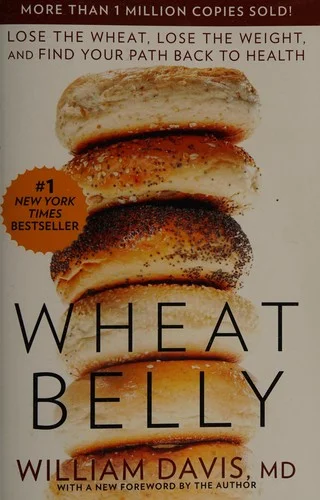
Wheat Belly is a health book by cardiologist William Davis that argues modern genetically modified dwarf wheat is the single largest contributor to obesity, diabetes, heart disease, and a wide range of chronic conditions. Davis presents clinical evidence that eliminating wheat reverses these conditions more effectively than any medication, and provides a practical guide to living wheat-free.
About the author
William Davis, MD, is a preventive cardiologist based in Milwaukee, Wisconsin who became frustrated watching patients follow conventional dietary advice — low fat, plenty of whole grains — and get progressively sicker. After accidentally discovering that removing wheat from his own diet and his patients’ diets produced dramatic health improvements, he spent years documenting the results. His clinical practice focused on reversing heart disease without medication or surgery. Wheat Belly, published in 2011, became a #1 New York Times bestseller that spent over 100 weeks on the bestseller list and sparked a national conversation about wheat’s role in modern disease. Davis has since written several follow-up books including Wheat Belly Total Health and Super Gut. Explore all William Davis book summaries →
Key concepts at a glance
| Concept | What it means | Use it when |
|---|---|---|
| Amylopectin A | A wheat-specific super starch that spikes blood sugar higher than sucrose | You want to understand why wheat is worse than other carbs |
| Exorphins | Opiate-like peptides from gluten digestion that stimulate appetite | You struggle with constant hunger and wheat cravings |
| Visceral fat | Deep belly fat that acts as an inflammatory organ producing cytokines | You carry weight around your midsection despite exercising |
| Small dense LDL | Dangerous tiny cholesterol particles triggered by high-glycemic foods | Your doctor says your cholesterol is high but you eat low fat |
| AGEs | Advanced Glycation End-products that accelerate tissue aging | You want to understand the wheat-aging connection |
| Gliadin protein | Wheat protein that increases intestinal permeability (leaky gut) | You have unexplained autoimmune or digestive symptoms |
| Wheat withdrawal | A 2–5 day adjustment period with fatigue and cravings when quitting wheat | You just started and feel terrible — it’s temporary |
| Dwarf wheat | The high-yield semi-dwarf variety that replaced traditional strains after the 1960s | Someone claims “humans have always eaten wheat” |
Part 1: The unholy grain — how wheat went wrong
Davis opens by tracing wheat’s transformation from the ancient einkorn grain (14 chromosomes) through emmer (28 chromosomes) to modern Triticum aestivum (42 chromosomes). The critical turning point came in the 1960s and 1970s when agricultural scientist Norman Borlaug’s Green Revolution produced high-yield dwarf and semi-dwarf wheat strains through extensive hybridization and chemical mutagenesis. These modern varieties — which now make up 99% of all wheat grown worldwide — were never tested for human health effects. Davis argues this was a catastrophic oversight: the new strains contain novel gluten proteins, higher levels of wheat germ agglutinin, and a form of starch (amylopectin A) that converts to blood glucose faster than any other food.
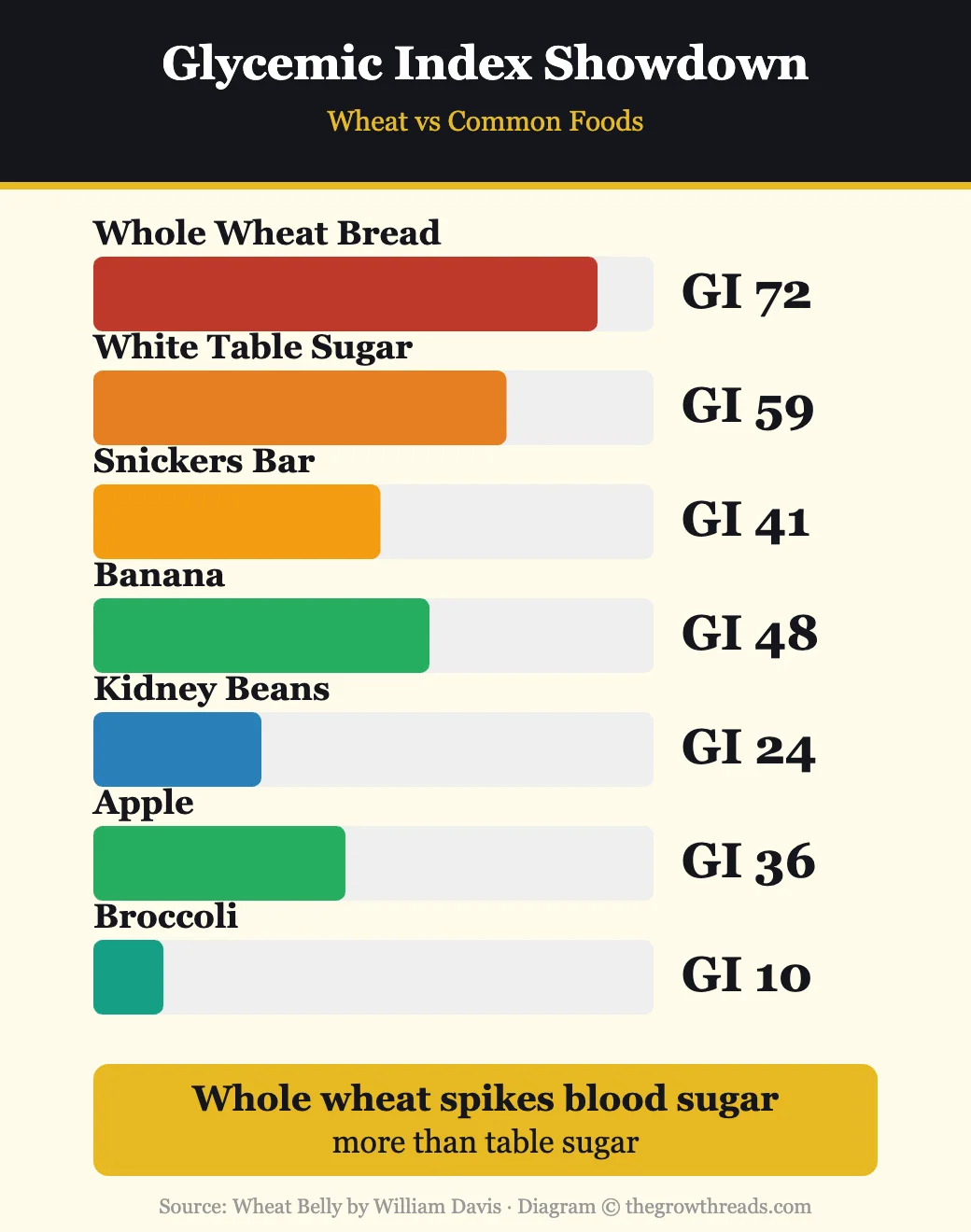
The most provocative claim is the glycemic index data. Davis points to studies showing that two slices of whole wheat bread raise blood sugar to approximately 72 on the glycemic index — higher than a Snickers bar (41) and higher than table sugar (59). This means the “healthy whole grains” that nutritional guidelines have promoted for decades may be doing more metabolic harm than the candy bars people are told to avoid.
Part 2: Wheat and the destruction from head to toe
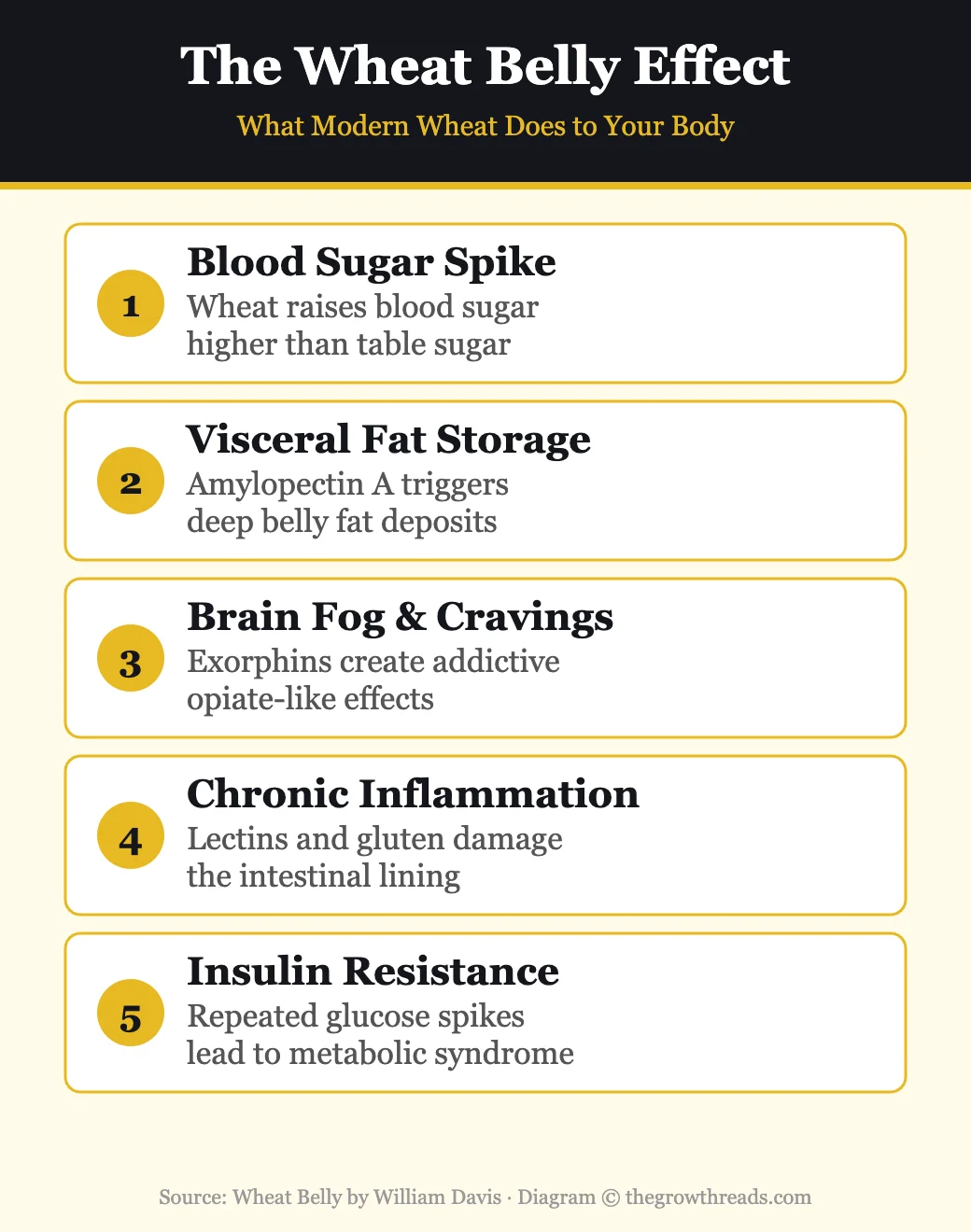
The middle section is where Davis broadens his argument from weight gain to systemic damage. He moves organ by organ, presenting clinical case studies from his cardiology practice. The brain chapter is particularly striking: Davis explains how gliadin, a component of gluten, is partially digested into polypeptides called exorphins that cross the blood-brain barrier and bind to the brain’s opiate receptors. The effect is not a full opiate high but a subtle appetite stimulation — people who consume wheat eat an average of 440 more calories per day than those who don’t, according to the studies he cites.
Davis connects wheat to an extraordinary range of conditions: type 2 diabetes (via chronic insulin surges), heart disease (via small dense LDL particle formation), cerebellar ataxia (direct neurological toxicity from gluten), peripheral neuropathy, rheumatoid arthritis, lupus-like syndromes, and dermatitis herpetiformis. He dedicates an entire chapter to wheat’s aging effects, explaining how Advanced Glycation End-products (AGEs) — formed when blood sugar reacts with proteins — crosslink collagen in the skin, stiffen arteries, cloud the lenses of the eyes (cataracts), and damage kidney tissue. The key insight is that wheat is the single largest dietary source of AGE-forming glucose spikes.
Part 3: The wheat belly solution
Davis’s prescription is elegant in its simplicity: eliminate all wheat, then eliminate most other grains and high-glycemic carbohydrates. He is careful to distinguish his approach from conventional “gluten-free” diets, which he considers largely misguided. Commercial gluten-free products typically substitute cornstarch, rice starch, potato starch, or tapioca starch — all of which spike blood sugar nearly as much as wheat. Davis’s wheat-free approach is therefore closer to a low-glycemic, grain-minimized whole-foods diet.
The replacement foods Davis recommends include vegetables (unlimited), raw nuts and seeds, healthy oils (olive, coconut, avocado), eggs, cheese, meats, fish, avocados, olives, and limited fruit (primarily berries). He allows small amounts of non-wheat grains like quinoa, millet, and sorghum but warns against overconsumption. The approach also restricts legumes moderately and eliminates fruit juice, dried fruit, and all sugar-sweetened beverages.
What makes this section compelling is not the dietary framework (which resembles paleo and low-carb approaches) but the clinical results Davis documents. He presents case after case: a 38-year-old woman who lost 73 pounds and reversed her pre-diabetes; a 51-year-old man whose rheumatoid arthritis went into complete remission; a teenager whose acne cleared within three weeks. The consistency of the outcomes — across ages, conditions, and starting weights — is the book’s strongest evidence.
Part 4: Living wheat-free for life
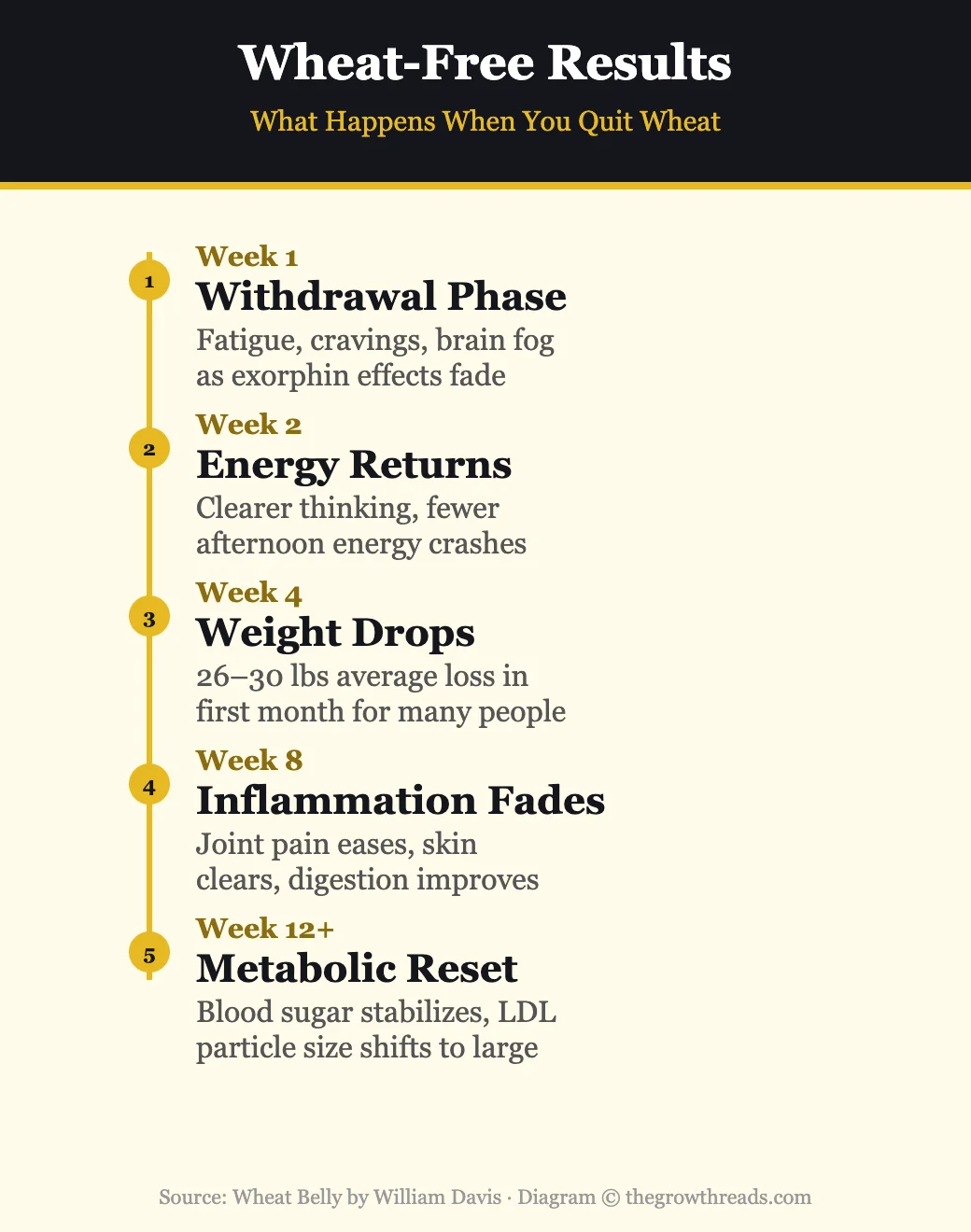
The final section addresses the practical realities of wheat elimination. Davis acknowledges the withdrawal period — typically 2 to 5 days of fatigue, mental fogginess, and irritability as the brain’s exorphin supply is cut off. He frames this as evidence that wheat was functioning as a mild addictive substance, and promises that energy, mental clarity, and mood improve dramatically on the other side.
Davis provides meal plans, recipes, and shopping strategies. He addresses restaurant dining (focus on meats, salads, vegetables; ask for no bread basket), label reading (wheat hides in soy sauce, modified food starch, dextrin, and caramel coloring), and social situations (bring your own food to parties rather than compromising). He also tackles the nutritional adequacy concern — pointing out that wheat provides no nutrients that cannot be obtained more efficiently from vegetables, nuts, and meats.
The lifestyle chapters extend to exercise recommendations (Davis prefers walking, cycling, and resistance training over chronic cardio), sleep optimization (removing wheat often resolves sleep apnea and restless sleep), and supplement guidance (he recommends vitamin D, magnesium, probiotics, and omega-3s for most people transitioning off wheat). The overall picture is a comprehensive health reset, not merely a diet.
Who is Wheat Belly best for — and who should read something else first?
Wheat Belly is best for people who have followed conventional dietary advice (low fat, whole grains, calorie restriction) and are frustrated by persistent weight gain, blood sugar issues, digestive problems, or chronic inflammation. It is especially powerful for anyone with a large waist circumference and metabolic syndrome symptoms. The book is written accessibly — Davis avoids excessive jargon and uses clinical stories to illustrate every point.
If you are looking for a more clinically rigorous exploration of insulin resistance specifically, start with our Obesity Code summary by Jason Fung. If your primary concern is brain health rather than metabolic health, our Grain Brain summary by David Perlmutter covers similar territory from a neurological perspective. And if you want the broadest possible view of nutrition science before committing to any single framework, our In Defense of Food summary by Michael Pollan offers an excellent philosophical foundation.
Questions to reflect on
- How much of your daily calorie intake currently comes from wheat-based products — and how would your meals look without them?
- Have you noticed patterns between eating bread, pasta, or cereal and afternoon energy crashes, brain fog, or hunger spikes?
- If wheat’s addictive properties are real, what withdrawal symptoms might you expect, and how would you plan for them?
- Which of the conditions Davis links to wheat (joint pain, skin issues, digestive problems, blood sugar instability) have you experienced personally?
- What would a two-week wheat-free experiment look like in your life — and what would convince you to make it permanent?
🔥 Ready to see what happens when you drop wheat?
Most readers report noticeable changes within the first two weeks.
How to apply Wheat Belly (7-day plan)
- Day 1 — Audit your kitchen: Read every label in your pantry and refrigerator. Identify all products containing wheat, wheat flour, modified food starch, dextrin, or maltodextrin. Set them aside (donate, don’t throw away).
- Day 2 — Stock your replacements: Shop for vegetables, raw nuts (almonds, walnuts, pecans), olive oil, eggs, cheese, meats, avocados, and berries. Buy almond flour and coconut flour for occasional baking.
- Day 3 — Go wheat-free: Start your first fully wheat-free day. Breakfast: eggs with vegetables. Lunch: large salad with grilled protein. Dinner: meat or fish with roasted vegetables. Expect cravings — ride them out.
- Day 4 — Track your symptoms: Note your energy levels, mental clarity, hunger patterns, joint stiffness, and digestive comfort in a simple journal. You may feel worse today (withdrawal) — this is expected and temporary.
- Day 5 — Navigate social eating: Practice ordering at a restaurant without wheat: grilled protein, salad, steamed vegetables, olive oil dressing. Skip the bread basket entirely.
- Day 6 — Check your progress: Compare today’s energy and hunger levels with Day 3. Most people notice reduced hunger, clearer thinking, and more stable energy by now. Weigh yourself if that motivates you.
- Day 7 — Plan your next three weeks: If you feel better (most people do), commit to a full 30-day wheat-free trial. Batch-prep meals for the week ahead. Share your experience with one person who might benefit.
Frequently asked questions
Is Wheat Belly backed by scientific evidence?
Davis draws on peer-reviewed research throughout the book, including glycemic index studies, clinical trials on gluten sensitivity, and epidemiological data on wheat consumption and chronic disease. His clinical observations from thousands of patients provide compelling anecdotal evidence. Some mainstream nutritionists have debated whether wheat alone deserves such singular blame, noting that overall dietary patterns and calorie quality matter too. However, the core claims about amylopectin A, glycemic response, and exorphins are grounded in published research that has not been meaningfully refuted.
Is Wheat Belly the same as a gluten-free diet?
No, and Davis is emphatic about this distinction. A conventional gluten-free diet simply replaces wheat flour with other high-glycemic starches like cornstarch, rice starch, and tapioca starch, which spike blood sugar almost as aggressively as wheat. Davis’s wheat-free approach eliminates these substitutes too, focusing instead on whole vegetables, nuts, healthy fats, and proteins. He considers most commercial gluten-free products to be “junk food in disguise” that perpetuate the same metabolic problems wheat causes.
How quickly will I see results after eliminating wheat?
Davis reports that most patients experience a 2–5 day withdrawal period with fatigue, brain fog, and irritability, followed by a noticeable improvement in energy and mental clarity by the end of the first week. Significant weight loss typically begins within the first two weeks, with many patients losing 15–20 pounds in the first month. Inflammatory conditions like joint pain and digestive issues often improve within two to four weeks. Blood sugar and cholesterol markers generally show measurable improvement within 8–12 weeks.
What can I eat on the Wheat Belly plan?
Davis encourages unlimited vegetables (except potatoes and corn), raw nuts and seeds, healthy oils (olive, coconut, avocado, walnut), eggs, natural cheeses, meats and poultry, fish and seafood, avocados, olives, herbs and spices, and limited berries. Small amounts of non-wheat grains like quinoa, millet, and sorghum are acceptable. He restricts legumes moderately and eliminates all sugar, fruit juice, dried fruit, corn-based products, and processed foods. The approach is essentially a whole-foods, low-glycemic diet with wheat elimination as the centerpiece.
Won’t I miss important nutrients by cutting out wheat?
Davis addresses this directly: wheat provides no essential nutrient — fiber, B vitamins, minerals, or protein — that cannot be obtained more efficiently from vegetables, nuts, meats, and other whole foods. In fact, he argues that wheat’s phytates actively block absorption of minerals like iron, zinc, and calcium, meaning eliminating wheat can actually improve your nutrient status. He recommends supplementing with vitamin D (most people are deficient regardless of diet), magnesium, omega-3 fatty acids, and a probiotic during the transition period.
How is Wheat Belly different from Grain Brain?
Both books argue against grain consumption, but they come from different medical perspectives. William Davis is a cardiologist focused on metabolic syndrome, visceral fat, heart disease risk, and blood sugar management. David Perlmutter, author of Grain Brain, is a neurologist focused on how grains and carbohydrates damage the brain, contributing to dementia, ADHD, depression, and anxiety. Wheat Belly is broader in scope (covering skin, joints, gut, heart, and brain), while Grain Brain dives deeper into neurological mechanisms. Reading both provides a comprehensive picture.
Is Wheat Belly still relevant in 2026?
Absolutely. The core science has held up well: subsequent research has continued to confirm the exceptionally high glycemic impact of modern wheat, the addictive properties of gluten-derived exorphins, and the relationship between wheat consumption and systemic inflammation. The ultra-processed food movement (see Chris van Tulleken’s work) has amplified Davis’s arguments by showing that wheat flour is a primary ingredient in the most health-damaging processed foods. If anything, the evidence base for wheat elimination has grown stronger since the book’s 2011 publication.
Related summaries
If you found Wheat Belly valuable, these summaries explore complementary perspectives on nutrition, metabolic health, and chronic disease reversal:
- The Obesity Code by Jason Fung — the insulin-resistance model of obesity from a nephrologist who shares Davis’s skepticism of conventional dietary guidelines.
- Grain Brain by David Perlmutter — the neurological case against grains and carbohydrates, with a focus on brain health and dementia prevention.
- Ultra-Processed People by Chris van Tulleken — the definitive investigation of how modern food manufacturing damages human health.
- In Defense of Food by Michael Pollan — a philosophical framework for navigating nutritional confusion with seven simple words.
Note: This summary is for educational purposes. It is not medical advice. Consult a healthcare professional before making significant dietary changes.