

★★★★☆ 4.2 / 5
One-liner: A young German microbiologist delivers a witty, surprisingly charming tour of the digestive system — from how you swallow to why your microbiome controls more of your health (and mood) than you ever imagined.
Best for: Curious readers who want to understand digestion without a medical textbook, anyone dealing with digestive issues, and people interested in the gut-brain connection.
Reading time: ~5 hrs (guide: 22 min)
Difficulty to apply: Low (awareness-based changes, no extreme protocols)
Gut in one minute
Your gut is not just a food-processing tube — it is a sophisticated organ system that houses 70% of your immune cells, produces 90% of your serotonin, and communicates directly with your brain through the vagus nerve. Giulia Enders, a medical researcher at Goethe University Frankfurt, wrote Gut as her doctoral thesis in disguise: a book that makes gastroenterology genuinely entertaining while delivering serious science. She covers everything from the biomechanics of swallowing (your oesophagus can push food to your stomach even if you are upside down) to the latest microbiome research showing that the bacteria in your gut influence your weight, your mood, your allergies, and your risk of chronic disease. The book sold over four million copies worldwide because it does something rare — it makes you care about an organ you have been ignoring.
Key takeaways
- The gut has its own nervous system: The enteric nervous system contains over 100 million neurons — more than the spinal cord — and can operate independently of the brain, earning it the nickname “the second brain.”
- 90% of serotonin is made in the gut: The neurotransmitter most associated with happiness and mood stability is primarily produced in the digestive tract, not the brain — which explains why gut problems and depression so often coexist.
- Your microbiome is an organ in itself: The two kilograms of bacteria living in your digestive tract perform essential functions: training your immune system, producing vitamins, breaking down fibre, and protecting against pathogens.
- Antibiotics cause lasting microbiome damage: A single course of broad-spectrum antibiotics can reduce gut bacterial diversity for months or even years, weakening immune function and increasing susceptibility to infections.
- The gut-brain axis is bidirectional: Your gut sends signals to your brain (via the vagus nerve and chemical messengers), and your brain sends signals to your gut — which is why stress causes stomach problems and gut problems cause anxiety.
- Proper toilet posture matters: Enders advocates squatting rather than sitting at a 90-degree angle, which straightens the anorectal angle and allows easier, more complete bowel movements. A footstool can approximate the squat position.
- Chewing is the most underrated digestive step: Saliva contains amylase (which starts digesting starch) and lysozyme (which kills bacteria). Thorough chewing reduces digestive burden on the stomach and improves nutrient absorption.
- Food intolerances are different from allergies: Allergies trigger an immune response; intolerances (like lactose intolerance) are enzyme deficiencies. About 75% of adults worldwide are lactose intolerant — it is the norm, not the exception.
- Prebiotics are as important as probiotics: While probiotics add beneficial bacteria, prebiotics (fibre from garlic, onions, asparagus, oats) feed the good bacteria you already have — and are often more effective for long-term gut health.
- Your gut bacteria influence your weight: Research on germ-free mice shows that transplanting gut bacteria from obese mice into lean mice causes weight gain, suggesting the microbiome plays a causal role in metabolism.
What is Gut about?
Gut is a tour of the human digestive system — from the mechanics of swallowing and stomach acid to the microbiome and the gut-brain axis. Giulia Enders combines gastroenterology research with humour and charm to explain why this underappreciated organ influences everything from mood to immunity to body weight.
About the author
Giulia Enders is a German medical researcher and gastroenterologist who wrote Gut while completing her doctoral work at the Institute for Microbiology at Goethe University Frankfurt. The book originated as a science slam presentation that went viral in Germany, leading to a publishing deal that would make it one of the bestselling German non-fiction books of the decade. The book features illustrations by her sister, Jill Enders, whose drawings make complex anatomy accessible and funny. Enders’ ability to discuss faeces, bacteria, and digestive mechanics with zero squeamishness and maximum charm is the book’s signature quality — she treats the gut with the same affectionate curiosity most popular science writers reserve for the brain. Explore all Giulia Enders book summaries →
Key concepts at a glance
| Concept | What it means | Use it when |
|---|---|---|
| Enteric nervous system | The gut’s independent network of 100M+ neurons that controls digestion autonomously | You want to understand why the gut is called the “second brain” |
| Microbiome | The community of trillions of bacteria, fungi, and viruses living in your digestive tract | You are exploring how gut bacteria affect health |
| Gut-brain axis | The bidirectional communication pathway between gut and brain via the vagus nerve | You experience both digestive and mood symptoms |
| Prebiotics | Fibre that feeds beneficial gut bacteria (garlic, onions, oats, asparagus) | You want to support gut health through diet |
| Probiotics | Live beneficial bacteria consumed through fermented foods or supplements | You are recovering from antibiotics or digestive issues |
| Peristalsis | The wave-like muscle contractions that move food through the digestive tract | You want to understand how food travels through you |
| Villi | Finger-like projections in the small intestine that absorb nutrients (surface area of a tennis court) | You are learning about nutrient absorption |
Part 1 — The charming machinery
Enders opens by walking readers through the digestive tract with the enthusiasm of a tour guide who genuinely loves her subject. She begins at the mouth, where most people assume digestion starts — and she is right: saliva contains the enzyme amylase, which begins breaking down starch the moment you start chewing. She notes that thorough chewing is one of the simplest ways to improve digestion, yet most people rush through meals without giving their saliva time to do its work.
The oesophagus section includes one of the book’s most memorable facts: swallowing is so mechanically powerful that you can eat and drink while standing on your head. The oesophagus does not rely on gravity — it uses a coordinated muscular wave called peristalsis to push food downward (or upward, if you happen to be inverted). At the bottom, a ring of muscle called the lower oesophageal sphincter acts as a gate between the oesophagus and the stomach, preventing acid reflux when functioning properly.
The stomach receives a particularly vivid treatment. Enders explains that stomach acid is strong enough to dissolve metal, yet the stomach protects itself with a thick mucus lining that is replaced every few days. She also addresses the toilet posture question with characteristic directness: humans evolved to squat, not sit. The modern seated toilet creates a kink in the rectum that requires unnecessary straining. A simple footstool that elevates the knees above the hips straightens the anorectal angle and makes elimination dramatically easier — a point backed by research showing reduced straining and faster emptying in the squatting position.
Part 2 — The nervous system of the gut
The second section tackles the gut-brain axis, and this is where the book shifts from entertaining anatomy lesson to genuinely surprising science. Enders presents the enteric nervous system — the gut’s own independent neural network — as an organ that neuroscience has historically overlooked. With over 100 million neurons, it processes information, learns patterns, and makes decisions about digestion without consulting the brain. It can sense the chemical composition of food, adjust enzyme production, regulate motility, and respond to threats — all autonomously.
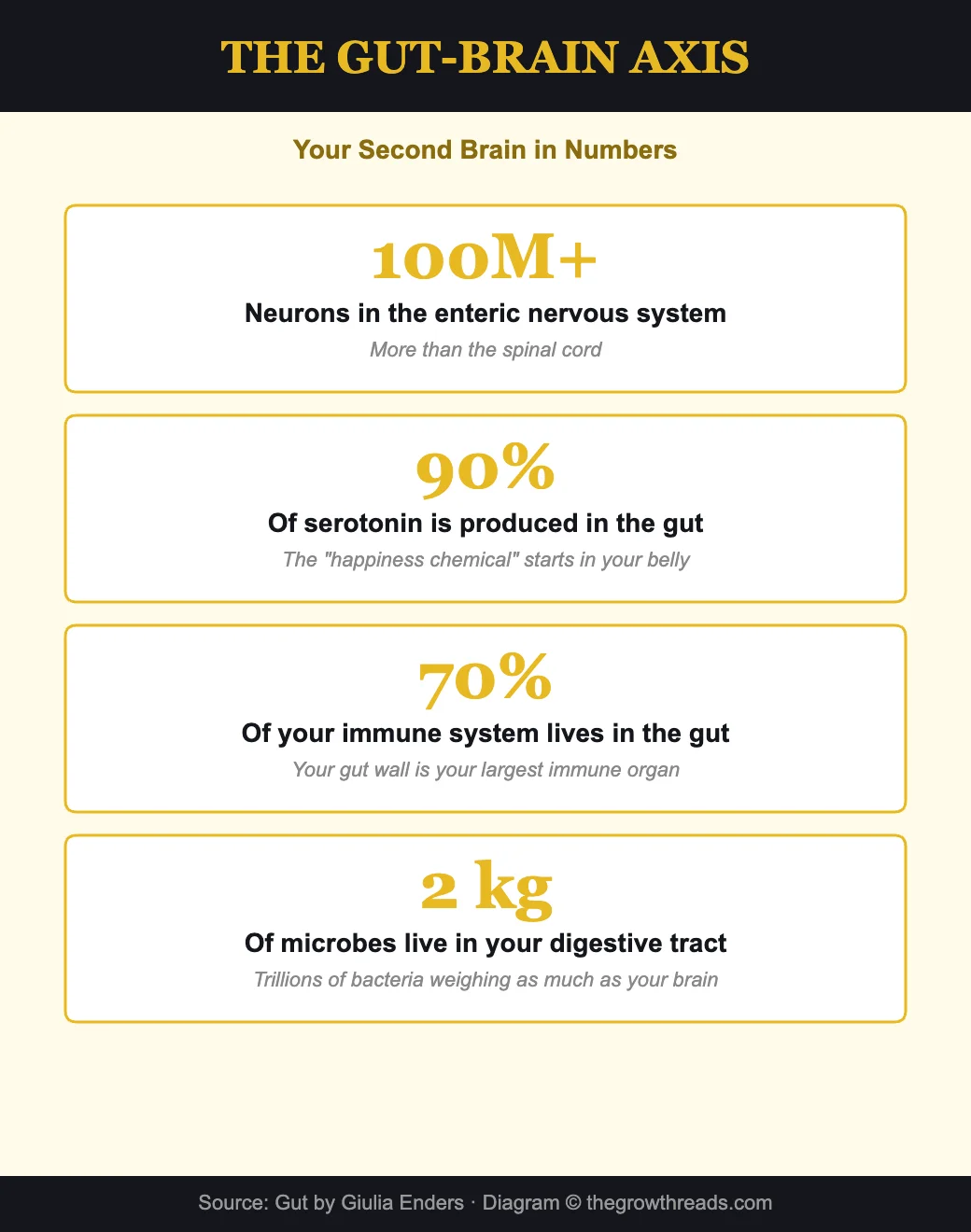
The serotonin finding is the section’s showstopper. Most people associate serotonin exclusively with the brain, but Enders explains that approximately 90% of the body’s serotonin is produced in enterochromaffin cells in the gut lining. This gut serotonin influences motility, secretion, and pain perception within the digestive tract, but it also communicates with the brain via the vagus nerve. The implication is significant: if your gut is unhealthy, your serotonin production may be compromised, contributing to mood disorders. This helps explain why irritable bowel syndrome (IBS) and depression have such high comorbidity rates.
She also covers the immune connection: roughly 70% of the body’s immune cells reside in the gut-associated lymphoid tissue (GALT). The gut wall is the body’s largest interface with the outside world — everything you swallow is technically “outside” your body until it is absorbed through the intestinal lining. The immune system in the gut must constantly distinguish between harmless food particles and dangerous pathogens, a task so complex that it requires more immune activity than any other organ system.
Part 3 — The world of microbes
The final third of the book focuses on the microbiome — and it is here that Enders is most forward-looking. She describes the two kilograms of microbes in the average adult gut as a “forgotten organ” with metabolic activity comparable to the liver. These bacteria ferment dietary fibre into short-chain fatty acids (butyrate, propionate, acetate) that nourish the cells of the colon lining, regulate inflammation, and even influence gene expression in distant organs.
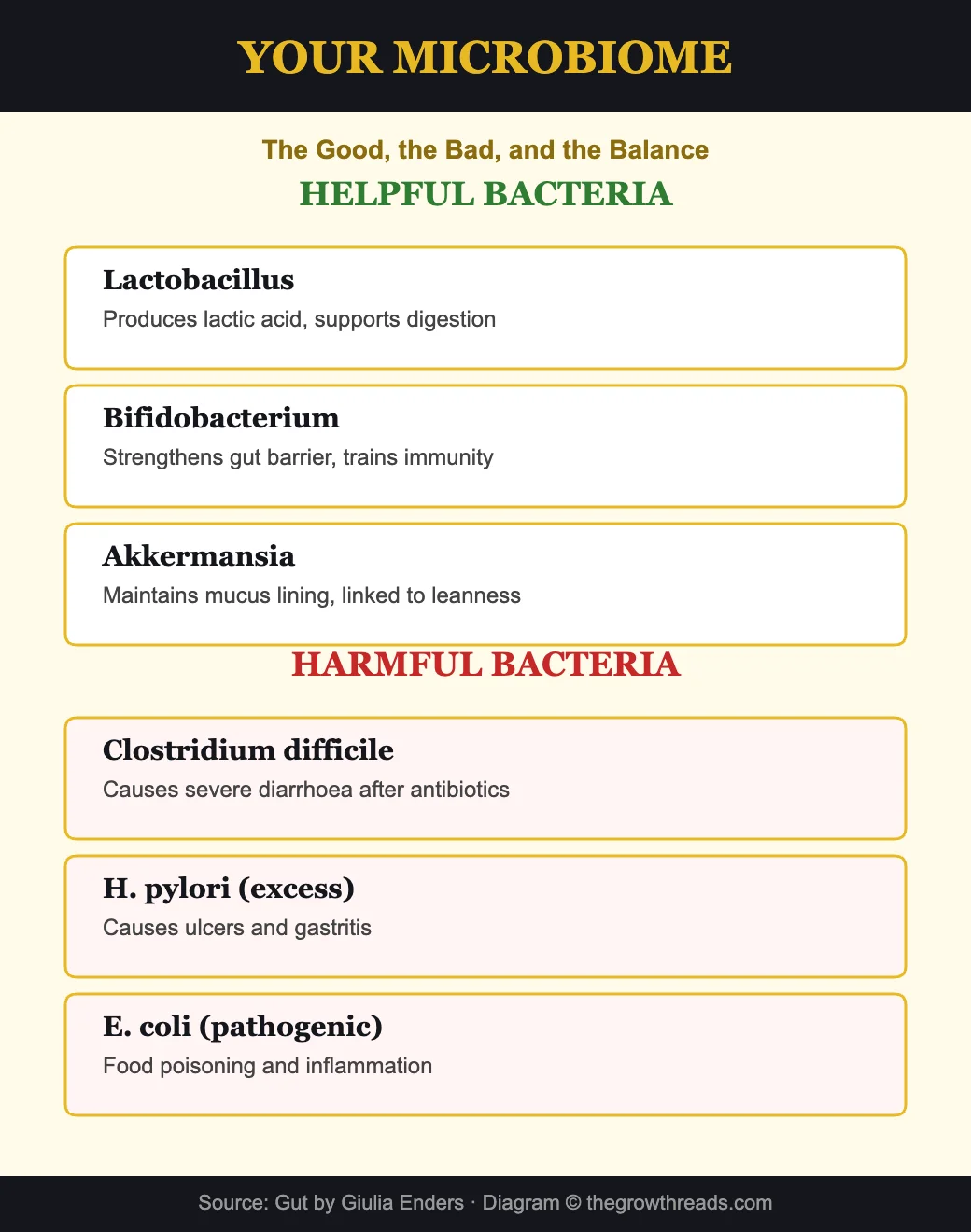
The antibiotic section is sobering. Enders explains that a single course of broad-spectrum antibiotics can reduce gut bacterial diversity by 30–50%, and some species may not recover for months or even years. Each course further diminishes diversity, weakening the microbiome’s ability to resist pathogenic invaders. She cites the rise of Clostridium difficile infections — often triggered by antibiotic use that wipes out the protective bacteria — as a direct consequence of overuse. Her recommendation is not to avoid antibiotics when medically necessary, but to use them judiciously and to support microbiome recovery afterward with fermented foods and prebiotic fibre.
The obesity-microbiome connection is perhaps the most provocative finding. Studies using germ-free mice (raised without any gut bacteria) showed that transplanting gut bacteria from obese mice into lean germ-free mice caused the lean mice to gain weight — without any change in diet. The composition of the microbiome appears to influence how efficiently calories are extracted from food and how fat is stored. This does not mean bacteria “cause” obesity, but it suggests the microbiome is a meaningful variable in metabolism, and that diversity of gut bacteria is associated with metabolic health.
Who is Gut best for — and who should read something else first?
This book is perfect for anyone who wants to understand their digestive system without reading a medical textbook. Enders writes with warmth, humour, and zero pretension, making complex gastroenterology genuinely enjoyable. It is especially useful for people dealing with digestive issues (bloating, IBS, food intolerances) who want to understand what is happening inside them, and for anyone curious about the gut-brain connection and microbiome science.
If you want deeper microbiome science with clinical applications, follow this with Grain Brain (which covers the gut-brain-inflammation axis in more detail). If your primary interest is diet rather than anatomy, In Defense of Food is more directly actionable. And if you are specifically dealing with weight issues connected to digestion, The Obesity Code provides the metabolic framework.
Questions to reflect on
- How many courses of antibiotics have you taken in the last five years, and did you do anything to support your microbiome afterward?
- Do you notice a connection between your digestive health and your mood — and if so, what does that suggest about your gut-brain axis?
- How thoroughly do you actually chew your food, and what would change if you doubled the time you spent chewing each bite?
- How many servings of prebiotic-rich foods (garlic, onions, oats, asparagus) do you eat in a typical week?
- If your gut produces 90% of your serotonin, what are you doing to keep that factory running well?
🔥 Ready to understand your most underrated organ?
Discover how your gut controls your mood, immunity, weight, and more — told with science and charm.
How to apply Gut (7-day plan)
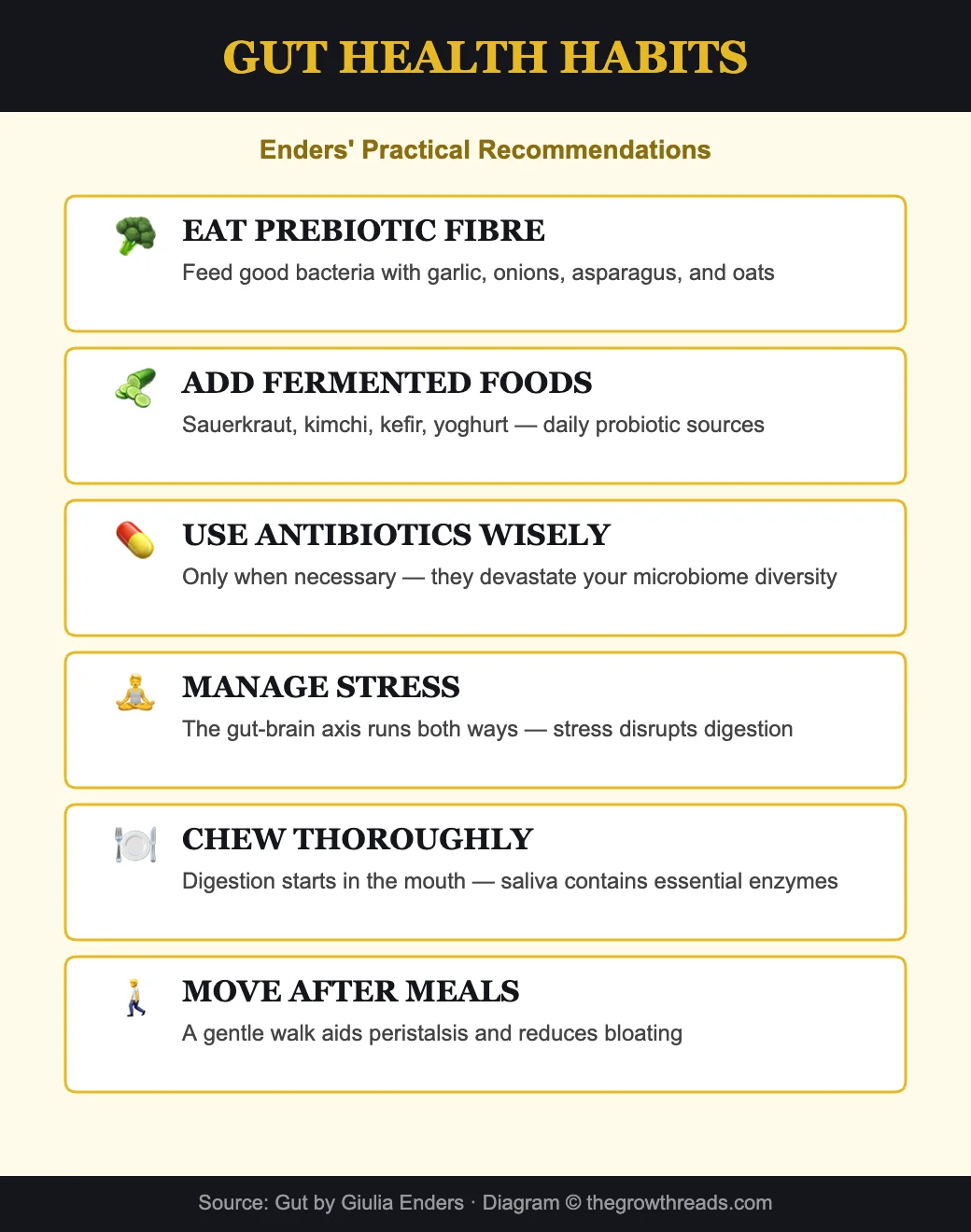
- Day 1 — Chew more, eat slower: At every meal today, chew each bite 20–30 times before swallowing. Set your fork down between bites. Notice whether you feel fuller sooner and whether your digestion improves.
- Day 2 — Add a prebiotic food: Include at least one prebiotic-rich food today: a clove of garlic in your cooking, half an onion in a salad, oatmeal for breakfast, or raw asparagus as a snack. You are feeding your good bacteria.
- Day 3 — Try a fermented food: Add one serving of a naturally fermented food: sauerkraut (not pasteurised), kimchi, kefir, live-culture yoghurt, or kombucha. Start small if you are not used to fermented foods.
- Day 4 — Adjust your toilet posture: Place a footstool (or a stack of books) in front of your toilet so your knees are above your hips when sitting. This straightens the anorectal angle. Notice whether elimination is easier and more complete.
- Day 5 — Walk after dinner: Take a gentle 15–20 minute walk after your evening meal. This stimulates peristalsis, aids digestion, and reduces the bloating that often follows large meals.
- Day 6 — Reduce unnecessary antibiotics: Check your medicine cabinet. Are you using antibacterial soap, hand sanitiser, or cleaning products that kill bacteria indiscriminately? Switch to regular soap for hand-washing — it removes pathogens without carpet-bombing your skin microbiome.
- Day 7 — Start a gut diary: For the next two weeks, briefly log what you eat, your energy levels, your mood, and any digestive symptoms. Patterns will emerge that connect specific foods to specific reactions — this is the foundation of personalised gut health.
Frequently asked questions
Is Gut a medical book or a popular science book?
It is popular science written by a medical researcher. Enders holds a medical doctorate and conducted her research at the Institute for Microbiology at Goethe University Frankfurt. The book is rigorously sourced but written in an accessible, humorous style aimed at general readers. It includes references to peer-reviewed studies but explains them in plain language. Think of it as a gastroenterology course taught by someone who actually wants you to enjoy it.
Does the book recommend specific probiotics?
Enders discusses probiotics in general terms rather than recommending specific brands. She notes that the most studied probiotic strains include Lactobacillus and Bifidobacterium species, and that evidence is strongest for probiotics taken after antibiotics, during travel, and for specific conditions like IBS. She emphasises that fermented foods (sauerkraut, kimchi, kefir) are often more effective than supplements because they deliver bacteria in a food matrix along with prebiotics. Her main caveat: probiotic research is still evolving, and not all products on the market have clinical evidence behind them.
Can fixing your gut really improve your mood?
The evidence is growing. Since 90% of serotonin is produced in the gut, and the gut communicates with the brain via the vagus nerve, there is a plausible biological pathway. Clinical trials have shown that certain probiotic strains reduce anxiety and depressive symptoms in healthy volunteers. A 2019 study in Nature Microbiology found that people with depression had consistently depleted levels of specific gut bacteria. However, gut health is one factor among many in mental health — it is not a substitute for professional treatment of clinical depression or anxiety.
What is the difference between prebiotics and probiotics?
Probiotics are live beneficial bacteria that you consume through fermented foods or supplements — they add new bacteria to your gut. Prebiotics are types of dietary fibre that your body cannot digest but your gut bacteria can — they feed and support the bacteria already living in your gut. Enders argues that prebiotics may be more important for long-term gut health because they nurture your existing microbiome rather than introducing transient visitors. The best approach is both: eat fermented foods (probiotics) and fibre-rich foods (prebiotics) daily.
Should I really use a footstool on the toilet?
Yes, according to Enders and the biomechanics research she cites. The puborectalis muscle creates a kink in the rectum when you sit at 90 degrees, requiring straining to evacuate. Elevating your knees above your hips (using a footstool, stack of books, or dedicated device like a Squatty Potty) straightens this angle. A 2019 study in the Journal of Clinical Gastroenterology found that footstool users reported less straining, more complete evacuation, and shorter time on the toilet. It is a simple, free intervention with measurable benefits.
How long does it take to repair gut health after antibiotics?
Research varies, but most studies suggest that gut bacterial diversity begins recovering within weeks of finishing a course of antibiotics, with substantial recovery in 1–3 months. However, some bacterial species may not fully recover for 6–12 months, and repeated antibiotic courses can cause cumulative damage that takes longer to repair. Enders recommends supporting recovery with daily fermented foods, prebiotic fibre, and a diverse diet rich in whole plants. Probiotic supplements containing Lactobacillus and Saccharomyces boulardii have evidence for post-antibiotic recovery.
How does Gut compare to other microbiome books?
Gut is the most accessible and entertaining entry point into the topic. It covers the full digestive system, not just the microbiome, and is ideal for readers with no science background. For a deeper dive specifically into microbiome science and diet, try The Diet Myth by Tim Spector. For the gut-brain connection in clinical depth, David Perlmutter’s Brain Maker expands on the ideas introduced here. Gut is the best starting point because it gives you the foundational understanding of digestive anatomy and function that makes the more specialised books easier to appreciate.
Related summaries
- Breath by James Nestor — Another “lost art” investigation: how proper breathing stimulates the vagus nerve and calms the gut.
- Grain Brain by David Perlmutter — The gut-brain-inflammation axis explored from a neurologist’s perspective.
- The Obesity Code by Jason Fung — How metabolic dysfunction (influenced by gut health) drives weight gain.
- The China Study by T. Colin Campbell — The dietary patterns that support or harm gut health at the population level.
- See all Health book summaries on our Best Health Books pillar page.