

★★★★☆ 4.0 / 5
One-liner: A board-certified neurologist argues that carbohydrates — even “healthy” whole grains — are silently destroying your brain through chronic inflammation, and that a high-fat, low-carb diet is the strongest defence against Alzheimer’s, depression, and cognitive decline.
Best for: Readers concerned about brain health and cognitive decline, anyone with a family history of Alzheimer’s or diabetes, and people interested in the neuroscience of nutrition.
Reading time: ~7 hrs (guide: 26 min)
Difficulty to apply: Moderate–High (requires significant dietary changes)
Grain Brain in one minute
The grain-heavy, low-fat diet that governments have recommended for decades may be the single biggest threat to your brain. David Perlmutter, a board-certified neurologist and Fellow of the American College of Nutrition, presents research linking elevated blood sugar, gluten sensitivity, and chronic inflammation to an alarming range of neurological conditions — from Alzheimer’s and dementia to depression, ADHD, and chronic headaches. His central argument: the brain is a fat-dependent organ (70% fat by dry weight), and the modern high-carb, low-fat diet starves it of what it needs while flooding it with inflammatory glucose. The prescription is a diet rich in healthy fats, low in sugar and grains, supported by exercise, sleep, and targeted supplementation.
Key takeaways
- Carbohydrates are the brain’s biggest threat: Perlmutter argues that excess carbohydrate consumption — including whole grains — drives the chronic inflammation that underlies most neurological diseases.
- Gluten is problematic even without coeliac disease: Non-coeliac gluten sensitivity can trigger inflammation that affects the brain without producing obvious digestive symptoms.
- Fat is brain fuel, not the enemy: The brain is 70% fat by dry weight and functions best on a diet high in healthy fats — olive oil, avocados, nuts, coconut oil, and omega-3-rich fish.
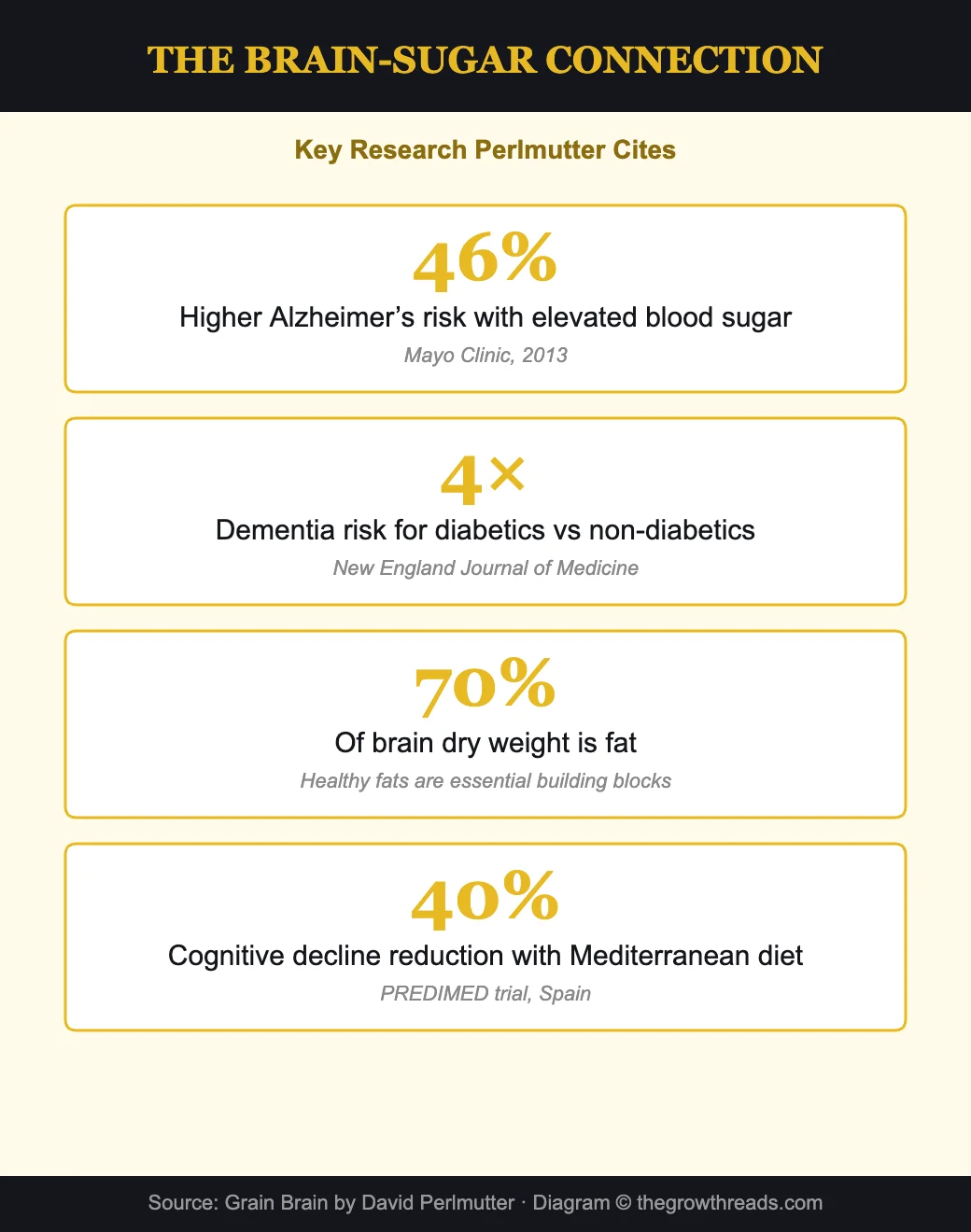
- Blood sugar predicts cognitive decline: A Mayo Clinic study found that people with elevated blood sugar (even within the “normal” range) had a 46% higher risk of developing Alzheimer’s.
- Diabetes and Alzheimer’s are deeply connected: Type 2 diabetics have four times the risk of developing dementia, leading some researchers to call Alzheimer’s “Type 3 diabetes.”
- Cholesterol is essential for brain health: Higher cholesterol levels are associated with better memory and cognitive function in older adults; statins may impair brain function in some patients.
- Exercise is the most powerful brain protector: Aerobic exercise stimulates BDNF (brain-derived neurotrophic factor), which grows new neurons and strengthens existing connections.
- The gut-brain axis is critical: The microbiome influences brain inflammation, neurotransmitter production, and mood; fermented foods and probiotics support this connection.
- Sleep is non-negotiable for brain repair: During deep sleep, the brain’s glymphatic system clears toxic proteins (including beta-amyloid, linked to Alzheimer’s) — poor sleep accelerates neurodegeneration.
- Fasting enhances brain function: Intermittent fasting and caloric restriction activate autophagy — the cell’s self-cleaning process — and boost BDNF production.
What is Grain Brain about?
Grain Brain presents a neurologist’s case that carbohydrates, gluten, and sugar are the primary drivers of brain inflammation and neurodegeneration. David Perlmutter combines clinical research, patient case studies, and evolutionary arguments to advocate for a high-fat, low-carb diet as the optimal fuel for brain health and cognitive longevity.
About the author
David Perlmutter, MD, FACN, is a board-certified neurologist and Fellow of the American College of Nutrition who practises in Naples, Florida. He was the first physician to receive the Linus Pauling Award from the Institute for Functional Medicine and has published extensively in peer-reviewed journals on the relationship between nutrition and neurological disease. Grain Brain spent 19 weeks on the New York Times bestseller list and was followed by Brain Maker (2015), which expanded his microbiome research, and The Grain Brain Whole Life Plan (2016), a practical implementation guide. His work has drawn both praise for raising awareness of the diet-brain connection and criticism from nutritionists who argue his anti-grain stance overstates the evidence. Explore all David Perlmutter book summaries →
Key concepts at a glance
| Concept | What it means | Use it when |
|---|---|---|
| Neuroinflammation | Chronic brain inflammation driven by diet, stress, and environmental toxins | You want to understand the root cause of cognitive decline |
| Gluten sensitivity | Immune response to gluten that can occur without coeliac disease | You experience brain fog, headaches, or mood issues |
| BDNF | Brain-derived neurotrophic factor — a protein that grows and protects neurons | You want to understand how exercise benefits the brain |
| Glycation | Process where sugar molecules bond to proteins, damaging them | You want to understand why high blood sugar harms the brain |
| Gut-brain axis | The bidirectional communication pathway between gut microbiome and brain | You experience digestive and neurological symptoms together |
| Autophagy | The cell’s self-cleaning process, activated by fasting | You are exploring intermittent fasting for brain health |
| Glymphatic system | Brain’s waste-clearance system that operates primarily during deep sleep | You want to understand why sleep protects against dementia |
| Type 3 diabetes | Proposed classification of Alzheimer’s as a form of insulin resistance in the brain | You have a family history of both diabetes and dementia |
Part 1 — The inflammation connection
Perlmutter opens with a claim that most readers will find uncomfortable: the dietary guidelines that have dominated public health for 40 years — emphasising grains, limiting fat, promoting the food pyramid — may be directly contributing to the epidemic of neurological disease. He points to a stark correlation: since the 1990s, as Americans shifted toward higher-carb, lower-fat diets, rates of Alzheimer’s, depression, ADHD, and anxiety have climbed steadily.
The mechanism he proposes is chronic inflammation driven by glycation — the process by which sugar molecules bond to proteins and fats, creating Advanced Glycation End-products (AGEs) that damage cells throughout the body. The brain is especially vulnerable because it has the highest metabolic rate of any organ, consuming 20% of the body’s glucose despite being only 2% of its weight. When blood sugar is chronically elevated, even within the “normal” range, the resulting glycation and inflammation progressively damage neurons, weaken synaptic connections, and impair the blood-brain barrier.
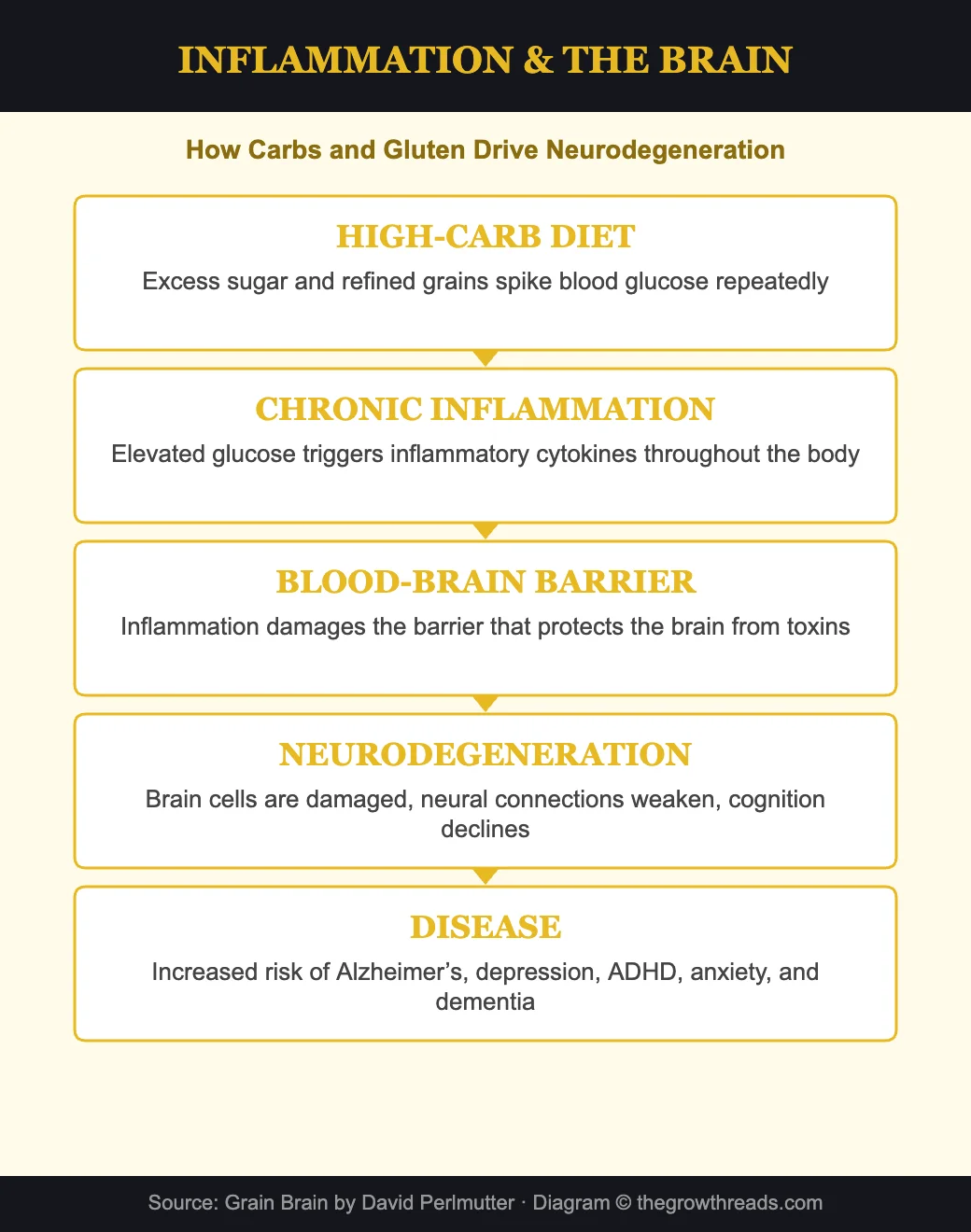
He cites a landmark 2013 New England Journal of Medicine study showing that even modestly elevated blood sugar (below the diabetic threshold) is associated with significantly increased dementia risk. A Mayo Clinic study the same year found that individuals whose diets were highest in carbohydrates had an 89% increased risk of developing mild cognitive impairment, while those with the highest fat intake had a 44% reduced risk. These studies form the evidential backbone of his argument that it is not fat but carbohydrates — and particularly refined grains and sugars — that pose the greatest dietary threat to the brain.
Part 2 — Gluten, fat, and the brain
The most controversial section of the book addresses gluten — a protein found in wheat, barley, and rye. Perlmutter argues that gluten sensitivity is far more common than coeliac disease and can manifest primarily as neurological symptoms: brain fog, depression, headaches, peripheral neuropathy, and cognitive decline — without any digestive discomfort. He cites research by Marios Hadjivassiliou at the Royal Hallamshire Hospital showing that gluten sensitivity can cause ataxia (loss of coordination), seizures, and white-matter brain lesions in patients who have no gastrointestinal symptoms whatsoever.
The fat argument is equally provocative. Perlmutter challenges the lipid hypothesis — the idea that dietary fat and cholesterol cause heart disease — and argues that cholesterol is essential for brain function. He cites studies showing that older adults with the highest cholesterol levels perform best on cognitive tests, and that statin drugs (which lower cholesterol) are associated with memory impairment in some patients. The brain, he emphasises, is 70% fat by dry weight, and healthy fats — omega-3 fatty acids, monounsaturated fats from olive oil and avocado, medium-chain triglycerides from coconut oil — are its preferred building materials.
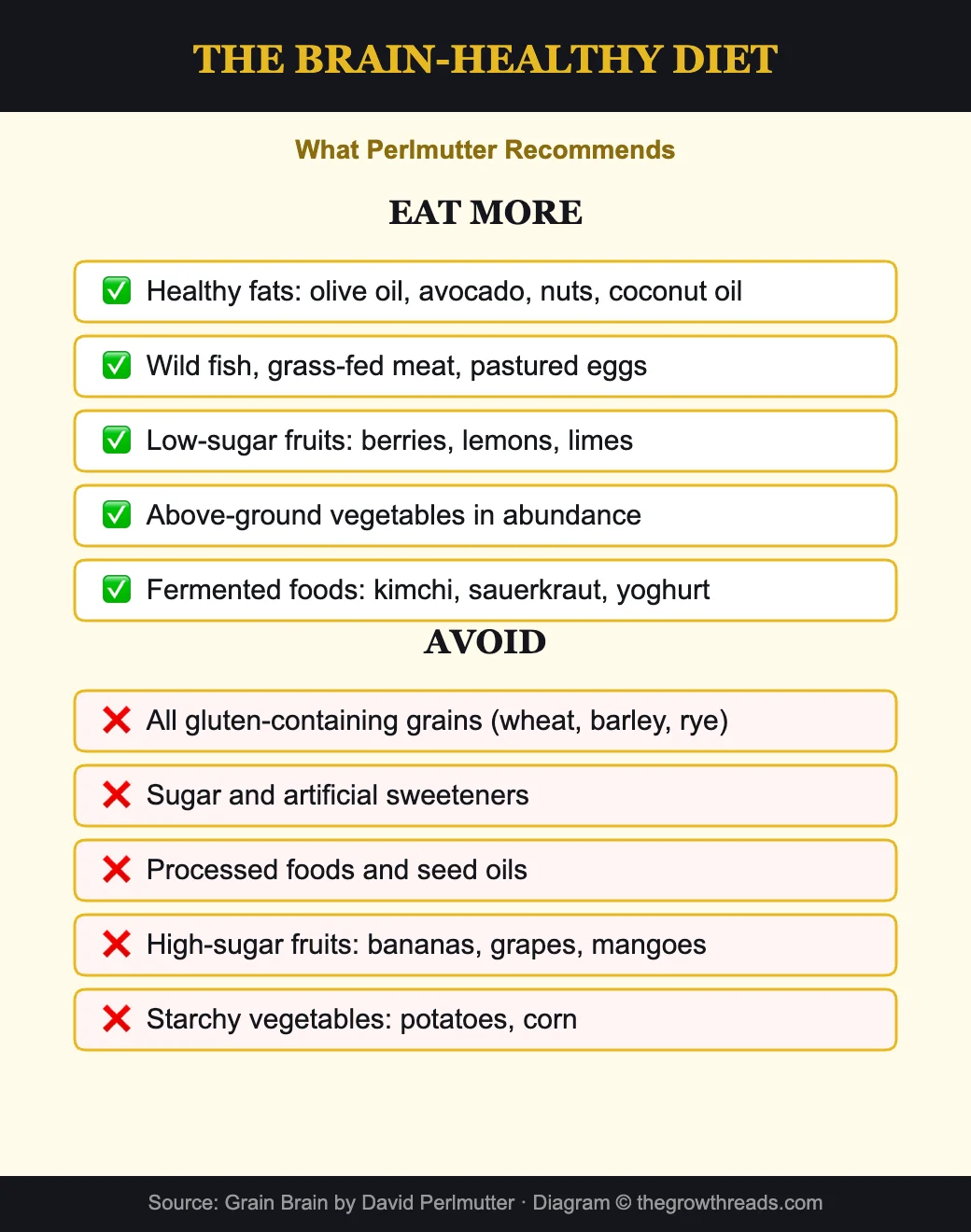
His recommended diet is essentially a modified Mediterranean-ketogenic approach: abundant healthy fats, non-starchy vegetables, moderate protein from wild fish and grass-fed meat, eggs, nuts, seeds, and low-sugar fruits like berries. Eliminated entirely: all gluten grains, sugar, processed foods, seed oils, and high-sugar fruits. This is more restrictive than most nutritional guidelines, and Perlmutter acknowledges it represents a significant departure from conventional advice — but argues the brain-health evidence justifies the shift.
Part 3 — The lifestyle prescription
The final third of the book moves beyond diet to cover the full lifestyle framework Perlmutter recommends for brain protection. Exercise receives the strongest endorsement: aerobic activity is the most powerful known stimulator of BDNF, which he calls “the brain’s growth hormone.” BDNF promotes the growth of new neurons (neurogenesis), strengthens synaptic connections, and protects existing brain cells from damage. A study Perlmutter cites found that regular aerobic exercise increased hippocampal volume by 2% in older adults — effectively reversing 1–2 years of age-related brain shrinkage.
Sleep receives extensive attention. During deep sleep, the brain’s recently discovered glymphatic system — a waste-clearance network that operates like a dishwasher — flushes out toxic metabolic byproducts, including beta-amyloid protein, the sticky plaque associated with Alzheimer’s disease. Chronic sleep deprivation allows these toxins to accumulate, accelerating neurodegeneration. Perlmutter recommends 7–8 hours of quality sleep, maintaining consistent sleep-wake timing, and minimising blue light exposure in the evening.
The gut-brain axis receives a preliminary treatment here (expanded in his follow-up, Brain Maker). Perlmutter argues that the microbiome — the trillions of bacteria in the digestive tract — directly influences brain inflammation, neurotransmitter production (90% of serotonin is made in the gut), and immune function. Fermented foods (kimchi, sauerkraut, live-culture yoghurt), prebiotic fibre, and probiotic supplements support a diverse, healthy microbiome that in turn supports brain health.
Who is Grain Brain best for — and who should read something else first?
This book is most valuable for readers with a family history of Alzheimer’s, diabetes, or neurological conditions who want to understand the diet-brain connection. It is also useful for anyone experiencing brain fog, mood instability, or cognitive decline and wondering whether diet could be a factor. Perlmutter writes clearly for a general audience while including enough research citations for medically literate readers to verify claims.
If you are looking for a more moderate dietary approach (not grain-free), In Defense of Food provides balanced guidance. If you want the exercise-brain connection in more detail, Spark by John Ratey is the deeper dive. And if sleep is your primary concern, Why We Sleep is the definitive resource. Note: Grain Brain’s dietary recommendations are strong opinions — consult a healthcare provider before making significant dietary changes, especially if you have existing medical conditions.
Questions to reflect on
- What percentage of your daily calories currently comes from refined carbohydrates and sugar?
- When did you last have your fasting blood glucose and HbA1c tested — and do you know what the results mean for brain health?
- Have you ever noticed a connection between what you eat and how clearly you think?
- How much healthy fat (olive oil, avocado, nuts, fatty fish) do you consume daily compared to the amount Perlmutter recommends?
- If brain health were your top priority, what is the one dietary change you would make this week?
🔥 Ready to protect your brain through better nutrition?
Learn how diet, exercise, and sleep shape your brain’s future — backed by neuroscience research.
How to apply Grain Brain (7-day plan)
- Day 1 — Track your carbs: For one day, log everything you eat and calculate total carbohydrate intake. Most people are shocked to discover they consume 250–300g daily; Perlmutter recommends 60–80g for brain health.
- Day 2 — Swap your breakfast: Replace cereal, toast, or pastries with eggs cooked in olive oil or coconut oil, topped with avocado and vegetables. Notice how your energy and mental clarity change through the morning.
- Day 3 — Eliminate added sugar: Read every label today and avoid anything with added sugar, high-fructose corn syrup, or artificial sweeteners. Drink water, herbal tea, or black coffee instead of sweetened beverages.
- Day 4 — Add healthy fats: Include at least three servings of brain-healthy fats today: a handful of walnuts, half an avocado, a serving of wild salmon or sardines, or a tablespoon of extra-virgin olive oil on your salad.
- Day 5 — Try a gluten-free day: Remove all wheat, barley, and rye for 24 hours. Replace with rice, quinoa, sweet potatoes, or simply more vegetables. Note any changes in energy, clarity, or digestive comfort.
- Day 6 — Move for your brain: Do 30 minutes of aerobic exercise — brisk walking, cycling, swimming, or dancing. This is not for fitness; this is specifically to stimulate BDNF production and protect your neurons.
- Day 7 — Optimise your sleep: Set a consistent bedtime. Remove screens from the bedroom. Aim for 7–8 hours. Your brain’s glymphatic system needs deep sleep to clear the toxic proteins that accumulate during the day.
Frequently asked questions
Is the anti-grain argument scientifically settled?
No. The link between elevated blood sugar and cognitive decline is well-established in peer-reviewed research. However, Perlmutter’s blanket recommendation to eliminate all grains is more aggressive than most nutritional scientists endorse. The largest longevity studies (including Blue Zones research) show that populations eating whole grains daily have excellent cognitive health into old age. The strongest interpretation is that refined grains and excess sugar are clearly harmful; whether unprocessed whole grains pose a brain risk remains debated. Perlmutter’s revised edition acknowledges more nuance.
Should everyone go gluten-free?
Not necessarily. Coeliac disease affects roughly 1% of the population and requires strict gluten avoidance. Non-coeliac gluten sensitivity is estimated at 6–10% but is harder to diagnose definitively. For the remaining majority, there is no strong evidence that gluten causes harm. Perlmutter argues the percentage is much higher than mainstream estimates. A practical approach: try a 30-day gluten-free trial and observe whether symptoms improve. If they do, discuss findings with your doctor.
What is the connection between Alzheimer’s and diabetes?
The connection is strong and growing stronger in the research. Type 2 diabetics have approximately four times the risk of developing Alzheimer’s disease. Researchers have proposed the term “Type 3 diabetes” to describe Alzheimer’s as a form of insulin resistance specifically in the brain. When brain cells become insulin resistant, they cannot efficiently absorb glucose for energy, leading to cell death and cognitive decline. This connection supports Perlmutter’s argument that blood sugar management is central to brain health.
Does Perlmutter recommend a keto diet?
Not exactly, though his recommendations overlap significantly with ketogenic principles. He advocates for approximately 60–80g of carbohydrates daily, which is lower than standard dietary guidelines (250–300g) but higher than strict keto (typically under 50g). He prioritises healthy fats as the primary calorie source and recommends periodic fasting to stimulate ketone production. The key distinction is that Perlmutter frames this as a brain-health protocol rather than a weight-loss strategy.
Is cholesterol really good for the brain?
Cholesterol plays essential roles in brain function: it is a structural component of every brain cell membrane, is necessary for synapse formation, and is a precursor to vitamin D and several hormones. Some studies do show that higher cholesterol levels in older adults correlate with better cognitive performance. However, the relationship between dietary cholesterol, blood cholesterol, and brain health is complex. Perlmutter’s claim that statins may impair cognitive function is supported by some case reports but not by large randomised trials. This remains an area of active debate.
What supplements does Perlmutter recommend?
His core supplement stack includes DHA (an omega-3 fatty acid critical for brain structure, 1,000mg daily), resveratrol (an antioxidant found in red wine), turmeric/curcumin (anti-inflammatory), probiotics (for gut-brain axis support), coconut oil (for medium-chain triglycerides), alpha-lipoic acid (antioxidant), and vitamin D. He emphasises that supplements complement rather than replace dietary changes. As with any supplement regimen, consult a healthcare provider before starting.
How does Grain Brain compare to Outlive by Peter Attia?
Both books address cognitive decline as a preventable condition, but they approach it differently. Perlmutter focuses specifically on the diet-brain connection and argues for a high-fat, grain-free approach. Attia takes a broader view, treating cognitive health as one of four pillars (alongside cardiovascular health, metabolic health, and emotional health) and is more moderate on dietary recommendations. Attia is also more exercise-focused. Read Grain Brain for the nutrition deep-dive; read Outlive for the integrated longevity framework.
Related summaries
- Why We Sleep by Matthew Walker — The science of how sleep protects the brain and clears toxic proteins.
- Spark by John Ratey — The clinical evidence for exercise as the most powerful brain-health intervention.
- Outlive by Peter Attia — A comprehensive longevity framework covering exercise, nutrition, sleep, and emotional health.
- The Obesity Code by Jason Fung — The insulin model of obesity that supports Perlmutter’s blood-sugar thesis.
- See all Health book summaries on our Best Health Books pillar page.