

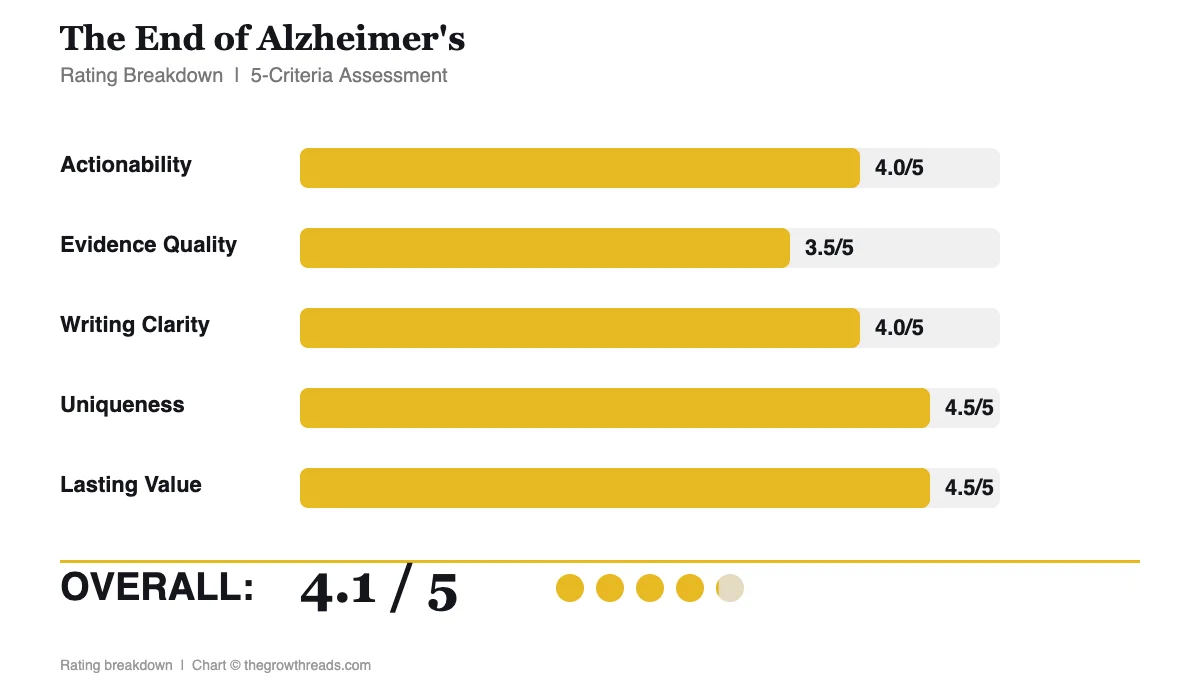
⭐⭐⭐⭐ 4.1 / 5
A paradigm-shifting argument that Alzheimer’s is not a death sentence but a metabolic problem with identifiable — and addressable — root causes.
Best for: Anyone with a family history of cognitive decline, health-conscious readers over 40, and practitioners seeking a functional medicine approach to brain health.
Reading time: ~7 hours (320 pages)
Difficulty to apply: High — requires extensive testing, dietary overhaul, supplement protocols, and ideally practitioner guidance.
The End of Alzheimer’s in one minute
Alzheimer’s disease is not a single problem — it is a roof with 36 holes, and each hole must be patched individually. Dr. Dale Bredesen, a neuroscientist who spent three decades studying neurodegeneration at UCLA and the Buck Institute, presents a radical thesis: Alzheimer’s is not an inevitable consequence of aging or bad genes but a protective response to metabolic insults — inflammation, nutrient deficiency, and toxic exposure. His ReCODE (Reversal of Cognitive Decline) protocol identifies the specific contributors driving each patient’s decline through comprehensive testing, then addresses them simultaneously through diet, exercise, sleep optimization, hormone balancing, detoxification, and targeted supplementation. Early clinical results show measurable cognitive improvement in patients with mild cognitive impairment and early Alzheimer’s, challenging the prevailing belief that neurodegeneration is irreversible.
Key takeaways
- Alzheimer’s has three subtypes: Type 1 (inflammatory/hot), Type 2 (atrophic/cold), and Type 3 (toxic/vile). Each requires a different treatment approach, which is why single-drug trials keep failing.
- Amyloid plaques are protective: The brain produces amyloid-beta as a defensive response to inflammation, infection, or toxins — not as a random malfunction. Removing plaques without addressing root causes is like turning off a fire alarm without putting out the fire.
- The “36 holes in the roof” analogy: Cognitive decline results from dozens of simultaneous contributors. Patching one hole (one drug) while 35 others leak will not stop the rain. The ReCODE protocol patches all of them.
- Metabolic flexibility is critical: The Alzheimer’s brain cannot efficiently use glucose for fuel. Achieving mild ketosis through diet and fasting provides an alternative energy source (ketones) that the brain can still metabolize.
- Sleep is non-negotiable: The glymphatic system clears amyloid during deep sleep. Seven to eight hours of quality sleep, including adequate time in deep and REM stages, is a foundational requirement of the protocol.
- Comprehensive testing reveals the pattern: Over 150 biomarkers — including homocysteine, fasting insulin, hs-CRP, hormones, heavy metals, mycotoxins, and ApoE genotype — map the specific contributors driving each individual’s decline.
- Exercise drives BDNF production: Brain-derived neurotrophic factor, the brain’s primary growth signal, increases dramatically with aerobic exercise. Bredesen recommends 150+ minutes per week of moderate-to-vigorous activity.
- Prevention starts decades early: The pathological process begins 20 years before symptoms appear. Testing and intervention in your 40s and 50s is dramatically more effective than waiting for a diagnosis.
- ApoE4 is a risk factor, not a destiny: Carrying one or two copies of the ApoE4 gene increases risk but does not guarantee Alzheimer’s. The protocol is specifically designed to mitigate ApoE4-related vulnerabilities.
- Reversal is possible in early stages: Bredesen’s published case studies show measurable cognitive improvement in patients with subjective cognitive impairment (SCI) and mild cognitive impairment (MCI), with some returning to normal function.

What is The End of Alzheimer’s about?
The End of Alzheimer’s presents a comprehensive, multi-targeted approach to preventing and reversing cognitive decline called the ReCODE protocol. Dr. Dale Bredesen argues that Alzheimer’s is driven by identifiable metabolic, inflammatory, and toxic factors — and that addressing all of them simultaneously can halt or even reverse early-stage neurodegeneration.
About the author
Dr. Dale Bredesen is an internationally recognized neuroscientist and expert in neurodegenerative diseases. He earned his MD from Duke University Medical School, trained in neurology at the University of California San Francisco, and served as a postdoctoral fellow in the laboratory of Nobel laureate Stanley Prusiner. He was founding president of the Buck Institute for Research on Aging and held faculty positions at UCSD, UCLA, and the University of California San Francisco. His research lab has published over 220 peer-reviewed papers on the mechanisms of neurodegeneration. The ReCODE protocol emerged from his three decades of research into why neurons die and what signals trigger programmed cell death. Explore all Dale Bredesen book summaries →
Key concepts at a glance
| Concept | What it means | Use it when |
|---|---|---|
| ReCODE Protocol | Reversal of Cognitive Decline — a personalized, multi-target intervention addressing all contributors simultaneously | Designing a comprehensive brain health plan |
| 36 Holes in the Roof | The dozens of metabolic factors that each contribute to cognitive decline | Understanding why single-drug approaches fail |
| Type 1 (Hot) | Inflammation-driven Alzheimer’s — infections, diet, gut permeability | When biomarkers show elevated hs-CRP and inflammatory cytokines |
| Type 2 (Cold) | Atrophic Alzheimer’s — withdrawal of hormones, nutrients, and trophic support | When biomarkers show low hormones, vitamin D, or nerve growth factor |
| Type 3 (Vile) | Toxic Alzheimer’s — driven by exposure to mycotoxins, metals, or chemicals | When onset is younger or atypical and toxin exposure is suspected |
| KetoFLEX 12/3 | A mildly ketogenic, plant-rich diet with 12-hour fasting and no food 3 hours before bed | Fueling the brain with ketones while reducing insulin resistance |
| ApoE4 | A genetic variant that increases Alzheimer’s risk but can be mitigated through lifestyle | Personalizing diet and supplementation based on genotype |
| Cognoscopy | Bredesen’s term for comprehensive cognitive and metabolic testing (like a colonoscopy for the brain) | Establishing your baseline risk profile, ideally by age 45 |
Part 1: Why everything we thought about Alzheimer’s is wrong
Bredesen opens with a devastating critique of the conventional approach to Alzheimer’s research. For decades, the dominant theory — the amyloid cascade hypothesis — held that the disease is caused by the accumulation of amyloid-beta plaques in the brain. Billions of dollars in drug development have targeted plaque removal, and every major clinical trial has failed. Bredesen argues this is because researchers have been treating the symptom rather than the cause.
His central insight, drawn from decades of laboratory work on programmed cell death, is that amyloid-beta is not a random toxic byproduct but a protective antimicrobial peptide. The brain produces it in response to specific threats — pathogens, inflammation, insulin resistance, toxin exposure. Removing the amyloid without addressing what triggered its production is like disabling a fire alarm while the building burns. This reframing explains why anti-amyloid drugs have consistently failed: they address the downstream response while ignoring the upstream causes.
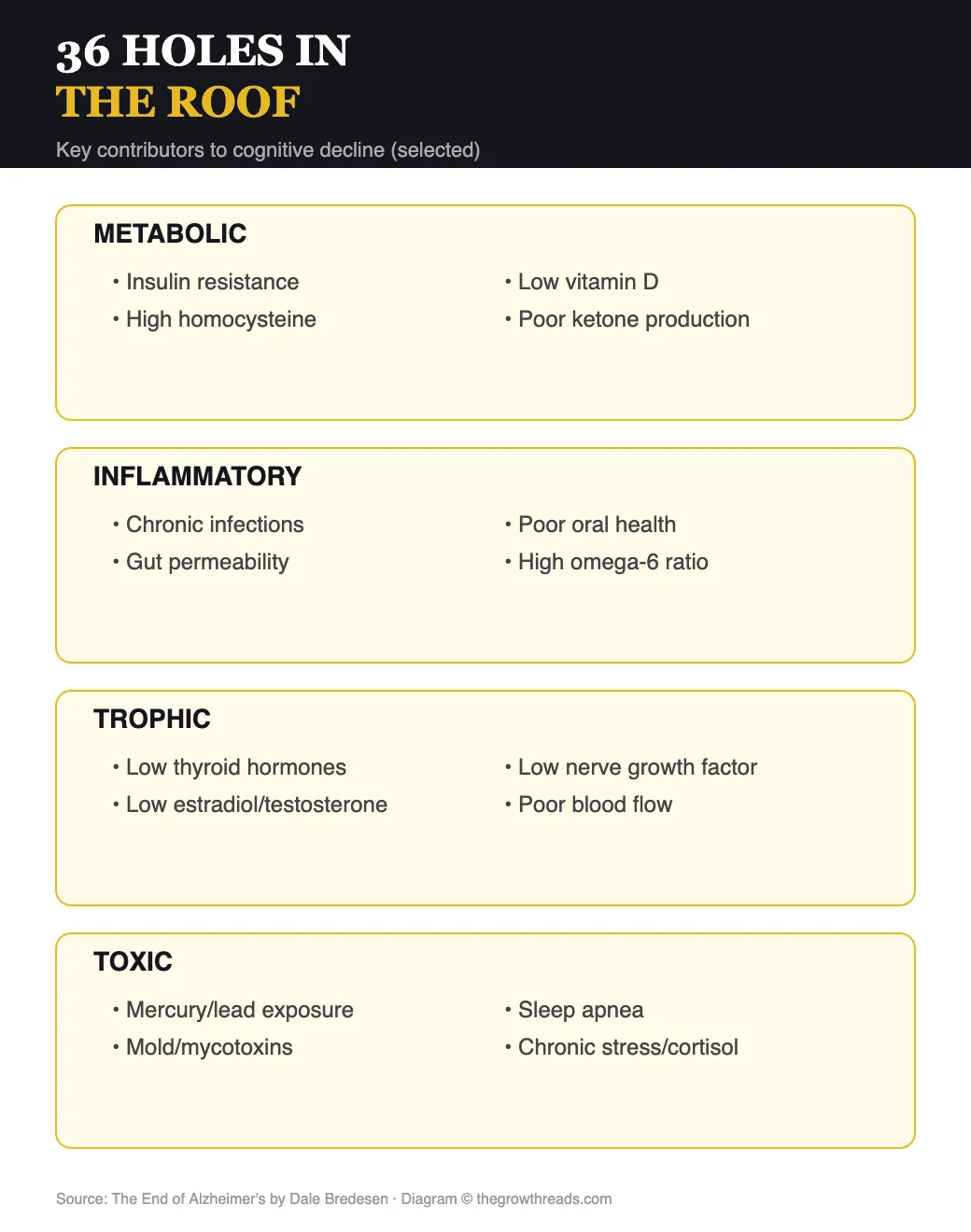
He introduces the “36 holes in the roof” analogy: Alzheimer’s is not caused by a single problem but by the simultaneous failure of multiple protective systems. Imagine your brain as a house with a roof full of holes. Patching one or two holes (one or two drugs) will not keep the rain out if 34 others are still leaking. The ReCODE protocol aims to identify and patch every hole specific to each patient.
Part 2: The three faces of Alzheimer’s
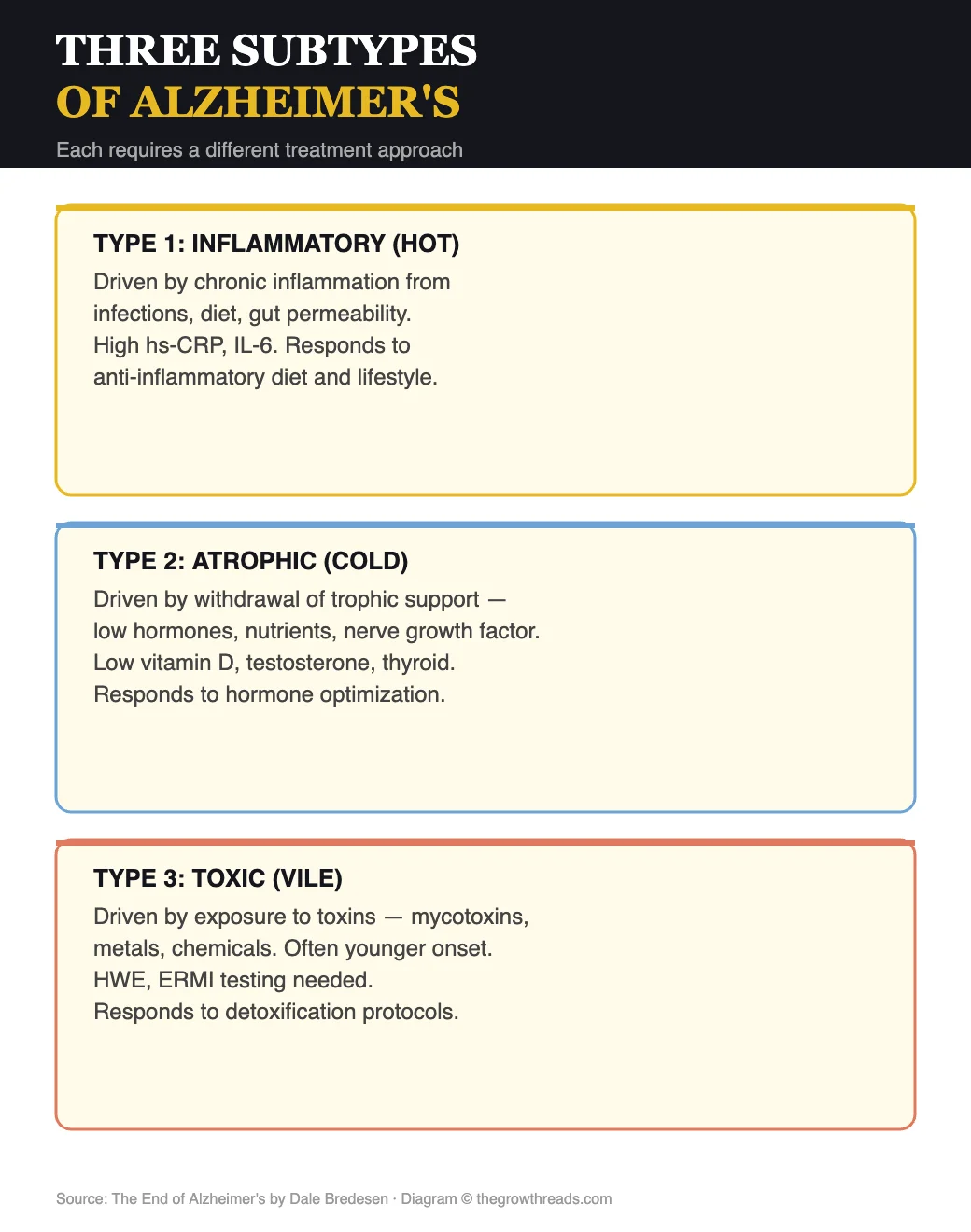
One of Bredesen’s most important contributions is the classification of Alzheimer’s into three distinct subtypes, each driven by different mechanisms and requiring different interventions. This explains why the disease manifests so differently across patients and why one-size-fits-all drug approaches fail.
Type 1 (Inflammatory or “Hot”) is driven by chronic inflammation. The sources can include systemic infections (oral pathogens, herpes viruses, Lyme disease), gut permeability (“leaky gut”), pro-inflammatory diet (high sugar, trans fats, processed foods), or chronic stress. Biomarkers typically show elevated hs-CRP, interleukin-6, and tumor necrosis factor. Treatment focuses on identifying and eliminating the inflammatory triggers while supporting anti-inflammatory pathways through diet, omega-3 supplementation, and gut repair.
Type 2 (Atrophic or “Cold”) results from the withdrawal of trophic (growth-supporting) factors that neurons need to survive. When hormones drop (estradiol, testosterone, thyroid), when nutrients become deficient (vitamin D, B12, zinc), or when nerve growth factor declines, neurons receive insufficient support signals and begin downsizing — pulling back synapses and eventually dying. Treatment involves optimizing hormone levels, correcting nutrient deficiencies, and supporting neurotrophin production through exercise.
Type 3 (Toxic or “Vile”) is the most challenging subtype, driven by exposure to biological toxins (mycotoxins from mold), metals (mercury, lead, arsenic), or organic chemicals. It often presents in younger patients (40s-50s), frequently affects non-ApoE4 carriers, and can involve symptoms beyond memory — including executive function deficits, depression, and difficulty with numbers. Treatment requires identifying the specific toxins through specialized testing and implementing detoxification protocols.
Part 3: The ReCODE protocol — patching every hole
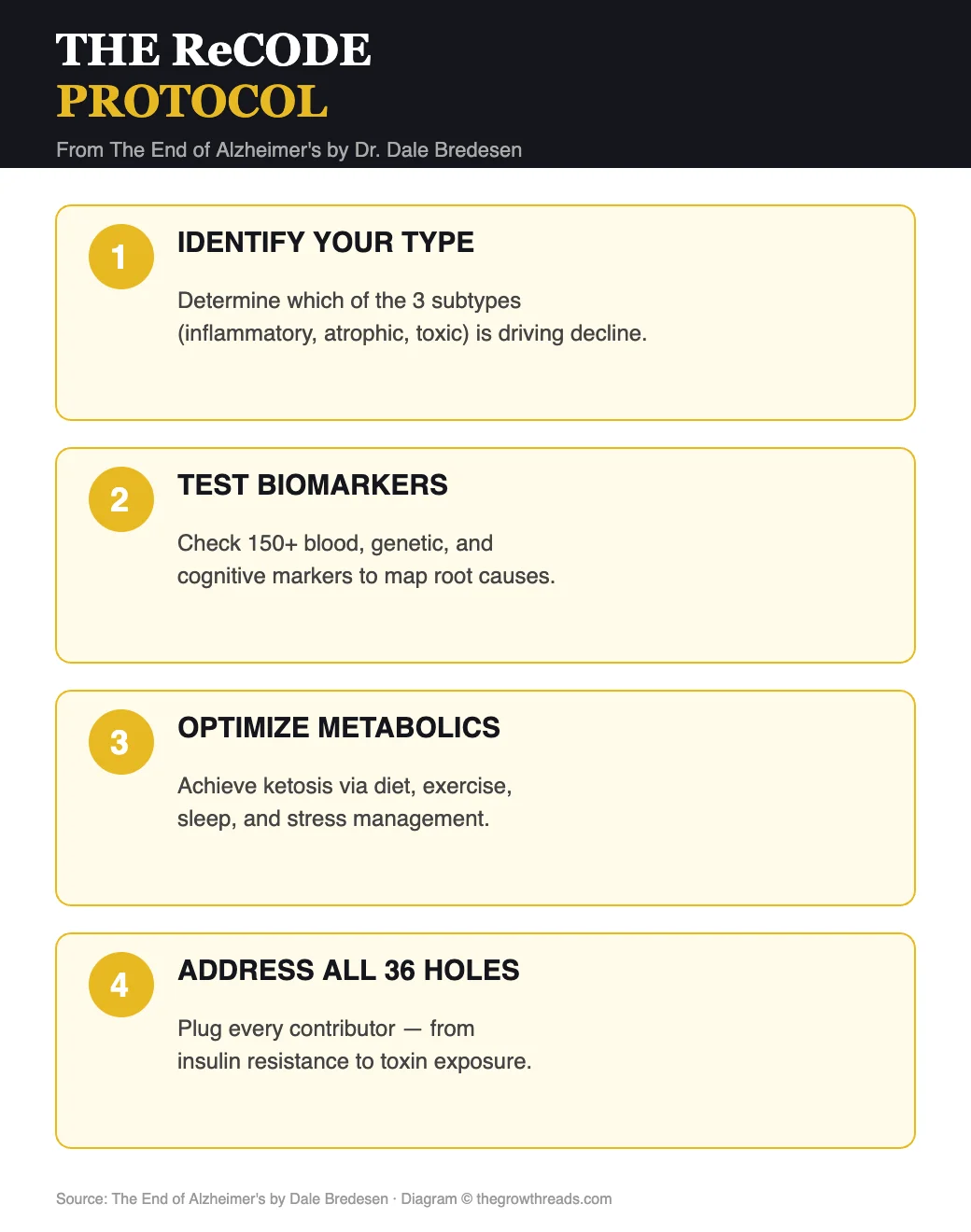
The practical core of the book is the ReCODE protocol: a comprehensive, personalized program that addresses all identified contributors to cognitive decline simultaneously. Bredesen compares it to treating a complex infection with a combination antibiotic regimen — the power comes from hitting multiple targets at once.
The protocol begins with what Bredesen calls a “cognoscopy” — a comprehensive battery of over 150 tests covering genetics (ApoE status), inflammation markers (hs-CRP, IL-6, TNF-alpha), metabolic health (fasting insulin, HbA1c, homocysteine), hormones (thyroid, sex hormones, cortisol, pregnenolone), nutrients (vitamin D, B12, zinc, copper, magnesium), toxins (mercury, lead, mycotoxins), and cognitive function. The results create a personalized map of which “holes” are present in each patient’s roof.
The dietary foundation is KetoFLEX 12/3: a mildly ketogenic, predominantly plant-based diet rich in non-starchy vegetables, healthy fats, and clean protein. “12/3” refers to the fasting protocol — a minimum 12-hour overnight fast with no food within 3 hours of bedtime. This promotes autophagy (cellular cleanup), improves insulin sensitivity, and provides ketones as an alternative brain fuel. For ApoE4 carriers, Bredesen recommends a more plant-heavy, lower-saturated-fat version.
Part 4: Making it work — lifestyle, supplements, and early results
Beyond diet, the ReCODE protocol includes specific prescriptions for exercise, sleep, stress management, and cognitive stimulation. Bredesen recommends a minimum of 150 minutes per week of aerobic exercise — ideally combining cardio, strength training, and high-intensity intervals — because exercise is the most potent known driver of brain-derived neurotrophic factor (BDNF), the molecule that promotes the growth and survival of neurons.
Sleep receives particular emphasis because the brain’s glymphatic system — which clears metabolic waste including amyloid-beta — operates primarily during deep sleep. Bredesen considers seven to eight hours of quality sleep, with adequate time in both deep and REM stages, a non-negotiable component of the protocol. He addresses common sleep disruptors including sleep apnea, which he considers an underdiagnosed contributor to cognitive decline.
The supplement protocol is extensive and personalized based on test results. Common recommendations include omega-3 fatty acids (DHA specifically for brain structure), vitamin D3 (targeting blood levels of 50-80 ng/mL), B vitamins (especially B12, folate, and B6 for homocysteine reduction), magnesium threonate (which crosses the blood-brain barrier), citicoline (for neuronal membrane support), and ashwagandha (for stress-driven cortisol reduction). The specific combinations and dosages depend on each patient’s biomarker profile.
Bredesen presents case studies of patients who have experienced documented cognitive improvement on the protocol. His first published paper described 10 patients with subjective cognitive impairment or mild cognitive impairment, 9 of whom showed measurable improvement — some returning to normal function and back to work. While these are not large randomized controlled trials, they represent the first published evidence that cognitive decline can be reversed rather than merely slowed.
Who is The End of Alzheimer’s best for — and who should read something else first?
This book is essential reading for anyone with a family history of Alzheimer’s or cognitive decline, particularly those in their 40s and 50s who want to take proactive steps before symptoms appear. It is also valuable for healthcare practitioners interested in functional and integrative medicine approaches to neurodegeneration. The protocol is complex and data-heavy, which will appeal to detail-oriented readers who want to understand the science behind every recommendation.
If you want a broader longevity framework that includes brain health as one component, start with Outlive by Peter Attia. If your primary interest is general brain optimization rather than Alzheimer’s prevention specifically, Keep Sharp by Sanjay Gupta offers a more accessible entry point. And if you are focused on nutrition’s role in brain health, Genius Foods by Max Lugavere covers many of the same dietary principles in a lighter format. This information is educational — consult your doctor before making health decisions.
Questions to reflect on
- When was the last time you had comprehensive blood work done, and does it include the metabolic markers Bredesen considers essential — fasting insulin, homocysteine, hs-CRP, and vitamin D?
- If you carry the ApoE4 gene variant (about 25% of people do), would knowing that change your behavior today even though symptoms may be decades away?
- How many hours of sleep do you consistently get, and have you ever been evaluated for sleep apnea or tracked your deep sleep percentage?
- Looking at the three Alzheimer’s subtypes, which risk factors (inflammatory, atrophic, toxic) are most present in your life right now?
- What would need to change in your daily routine to implement even 50% of the ReCODE protocol — and what is the cost of doing nothing?
🔥 Ready to protect your brain for the long run?
The End of Alzheimer’s gives you the science-backed protocol to identify your risk factors and take action decades before symptoms appear.
How to apply The End of Alzheimer’s (7-day plan)
- Day 1 — Get your baseline blood work: Schedule comprehensive labs including fasting insulin, HbA1c, homocysteine, hs-CRP, vitamin D, B12, thyroid panel, and lipid panel. Ask your doctor about ApoE genotyping.
- Day 2 — Start the 12/3 fast: Stop eating 3 hours before bed and do not eat again for at least 12 hours. This single change begins improving insulin sensitivity and promoting autophagy immediately.
- Day 3 — Audit your sleep: Track your sleep with a wearable or app. Note total hours, estimated deep sleep, and any disruptions. Address the biggest sleep disruptor you identify.
- Day 4 — Shift your plate: Make one meal today predominantly non-starchy vegetables and healthy fats (avocado, olive oil, nuts, wild fish). Eliminate added sugar and processed food from that meal.
- Day 5 — Move for your brain: Complete 30 minutes of moderate-to-vigorous aerobic exercise — brisk walking, cycling, swimming, or jogging. This directly increases BDNF production.
- Day 6 — Start three foundational supplements: After consulting your doctor, consider omega-3 (DHA-rich), vitamin D3, and magnesium — three of the most commonly deficient nutrients in Bredesen’s protocol.
- Day 7 — Review and plan: When your blood work results arrive, compare them to Bredesen’s optimal ranges. Identify the three biomarkers furthest from optimal and research specific interventions for each.
Frequently asked questions
Can Alzheimer’s really be reversed?
Bredesen’s published case studies show measurable cognitive improvement in patients with subjective cognitive impairment and mild cognitive impairment — the earliest stages of decline. Some patients returned to normal function and resumed working. However, the results are less promising for moderate-to-severe Alzheimer’s, and large-scale randomized controlled trials are still underway. The strongest case is for prevention and early intervention rather than reversing advanced disease. Always work with a qualified healthcare provider.
What is the ReCODE protocol?
ReCODE stands for Reversal of Cognitive Decline. It is a personalized, multi-target intervention that identifies the specific metabolic, inflammatory, and toxic factors driving each patient’s cognitive decline through comprehensive testing, then addresses all of them simultaneously through diet (KetoFLEX 12/3), exercise, sleep optimization, stress management, hormone balancing, and targeted supplementation. The protocol is tailored to each individual based on their biomarker profile and Alzheimer’s subtype.
What is KetoFLEX 12/3?
KetoFLEX 12/3 is the dietary component of the ReCODE protocol. It is a mildly ketogenic, predominantly plant-based diet emphasizing non-starchy vegetables, healthy fats, and clean protein sources. The “12/3” refers to the fasting window: a minimum 12-hour overnight fast with no food consumed within 3 hours of bedtime. For ApoE4 carriers, the diet is modified to be lower in saturated fat and higher in plant-based fats. The goal is to improve insulin sensitivity and provide ketones as an alternative brain fuel.
Should I get tested for the ApoE4 gene?
Bredesen recommends it, arguing that knowledge empowers prevention. About 25% of the population carries at least one copy of ApoE4, which increases Alzheimer’s risk by 3-12x depending on whether you have one or two copies. Knowing your status allows you to tailor dietary choices (ApoE4 carriers may need less saturated fat), increase vigilance with metabolic markers, and start the protocol earlier. However, genetic testing is a personal decision — discuss it with a genetic counselor or physician first.
How is this different from conventional Alzheimer’s treatment?
Conventional treatment focuses on single-drug approaches that target one mechanism (usually amyloid plaques or acetylcholinesterase). Bredesen’s protocol targets all identified contributors simultaneously — metabolic, inflammatory, hormonal, nutritional, and toxic — using a combination of lifestyle changes and supplements rather than pharmaceuticals alone. The key philosophical difference is that Bredesen treats Alzheimer’s as a multi-factorial metabolic disease rather than a single-cause neurological condition.
Is the protocol too complex for most people to follow?
The full ReCODE protocol is genuinely complex and ideally implemented with the guidance of a trained practitioner. However, Bredesen emphasizes that even partial implementation — adopting the diet, improving sleep, exercising regularly, and correcting obvious nutrient deficiencies — can provide significant benefit. He encourages readers to start with the foundational elements and add complexity as they gain confidence. Many functional medicine practitioners are now trained in the protocol.
What are the three subtypes of Alzheimer’s?
Type 1 (Inflammatory or “Hot”) is driven by chronic inflammation from infections, diet, or gut issues. Type 2 (Atrophic or “Cold”) results from withdrawal of growth-supporting factors like hormones and nutrients. Type 3 (Toxic or “Vile”) is caused by exposure to toxins including mold, metals, and chemicals. Many patients have elements of more than one subtype, which is why comprehensive testing is essential for determining the right treatment approach for each individual.
Related summaries
- Outlive Summary — Peter Attia on proactive longevity medicine, including neurodegeneration as one of the Four Horsemen.
- Keep Sharp Summary — Sanjay Gupta on five pillars of brain health for everyday cognitive optimization.
- Why We Sleep Summary — Matthew Walker on sleep’s critical role in brain health and amyloid clearance.
- Genius Foods Summary — Max Lugavere on nutrition strategies that support brain function and prevent decline.
📚 Explore the full Health collection
This summary is part of our best health books series — 40 in-depth reviews covering nutrition, exercise, sleep, longevity, and the science of feeling your best.