

★★★★☆ 4.0 / 5
One-liner: A Cornell biochemist presents decades of research linking animal protein to cancer, heart disease, and diabetes — and argues that a whole-food, plant-based diet can prevent and even reverse the leading killers.
Best for: Readers who want the scientific case for plant-based eating, anyone with a family history of heart disease or cancer, and health professionals evaluating nutrition evidence.
Reading time: ~8 hrs (guide: 28 min)
Difficulty to apply: High (advocates eliminating all animal products)
The China Study in one minute
The foods you eat every day are either feeding disease or fighting it — and decades of research suggest that animal protein is on the wrong side of that equation. T. Colin Campbell, a biochemist at Cornell University, presents findings from the China-Cornell-Oxford Project — the largest epidemiological study of diet and disease ever conducted — alongside his own laboratory research and a sweeping review of nutrition science. His conclusion: a whole-food, plant-based diet dramatically reduces the risk of heart disease, cancer, diabetes, autoimmune conditions, and obesity. The book is both a scientific argument and a polemic, challenging the food industry, government dietary guidelines, and mainstream nutrition science for promoting animal-based diets despite evidence of harm.
Key takeaways
- Animal protein promotes cancer growth: In laboratory studies, casein (the primary protein in dairy) at 20% of calories consistently promoted cancer cell growth; reducing it to 5% stopped tumour development even in the presence of carcinogens.
- The China Study revealed striking dietary correlations: Across 65 rural Chinese counties, populations eating the most plant-based diets had dramatically lower rates of cancer, heart disease, and diabetes compared to those eating more animal foods.
- Whole-food plant-based diets can reverse heart disease: Dean Ornish and Caldwell Esselstyn demonstrated in clinical trials that severe heart disease could be reversed — not merely slowed — through plant-based nutrition.
- Dairy is linked to prostate and breast cancer: Countries with the highest dairy consumption have the highest rates of these cancers; the mechanism may involve IGF-1, a growth hormone stimulated by dairy protein.
- Type 2 diabetes responds rapidly to dietary change: Patients switching to whole-food, plant-based diets frequently reduce or eliminate insulin medication within weeks.
- The calcium-osteoporosis paradox: Countries consuming the most dairy have the highest rates of hip fractures, suggesting that animal protein may leach more calcium from bones than dairy provides.
- Autoimmune diseases have dietary triggers: Research links dairy protein consumption in genetically susceptible children to increased risk of Type 1 diabetes.
- Nutrition science is compromised by industry funding: Campbell argues that the food and pharmaceutical industries systematically influence research, guidelines, and public health messaging to protect their markets.
- Reductionist nutrition misses the big picture: Studying individual nutrients (vitamin C, beta-carotene) in isolation often fails; the synergy of whole foods produces health effects that single nutrients cannot replicate.
- The simplest dietary advice is the most powerful: Eat whole, plant-based foods. Avoid animal products and processed foods. No calorie counting or portion control needed.
What is The China Study about?
The China Study presents the findings of the largest epidemiological nutrition study ever conducted, linking animal protein consumption to cancer, heart disease, and diabetes. Author T. Colin Campbell combines this data with laboratory research and clinical evidence to argue that a whole-food, plant-based diet is the most powerful tool for preventing and reversing chronic disease.
About the author
T. Colin Campbell, PhD, is the Jacob Gould Schurman Professor Emeritus of Nutritional Biochemistry at Cornell University. He grew up on a dairy farm and began his career studying how to produce animal protein more efficiently — making his eventual advocacy for plant-based nutrition a dramatic personal and scientific reversal. He directed the China-Cornell-Oxford Project alongside researchers from Oxford University and the Chinese Academy of Preventive Medicine, and has authored over 300 peer-reviewed research papers. The China Study, co-written with his son Thomas M. Campbell II, MD, has sold over two million copies and been translated into more than 50 languages. Campbell also helped develop the plant-based nutrition certificate programme at Cornell. Explore all T. Colin Campbell book summaries →
Key concepts at a glance
| Concept | What it means | Use it when |
|---|---|---|
| Diseases of affluence | Chronic conditions (cancer, heart disease, diabetes) that rise as nations adopt Western diets | You want to understand why wealthy nations are sicker |
| Diseases of poverty | Infectious and deficiency diseases common in underdeveloped regions | You are comparing global health patterns |
| Casein | The primary protein in dairy, used in Campbell’s cancer-promotion experiments | You are evaluating dairy’s role in disease |
| IGF-1 | Insulin-like growth factor 1, a hormone that promotes cell growth (including cancer cells), stimulated by animal protein | You want to understand the cancer-protein mechanism |
| Whole-food plant-based | Diet of unprocessed vegetables, fruits, grains, and legumes with minimal or no animal products | You are considering dietary changes for health |
| Reductionism | The flawed approach of studying single nutrients rather than whole dietary patterns | You are confused by contradictory supplement studies |
| Nutritional holism | The principle that whole foods deliver synergistic benefits that isolated nutrients cannot replicate | You wonder whether food is better than supplements |
Part 1 — The laboratory evidence
Campbell begins not with the China data but with his own laboratory research, which provides the mechanistic foundation for the book’s argument. In a series of experiments spanning over two decades, he studied the relationship between dietary protein and cancer development in rats. The setup: rats were exposed to aflatoxin (a potent carcinogen found in mouldy peanuts) and then fed diets with varying levels of casein, the primary protein in cow’s milk.
The results were striking and consistent. Rats fed a diet containing 20% casein developed extensive liver cancer. Rats fed the same carcinogen but only 5% casein showed virtually no cancer development. Campbell could switch cancer growth on and off like a light switch simply by adjusting the protein level. When he tested plant proteins (wheat gluten, soy protein) at the same 20% level, they did not promote cancer growth. This led him to conclude that it was specifically animal protein — not protein in general — that was the promoter.
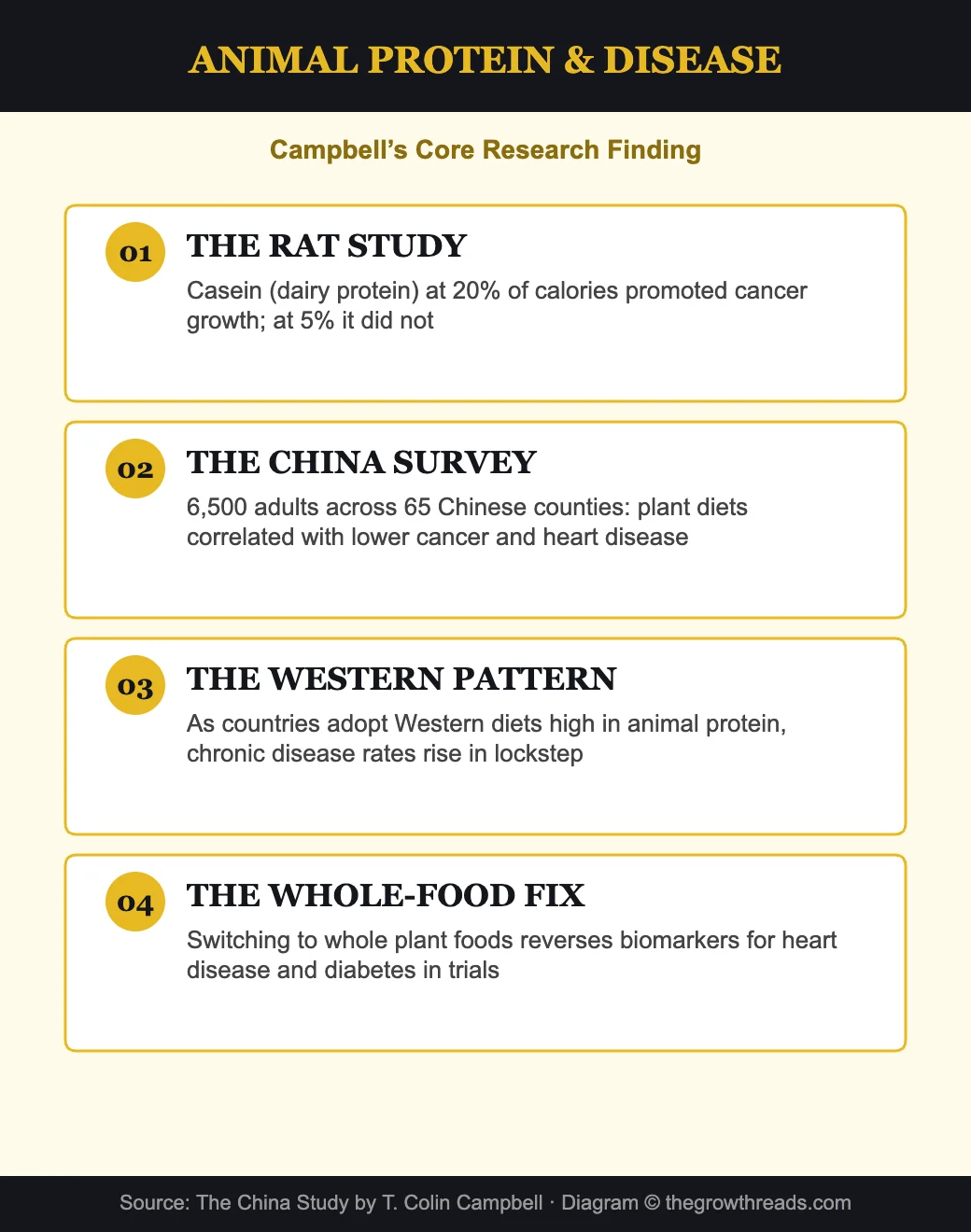
He further investigated the mechanism and found that casein at high levels increased the activity of an enzyme called mixed-function oxidase (MFO), which converts aflatoxin into its cancer-causing form. It also promoted cell growth through IGF-1, a hormone that accelerates the division of both healthy and cancerous cells. These findings, published in peer-reviewed journals, established a biological pathway linking animal protein to cancer promotion — a pathway that would later be supported by the epidemiological data from China.
Part 2 — The China data
The centrepiece of the book is the China-Cornell-Oxford Project, a collaboration between Cornell University, Oxford University, and the Chinese Academy of Preventive Medicine. The study collected dietary, lifestyle, and disease data from 6,500 adults across 65 rural Chinese counties — regions chosen because populations were genetically similar but ate very different diets depending on local agriculture and tradition. This design allowed researchers to isolate the effects of diet from the confounding variables of genetics and geography that plague many Western nutrition studies.
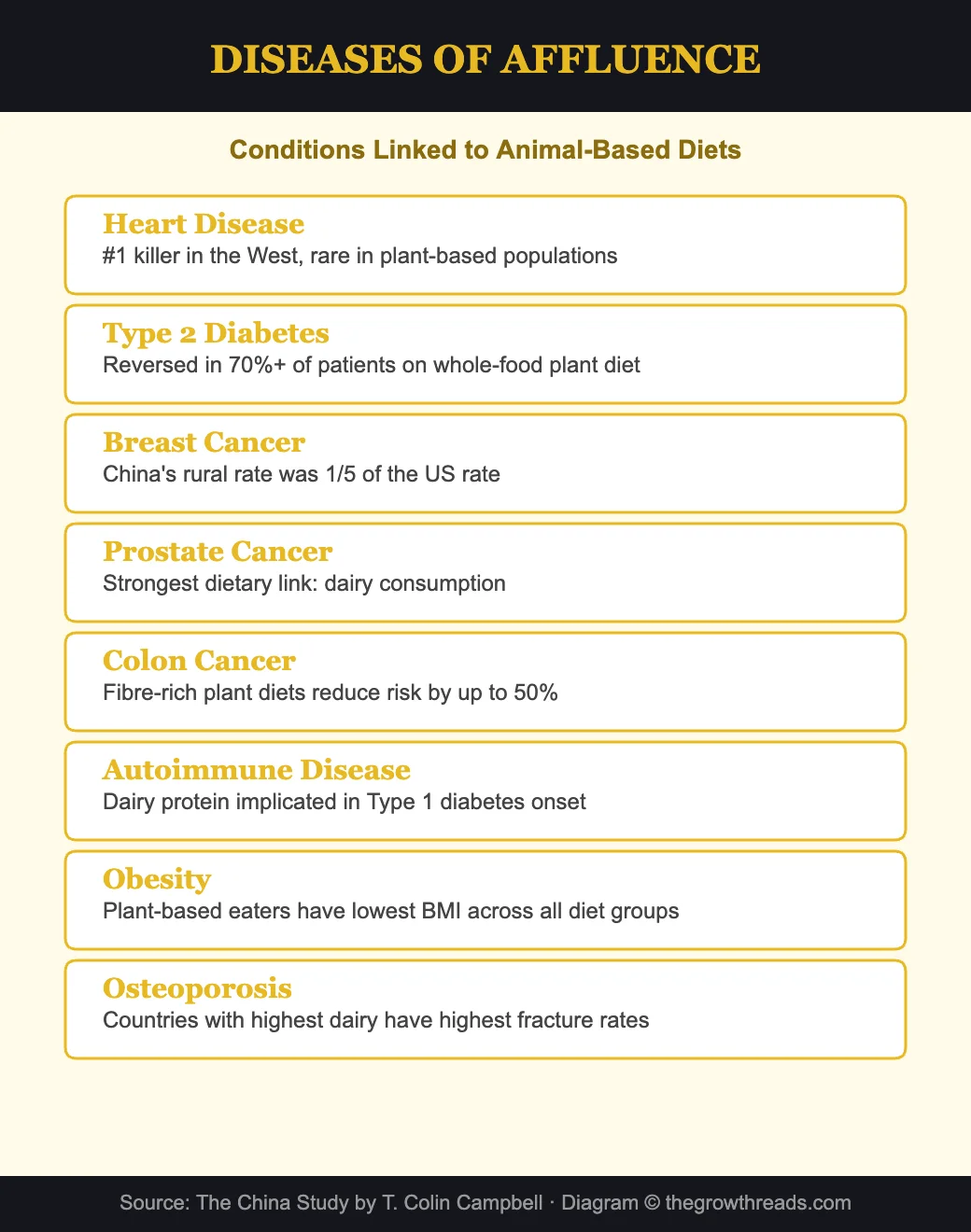
The findings revealed a clear pattern. Counties where diets were most plant-based had dramatically lower rates of heart disease, breast cancer, colon cancer, and diabetes. As animal food consumption increased — even modestly by Western standards — so did chronic disease rates. Blood cholesterol levels in rural China averaged 127 mg/dL (compared to 215 in the US), and even within the Chinese population, higher cholesterol correlated with higher cancer rates. Campbell describes this as the most consistent finding: the diseases of affluence cluster together, are driven by the same dietary pattern (high animal protein, high fat, low fibre), and can be predicted with remarkable accuracy by a handful of biomarkers.
He extends the argument beyond China to global patterns. Wherever Western diets have been adopted — Japan after World War II, urban India, industrialising Brazil — rates of cancer, diabetes, and heart disease have risen in lockstep with animal food consumption. This ecological evidence, while not sufficient to prove causation on its own, is consistent enough across dozens of populations and decades of data to constitute a powerful signal.
Part 3 — Diseases and the food connection
The second half of the book applies the framework to specific diseases. Heart disease receives the most compelling treatment. Campbell presents the work of Caldwell Esselstyn at the Cleveland Clinic and Dean Ornish at the Preventive Medicine Research Institute, both of whom demonstrated in clinical trials that severe coronary artery disease could be reversed — arteries actually unclogged — through whole-food, plant-based diets combined with lifestyle changes. Esselstyn’s patients, many of whom had been told they were beyond surgical help, saw their angina disappear and their arteries clear on plant-based nutrition alone.
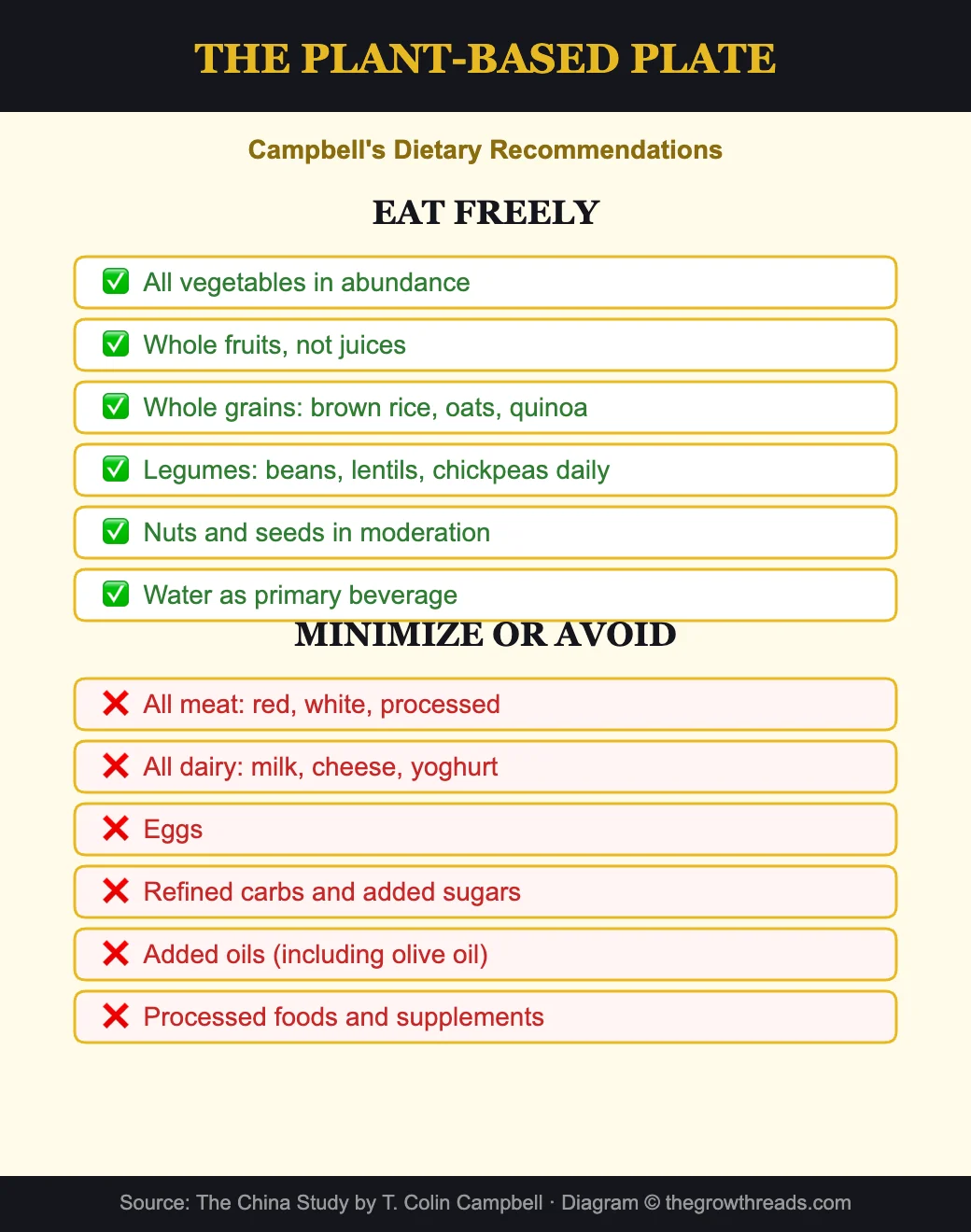
The diabetes chapter documents how patients switching to plant-based diets frequently reduce or eliminate insulin medication within weeks — a timeframe that surprises most readers. The mechanism: whole plant foods are high in fibre and low in saturated fat, which improves insulin sensitivity rapidly. Campbell notes that this dietary approach works for Type 2 diabetes management (not a cure) and should be supervised by a physician.
The cancer chapters cover breast, prostate, and colon cancer, with dairy receiving particular scrutiny. Countries with the highest dairy consumption consistently have the highest rates of prostate and breast cancer. The proposed mechanism involves IGF-1: dairy consumption elevates IGF-1 levels, which promotes the growth of existing cancer cells. Campbell is careful to note that diet does not “cause” cancer in the way that a carcinogen does — rather, it creates or removes the conditions under which cancer cells thrive or are kept in check.
Who is The China Study best for — and who should read something else first?
This book is ideal for readers who want the scientific case for plant-based eating presented in full — the laboratory evidence, the epidemiological data, and the clinical applications. It is especially valuable for anyone with a family history of heart disease, cancer, or diabetes who wants to understand how dietary choices affect their risk. Health professionals will find the research citations useful for evaluating the evidence themselves.
If you want a more practical, less academic guide to plant-based eating, How Not to Die is more actionable. If you prefer a balanced approach that includes some animal foods, In Defense of Food offers a middle path. And if you are sceptical of plant-based advocacy, read Grain Brain alongside this book — Perlmutter reaches very different conclusions about grains and fats, and comparing the two will sharpen your own thinking. Note: always consult a healthcare provider before making significant dietary changes.
Questions to reflect on
- What percentage of your current diet comes from animal products, and how does that compare to the rural Chinese diet Campbell studied?
- If the evidence for plant-based eating is this strong, why do you think mainstream dietary guidelines still emphasise animal protein?
- Have you ever experienced a noticeable health improvement after changing what you eat — even temporarily?
- What would a one-week experiment with whole-food, plant-based eating look like for you?
- How much of your nutritional information comes from sources funded by the food industry?
🔥 Ready to explore the most comprehensive nutrition study ever conducted?
Discover why a whole-food, plant-based diet may be the most powerful health intervention available.
How to apply The China Study (7-day plan)
- Day 1 — Audit your animal intake: Track every animal product you consume today — meat, dairy, eggs, fish. Calculate what percentage of your calories they represent. This is your baseline.
- Day 2 — Go plant-based for breakfast: Try oatmeal with berries and nuts, a smoothie with banana and spinach, or whole-grain toast with avocado and tomato. No eggs, no dairy.
- Day 3 — Master one bean dish: Cook a large batch of your favourite legume: black bean chilli, lentil soup, chickpea curry, or hummus with vegetables. Beans are the protein foundation of a plant-based diet.
- Day 4 — Plant-based lunch: Keep breakfast plant-based and add a plant-based lunch: a grain bowl with roasted vegetables, a hearty salad with beans and seeds, or vegetable stir-fry with brown rice.
- Day 5 — Full plant-based day: Eat entirely from whole plant foods for 24 hours. Focus on variety: grains, beans, vegetables, fruits, nuts. Notice how your energy and digestion feel.
- Day 6 — Check your blood work context: If you have recent blood work, look up your total cholesterol, LDL, fasting glucose, and HbA1c. Compare to the ranges Campbell discusses. Consider requesting updated tests from your doctor in 3 months.
- Day 7 — Decide your next step: Based on the week, decide whether to continue plant-based eating for a 30-day trial. Stock your kitchen with whole grains, beans, frozen vegetables, and fruit. The biggest barrier is preparation — remove it by having ingredients ready.
Frequently asked questions
Is The China Study scientifically rigorous?
The China-Cornell-Oxford Project itself was conducted with legitimate epidemiological methods and published in peer-reviewed journals. However, critics — notably statistician Denise Minger — have argued that Campbell overstates the strength of the correlations and underemphasises confounding variables. The laboratory casein research is more controlled and harder to dispute. The strongest approach is to read the book as a compelling hypothesis supported by substantial (but not conclusive) evidence, and to evaluate it alongside contradictory findings from other well-designed studies.
Does Campbell say all animal protein causes cancer?
Not exactly. His laboratory research specifically tested casein (dairy protein) and found it promoted cancer growth at high intake levels. Plant proteins tested at the same levels did not promote cancer. He extrapolates from this and the epidemiological data to recommend minimising all animal protein, but he acknowledges the lab evidence is strongest for dairy. His position is that animal protein at typical Western consumption levels creates conditions favourable to cancer development — not that any single serving causes cancer.
Can you get enough protein on a plant-based diet?
Yes. Campbell argues that protein deficiency is essentially nonexistent in anyone eating adequate calories from whole plant foods. Beans, lentils, tofu, tempeh, whole grains, nuts, and seeds all provide protein. The average adult needs about 0.8g of protein per kilogram of body weight daily; a varied plant-based diet easily meets this. The American Dietetic Association, the British Dietetic Association, and other professional bodies confirm that well-planned plant-based diets meet all nutritional requirements at every life stage.
What about B12 and other nutrients on a plant-based diet?
Vitamin B12 is the one nutrient that cannot be reliably obtained from plant foods alone and must be supplemented (Campbell acknowledges this). Other nutrients sometimes flagged as concerns — iron, zinc, calcium, omega-3s — are available in plant foods but may require some dietary planning. Dark leafy greens provide calcium, legumes provide iron and zinc, and flaxseeds and walnuts provide omega-3 ALA (though conversion to DHA is limited, so an algae-based DHA supplement may be prudent). Regular blood work is advisable during any major dietary transition.
How does The China Study compare to How Not to Die?
Both advocate whole-food, plant-based diets, but they approach the topic differently. The China Study is primarily a research narrative — it tells the story of how Campbell arrived at his conclusions through decades of laboratory and epidemiological work. How Not to Die by Michael Greger is organised by disease and is more practical, providing specific food recommendations for preventing each of the leading causes of death. Read The China Study for the scientific foundation; read How Not to Die for the daily application.
Why is Campbell against added oils, even olive oil?
Campbell views all extracted oils — including olive oil — as processed foods that have been stripped of fibre, protein, and most micronutrients. He argues that whole food sources of fat (olives, nuts, avocados, seeds) provide the same beneficial fats in a package that includes fibre and other nutrients that moderate absorption and provide additional health benefits. This is one of his more controversial positions; many nutrition researchers consider extra-virgin olive oil a health food based on Mediterranean diet research. It is the most restrictive aspect of his recommendations.
Is this book biased toward veganism?
Campbell would argue he is following the evidence, not an ideology — he grew up on a dairy farm and spent the first half of his career trying to improve animal protein production. That said, critics note that the book presents correlational data as more conclusive than it is, downplays studies that contradict the plant-based thesis, and does not sufficiently address healthy populations (like some Blue Zone communities) that include moderate amounts of animal foods. The most productive approach is to read it alongside books that reach different conclusions and form your own evidence-based view.
Related summaries
- How Not to Die by Michael Greger — The practical companion: disease-by-disease guide to plant-based prevention.
- In Defense of Food by Michael Pollan — A more moderate take: eat food, not too much, mostly plants.
- The Blue Zones by Dan Buettner — Real-world evidence from the longest-lived populations, who eat mostly (but not exclusively) plant-based.
- Grain Brain by David Perlmutter — The contrarian view: a neurologist argues for high fat and against grains.
- See all Health book summaries on our Best Health Books pillar page.