
The Mythical Man-Month Summary & Review: Why Extra People Make Late Work Later
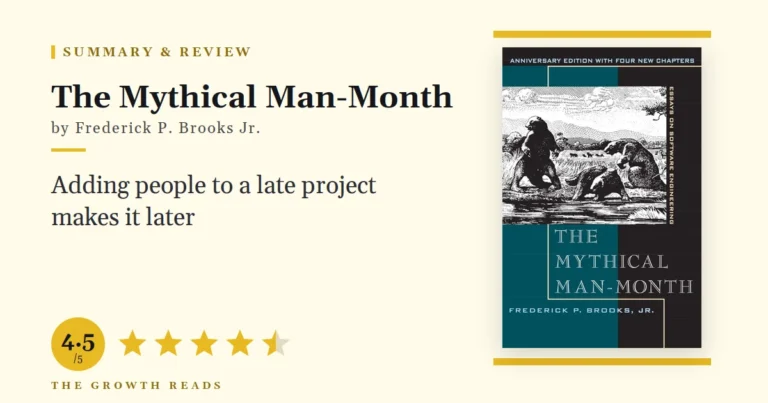
The Mythical Man-Month summary: Brooks’s Law says adding people to a late project makes it later — plus a 7-day plan to protect one mind’s design this week.

The Mythical Man-Month summary: Brooks’s Law says adding people to a late project makes it later — plus a 7-day plan to protect one mind’s design this week.
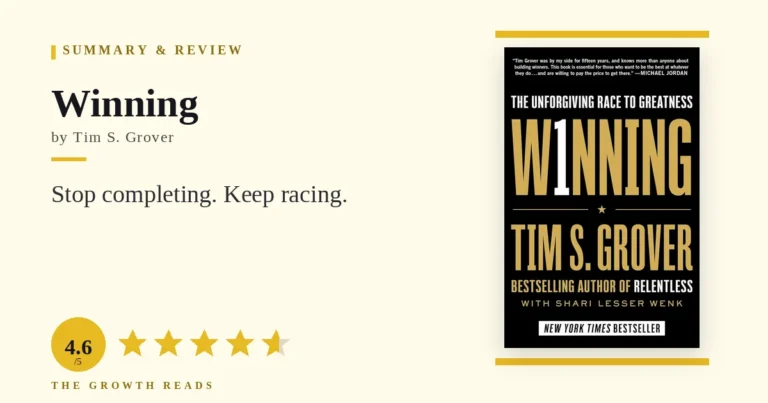
Winning summary: Tim Grover's competitor OS for people who finish the job and then stop. Keep racing after the result, and pay the unforgiving price of greatness.
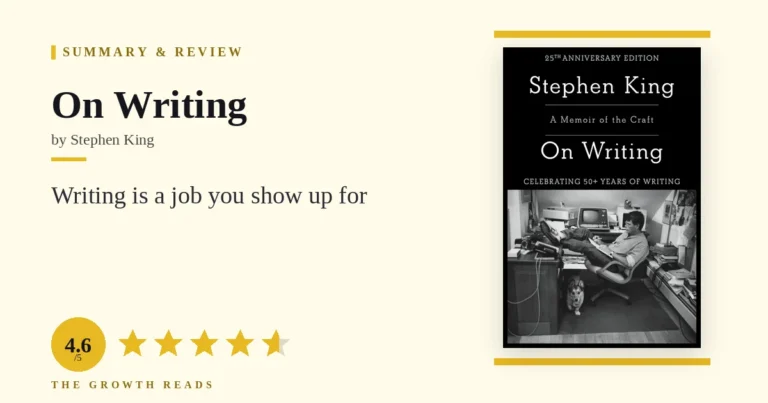
Stephen King’s On Writing treats writing as a job you show up for: read a lot, write a lot, close the door, then cut ten percent. A 7-day desk plan inside.
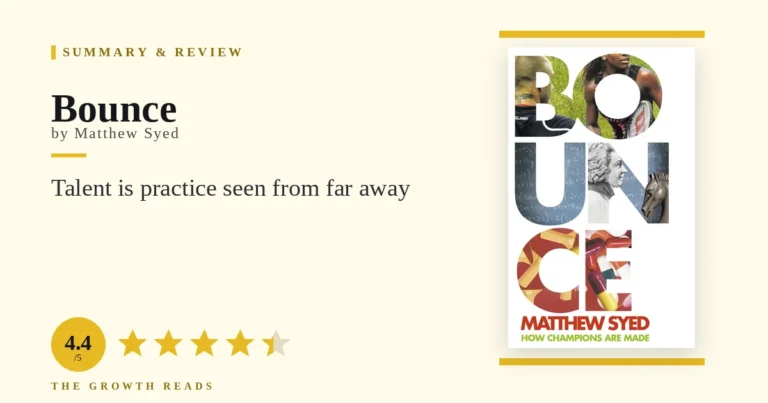
Bounce summary: talent is the visible tip of an iceberg. Matthew Syed on purposeful practice, choking, and a 7-day plan to train the hours nobody sees.

Elizabeth Gilbert’s year in Italy, India, and Indonesia — pleasure, devotion, then balance — and a 7-day home version that doesn’t require a plane. Rated 4.4/5.
Inner Excellence summary: Jim Murphy's system to drop self-centered fear, train presence, and perform under pressure without the scoreboard owning you.

Cal Newport’s Straight-A Student system: a five-minute weekly plan, isolated work, Q/E/C notes, and quiz-and-recall exams so you study less and score more.
Norman Vincent Peale’s 1952 classic shows how to empty worry, fill one true sentence, and take the next hour back — with takeaways, diagrams, and a 7-day plan.
Michael Pollan's four-meal investigation of industrial corn, Big Organic, grass farming, and the hunt — then eat with a story you can tell. Rated 4.6/5.
You Are a Badass summary: Jen Sincero's blunt guide to drop self-doubt, decide a specific life, and take the next scared yes this week. Then repeat the loop.
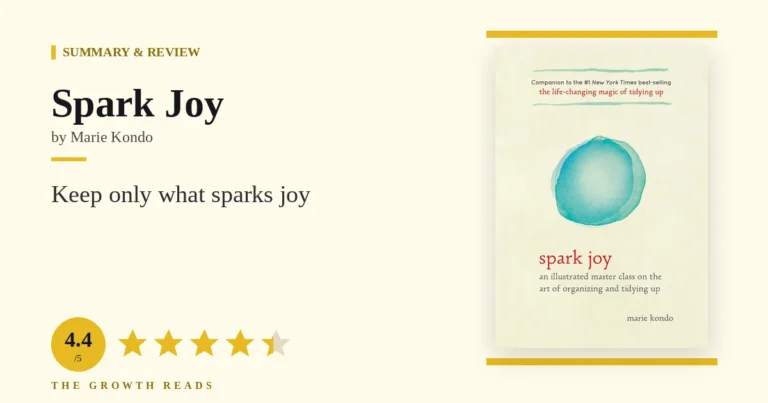
Spark Joy summary: Marie Kondo’s illustrated KonMari master class. Keep what sparks joy, fold it to stand, and give every item a home. Read the review.
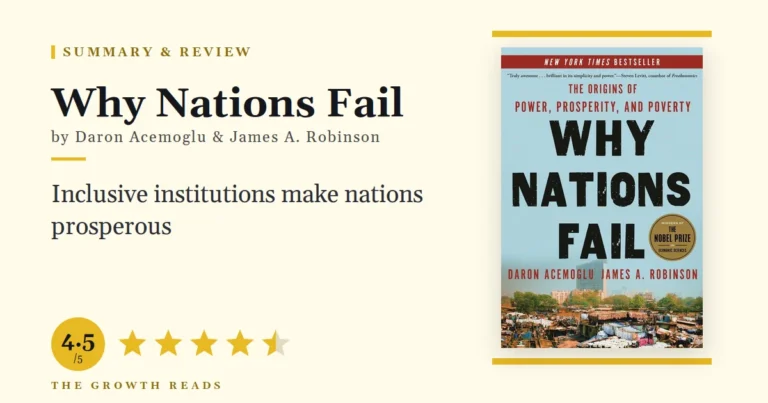
Acemoglu and Robinson’s 2012 map of inclusive versus extractive institutions — why Nogales and Botswana got rich while extractive rules keep other nations poor.