
Time management examples
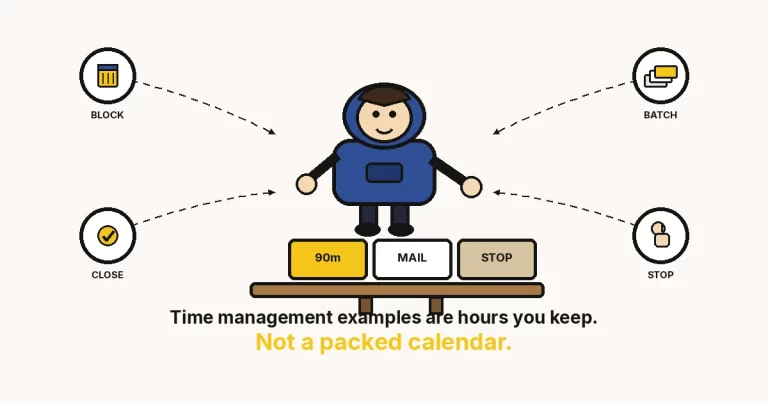
Time management examples are hours you kept — a protected block, a batched inbox, a written no, a timed close — not a packed calendar. What the research treats as a visible behaviour, and what is only busy.
Time management examples are hours you kept — a protected block, a batched inbox, a written no, a timed close — not a packed calendar. What the research treats as a visible behaviour, and what is only busy.
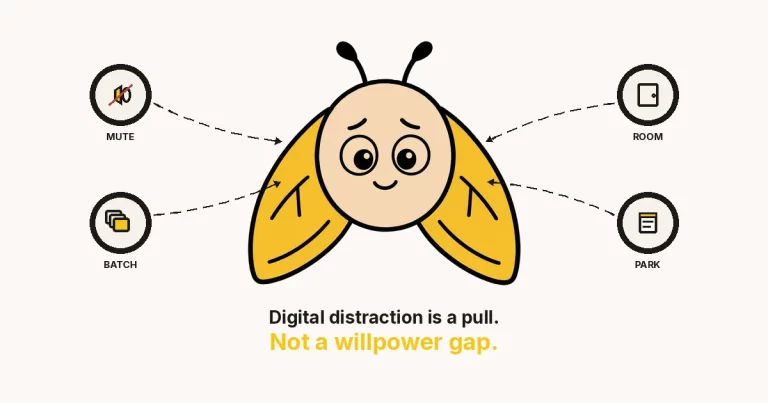
Digital distraction is the attention tax of screens, tabs, and alerts inside the work — not a willpower gap, and not the same problem as a silent phone on the desk.
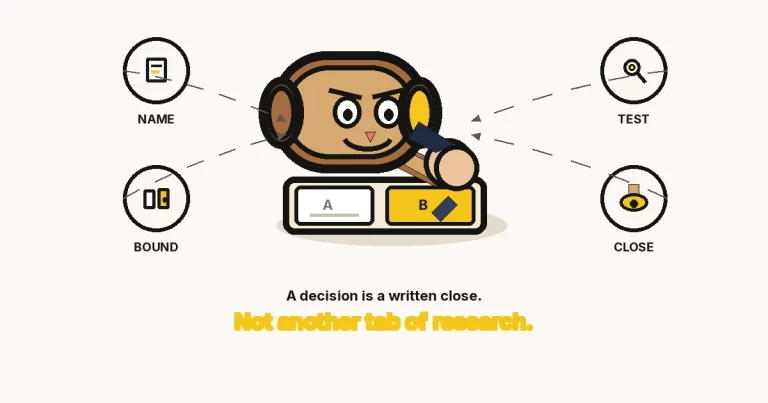
Make a decision by naming the call, bounding the door, running one disconfirming test, and writing the first action — a 6-step close, not another tab of research.
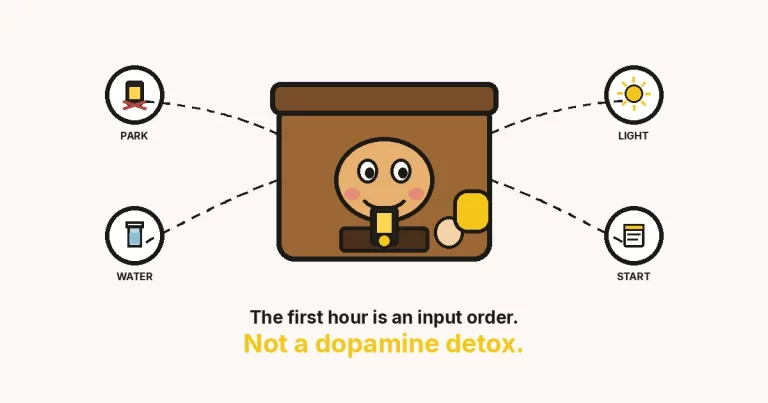
A low-dopamine morning routine is a quieter first hour: delay high-stimulation inputs until after light, water, and one work block. Stimulus order, not a brain hack.
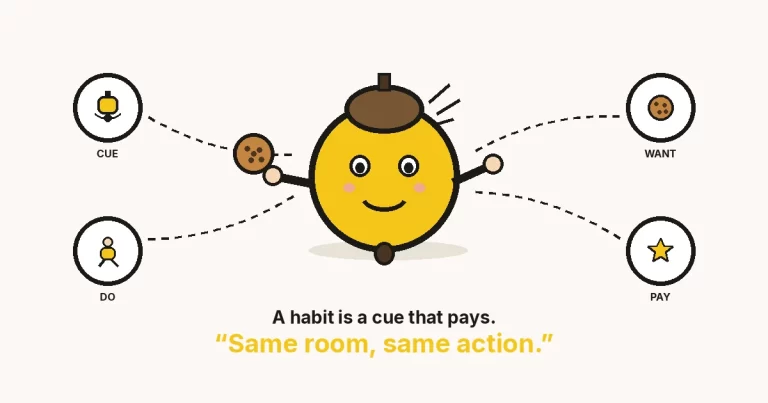
The habit loop is a cue that fires the same action, then a payoff that stamps that cue. Name the room, swap the action, stop chasing the old payoff.
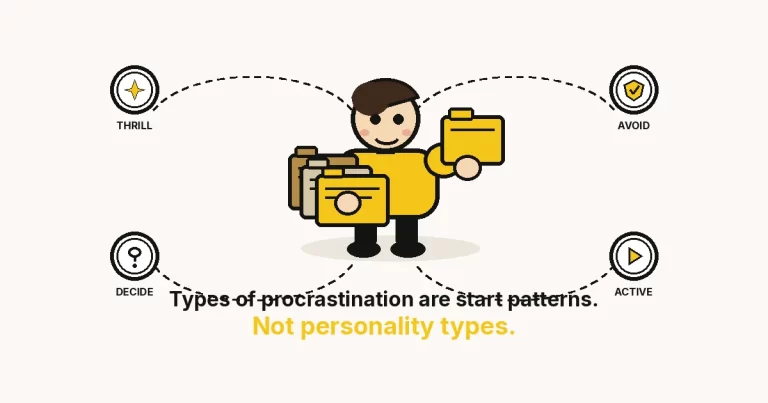
Types of procrastination are start patterns — arousal, avoidant, decisional, active — not personality types. Name the start, not the person.
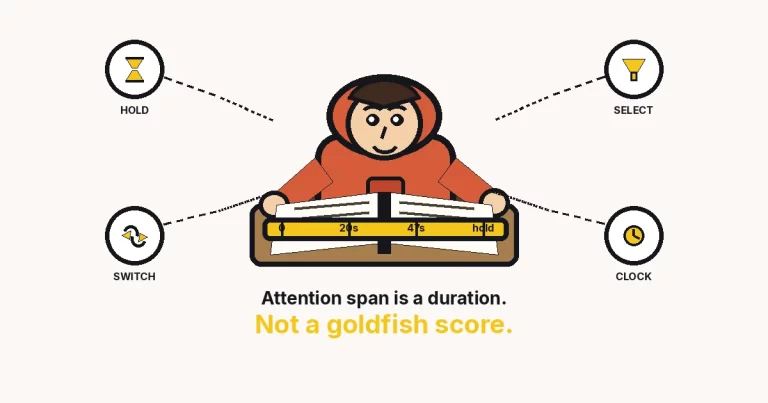
Attention span is the duration you stay with one chosen target — not a goldfish score, not an IQ-like rating, and not a second how-to-focus guide.
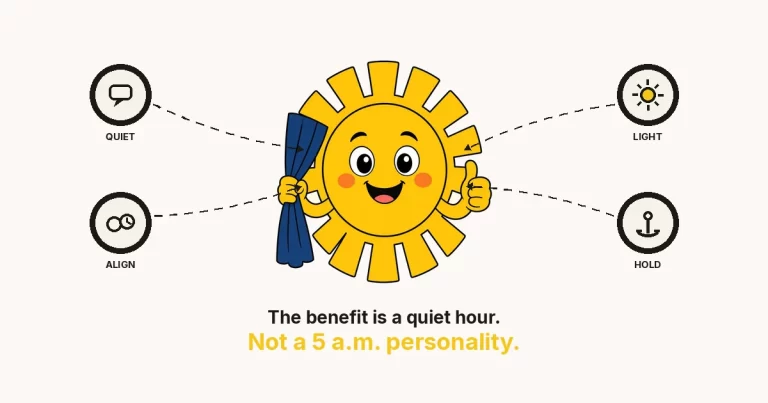
The benefits of waking up early are a quiet first hour and a match to other people’s clocks — not extra hours stolen from sleep, and not a 5 a.m. personality.
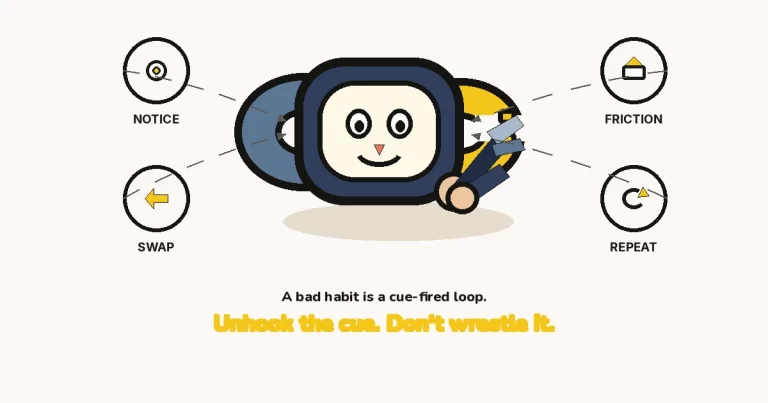
Break a bad habit by unhooking the cue that fires it, swapping in a same-place replacement, and watching the first ten seconds — a 6-step system, not a 21-day pep talk.
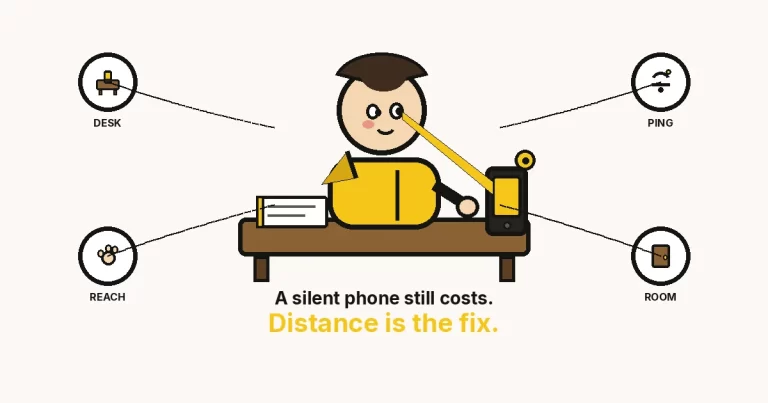
Phone distraction is the attention tax of a nearby smartphone — even a silent one. Presence, ping, and reach each start a switch. Distance is the cheap fix.
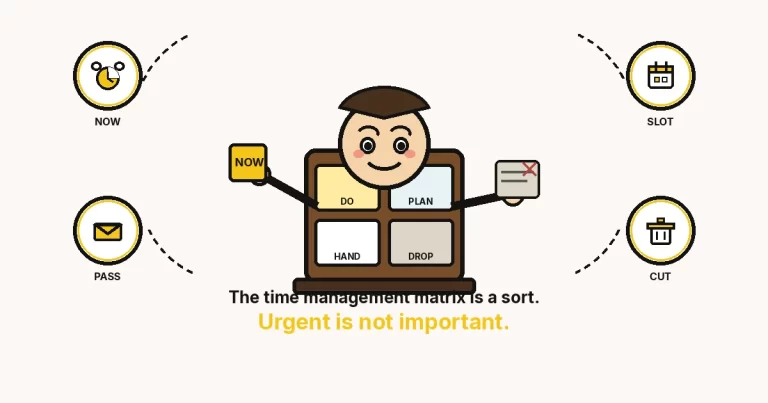
The time management matrix is a two-axis sort: important versus urgent. Four boxes — do now, schedule, hand off, or drop — so the loudest task stops winning the day.
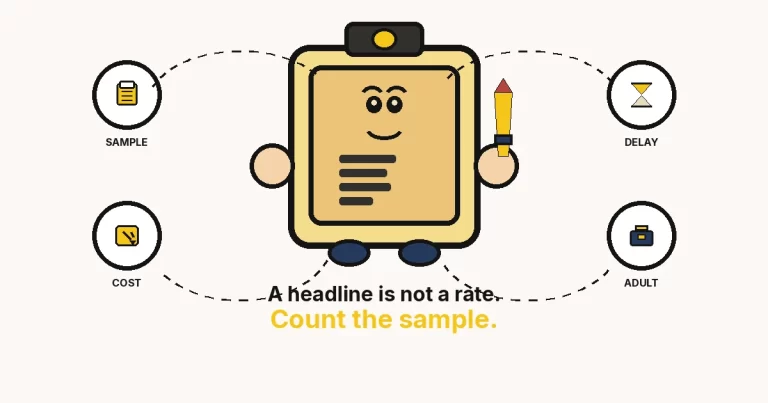
Procrastination statistics are not one rate. Steel's 2007 review collected the 80–95% college figure as earlier estimates. Adult chronic claims sit nearer 15–20%. Read the sample first.