
The PARA Method Summary & Review: Organize by Action, Not Topic
The PARA Method summary: Tiago Forte’s four-folder system — Projects, Areas, Resources, Archives — plus key takeaways, a 7-day apply plan, and FAQs for work.

The PARA Method summary: Tiago Forte’s four-folder system — Projects, Areas, Resources, Archives — plus key takeaways, a 7-day apply plan, and FAQs for work.
Marshall Goldsmith’s 20 interpersonal habits, feedforward, and a 7-day plan for successful people whose winning style is now stalling the next level of work.
Decisive summary: Chip and Dan Heath’s WRAP process for beating narrow framing, plus a 7-day plan to test your assumptions before you choose. Rated 4.5/5.
Yudkowsky and Soares argue that if anyone builds superintelligence with current methods, humanity loses. Grown AIs will not want what you trained. Here's the field guide.
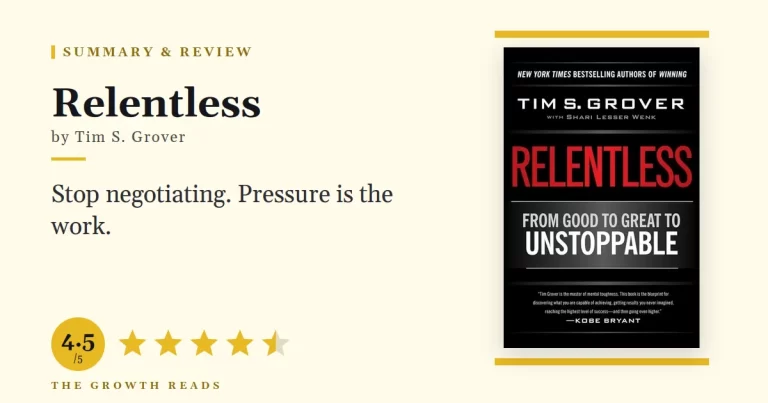
Relentless summary: Tim Grover’s Cooler–Closer–Cleaner map for staying unstoppable under pressure — key takeaways, a 7-day apply plan, and FAQs for work.

StrengthsFinder 2.0 summary: Tom Rath’s Top 5 system for building strengths instead of chasing a well-rounded gap list — takeaways, a 7-day plan, and FAQs.

Give and Take summary: Adam Grant’s three reciprocity styles, why givers finish last and first, and a 7-day plan to stay otherish without burning out.

The Art of Seduction summary and review: Robert Greene’s nine types and four-phase map of how attraction is created, plus a 7-day plan to become more magnetic.

Tribe of Mentors is Tim Ferriss’s 11-question playbook from 130+ world-class performers — short life advice you can steal this week, not another guru to wait for.

Managing Oneself summary: Peter Drucker's method for finding your strengths, how you perform, and where you belong — key takeaways, a 7-day plan, and FAQs.

The Personal MBA summary: Josh Kaufman’s five-part model — value creation, marketing, sales, delivery, finance — and a 7-day plan to learn business without the degree.

Paul Kalanithi’s memoir on meaning, mortality, and how to live when the future is no longer a ladder. A practical reading of When Breath Becomes Air.