
Your body is the vehicle for everything you do. The best health books don’t peddle fad diets — they translate cutting-edge science on sleep, nutrition, exercise, and longevity into habits you can actually sustain.
Top 10 Health & Wellness Books
Our highest-rated picks — based on depth, practicality, and lasting impact.
Key Authors in Health & Wellness
The writers shaping how we think about health.
Latest Summaries
Recently published reviews in this topic.



All Health Book Reviews
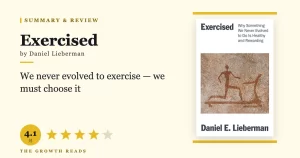
Exercised Summary & Review: Why Something We Never Evolved to Do Is Essential
Daniel Lieberman busts exercise myths using evolutionary biology. Learn why we never evolved to exercise, what actually works, and a practical 7-day plan.
Read Review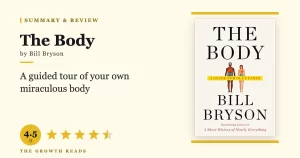
The Body Summary & Review: A Guide to the Most Extraordinary Machine in Existence
Bill Bryson delivers a witty, wonder-filled tour of every organ and system that keeps you alive. Key takeaways on the brain, heart, immune system,...
Read Review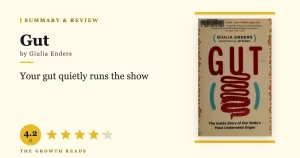
Gut Summary & Review: The Inside Story of Your Most Underrated Organ
Giulia Enders reveals how your gut controls mood, immunity, and weight. Key takeaways on the microbiome, gut-brain axis, and a practical 7-day plan.
Read Review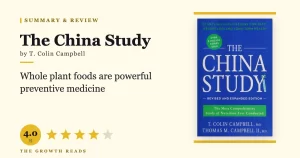
The China Study Summary & Review: The Case for Plant-Based Eating
T. Colin Campbell presents the largest nutrition study ever conducted, linking animal protein to cancer, heart disease, and diabetes. Key takeaways and 7-day plan.
Read Review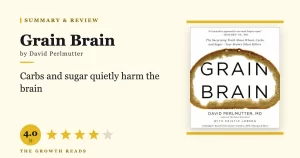
Grain Brain Summary & Review: How Carbs Silently Destroy Your Brain
David Perlmutter reveals how carbs, gluten, and sugar drive brain inflammation and cognitive decline. Key takeaways on the brain-healthy diet plus a 7-day plan.
Read Review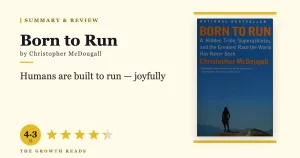
Born to Run Summary & Review: Why Humans Were Made to Run
Christopher McDougall reveals why humans evolved to run and how the Tarahumara tribe does it injury-free. Key takeaways on natural running form and a...
Read Review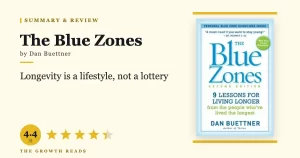
The Blue Zones Summary & Review: 9 Lessons From the World’s Longest-Lived People
Dan Buettner reveals the 9 habits shared by the world's longest-lived communities. Key takeaways from all 5 Blue Zones plus a practical 7-day plan.
Read Review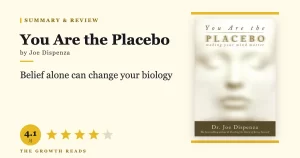
You Are the Placebo Summary & Review: How Your Mind Rewires Your Body
Joe Dispenza reveals how the placebo effect works and teaches a meditation model to rewire your brain, shift gene expression, and become your own...
Read Review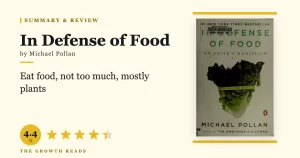
In Defense of Food Summary & Review: Eat Food, Not Too Much, Mostly Plants
Michael Pollan's In Defense of Food summary: how nutritionism reshaped the Western diet, why it drives chronic disease, and his simple rules for eating...
Read Review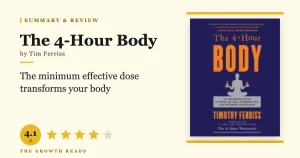
The 4-Hour Body Summary & Review: Minimum Dose, Maximum Results
Tim Ferriss on the Slow-Carb Diet and minimum effective dose protocols. Full summary with 7-day plan.
Read Review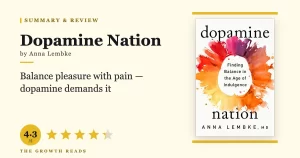
Dopamine Nation Summary & Review: Finding Balance in the Age of Indulgence
Anna Lembke on the pleasure-pain balance, dopamine fasts, and self-binding strategies. Full summary with 7-day plan and honest review.
Read Review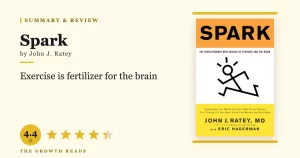
Spark Summary & Review: The Science of Exercise and the Brain
John Ratey's neuroscience proof that exercise transforms your brain: BDNF, Naperville experiment, exercise vs antidepressants, and a 7-day brain fitness plan.
Read ReviewBrowse All Health & Wellness Summaries
We’ve reviewed 59 health books — each with key takeaways, practical lessons, and honest ratings.
How We Select & Review Health Books
The Growth Reads editorial team reads every health and wellness book we cover in full before writing a summary. We prioritize books grounded in peer-reviewed research and clinical practice — sleep science, metabolic health, longevity biology — over books that repackage generic wellness trends without evidence behind them.
Each book is evaluated against the same three criteria we use across every topic on this site: depth (does it go beyond the headline advice?), practicality (can you actually build a sustainable habit from it?), and lasting impact (does it still hold up as the underlying science evolves?). Where a book makes a specific claim about a study, a mechanism, or a health outcome, we check it against the author’s own cited sources and, where relevant, more recent research — and we flag it in the summary when a book’s specific numbers or protocols have visibly aged, even if its core argument hasn’t.
Books enter this topic from several directions: physician- and researcher-authored books grounded in clinical data (Outlive, Why We Sleep, Lifespan), practical protocol books built on a single well-tested idea (The Obesity Code, Glucose Revolution, The Whole30), and books that synthesize population-level research into everyday habits (The Blue Zones, Spark). We periodically re-review earlier summaries to make sure specific numbers, dosing, and protocol details still reflect current science.
Every summary ends with a practical takeaway, not just a recap of the book’s argument, and every rating reflects an honest read of the whole book, not the publisher’s marketing copy. We are an independent publisher: our reviews aren’t affiliated with or endorsed by the authors or publishers of the books we cover, and while some links on this page are affiliate links (Amazon, Bookshop.org), that has no bearing on which books make this list or how we rate them. Nothing in these summaries is medical advice — for personal health decisions, consult a licensed physician.
For our full ranked countdown, see 20 Best Health Books of All Time.
Frequently Asked Questions
What’s the best book to understand overall health and longevity?
Outlive by Peter Attia, MD is the most comprehensive current starting point — it covers the major causes of chronic disease and how to think about long-term health risk, not just a single topic like diet or sleep. Lifespan by David Sinclair pairs well with it for the underlying biology of aging.
Is Why We Sleep still worth reading?
Yes — it remains the most cited general-audience book connecting sleep to nearly every other health outcome (metabolism, immune function, mental health). Some of the book’s more specific statistical claims have been publicly disputed since publication, so read it for the broad case for prioritizing sleep rather than for exact numbers.
What book should I start with for weight and metabolic health?
The Obesity Code by Dr. Jason Fung for the underlying insulin/hormone framework, or Glucose Revolution by Jessie Inchauspé for simpler, immediately actionable food-ordering tricks. The two complement each other — one explains the mechanism, the other gives day-to-day tactics.
Do I need a science background to read these books?
No. Almost every book on this list is written for a general audience. Books like Ikigai and The Blue Zones are narrative and accessible with no scientific background needed, while books like Outlive and Lifespan explain the relevant biology as they go.
Which health book should I start with if I’m new to the topic?
The Blue Zones for an accessible, story-driven introduction to what actually predicts long, healthy lives, or Why We Sleep if you want to start with the single highest-leverage habit most people underinvest in.
What do doctors and researchers actually recommend?
Outlive (Peter Attia, MD) and How Not to Die (Michael Greger, M.D.) are both written by physicians and lean heavily on peer-reviewed research rather than anecdote, which is why they’re the most frequently recommended by other clinicians among the books on this list.
Is Ikigai a health book or a lifestyle/philosophy book?
Both — it’s framed around purpose and life satisfaction, but its central case studies (the long-lived residents of Okinawa) are longevity research, which is why it consistently ranks alongside more clinical health titles on this list.
What’s the difference between Breath and Why We Sleep?
Why We Sleep is about the case for prioritizing sleep quantity and quality broadly. Breath by James Nestor is narrower — specifically about breathing mechanics and technique — and is best read as a practical add-on once you already have your sleep basics in place.
Which book is best for building an exercise habit rather than just reading theory?
Spark by John J. Ratey, MD is the most practically oriented pick — it focuses specifically on exercise’s effect on brain function and mood as motivation for building a consistent habit, rather than general fitness theory.
How often is this list updated?
We review and refresh this page at least yearly, and add new health books as they’re published and reviewed. Older summaries are periodically checked for dated statistics or protocols even when their core arguments still hold.
Explore Other Topics
More book summary hubs on The Growth Reads.