

★★★★☆ 3.7/5
One-liner: Aging is not inevitable — it is a hackable process driven by four cellular mechanisms that can be slowed, stopped, or even reversed.
Best for: Biohacking enthusiasts, longevity-curious readers, and anyone who wants a comprehensive guide to the science and practice of extending healthspan and lifespan.
Reading time: ~7 hours (384 pages)
Difficulty to apply: Moderate to high — some strategies are simple lifestyle changes, others involve advanced supplements and technologies. This is educational content, not medical advice.
Super Human in One Minute
You are dying from four things — and all of them are hackable. Dave Asprey, the father of biohacking and creator of Bulletproof Coffee, argues that aging is not a natural inevitability but a disease process driven by four mechanisms: mitochondrial dysfunction, chronic inflammation, toxin accumulation, and cellular senescence. Drawing on anti-aging research, functional medicine, and his personal experiments with hundreds of interventions, Asprey presents a comprehensive toolkit for extending both lifespan and healthspan. The book covers sleep optimization, anti-inflammatory nutrition, exercise strategies, light management, detoxification, cold and heat therapy, supplements, and emerging technologies — all aimed at slowing or reversing the four killers that drive the aging process.
Key Takeaways
- Aging is driven by four killers: Mitochondrial dysfunction, chronic inflammation, toxin exposure, and cellular senescence are the root causes of aging — and all are modifiable.
- Mitochondria are the master switch: When your cellular power plants decline, everything declines. Supporting mitochondrial function through nutrition, exercise, and targeted supplements is the foundation of longevity.
- Chronic inflammation accelerates every disease: Low-grade, systemic inflammation is the common thread connecting heart disease, cancer, Alzheimer’s, and diabetes. Reducing it is the single most impactful anti-aging strategy.
- Sleep is the most powerful recovery tool: Quality sleep repairs DNA damage, clears brain waste, resets hormones, and consolidates memory. Poor sleep accelerates aging more than almost any other factor.
- Food is anti-aging medicine: An anti-inflammatory, nutrient-dense diet rich in polyphenols, healthy fats, and quality proteins directly supports longevity pathways.
- Exercise should be smart, not excessive: High-intensity intervals and strength training activate longevity genes. Chronic endurance exercise can increase inflammation and oxidative stress.
- Light exposure matters enormously: Morning sunlight sets circadian rhythm; blue light at night disrupts it. Managing light exposure is a free, powerful longevity tool.
- Environmental toxins accumulate: Heavy metals, mold, plastics, and pesticides build up over time and overwhelm detoxification systems. Reducing exposure and supporting detox pathways is essential.
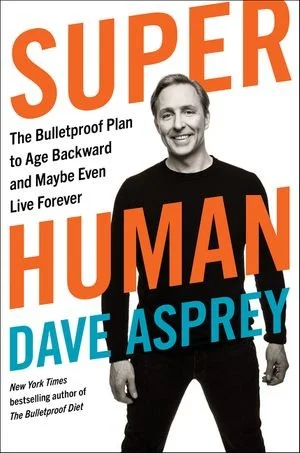
What Is Super Human About?
Super Human presents a comprehensive anti-aging framework based on addressing four cellular mechanisms that drive aging: mitochondrial dysfunction, chronic inflammation, toxin accumulation, and cellular senescence. Asprey provides practical strategies across nutrition, sleep, exercise, supplementation, and emerging technologies for extending healthspan and lifespan.
About the Author
Dave Asprey is an entrepreneur, biohacker, and the founder of Bulletproof, the company that popularized butter-in-coffee and brought biohacking into mainstream awareness. A former Silicon Valley executive who weighed three hundred pounds and suffered from chronic fatigue, Asprey spent over two decades and more than a million dollars experimenting with anti-aging interventions on himself. He hosts the top-rated Bulletproof Radio podcast, has authored multiple bestsellers, and runs Upgrade Labs, a chain of biohacking facilities. His approach is controversial among conventional medical practitioners but has built one of the largest communities of self-optimization enthusiasts worldwide. Explore all Dave Asprey book summaries →
Key Concepts at a Glance
| Concept | What It Means | Use It When |
|---|---|---|
| The Four Killers | Mitochondrial decline, inflammation, toxins, and zombie cells drive aging | You want a framework for understanding what actually causes aging |
| Mitochondrial Health | Supporting cellular energy production through diet, exercise, and supplements | You experience fatigue, brain fog, or declining energy |
| Anti-Inflammatory Protocol | Diet and lifestyle strategies to reduce chronic low-grade inflammation | You want to address the root cause connecting most diseases of aging |
| Sleep Architecture | Optimizing sleep quality for maximum cellular repair and brain detoxification | You sleep enough hours but wake up tired |
| Hormesis | Small stresses (cold, heat, fasting, exercise) that activate repair pathways | You want to trigger your body’s built-in longevity mechanisms |
Part 1: The Four Killers of Longevity
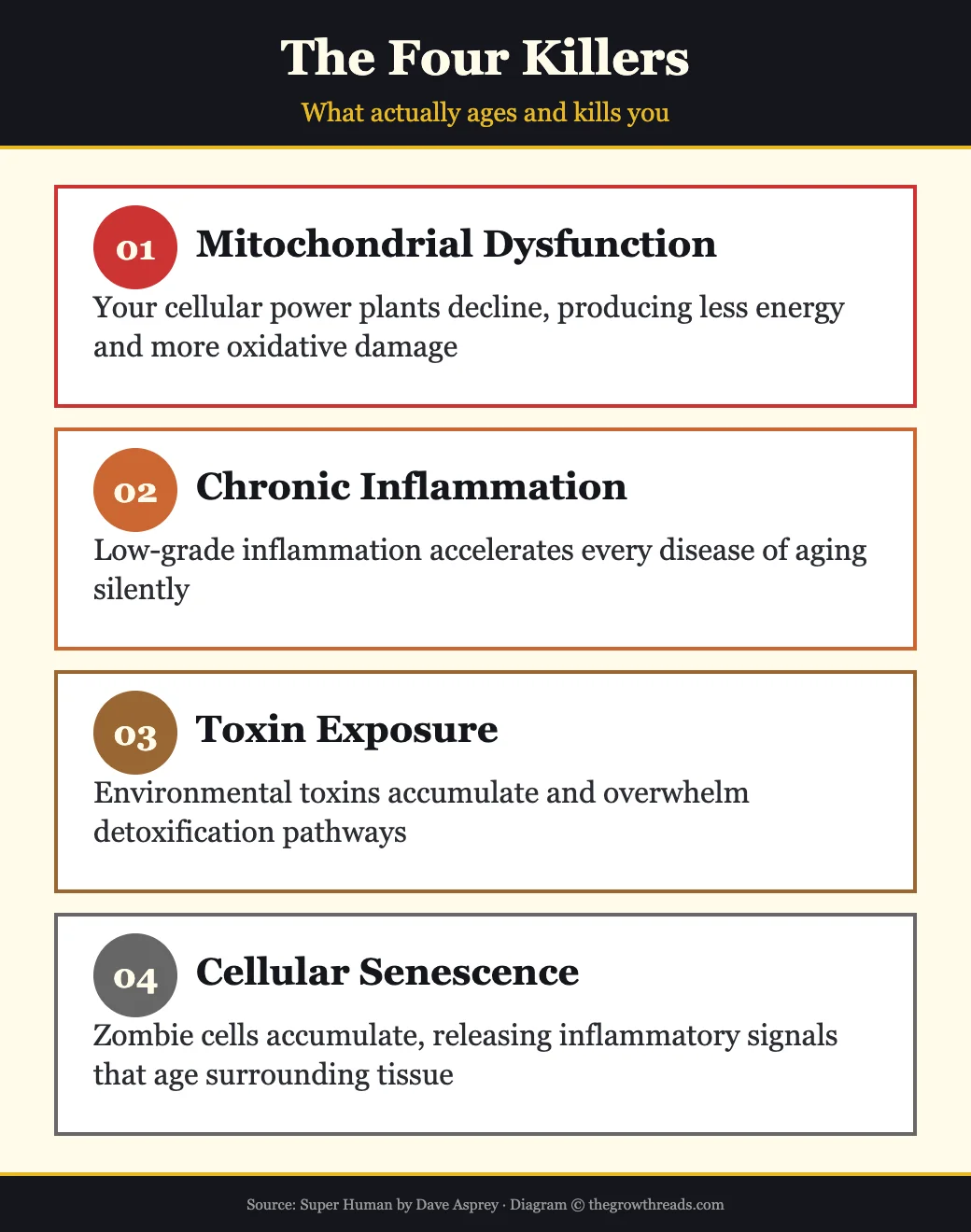
Asprey frames aging not as an inevitable decline but as a disease process with identifiable causes. The first killer is mitochondrial dysfunction — as mitochondria deteriorate, cells produce less energy and more reactive oxygen species, creating a vicious cycle of declining function and increasing damage. The second killer is chronic inflammation — persistent, low-grade inflammatory signaling that accelerates tissue damage and drives every major disease of aging. The third is environmental toxin accumulation — heavy metals, mold biotoxins, pesticides, and endocrine-disrupting chemicals that build up in tissues over decades. The fourth is cellular senescence — the accumulation of “zombie cells” that have stopped dividing but refuse to die, instead secreting inflammatory signals that damage surrounding healthy tissue.
Asprey argues that conventional medicine addresses symptoms rather than these root causes. Treating high blood pressure with medication, for example, does nothing about the mitochondrial dysfunction or inflammation that caused it. The biohacking approach targets the four killers directly, aiming to slow, stop, or reverse the aging process at the cellular level.
Part 2: The Longevity Toolkit
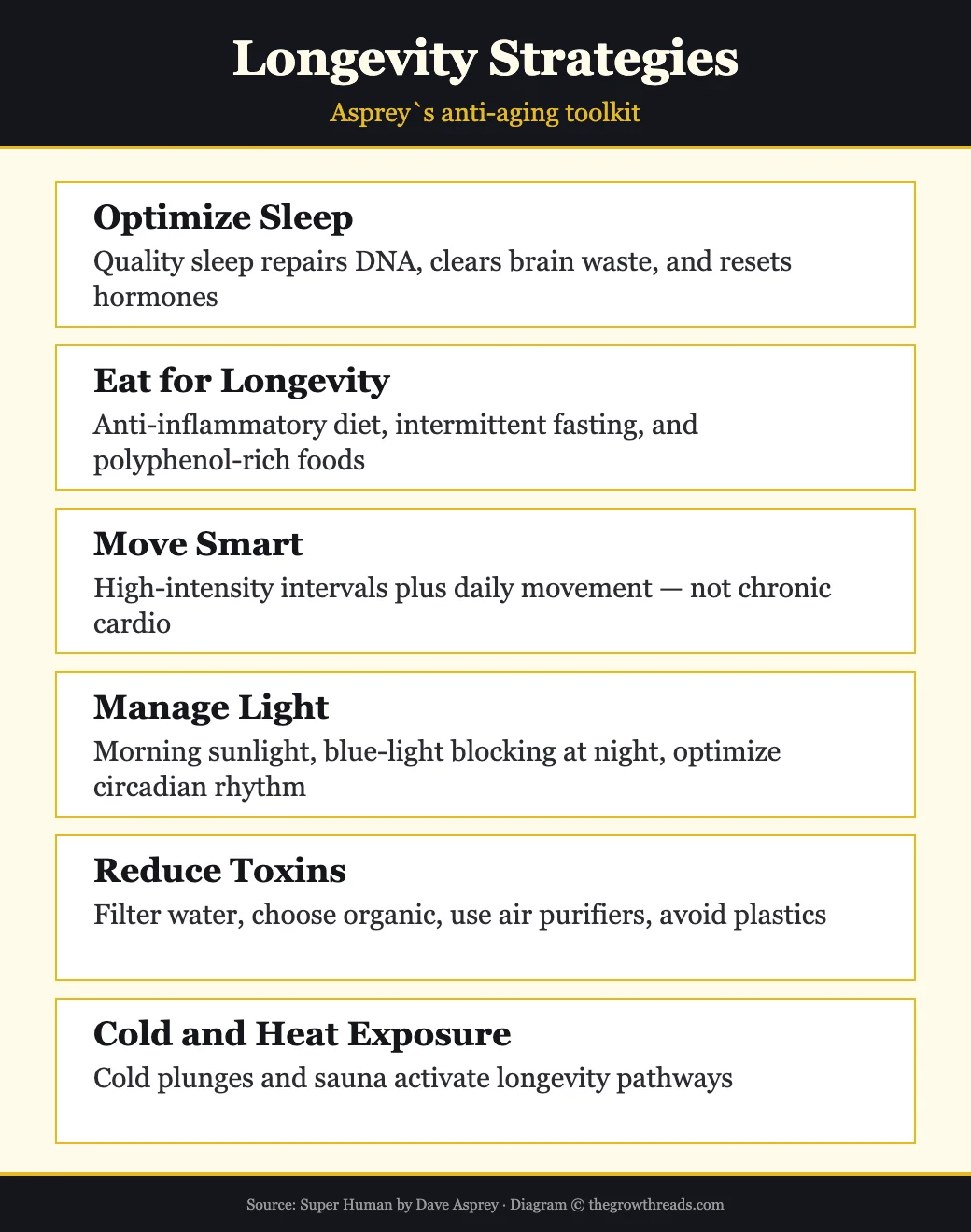
The middle section provides Asprey’s practical intervention stack. Sleep optimization comes first — he recommends blackout curtains, blue-light-blocking glasses after sunset, sleeping in a cool room, and tracking sleep quality with wearables. He emphasizes that sleep quality matters more than duration, and that the deep sleep and REM phases are where the most critical repair processes occur.
Nutrition focuses on an anti-inflammatory, nutrient-dense diet: abundant vegetables, quality fats (grass-fed butter, MCT oil, olive oil), moderate protein from well-sourced animals, and minimal sugar and processed food. Asprey is a strong advocate of intermittent fasting, arguing that regular fasting periods activate autophagy — the cellular cleanup process that removes damaged components and zombie cells.
Exercise strategy favors high-intensity intervals and strength training over chronic cardio. Asprey argues that short, intense workouts activate longevity pathways (hormesis) while long endurance sessions can increase cortisol, inflammation, and oxidative stress. He also recommends daily movement — walking, stretching, light activity — as distinct from formal exercise.
The book covers hormesis extensively — the principle that small, controlled stresses activate the body’s repair mechanisms. Cold exposure (cold showers, ice baths), heat exposure (saunas), intermittent fasting, and high-intensity exercise all work through hormesis, triggering adaptive responses that make cells stronger and more resilient.
Part 3: Supplements and Emerging Technologies
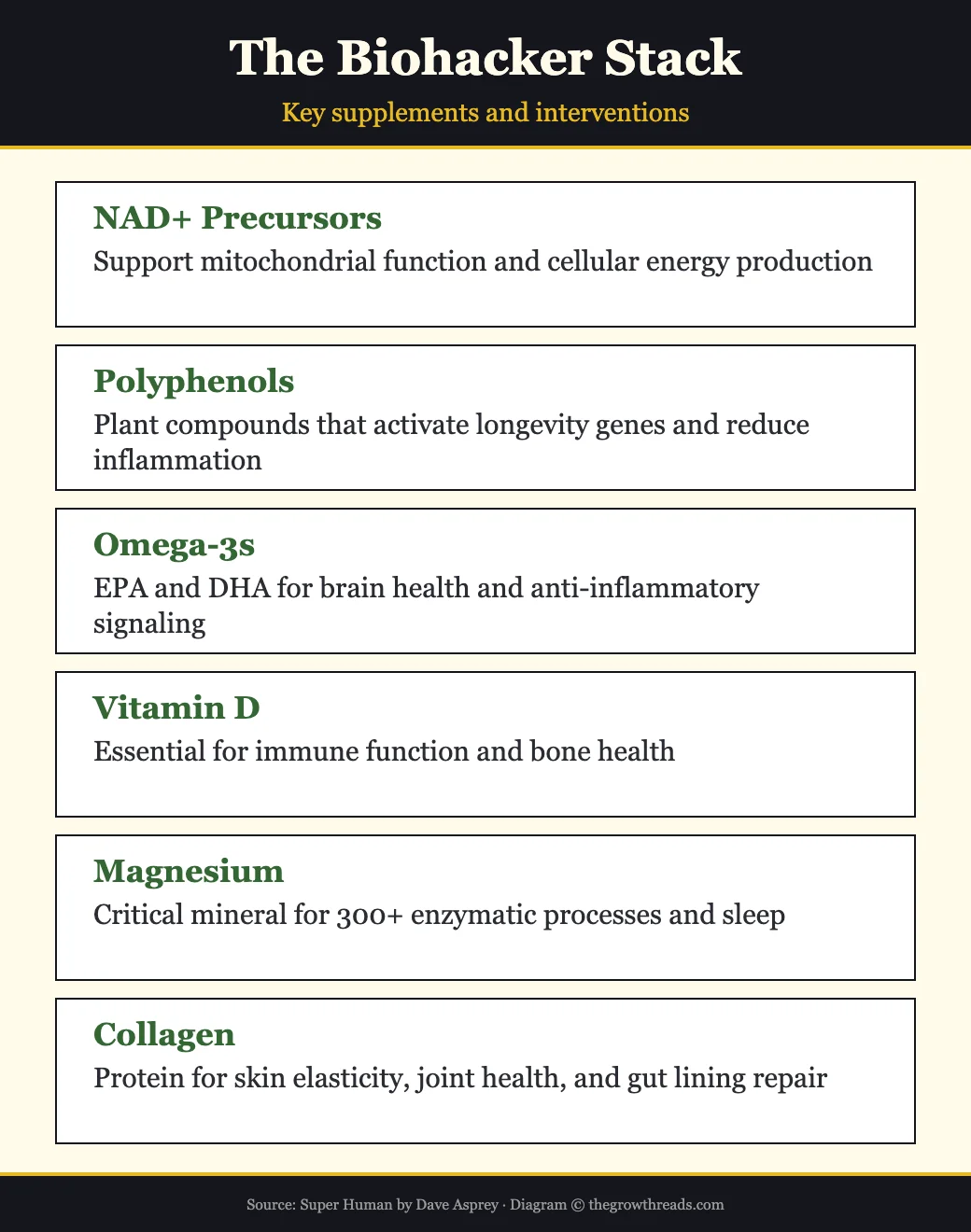
The final section covers Asprey’s supplement stack and emerging anti-aging technologies. Key supplements include NAD+ precursors (to support mitochondrial function), polyphenols from plants (to activate longevity genes), omega-3 fatty acids (for anti-inflammatory signaling), vitamin D (for immune function), magnesium (for enzymatic processes and sleep), and collagen (for skin, joint, and gut health).
Asprey also discusses emerging technologies: stem cell therapies, peptide protocols, red light therapy, hyperbaric oxygen, and senolytics (compounds that clear zombie cells). He acknowledges that many of these are experimental and not yet widely available, but presents them as the frontier of anti-aging science that will become increasingly mainstream. The book maintains an optimistic view that the convergence of biohacking, functional medicine, and biotechnology will dramatically extend human healthspan and lifespan within the coming decades.
Who Is Super Human Best For — and Who Should Read Something Else First?
Super Human is ideal for biohacking enthusiasts and longevity-curious readers who want a comprehensive guide to the full spectrum of anti-aging interventions. It works well for people who enjoy self-experimentation and are willing to invest in their health optimization.
If you want a more scientifically rigorous approach to longevity, Lifespan by David Sinclair provides deeper research without the commercial product tie-ins. If you want a practical health book focused on evidence-based fundamentals rather than cutting-edge biohacking, Outlive by Peter Attia is more grounded. This is educational content — always consult a healthcare provider before making significant health changes.
Questions to Reflect On
- Which of the four killers — mitochondrial decline, inflammation, toxins, or zombie cells — do you suspect is most active in your own aging?
- How would you rate your sleep quality, and what one change could improve it most?
- What environmental toxins are you regularly exposed to that you could reduce or eliminate?
- Do you practice any form of hormesis — cold exposure, fasting, intense exercise — and how does it make you feel?
- If you could implement one longevity strategy from this book today, which would have the highest impact for the lowest effort?
🔥 Ready to Hack Your Aging?
Discover the four mechanisms driving your aging and the comprehensive toolkit for slowing, stopping, or reversing them.
How to Apply Super Human (7-Day Plan)
- Day 1 — Optimize your sleep environment: Install blackout curtains or use a sleep mask. Set your bedroom temperature to 65-68°F. Put on blue-light-blocking glasses two hours before bed.
- Day 2 — Eat anti-inflammatory: Eliminate processed food for the day. Eat vegetables, quality fats, and clean protein. Notice your energy levels compared to a normal day.
- Day 3 — Try intermittent fasting: Skip breakfast and eat your first meal at noon. Drink water, tea, or black coffee in the morning. Notice hunger patterns and mental clarity.
- Day 4 — Cold exposure: End your shower with 30 seconds of cold water. Notice the energizing effect and mood boost. Build up gradually over the following weeks.
- Day 5 — Audit your toxin exposure: Check your personal care products, cleaning supplies, and food containers for known toxins. Replace one product with a cleaner alternative.
- Day 6 — High-intensity exercise: Do a short, intense workout — 20 minutes of intervals rather than 60 minutes of steady cardio. Compare how you feel afterward.
- Day 7 — Start one supplement: Based on your biggest gap, begin one foundational supplement — vitamin D, magnesium, or omega-3. Research the dose and quality appropriate for you. Consult your healthcare provider.
Frequently Asked Questions
What are the four killers in Super Human?
Asprey identifies four cellular mechanisms that drive aging: mitochondrial dysfunction (declining cellular energy production), chronic inflammation (persistent low-grade inflammatory signaling), environmental toxin accumulation (heavy metals, mold, pesticides building up in tissues), and cellular senescence (zombie cells that release inflammatory compounds). Addressing all four simultaneously is the foundation of his anti-aging approach.
Is biohacking scientifically supported?
Some biohacking strategies have strong scientific support — sleep optimization, anti-inflammatory nutrition, exercise, and intermittent fasting are well-researched. Other strategies Asprey recommends — certain supplements, stem cell therapies, and experimental protocols — have less robust evidence. The book blends established science with cutting-edge experimentation. Readers should evaluate each intervention individually and consult healthcare providers before making significant changes.
What is hormesis?
Hormesis is the biological principle that small, controlled stresses activate repair and resilience pathways in the body. Cold exposure triggers anti-inflammatory responses. Heat stress from saunas activates heat shock proteins that repair damaged cells. Intermittent fasting activates autophagy. High-intensity exercise triggers mitochondrial biogenesis. These brief stresses make the body stronger, much like how a vaccine uses a small dose of a pathogen to build immunity.
How does Super Human compare to Lifespan?
Both books argue that aging is a modifiable biological process, but they approach it differently. David Sinclair’s Lifespan is more academically rigorous, focusing on the information theory of aging and specific molecules like resveratrol and NMN. Asprey’s Super Human is broader and more practical, covering lifestyle interventions, environmental toxins, and a wider range of supplements and technologies. Sinclair writes as a research scientist; Asprey writes as a self-experimenter and entrepreneur.
Do I need expensive supplements and technologies?
No. Asprey acknowledges that the foundational strategies — sleep optimization, anti-inflammatory diet, exercise, light management, and toxin reduction — are free or low-cost and provide the majority of anti-aging benefits. Advanced supplements and technologies offer additional optimization but are not necessary for significant improvements in healthspan. Start with the fundamentals and add advanced interventions only if you have the budget and interest.
Is intermittent fasting safe for everyone?
Asprey recommends intermittent fasting as a powerful longevity tool, but acknowledges it is not appropriate for everyone. Pregnant or breastfeeding women, people with eating disorders, those with certain medical conditions, and people on specific medications should consult their healthcare provider before fasting. For most healthy adults, a daily eating window of eight to ten hours is well-tolerated and supported by research.
What is the most impactful strategy in Super Human?
Asprey repeatedly emphasizes sleep as the highest-leverage intervention. Quality sleep activates virtually every repair and regeneration pathway in the body — DNA repair, brain waste clearance, hormone optimization, immune function, and memory consolidation. If you can only implement one strategy from the book, optimizing your sleep environment and habits will produce the broadest benefits for the least effort and cost.
Related Summaries
- Lifespan by David Sinclair — the academic case for treating aging as a disease.
- Outlive by Peter Attia — evidence-based longevity medicine for the modern era.
- Breath by James Nestor — how breathing optimization supports health and performance.
- Best Health Books — our complete guide to the top books on health and wellness.