
Team Human
Douglas Rushkoff's manifesto argues that technology and markets increasingly pit people against each other — and makes the case for choosing human solidarity, on purpose, in a hundred short chapters built to be shared.

Douglas Rushkoff's manifesto argues that technology and markets increasingly pit people against each other — and makes the case for choosing human solidarity, on purpose, in a hundred short chapters built to be shared.
Talking to Robots pairs speculative fiction with grounded reporting to test how close robots really are to reshaping work, relationships, elder care, medicine, parenting, and warfare.
Ray Kurzweil argues AGI arrives by 2029 and the Singularity by 2045. Here's the book's core argument, its track record so far, and how to think about what's coming.
John Markoff traces AI and human-centered computing to the same 1960s Bay Area labs — and argues the fork between 'replace' and 'augment' is a design choice we're still making today.
Tim Wu's The Attention Merchants traces 150 years of attention-harvesting business models, from patent-medicine posters to algorithmic feeds, and what reclaiming your focus actually requires.
Nicholas Carr's The Shallows explains how the internet trains our brains toward skimming instead of deep thought — and what to do about it, with a practical 7-day focus plan.
A World Without Work by Daniel Susskind explains why automation threatens jobs even without full "thinking" machines — and the policy toolkit for a future with less traditional work.
Martin Ford interviews 23 leading AI researchers and entrepreneurs — and finds no consensus on AGI timelines, deep learning's limits, or how worried we should be.
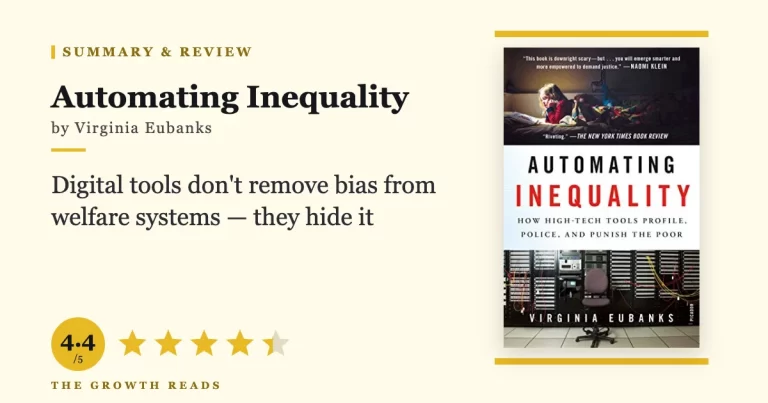
Virginia Eubanks traces how automated eligibility, risk-scoring, and coordinated-entry systems in Indiana, Pittsburgh, and LA profile and punish poor families — and why it's harder to fight a computer than a caseworker.
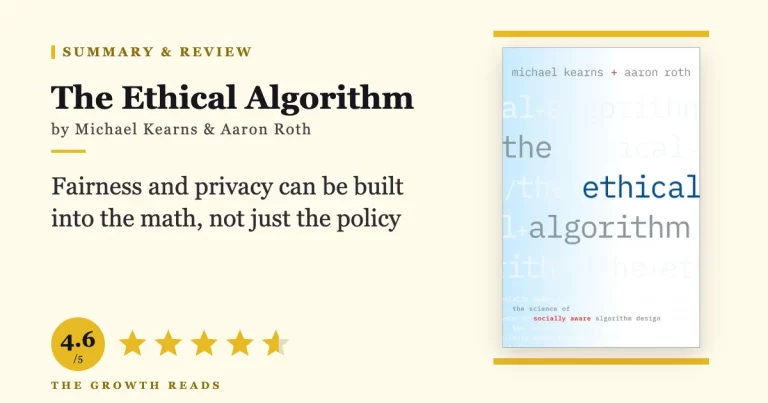
Kearns and Roth show how to build fairness and privacy directly into algorithms with differential privacy and formal fairness constraints, replacing after-the-fact policy patches with provable, mathematical guarantees.
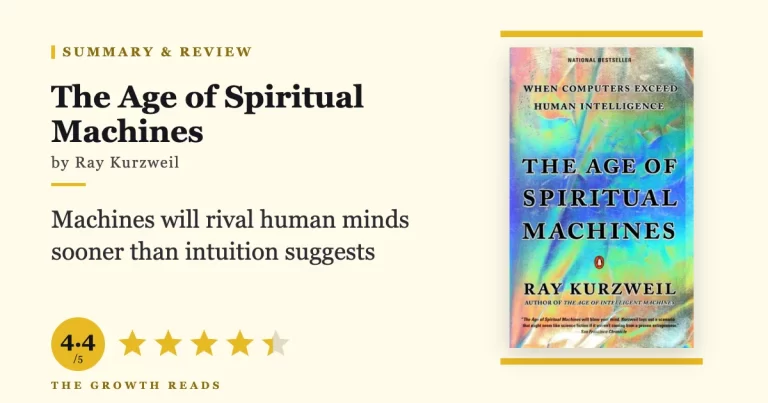
Ray Kurzweil's Law of Accelerating Returns, his decade-by-decade AI predictions, and the human-machine merger — summarized and reviewed.
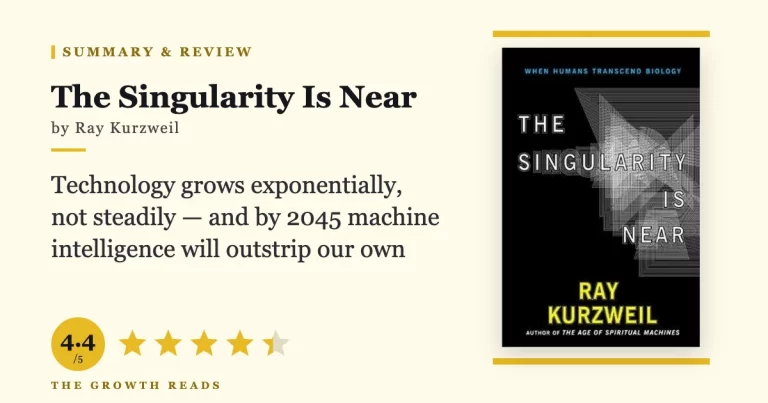
Ray Kurzweil's The Singularity Is Near summary: the Law of Accelerating Returns, the Six Epochs, GNR technologies, and why he expects 2045 to transform intelligence itself.