

★★★★ 4.0 / 5
One-liner: A neuroscientist’s evidence-based guide to eating for long-term brain health — from preventing cognitive decline to sharpening daily performance.
Best for: Anyone concerned about brain ageing, cognitive decline, or dementia prevention — and willing to make dietary changes based on neuroscience rather than diet trends.
Reading time: ~6 hours (336 pages)
Difficulty to apply: Medium — the science is thorough, and the dietary shifts are significant but not extreme.
Brain Food in one minute
Your brain eats what you eat — and most people are starving it. Lisa Mosconi, a neuroscientist and associate director of the Alzheimer’s Prevention Clinic at Weill Cornell Medical College, argues that the brain has unique nutritional needs that differ from the rest of the body. Using brain imaging studies and decades of nutritional neuroscience, she shows that specific foods directly protect neurons, reduce inflammation, and lower dementia risk — while others accelerate cognitive decline. Her central message: the standard Western diet is a neurological disaster, and the Mediterranean-style diet supported by her research can reduce Alzheimer’s risk by up to 50%. The book provides a practical framework for eating to protect and enhance your brain for life.
Key takeaways
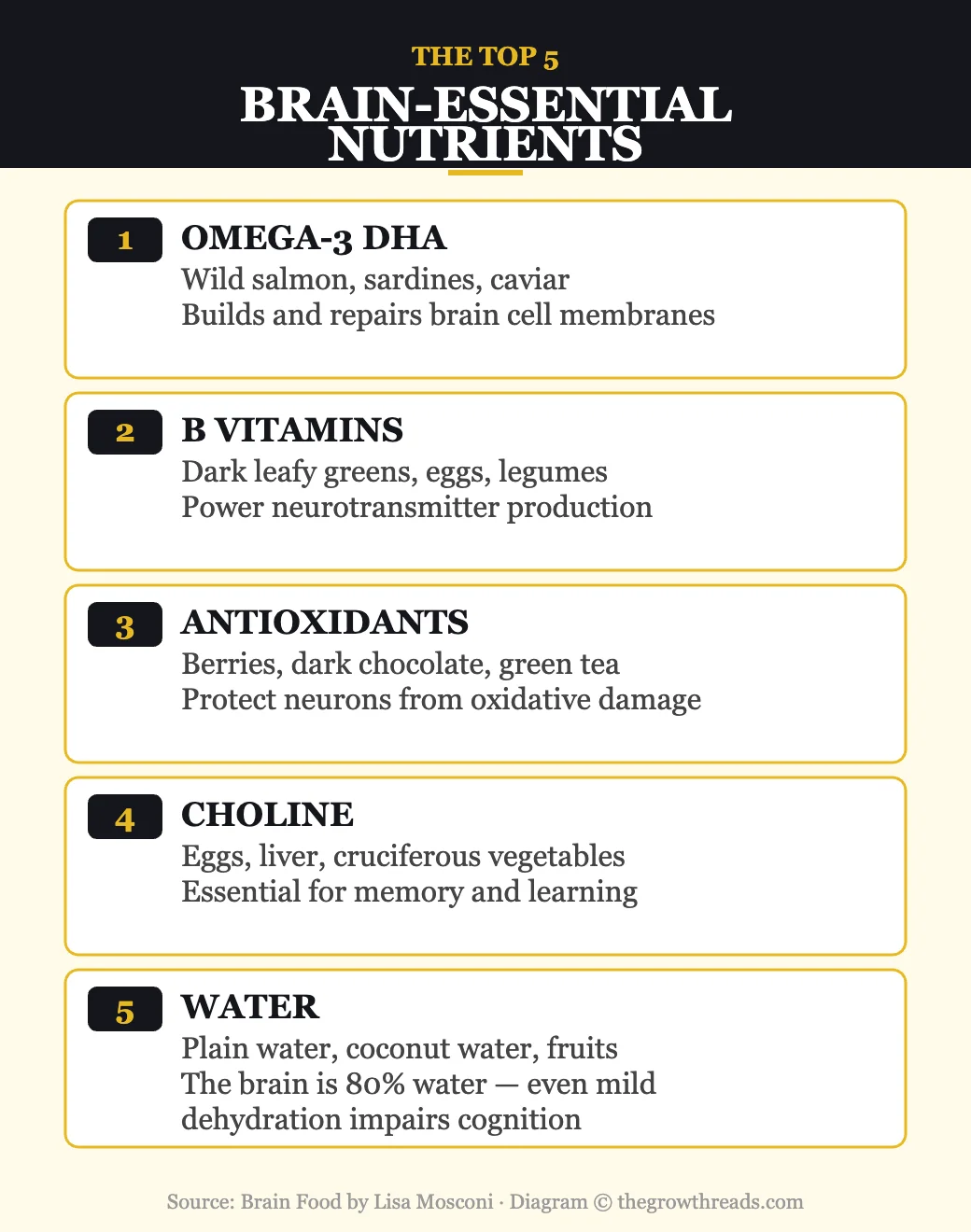
- The brain has unique dietary needs: It consumes 20% of your daily calories despite being only 2% of body weight, and requires specific nutrients — DHA, choline, B vitamins — that many diets lack.
- Water is critical for cognition: The brain is 80% water, and even 1–2% dehydration measurably impairs attention, memory, and processing speed.
- Omega-3 DHA is irreplaceable: This fatty acid builds and maintains brain cell membranes. Wild salmon, sardines, and caviar are the richest dietary sources — supplements are a distant second.
- Not all fats are equal for the brain: The brain needs specific fats (DHA, omega-3s, monounsaturated fats from olive oil) and is harmed by trans fats and excess saturated fat from processed foods.
- Sugar is neurotoxic in excess: Chronic high sugar intake promotes neuroinflammation, insulin resistance in the brain, and accelerated shrinkage of the hippocampus — the memory centre.
- The Mediterranean diet is the most brain-protective: Multiple large-scale studies associate it with 30–50% lower dementia risk and slower age-related cognitive decline.
- Your gut microbiome affects your brain: The gut-brain axis means that the diversity of your gut bacteria directly influences mood, cognition, and neuroinflammation.
- Genetics load the gun, diet pulls the trigger: Only 1–2% of Alzheimer’s cases are purely genetic. Lifestyle factors — especially diet — determine whether genetic risk actually manifests.
- Brain health starts decades before symptoms: Alzheimer’s pathology begins 20–30 years before the first symptom. What you eat in your 30s and 40s shapes your brain in your 60s and 70s.
- Personalisation matters: Blood tests for key nutrients (vitamin D, B12, homocysteine, omega-3 index) can reveal hidden deficiencies and guide targeted dietary adjustments.
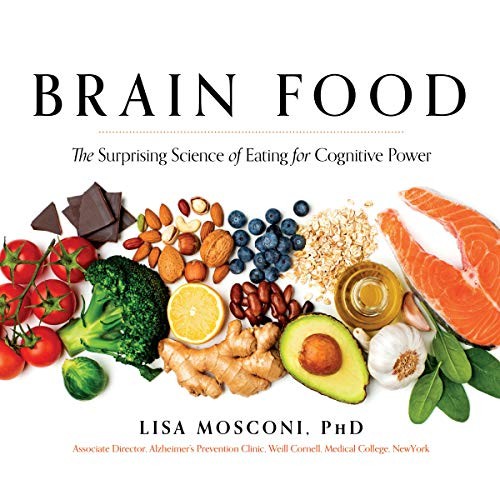
What is Brain Food about?
Brain Food is about how specific foods and dietary patterns directly affect brain health, cognitive performance, and long-term dementia risk. Lisa Mosconi combines brain imaging research with nutritional neuroscience to show which nutrients the brain needs, which foods provide them, and how a Mediterranean-style diet can reduce Alzheimer’s risk by up to 50%.
About the author
Lisa Mosconi, PhD, is an Italian-American neuroscientist and the associate director of the Alzheimer’s Prevention Clinic at Weill Cornell Medical College. She holds dual doctorates in neuroscience and nuclear medicine from the University of Florence and has published over 150 peer-reviewed papers on brain ageing, nutrition, and Alzheimer’s prevention. Her lab was among the first to use brain PET scans to study how diet affects neuronal metabolism in vivo. She grew up in Florence, Italy, in a family that treated food as medicine — an experience that shaped her research focus. She is also the author of The XX Brain, on women’s brain health. Explore all Lisa Mosconi book summaries →
Key concepts at a glance
| Concept | What it means | Use it when |
|---|---|---|
| Neuro-nutrition | The science of how food affects brain structure and function | You want to eat for cognitive performance, not just body composition |
| Brain-essential nutrients | DHA, choline, B vitamins, antioxidants, water | You suspect your diet lacks specific brain-protective nutrients |
| Mediterranean diet | Fish, olive oil, vegetables, legumes, whole grains | You want the single dietary pattern with the strongest brain evidence |
| Neuroinflammation | Chronic brain inflammation driven by diet and lifestyle | You experience brain fog, mood issues, or memory lapses |
| Gut-brain axis | The bidirectional communication between gut bacteria and brain | You want to understand why digestion affects thinking and mood |
| Cognitive reserve | The brain’s resilience built through diet, exercise, and learning | You want to protect yourself against age-related decline |
Part 1 — The brain’s unique nutritional needs
Mosconi opens with a striking fact: the brain is the most metabolically demanding organ in the body. It consumes roughly 20% of your daily energy intake despite representing only 2% of your body weight. And unlike other organs, it is extraordinarily selective about its fuel. While muscles can burn fat, glucose, or ketones interchangeably, the brain runs primarily on glucose and requires specific structural fats (particularly DHA) that it cannot manufacture on its own.
She identifies five categories of brain-essential nutrients. First, complex carbohydrates from whole grains, fruits, and vegetables — the brain’s preferred glucose source, delivered slowly and steadily rather than in the spike-crash pattern of refined sugars. Second, omega-3 fatty acids, especially DHA, which comprise a significant portion of brain cell membranes and are critical for synaptic transmission. Third, proteins and amino acids, particularly tryptophan (the precursor to serotonin) and tyrosine (the precursor to dopamine). Fourth, antioxidants from berries, dark chocolate, and green tea, which protect neurons from oxidative stress. Fifth, and most overlooked: water.
The water point is particularly compelling. Mosconi cites imaging studies showing that even mild dehydration — losing just 1–2% of body water — causes measurable shrinkage of brain tissue and impairs working memory, attention, and processing speed. Most people chronically under-hydrate without realising the cognitive cost.
Part 2 — Foods that harm the brain
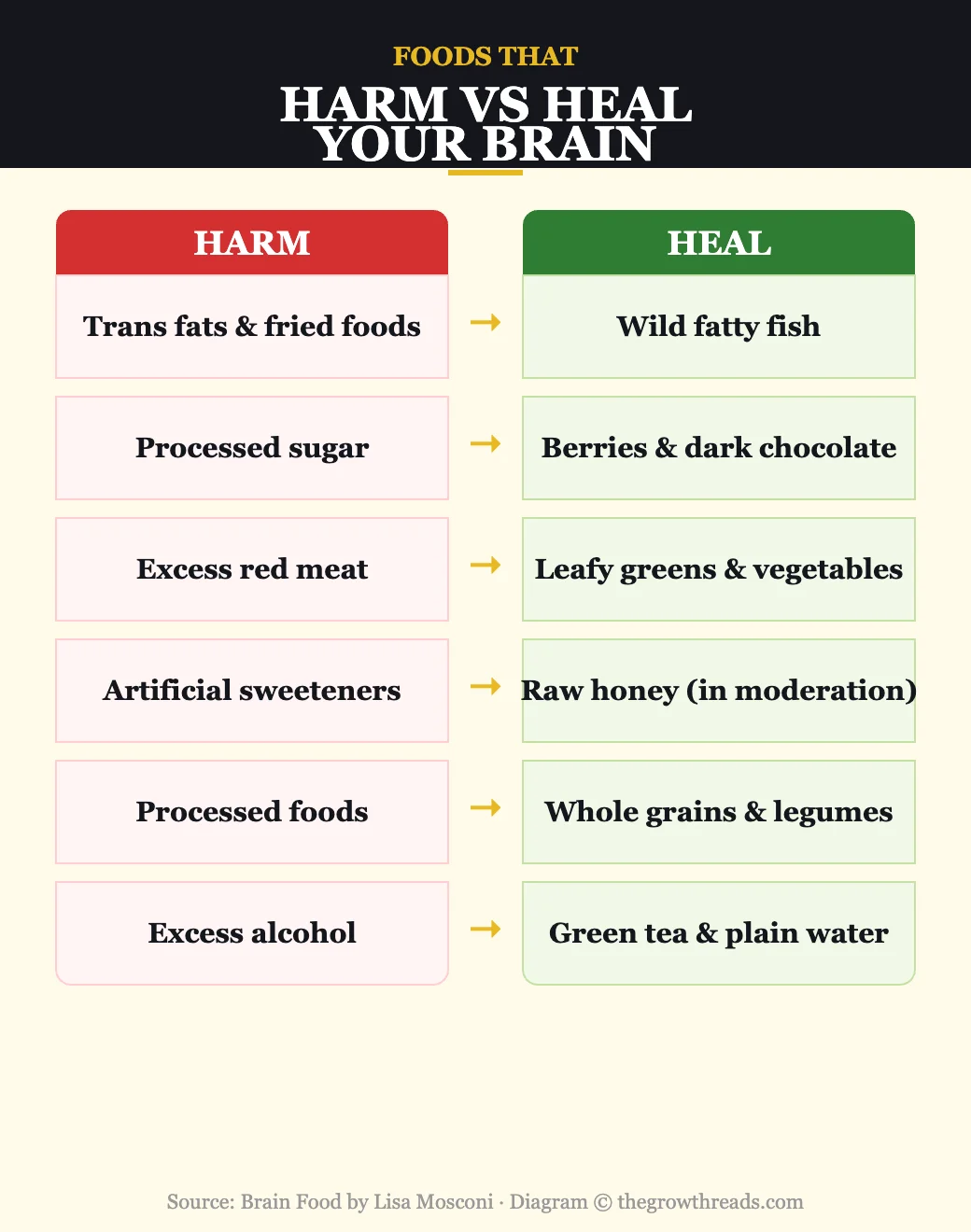
The middle section of the book catalogues the foods that scientific evidence links to accelerated cognitive decline. Trans fats top the list — found in fried foods, margarine, and many packaged snacks, they integrate into brain cell membranes and make them rigid, impairing neurotransmission. Mosconi cites a landmark study from the Archives of Neurology showing that people in the highest quintile of trans fat consumption had more than double the risk of developing Alzheimer’s.
Refined sugar is next. While the brain needs glucose, it needs it delivered steadily from complex carbohydrates — not in the sharp spikes produced by soda, candy, and processed foods. Chronic high-sugar diets promote insulin resistance in the brain (sometimes called “type 3 diabetes”), shrink the hippocampus, and accelerate the formation of amyloid plaques associated with Alzheimer’s.
Processed and ultra-processed foods present a compound threat: they combine refined sugars, unhealthy fats, excess sodium, and artificial additives while stripping out the fiber, vitamins, and antioxidants the brain needs. Mosconi points to population studies showing that countries that adopted the Western processed food diet saw sharp increases in dementia rates within a single generation.
Part 3 — Foods that heal the brain and the neuro-nutrition plan
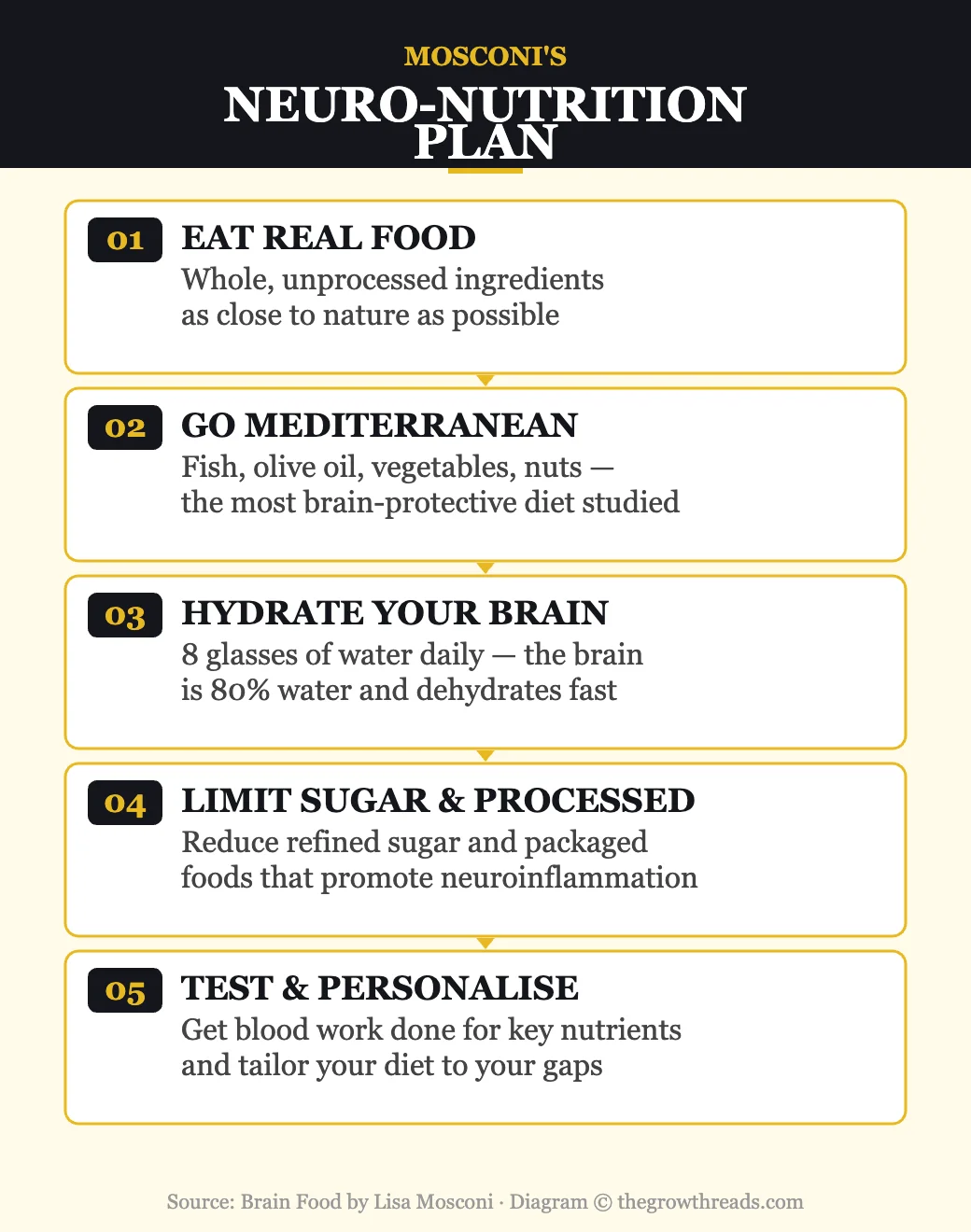
Mosconi’s prescription centres on the Mediterranean diet — not as a trend but as the dietary pattern with the strongest scientific evidence for brain protection. She cites the PREDIMED trial (over 7,000 participants), the MIND diet studies, and her own brain imaging research showing that people who adhere to a Mediterranean-style diet have thicker cortices, larger hippocampi, and slower rates of brain ageing compared to those on a typical Western diet.
Her top brain-protective foods include wild fatty fish (especially salmon, sardines, mackerel, and anchovies — eaten 2–3 times per week for DHA), extra-virgin olive oil (the primary fat source, rich in polyphenols), berries (particularly blueberries, which cross the blood-brain barrier and reduce neuroinflammation), dark leafy greens (for folate, vitamin K, and lutein), nuts and seeds (especially walnuts and flaxseeds for plant-based omega-3s), and eggs (one of the richest dietary sources of choline, critical for memory).
She also addresses the gut-brain axis, explaining that the microbiome produces neurotransmitters (including 90% of the body’s serotonin) and can either promote or suppress neuroinflammation depending on its composition. Fermented foods — yoghurt, kefir, sauerkraut — and prebiotic fibers from garlic, onions, and asparagus support the beneficial bacteria that protect brain health.
Who is Brain Food best for — and who should read something else first?
This book is ideal for anyone concerned about cognitive decline, dementia prevention, or optimising brain performance through diet — especially people in their 30s–50s who want to make changes while they have the most impact. It is also valuable for caregivers of people with Alzheimer’s who want to understand the nutritional dimension.
If you want a broader health framework that goes beyond nutrition, start with Outlive by Peter Attia. If you are more interested in mood and mental health than cognitive decline, The Body Keeps the Score by Bessel van der Kolk covers the body-brain connection from a trauma-informed perspective. This book does not constitute medical advice — always consult a healthcare professional for personalised dietary guidance.
Questions to reflect on
- How many glasses of water did you drink yesterday — and could chronic under-hydration be affecting your focus and memory?
- How often do you eat wild fatty fish? If the answer is rarely, what is your plan for getting adequate DHA?
- What percentage of your weekly meals comes from processed or ultra-processed foods?
- If Alzheimer’s pathology begins 20–30 years before symptoms, what changes would you make today to protect your brain in your 60s?
- What is one brain-harmful food you consume regularly that you could reduce or replace this week?
🔥 Ready to eat for your brain?
Get the neuroscientist-backed plan for protecting and enhancing your cognitive power through food.
How to apply Brain Food (7-day plan)
- Day 1 — Hydrate your brain: Track your water intake today. Aim for eight glasses (2 litres). Set hourly reminders if needed. Notice any changes in focus by late afternoon.
- Day 2 — Add brain berries: Add a serving of blueberries, strawberries, or blackberries to your breakfast or as a snack. These are among the most potent brain-protective foods studied.
- Day 3 — Swap your cooking oil: Replace butter or vegetable oil with extra-virgin olive oil for cooking and salad dressings. Olive oil’s polyphenols cross the blood-brain barrier.
- Day 4 — Eat wild fish: Have a serving of wild salmon, sardines, or mackerel for dinner. Aim to do this 2–3 times per week going forward for DHA.
- Day 5 — Go green: Add a large serving of dark leafy greens (spinach, kale, rocket) to both lunch and dinner. These provide folate, vitamin K, and lutein — all brain-essential.
- Day 6 — Reduce one processed food: Identify the most-consumed processed food in your diet and replace it with a whole-food alternative for the rest of the week.
- Day 7 — Plan your Mediterranean week: Map out next week’s meals using Mosconi’s framework: fish 2–3 times, olive oil daily, berries daily, greens at every meal, whole grains instead of refined.
Frequently asked questions
What are the best foods for brain health according to Brain Food?
Mosconi identifies wild fatty fish (salmon, sardines, mackerel) as the single most important brain food for its DHA content. Other top-tier brain foods include extra-virgin olive oil for its polyphenols, blueberries and other dark berries for their antioxidants, dark leafy greens for folate and vitamin K, eggs for choline, walnuts for plant-based omega-3s, and plain water — which most people chronically under-consume despite the brain being 80% water.
Can diet really prevent Alzheimer’s disease?
Mosconi cites multiple large-scale studies showing that a Mediterranean-style diet is associated with 30–50% lower risk of developing Alzheimer’s and slower age-related cognitive decline. However, “prevent” may be too strong — diet is one of several lifestyle factors (alongside exercise, sleep, and cognitive engagement) that collectively build cognitive reserve. What the research shows clearly is that diet significantly modifies risk, and since Alzheimer’s pathology begins 20–30 years before symptoms, early dietary changes have the greatest protective effect.
Is Brain Food based on real scientific research?
Yes. Mosconi is a neuroscientist at Weill Cornell Medical College with over 150 peer-reviewed publications. She uses PET brain imaging to study how diet affects neuronal metabolism. The book draws on population studies (PREDIMED, MIND diet trials), her own lab’s imaging data, and established nutritional neuroscience. She is careful to distinguish between correlation and causation throughout, though some critics note that dietary research inherently relies on observational data rather than randomised controlled trials.
Do omega-3 supplements work as well as eating fish?
Mosconi argues that whole fish is significantly more effective than supplements. Wild fatty fish provides DHA in a form that is highly bioavailable, alongside complementary nutrients (selenium, vitamin D, iodine) that work synergistically. Many omega-3 supplements use a form of DHA (ethyl esters) with lower absorption rates. She recommends supplements only as a backup for people who genuinely cannot eat fish, and advises choosing triglyceride-form DHA supplements over ethyl ester versions for better absorption.
What is the gut-brain axis and why does it matter?
The gut-brain axis is the bidirectional communication network between your digestive system and your brain, mediated by the vagus nerve, hormones, and the immune system. Your gut bacteria produce neurotransmitters — including about 90% of the body’s serotonin — and can either promote or suppress neuroinflammation. A diverse, healthy microbiome (supported by fermented foods and prebiotic fibers) protects brain function, while a depleted microbiome (from antibiotics, processed food, or stress) can contribute to mood disorders and cognitive decline.
How much water does the brain need daily?
Mosconi recommends approximately eight glasses (2 litres) of plain water per day for most adults, adjusting upward for exercise, heat, and altitude. The brain is roughly 80% water, and even 1–2% dehydration causes measurable impairment in attention, working memory, and processing speed. She notes that many people rely on coffee and tea for hydration, but these have a mild diuretic effect that partially offsets their fluid contribution. Plain water is the gold standard for brain hydration.
At what age should you start eating for brain health?
As early as possible, but especially from your 30s onward. Mosconi’s research shows that Alzheimer’s-related brain changes can begin 20–30 years before the first cognitive symptom. This means that what you eat in your 30s and 40s is actively shaping the brain you will have in your 60s and 70s. However, the brain retains neuroplasticity throughout life, so dietary improvements at any age can yield measurable benefits in cognitive function, mood, and energy — it is never too late to start.
Related summaries
- Why We Sleep by Matthew Walker — The sleep companion to brain nutrition: both pillars of long-term cognitive health.
- Outlive by Peter Attia — The comprehensive longevity framework integrating nutrition, exercise, sleep, and emotional health.
- Glucose Revolution by Jessie Inchauspé — Practical hacks for reducing the glucose spikes that Mosconi identifies as neurotoxic.
- Atomic Habits by James Clear — The habit system for making dietary changes stick permanently.
📚 Explore more: Best Health Books