

★★★★½ 4.5/5 — Fifty-two pocket drills for growing any skill: stare, steal, then practice in the sweet spot.
Best for: people who already believe practice matters and still waste the hour on comfortable reps.
Reading time: ~3 hours (160 pages) · this guide ~12 min
Difficulty to apply: Easy to start, hard to keep honest — the tips are short; the daily reach is the work.
The Little Book of Talent in one minute
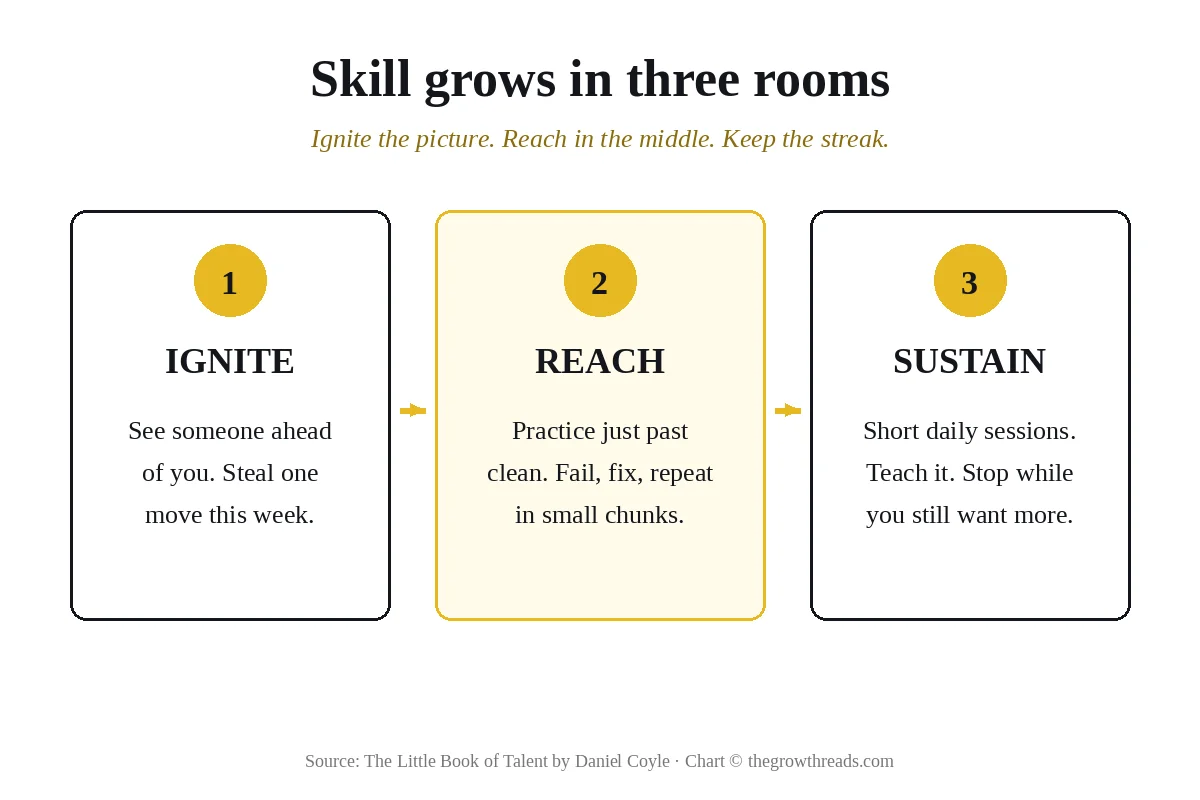
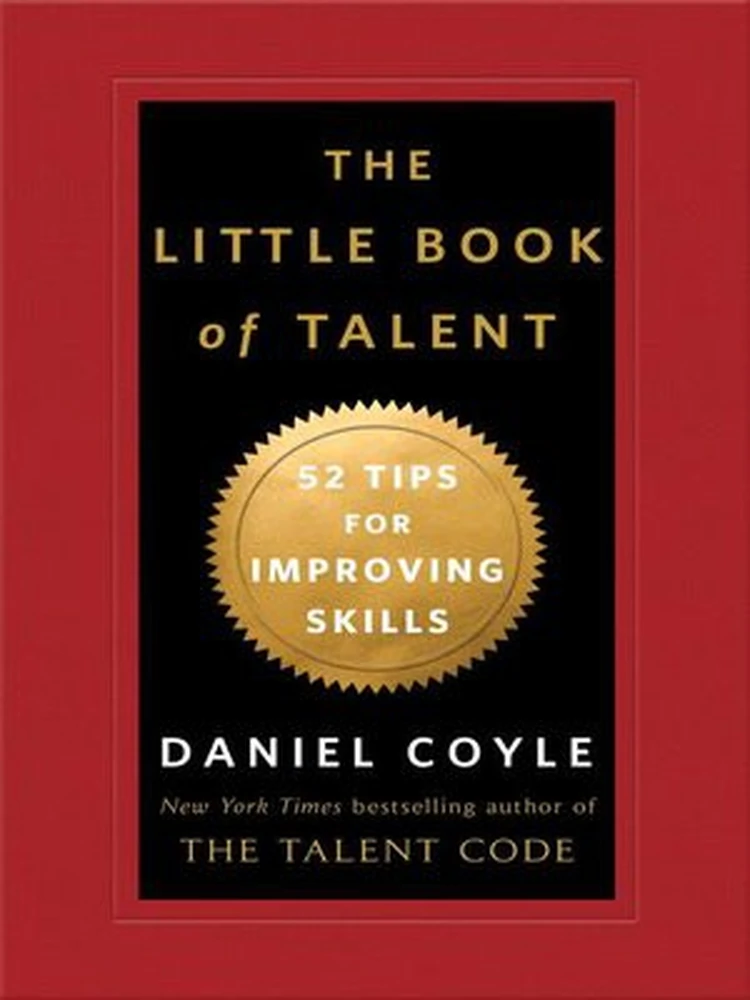
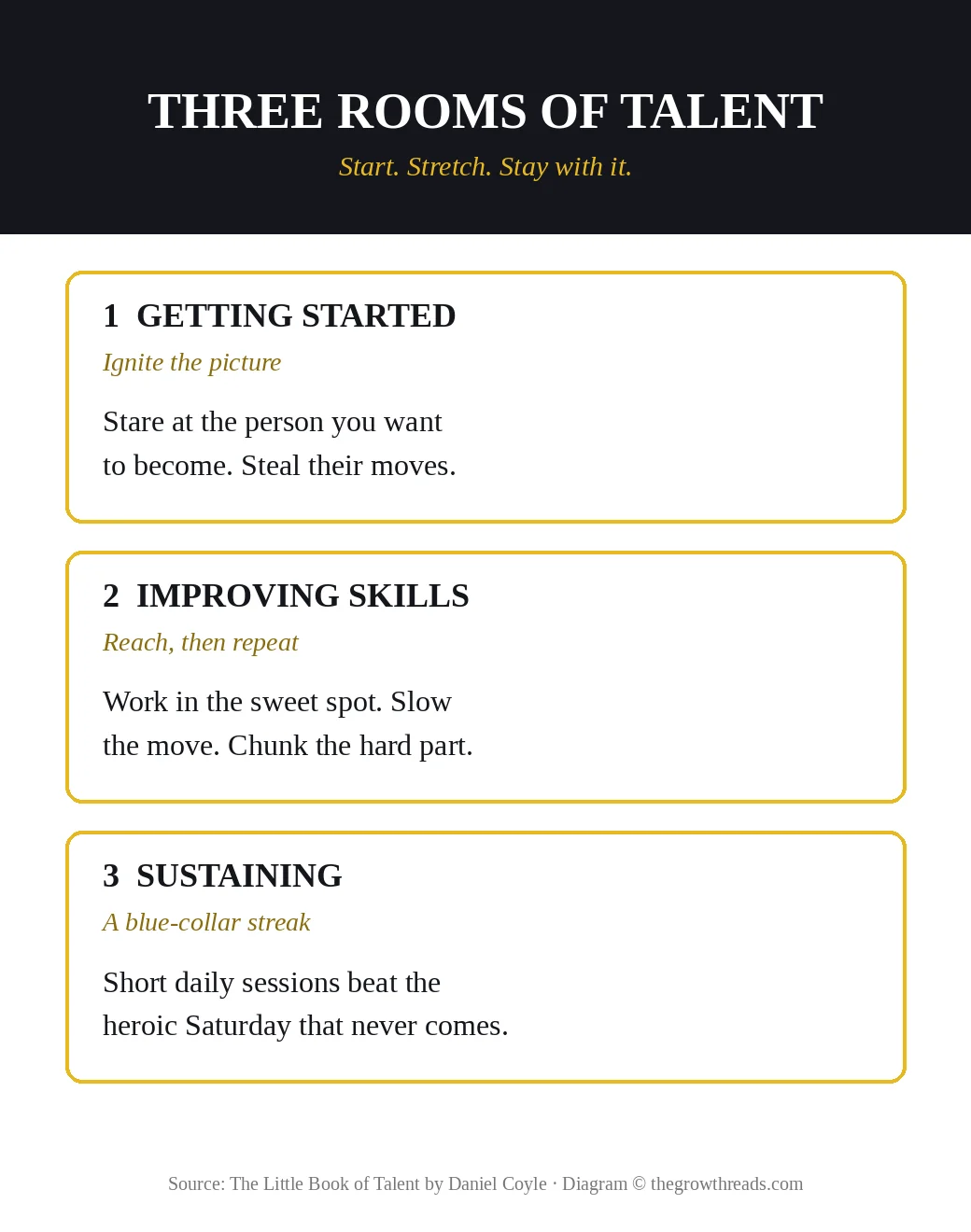
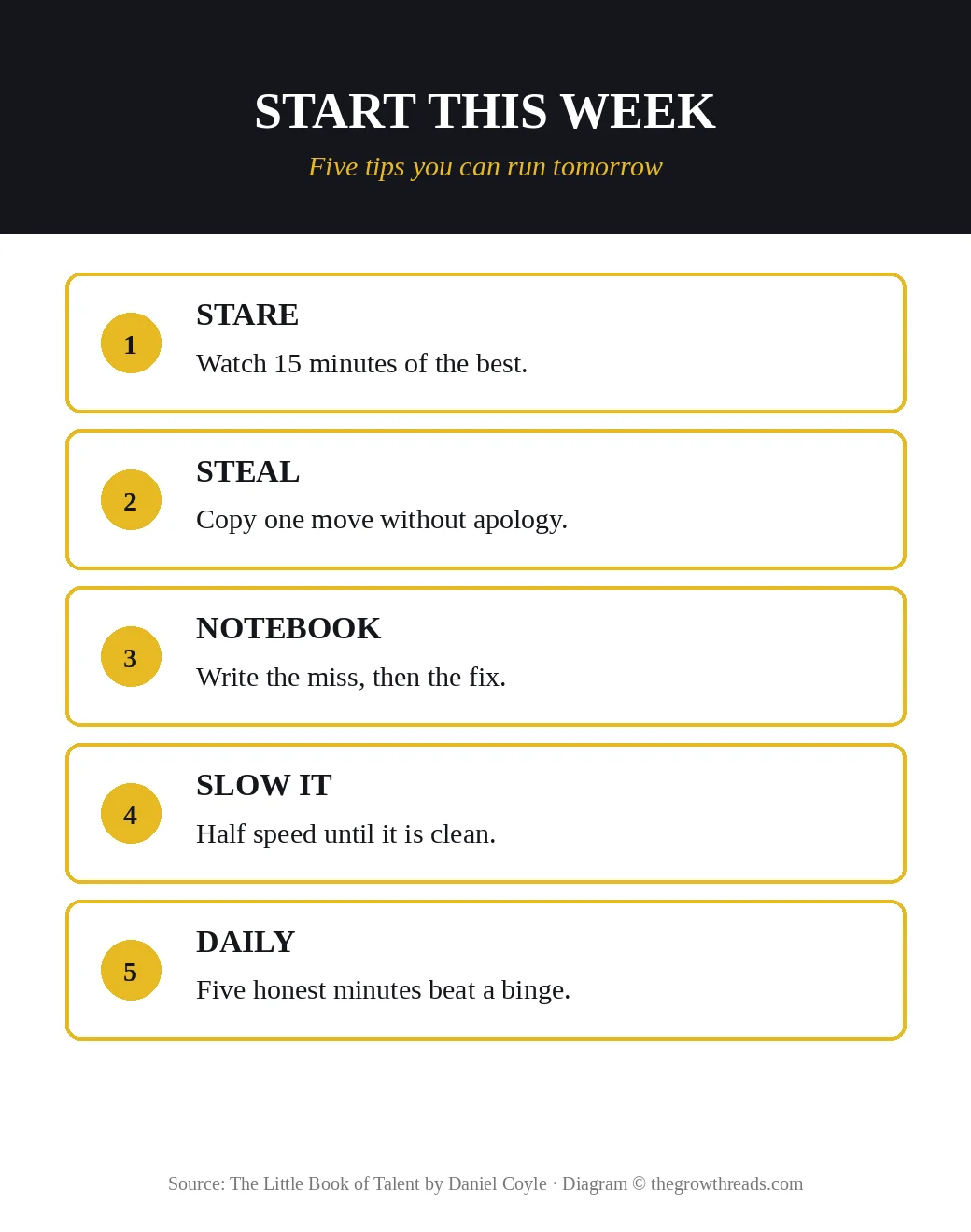
Talent is not a personality type. It is a drawer of small, slightly uncomfortable drills. Daniel Coyle spent years in rooms that manufacture skill — tennis clubs, music camps, coaching gyms — then refused to leave you with a myelin lecture. This 160-page Bantam field guide (2012) is the pocket version of The Talent Code: fifty-two tips, most of them one page, grouped into getting started, improving, and sustaining. The engine is still deep practice. The instruction is blunter. Stare at who you want to become. Steal a move without apology. Work in the sweet spot where you fail just enough. Keep a notebook. Come back tomorrow for five honest minutes. If you only remember one sentence, remember this: stop hunting for a gift. Install a tiny, designed reach, then protect it like a lesson.
Key takeaways
- Stare first: skill starts as a picture you can copy, not as a vibe you wait to feel.
- Steal without apology: the people you admire already stole; your job is to copy one move cleanly.
- The sweet spot is the work: too easy is polishing; too hard is panic. Stay where you miss on purpose.
- Hard skills and soft skills need different rooms: carpenter precision versus skateboarder play.
- Slow is a feature: half speed until the chunk is clean, then add speed, not the other way around.
- A notebook is a coach: write the miss, then the fix. Memory without a mark is tourism.
- Short daily beats heroic Saturday: five honest minutes compound; the binge that never happens does not.
- Do not look down: ignore the public scoreboard while you are still installing the move.
- Teach it to keep it: explaining the chunk is another rep, and a better one.
- Think like a gardener, work like a carpenter: long patience, daily construction — not a weekend personality transplant.
What is The Little Book of Talent about?
The Little Book of Talent is a 52-tip field manual for growing skill on purpose. Coyle turns what he saw in talent hotbeds into short actions: how to start, how to practice so the hour counts, and how to keep going when novelty dies.
About the author
Daniel Coyle is a journalist who treated talent like a beat. After embedding in the rooms that keep producing outliers — from a Moscow tennis club to American music camps — he wrote The Talent Code to explain the pattern, then this thinner book so a coach, a parent, or a tired professional could actually run the pattern. He later turned the same reporter’s eye on groups in The Culture Code, advising organizations from the Navy SEALs to big-league baseball. He is not selling a personality test. He is translating rooms that already know how to grow skill into language you can use on a Tuesday with a notebook and a timer. If you want the science unfiltered, he points you at myelin and Anders Ericsson. If you want a tip you can steal before lunch, this is the book he wrote for you. Explore all Daniel Coyle book summaries →
Key concepts at a glance
| Concept | What it means | Use it when |
|---|---|---|
| Staring | Spending time watching the person you want to become until the move is a picture, not a rumor. | You cannot yet describe the skill in verbs. |
| Stealing | Copying one specific move from the best without waiting to feel original. | You are stuck “finding your voice” instead of practicing a form. |
| Sweet spot | The difficulty band where you succeed often and fail enough to feel stretch. | Practice is either boring or chaotic. |
| Hard vs soft skill | Precision skills that want carpenter reps versus judgment skills that want playful variation. | You are using one practice style for both kinds of work. |
| Deep practice | Reach, miss, notice, repeat — the hour that grows myelin, not the hour that feels like flow. | You logged time and the curve is flat. |
| Spartan space | A simple room that makes reaching easier than decorating the ritual. | You keep buying gear instead of starting the drill. |
| Blue-collar streak | Short daily construction rather than waiting to feel destined. | You binge, disappear, then call it a motivation problem. |
| Don’t look down | Ignore rankings and public scoreboards while the move is still being installed. | Comparison is aborting the session. |
Part 1: Getting started — ignition is a picture you can steal
Coyle’s first section is not a pep talk. It is ignition borrowed from rooms that already work. The headline tip is visual: stare at who you want to become. Future skill arrives as a picture first — a serve, a sentence, a close — and only later as an identity. Fifteen minutes a day watching excellence is downloading the target so practice has somewhere to aim. Then steal without apology. Every hotbed he visited was a copy shop with high standards. Originality, when it showed up, was recombination after stolen reps, not a personality that appeared before the work.
He wants you slightly off-balance. Be willing to be stupid. Buy a notebook. Choose a Spartan space, because luxury delays the reach. Decide whether the thing in front of you is a hard skill or a soft skill. Hard skills want carpenter patience: slow, correct, identical. Soft skills want skateboarder patience: variation, play, ugly landings. Mixing the two is how professionals polish the wrong hour for a decade. The prodigy myth is a veto on the first ugly week. Coyle’s hotbeds did not hunt unicorns. They hunted reps that looked like someone slightly ahead.
TGR Note: If you want the reported why behind these tips — myelin, ignition, master coaching — read our Talent Code summary. For the lab monograph, Peak is Ericsson in his own voice. This little book is the drawer you open after you already believe those arguments.
Part 2: Improving skills — the sweet spot is the whole engine
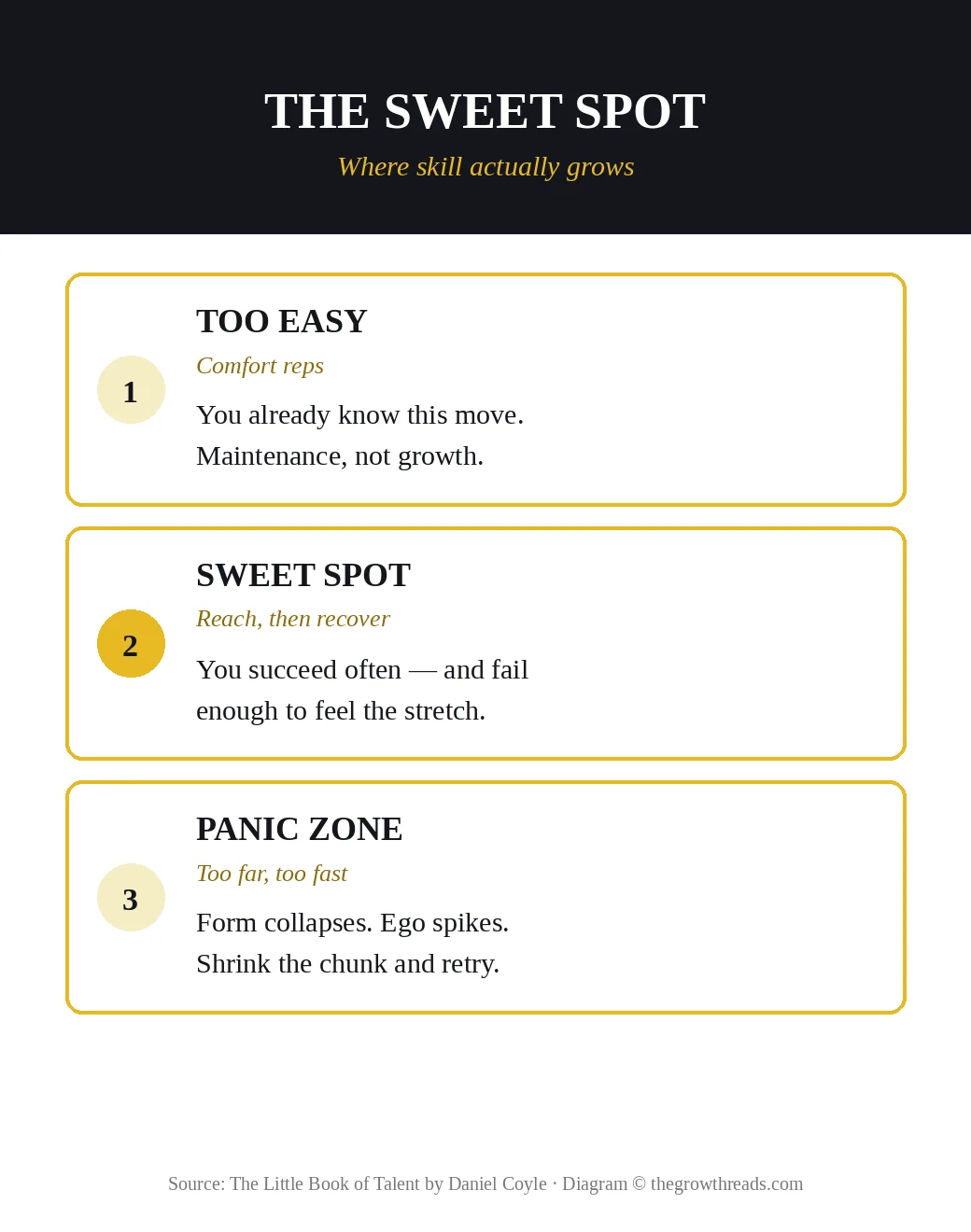
The middle of the book is where most productivity reading goes vague and Coyle stays fussy. Deep practice is not “work hard.” It is a designed reach: a chunk just past clean, repeated with attention, slowed until the miss is visible. The sweet spot is his simplest diagnostic. If you are succeeding at nearly everything, you are polishing. If you cannot complete a single rep, you are in the panic zone — form collapses, ego spikes, and the session becomes a story about your character. Shrink the chunk. Slow the speed. Raise the grain only when the small version is honest. A desk translation: do not “practice writing.” Practice the opening two sentences of the memo you keep dodging, at half speed, out loud, until they stop being mush.
Coyle keeps returning to noticing. Pay attention to the error instead of skating past it. Exaggerate a new move so the nervous system can find it. Take the test — record, film, checklist — because your mood is a terrible coach. The talent whisperers in his reporting are not cheerleaders. They watch. They name the next small thing. They will not let you skip the ugly part to protect your self-image. If you do not have one, the notebook is the substitute: miss, fix, date. That loop is the entire difference between a year of occupancy and a year of skill. It is also why this book belongs in a productivity silo. Your calendar can be full of “practice” that never enters the sweet spot. Coyle is a filter for those hours.
TGR Note: Geoff Colvin’s Talent Is Overrated is the same engine in Fortune language: experience is not deliberate practice. Josh Kaufman’s First 20 Hours is the other timescale — get usefully good fast. Use Kaufman to start; use Coyle when “good enough” has become a hiding place. Ultralearning is the aggressive project cousin.
Part 3: Sustaining progress — a blue-collar streak
The last third is what happens after novelty dies. Hotbeds look romantic from the cheap seats. Up close they are repetitive and protected. Practice every day. Keep sessions short enough that you stop while you still want one more. Teach the move; teaching is a deeper rep. Sleep. The pocket line is gardener plus carpenter: think in seasons, work in daily boards. Identity follows the streak. It does not grant the streak in advance.
“Don’t look down” is the hygiene. While the move is still being installed, rankings and comparisons abort the session. Look at the chunk, not the scoreboard. The blue-collar mindset is the same point in work clothes: clock in; do not wait to feel destined. If passion arrives after competence, “I’m not inspired” is a scheduling error. Five honest minutes before email will not make you a prodigy. They will keep the curve moving in month seven.
TGR Note: Thomas Sterner’s Practicing Mind is the attention layer — stay with the process when the ego wants a result. Grit is stamina once the drill exists. The War of Art names Resistance; Coyle hands you a smaller door through it. Stack them, do not binge them.
Part 4: Apply the 52 tips at a desk
You probably do not train at Spartak. You have a laptop, a calendar, and a skill that would change the next year if it were actually rare. Translate. Staring is a folder of three recorded calls, three decks, three essays you want to sound like — fifteen minutes, not a documentary binge. Stealing is one structure: the way they open, the way they handle an objection, the way they cut a paragraph. The notebook is two lines after the session, not a beautiful productivity system. Hard-skill morning: one syntax, one formula, one layout, slow. Soft-skill afternoon: three variations of the same conversation, playful on purpose. The sweet-spot test is rude and useful: could a coach tell, from the next fifteen minutes, what weakness you were attacking? If not, you were occupying the chair.
Managers can steal this without a poster. A one-on-one that only reviews status is naive practice. A one-on-one that picks a chunk, a drill, and a score is Coyle in a conference room. Protect short daily blocks the way a music school protects lessons. Audit last week with one sentence: people in the hotbeds have a different relationship with practicing. How many of your hours would survive if improvement were the only allowed goal? Whatever remains is practice. The rest is occupancy with better branding.
Who is The Little Book of Talent best for — and who should read something else first?
Read this if you already work, you already believe practice matters, and you want a drawer of drills instead of another theory of greatness. It is especially sharp for coaches, parents, and professionals who keep buying courses instead of staring, stealing, and slowing the move. It is a good second book after you have a basic habit of showing up.
Read something else first if you cannot get started at all — go to Atomic Habits or Mini Habits. If you need competence this month, start with The First 20 Hours. If you want the science unfiltered, start with Peak or The Talent Code. If your stall is mood rather than design, No Excuses! is the “anyway” companion. Coyle will not build your calendar. He will tell you which five minutes on that calendar actually count.
Questions to reflect on
- Who, specifically, are you staring at — and have you watched them for fifteen minutes this week?
- What is the one move you could steal without apology by Friday?
- Of the last ten practice hours, how many were in the sweet spot versus polishing or panic?
- Is the skill in front of you a carpenter skill or a skateboarder skill — and are you practicing the wrong way?
- If you treated the next 30 days like a blue-collar streak, what would you stop waiting to feel?
🔥 Ready to stop waiting on a gift?
Pick one skill. Stare, steal, then run a 15-minute sweet-spot drill before email.
How to apply The Little Book of Talent (7-day plan)
- Day 1 — Name one skill. Write the person or recording you will stare at. If you cannot name them, you do not have a target yet.
- Day 2 — Watch fifteen minutes of that model. Steal one move. Write it as a verb in a notebook.
- Day 3 — Design a 15-minute sweet-spot drill on the weakest chunk. Raise grain if it is easy; shrink if it panics.
- Day 4 — Run the drill slowly. Circle the miss. Write the fix in one line. No second skill.
- Day 5 — Repeat the same drill before email. Stop while you still want one more rep.
- Day 6 — Teach the chunk to a person or a page in five sentences. Teaching is a rep.
- Day 7 — Block four short sessions for next week. Protect them like lessons, not leftover calendar.
Frequently asked questions
What is The Little Book of Talent about in one paragraph?
The Little Book of Talent is Daniel Coyle’s pocket field guide: 52 short tips for growing a skill, grouped into getting started, improving, and sustaining. Where The Talent Code explains myelin and hotbeds, this book tells you what to do on Tuesday — stare at who you want to become, steal a move, practice in the sweet spot, keep a notebook, and come back tomorrow. It is a coaching manual, not a memoir. Read it as a drawer of drills, not a story you finish once.
Is this the same book as The Talent Code?
No. The Talent Code (2009) is the reported why: talent hotbeds, ignition, deep practice, master coaching, and myelin. The Little Book of Talent (2012) is the how: fifty-two one-page actions you can run without rereading the neuroscience. They stack. If you want the story of Spartak and Meadowmount, start with The Talent Code. If you already believe practice matters and still waste the hour, this is the thinner, more useful book. You do not need both on day one. You need one tip in the calendar.
What is the sweet spot in this book?
The sweet spot is the difficulty band where you succeed often enough to stay in the move, and fail often enough to feel a stretch. Too easy is polishing. Too hard is panic — form collapses and ego takes the wheel. Coyle’s instruction is practical: if you are sailing through, raise the grain; if you are flailing, shrink the chunk or slow the speed. A desk version is a paragraph you cannot yet write cleanly, not a whole chapter you have never outlined. Stay there for a short session, then stop.
Can I use this if I am not an athlete or musician?
Yes. Coyle’s examples come from tennis clubs, music camps, and coaching gyms because those rooms already treat practice as a craft. The tips translate. Staring is watching a recorded sales call or a design you admire. Stealing is copying one structure, not a career. The notebook is the miss and the fix after a meeting. Hard skills at a desk are syntax, a close, a chord change of a slide. Soft skills are judgment under time. The book will not invent your calendar. It will tell you which five minutes on that calendar actually grow a skill.
How is this different from Peak, Talent Is Overrated, or Ultralearning?
Peak is Ericsson’s lab account. Talent Is Overrated is Colvin’s business-journalist case that experience is not practice. Ultralearning is Scott Young’s aggressive, self-directed projects. Coyle’s little book is the daily drawer: shorter, more tactical, less argument. Use Peak when you want the science. Use Colvin when you need to tell a manager that years in the chair are not a development plan. Use Young when you have a twelve-week siege. Use Coyle when you need a tip you can run before lunch without a manifesto.
Do I need a coach to use the 52 tips?
A coach is a multiplier, not a gate. Coyle’s “talent whisperers” watch, name the next chunk, and will not let you skip the ugly part. If you have one, bring them a sweet-spot drill, not a mood. If you do not, fake the loop: record, checklist, or a colleague who will be honest. The notebook is the poor person’s coach. Five minutes of watching the best is the poor person’s master class. Do not wait for a mentor to appear before you stare, steal, and slow the move. The tips were written for rooms that already have teachers — and for rooms that do not.
Should I read Atomic Habits or The First 20 Hours instead?
Read Atomic Habits if the problem is showing up at all. Read The First 20 Hours if you need useful competence this month, not a decade of craft. Read The Little Book of Talent if you already sit down and still practice like a tourist — comfortable reps, no notebook, no model. They nest. Clear gets you in the chair. Kaufman gets you to “good enough to use.” Coyle tells you how the next hundred short sessions should feel. None of them replace a score. If you cannot name the miss, you are still polishing.
Related summaries
- The Talent Code — Coyle’s longer why: hotbeds, ignition, myelin, coaching.
- Talent Is Overrated — Colvin’s case that experience is not designed practice.
- Peak — Ericsson’s science of expertise, the lab underneath these tips.
- The Practicing Mind — how to stay with the process when ego wants a result.
- Best productivity books — the full Productivity pillar.
How we analyze books: every book on The Growth Reads is read cover to cover, summarized in thousands of words of original analysis, and rated against our five-criteria rubric (lasting impact, evidence quality, practical application, writing & originality, external consensus). Read our full methodology.