

★★★★½ 4.5/5 — Interruption buys a glance. Permission is the privilege of the next message.
Best for: Founders, marketers, and makers whose week is another blast to a list that never asked.
Reading time: ~7 hrs (Simon & Schuster hardcover, 1999, 256 pp) · this guide ~13 min
Difficulty to apply: Easy to kill one interrupt today. Hard to earn the next yes without turning it into a pitch.
Permission Marketing in one minute
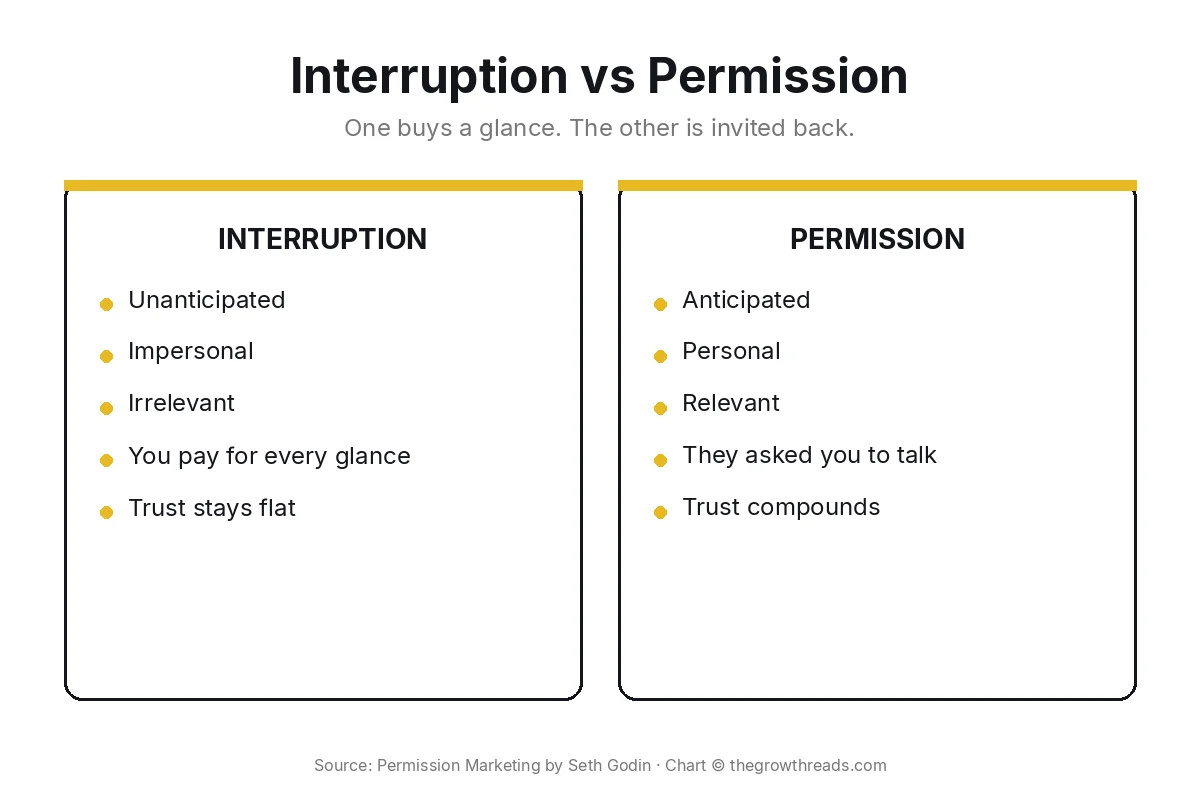
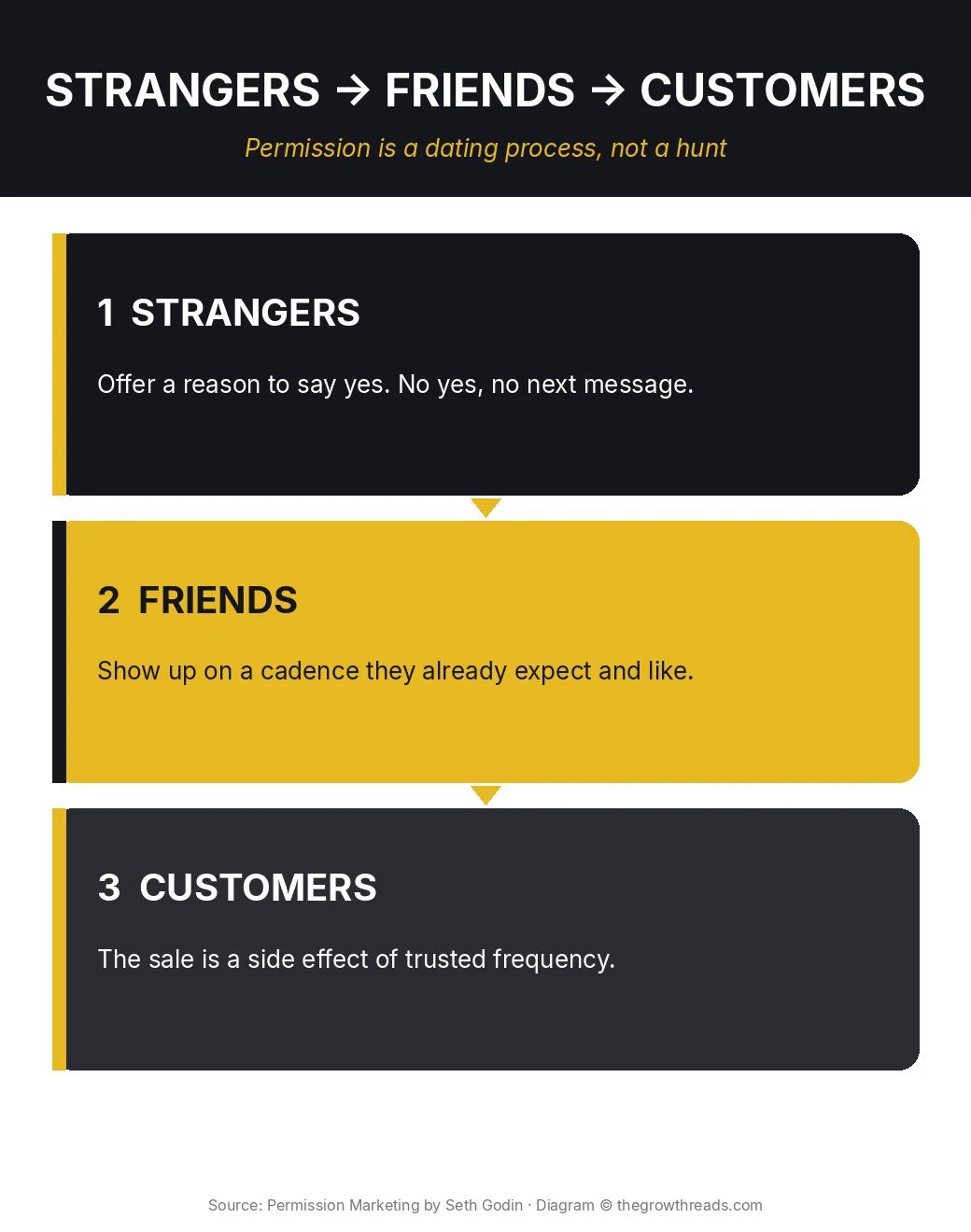
You do not have a right to talk. You earn the privilege of the next message. Seth Godin’s 1999 book named the shift every inbox still punishes you for missing. Interruption marketing rents a glance from people who did not ask — TV, banners, cold lists, the unsolicited DM. Permission marketing is anticipated, personal, and relevant. They knew a note was coming. It was for them. It helped a job they already had. Frequency then compounds trust the way dating does. If your week is another blast, this is the reset. Offer a reason to say yes. Show up on a cadence they already expect. Raise the level of permission instead of buying another interrupt.
Key takeaways
- Interruption is a tax: You pay for every glance, and the yield keeps falling as clutter rises.
- Permission is a privilege: Not a right, not a purchased email, not a scraped handle.
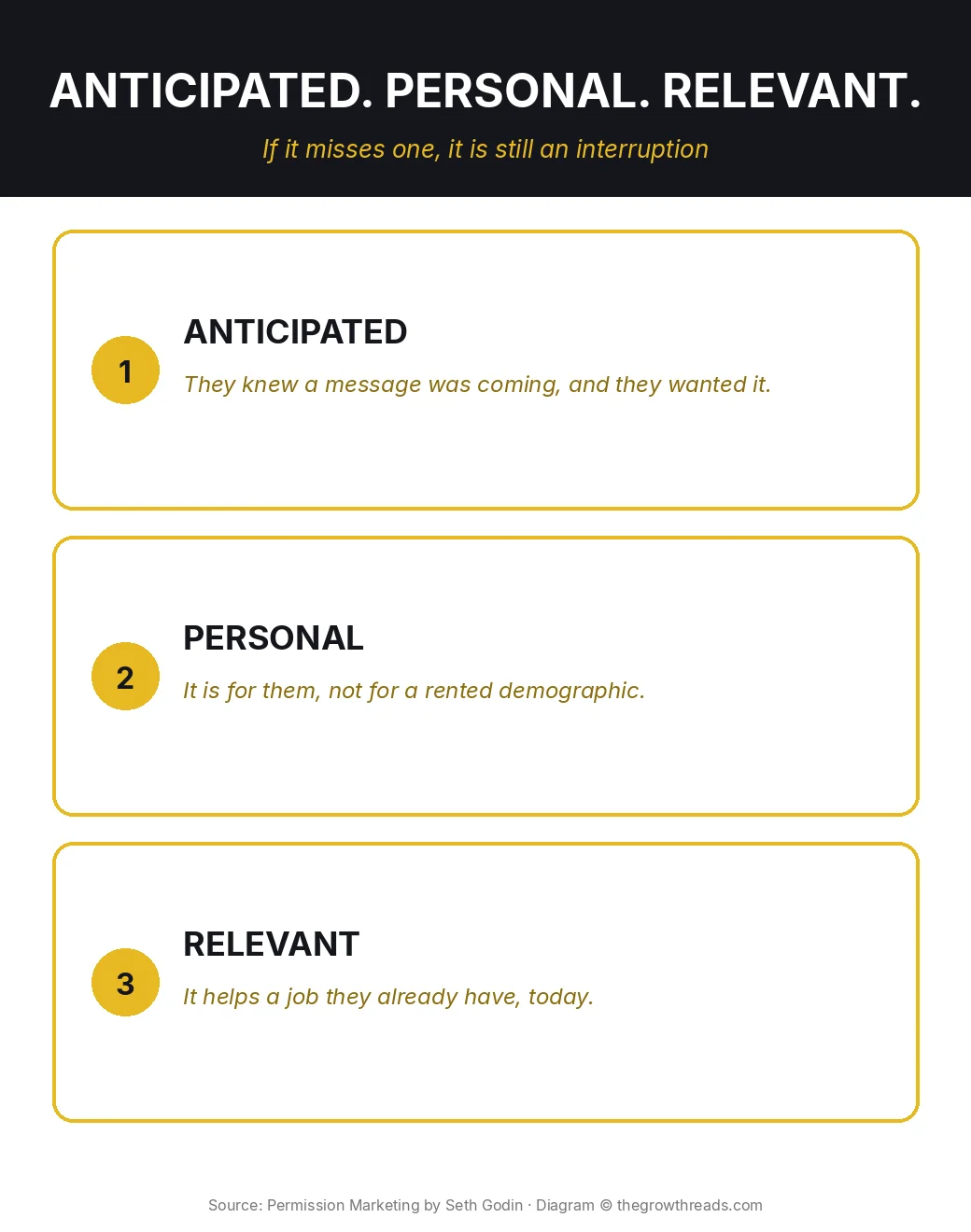
- Three tests: Anticipated, personal, and relevant. Miss one and you are interrupting again.
- Date, don’t hunt: A stranger does not owe you a pitch on first contact.
- Frequency is the engine: Trust compounds when they already expect you.
- Five levels: Situational help is the floor. Intravenous trust is the ceiling. Raise the level.
- Incentives start the yes: A useful first date, not a disguised brochure.
- The sale is a side effect: Friends become customers because the cadence already works.
- Keep the privilege: One greedy pitch resets you to stranger.
What is Permission Marketing about?
Permission Marketing is Seth Godin’s 1999 argument that you earn the next message instead of buying another interruption. Interruption marketing rents a glance. Permission is anticipated, personal, and relevant — they wanted it, it is for them, and it helps today — or it is still spam.
About the author
Seth Godin is a writer, marketer, and teacher whose daily blog has run since 2002. Before the books, he founded Yoyodyne, an early internet permission-marketing firm later sold to Yahoo, where he worked as a vice president of direct marketing. Permission Marketing (Simon & Schuster, 1999) is the book that named the shift he had been building in public: strangers do not owe you their attention, and frequency only compounds after a yes. He later wrote Purple Cow, Linchpin, The Dip, Tribes, The Practice, and This Is Marketing, and founded the altMBA and Akimbo workshops. The through-line is the same: ship work for people who already want the change, and stop paying to interrupt everyone else. Explore all Seth Godin book summaries →
Key concepts at a glance
| Concept | What it means | Use it when |
|---|---|---|
| Interruption marketing | Buy a glance from people who did not ask. | The plan is more ads to a colder list. |
| Permission | The privilege of a message they want next. | You cannot name who said yes, and why. |
| Anticipated / personal / relevant | They expected it, it is for them, it helps today. | The opt-in exists and the open rate still shrugs. |
| Dating metaphor | Earn the next conversation. Don’t hunt a close. | First contact is already a pitch deck. |
| Frequency | Trusted cadence compounds; random blasts reset you. | You send when you need something, not when they do. |
| Five levels | Situational → brand → points → approval → intravenous. | You treat a one-time yes like a subscription. |
| Incentive | A real first-date reason to opt in. | The magnet is a 40-page brochure. |
| Keep the privilege | One greedy pitch returns you to stranger. | Every newsletter is a discount and a funnel. |
Part 1 — Interruption marketing is going broke
Godin opens with a cost curve everyone in media already felt in 1999 and everyone in a notification tray feels now. There are more messages than hours. Each new interrupt trains people to ignore the next one. You can still buy a glance. You cannot buy the second glance at the same price. Television clutter, mailbox clutter, and banner clutter were his exhibits. The exhibit today is the same math with a different logo: the unsolicited sequence, the scraped LinkedIn note, the “quick question” that is a pitch.
Interruption marketing is hunting. You spend to find a stranger, you shout, you hope a fraction turns. As the woods fill up, you spend more for the same meat. Permission marketing is farming. You plant a yes, you water it on a schedule the plant already expects, and the yield is a relationship you do not have to re-buy. Yoyodyne was Godin’s lab for that farm: contests and email that people signed up to receive, then a cadence that tried to stay invited. The book is not a channel list. It is a warning that the interrupt is a wasting asset.
The practical tell is ugly and useful. If the only way the message works is that they did not see it coming, you are already on the wrong side of the curve. A useful message can survive being expected. A weak one needs surprise, volume, and a bigger budget next quarter.
TGR Note: If the product itself is invisible, start with Purple Cow — remarkable work beats a cheaper interrupt. If you can already see the customer and still shout, This Is Marketing is the 2018 language for the smallest viable market. This book is the older rule for the message: did they ask you to talk?
Part 2 — Permission is anticipated, personal, and relevant
Godin’s definition is a filter, not a slogan. Permission marketing is the privilege — not the right — of delivering anticipated, personal, and relevant messages to people who actually want to get them. Anticipated: they knew a note was coming and they wanted it. Personal: it is for them, not for a rented demographic. Relevant: it helps a job they already have today. Miss any one and the opt-in on file is a legal cover for another interrupt.
The dating metaphor is the working picture. You do not propose to a stranger in the grocery line. You offer a reason to go on a first date. If that date is useful, you earn the second. Frequency without value is clingy. A single brilliant note with no follow-through is a one-night glance. Friends become customers because they already expect you, not because you closed harder on Tuesday. The test Godin wants on your next outbound is almost rude: would you send this to someone you are actually dating?
Personal is the test teams fake with a merge field. A first name on a generic feature tour is still impersonal. Relevant is the test product teams fake with “thought you should know.” If they cannot use it this week, it is your calendar, not theirs. Anticipated is the test growth teams fake with a buried checkbox. An accidental yes is not a welcome. The three tests together are why a small invited list outperforms a huge rented one — not because the copy is cleverer, because the audience already leaned in.
TGR Note: Permission without a thing to send is a list you will abuse. The Practice is the shipping habit so the cadence is real. Linchpin is the emotional labor inside each note — a gift, not a brochure. Earn the yes, then actually show up.
Part 3 — Five levels of permission
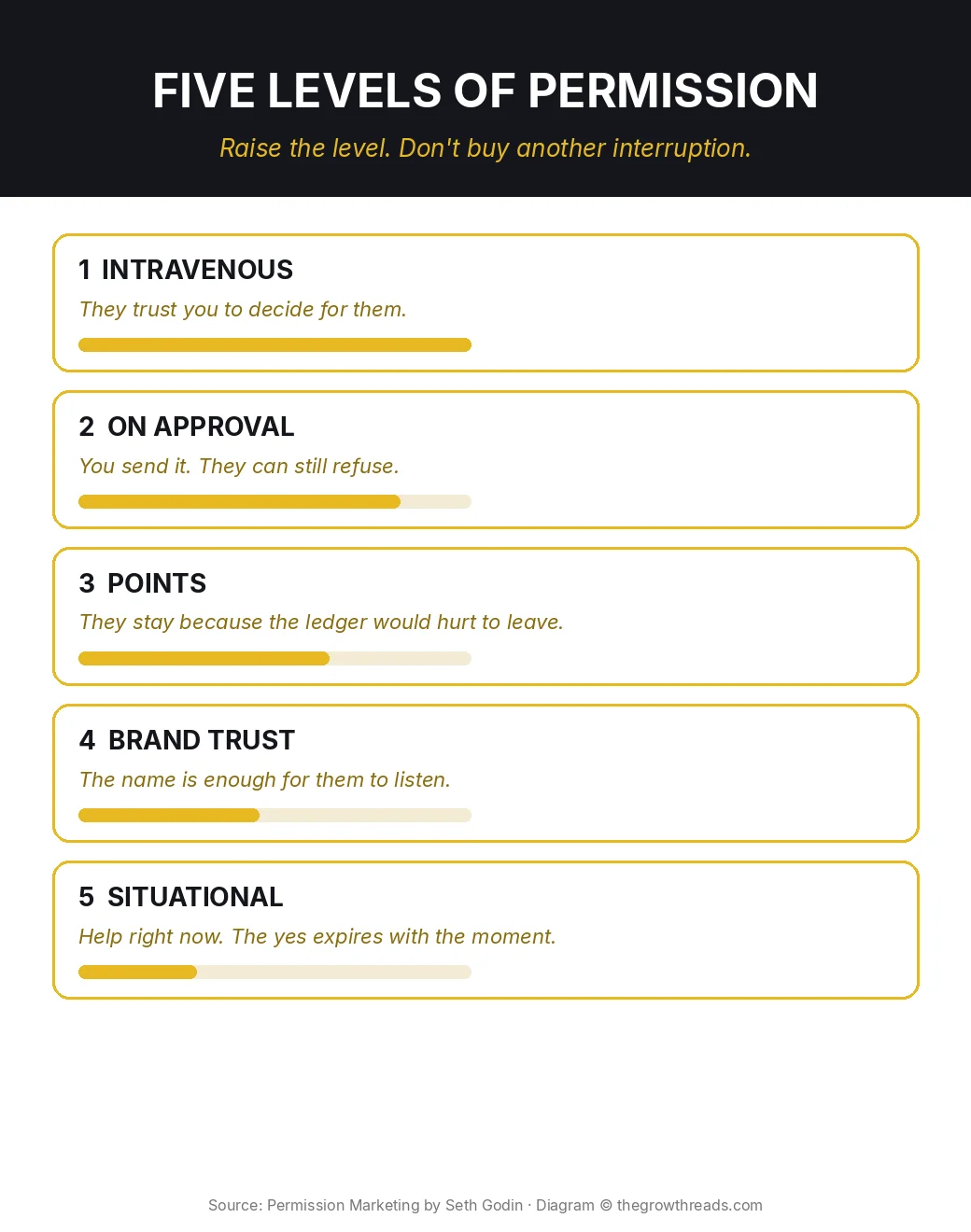
Not every yes is the same yes. Godin ranks five levels so you stop treating a clerk’s “can I help you?” like a subscription. Situational permission is the floor: help right now, then the yes expires with the moment. Brand trust is next: the name is enough for them to listen, which is why a sloppy brand burns the next message before it is written. Points permission is a ledger — miles, stamps, punches — that makes leaving feel wasteful. Useful, and also brittle if the points are the only reason they stay.
Purchase on approval is a higher bet: you send the thing and they can still refuse. Book clubs and replenish programs live here. Intravenous is the ceiling. They trust you to decide for them — a magazine that just arrives, a refill that just ships, a curator whose next pick they already want. That level is power with a duty attached. Abuse it once and you do not slide to situational. You go back to stranger, and you have to buy the glance again.
The work is to raise the level on purpose. A situational yes can become a cadence if the first help was real. A points member can become intravenous if the program starts choosing for them in a way they like. The failure mode is the opposite: you win a situational hello and immediately send the quarterly catalog. You had a date. You mailed a contract.
TGR Note: Raising the level is a long game. The Dip is when to quit a list that will never say yes, and when to stay with the one that is compounding. Tribes is what happens after friends want a leader, not another coupon. Do not confuse a situational yes with intravenous trust.
Part 4 — Frequency turns friends into customers
Once you have a yes, the product is the cadence. Godin argues that frequency — showing up as expected, with something worth the open — is how strangers become friends and friends become customers. The sale is a side effect of trusted repetition, not a one-shot close you bolted onto a welcome sequence. That is why a useful weekly note from a tiny list can out-earn a giant blast: the giant list is still a hunt. The weekly note is a farm.
Getting the first yes still needs an incentive that is actually a first date. A 40-page brochure is not a date. A sample, a seat, a short useful report, a tool they can use this afternoon — that is a date. Then you keep the privilege by not converting every touch into a pitch. The greedy move is famous because everyone has done it: the welcome email is a discount, the second is a webinar, the third is “last chance.” You taught them that saying yes was a mistake.
Testing, in Godin’s frame, is not a lab for subject-line tricks. It is a way to see whether the next message still passes anticipated, personal, and relevant. If opens fall after a pitch week, you did not “need better creative.” You spent the privilege. Raise the level for a few people on purpose — a tighter cadence, a replenish offer, a curator pick — and leave the rest of the list at the level they actually granted.
Who is Permission Marketing best for — and who should read something else first?
Best for founders, marketers, newsletter writers, and product people whose week is outbound they did not earn. If you can paste last month’s sends into a doc and feel the flinch, start here. The book is short. The filter is sharp. You will kill a blast before you buy another tool.
Read something else first if the product itself is invisible — that is Purple Cow. If you already have permission and still cannot name the smallest market, that is This Is Marketing. If you will not ship the emails you promised, that is The Practice. If the real problem is the room and the calendar, not the list, start with Peopleware. Permission Marketing will not fix a product nobody wants, and it will not protect deep work. It will stop you paying to annoy people who already told you no.
Questions to reflect on
- Of the last twenty messages you sent, how many were anticipated, personal, and relevant — all three?
- Who actually said yes, and what did they think they were saying yes to?
- What level of permission do you pretend you have versus the level they granted?
- What would a first date look like for a stranger who does not owe you a pitch?
- Which send from last month spent the privilege, and what would you send instead?
🔥 Ready to earn the next message?
Stop buying interruptions. Build a cadence people already expect.
How to apply Permission Marketing (7-day plan)
- Day 1 — Audit twenty sends: Paste the last twenty outbound notes. Mark each A, P, R. Anything missing a letter was an interrupt, even with an opt-in.
- Day 2 — Write the permission sentence: One line: what they get if they say yes, in their words. If you cannot say it without a feature list, you are still hunting.
- Day 3 — Kill one interrupt: Cancel one blast, one cold sequence, or one “just circling back” that nobody asked for. Feel the empty calendar. That is the point.
- Day 4 — Offer a real first date: A short useful asset, a sample, a seat. Send the offer only to people who can use it this week. No 40-page brochure.
- Day 5 — Send one anticipated note: Only to people who already said yes. Personal and relevant. No pitch. If you need a CTA, make it a question they can answer.
- Day 6 — Score frequency vs new names: Count invited sends versus new-list adds. If adds are the only number you celebrate, you are still hunting.
- Day 7 — Raise the level for ten people: Pick ten who already like the cadence. Offer a tighter loop, a replenish, or a curator pick. Leave everyone else at the level they granted.
Frequently asked questions
What is Permission Marketing about?
Permission Marketing is Seth Godin’s 1999 book about earning the right to talk. Interruption marketing buys a glance from people who did not ask. Permission marketing is anticipated, personal, and relevant: they knew a message was coming, it is for them, and it helps a job they already have. Godin uses a dating metaphor. You offer a reason to say yes, show up on a cadence they expect, and raise the level of trust instead of renting another ad. Frequency is the engine. The sale is a side effect of being invited back. Simon & Schuster, 256 pages.
What does Godin mean by “anticipated, personal, and relevant”?
Those three tests are the whole filter. Anticipated means they knew the message was coming and wanted it — a newsletter they signed for, not a blast they never met. Personal means it is for that person, not a rented age band. Relevant means it helps a job they already have today, not a feature tour you needed to send. Miss one test and you are interrupting again, even with an opt-in on file. The practical move is to score the next outbound against all three before you hit send.
What are the five levels of permission?
Godin ranks permission from most leverage to least. Intravenous: they trust you to decide for them, like a book club or a replenish order. Purchase on approval: you send it and they can still refuse. Points: they stay because walking away wastes a ledger. Brand trust: the name is enough for them to listen. Situational: help right now, then the yes expires with the moment. The work is to raise the level, not to buy another situational glance when the moment has passed.
Is Permission Marketing still relevant in 2026?
The media in the examples aged. Banner ads and 1999 TV clutter are not your stack. The inbox, the notification tray, and the unsolicited DM are the same tax with new buttons. People still ignore what they did not ask for, and they still reward a cadence they invited. Read it as a filter for outbound, not as a media-buying manual. If you need status, affiliation, and the smallest viable market in 2018 language, pair it with This Is Marketing. The permission test has not expired.
How is Permission Marketing different from Purple Cow or This Is Marketing?
Purple Cow is about making the product itself worth remarking on so advertising is not the only engine. This Is Marketing is about seeing a tiny market, naming the culture, and creating tension so they enroll. Permission Marketing is the older operating rule for the message itself: do you have the privilege of the next note, or are you renting a glance? You can be remarkable and still spam. You can see the customer and still interrupt them. Start here if the list is the problem. Read the later books if the offer or the market is the problem.
How long does it take to apply Permission Marketing?
You can audit twenty outbound messages in an afternoon and kill one interrupt the same day. Earning a higher level of permission takes a cadence measured in weeks, not a weekend funnel. The 7-day plan below is one week of that cadence: a permission sentence, one dead blast, a real incentive, one anticipated note to people who already said yes, and a raise in level for ten people. The book is a short hardcover. The practice is showing up again without turning every touch into a pitch.
What is the dating metaphor in Permission Marketing?
Godin says permission is a dating process, not a hunt. A stranger does not owe you a pitch on first contact. You offer a reason to go on a first date — a useful report, a sample, a seat — and you only earn the next conversation if that one was anticipated, personal, and relevant. Frequency without value is clingy. A single useful note with no follow-through is a one-night glance. Friends become customers because they already expect you, not because you closed harder. If you would not send the email to someone you are actually dating, do not send it.
Related summaries
- This Is Marketing Summary & Review — see the customer, then earn the glance
- Purple Cow Summary & Review — make the product worth remarking on
- Linchpin Summary & Review — the gift inside each note
- The Practice Summary & Review — ship the cadence you promised
- Best productivity books — the full Productivity silo
How we analyze books: we paraphrase arguments, add original application notes, and skip chapter-by-chapter reproduction. Read our full methodology.