
Every area of life improves when your relationships improve. The best relationship books cover everything from romantic partnerships to friendships, family dynamics, and professional communication — giving you the tools to connect more deeply and resolve conflict with grace.
Top 10 Relationships Books
Our highest-rated picks — based on depth, practicality, and lasting impact.
Key Authors in Relationships
The writers shaping how we think about relationships.
Latest Summaries
Recently published reviews in this topic.
All Relationships Book Reviews
Untamed Summary & Review: Stop Pleasing and Start Living as Your Truest Self
Glennon Doyle's fierce manifesto for breaking free from expectations and trusting your inner Knowing. A guide to choosing authenticity over approval.
Read Review
Fair Play Summary & Review: A Game-Changing System for Dividing Domestic Life
Eve Rodsky's card-based system makes invisible domestic labour visible and divisible — transforming resentment into genuine partnership.
Read Review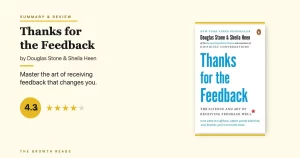
Thanks for the Feedback Summary & Review: Master the Art of Receiving
Full Thanks for the Feedback summary: three triggers, three feedback types, blind spots, 5-criteria rating, and a 7-day plan to receive feedback without shutting...
Read Review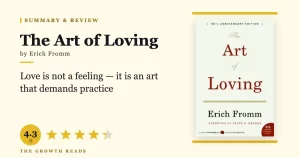
The Art of Loving Summary & Review: Love Is a Skill You Practice
Erich Fromm argues love is an art requiring knowledge, discipline, and practice — not a feeling you fall into. A timeless guide to relationships.
Read Review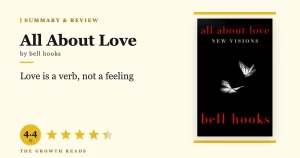
All About Love Summary & Review: Why Love Is a Practice, Not a Feeling
All About Love summary by bell hooks — discover why love is a practice requiring honesty, care, and community, not just a feeling. Key...
Read Review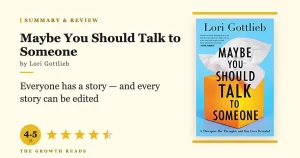
Maybe You Should Talk to Someone Summary & Review: A Therapist’s Guide to Being Human
Lori Gottlieb's extraordinary memoir interweaving her own therapy journey with four patients' stories. A profound exploration of vulnerability, connection, and the courage to change.
Read Review
His Needs, Her Needs Summary & Review: Affair-Proof Your Marriage
His Needs, Her Needs summary: Willard Harley's Love Bank framework and the 10 vital needs that keep marriages affair-proof, plus a practical 7-day plan.
Read Review
Supercommunicators Summary & Review: The Secret Language of Connection
Charles Duhigg's research-backed guide to the three conversations, looping for understanding, and becoming the person everyone wants to talk to.
Read Review
The Mastery of Love Summary & Review: Build Relationships Without Fear
Don Miguel Ruiz's Toltec guide to replacing fear, control, and neediness with unconditional love, self-acceptance, and genuine freedom in relationships.
Read Review
Getting to Yes Summary & Review: Negotiate Agreement Without Giving In
The Harvard Negotiation Project's principled negotiation framework — separate people from problems, focus on interests, invent options, and use your BATNA.
Read Review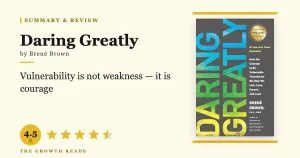
Daring Greatly Summary & Review: Why Vulnerability Is the Ultimate Courage
Brené Brown's research proves that vulnerability — not toughness — is the birthplace of connection, creativity, and courage. A transformative guide to showing up...
Read Review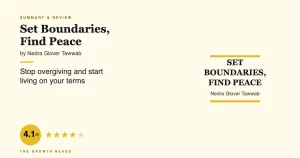
Set Boundaries, Find Peace Summary & Review: Stop Overgiving and Start Living
Nedra Glover Tawwab's guide to the six types of boundaries — practical scripts and strategies for people-pleasers ready to reclaim their energy.
Read ReviewBrowse All Relationships Summaries
We’ve reviewed 59 relationships books — each with key takeaways, practical lessons, and honest ratings.
How We Select & Review Relationship Books
The Growth Reads editorial team reads every relationship book we cover in full before writing a summary. We prioritize books grounded in research or long clinical practice — the Gottman Institute’s marriage studies, attachment theory, negotiation and communication frameworks — over books that repackage generic advice without evidence behind it.
Each book is evaluated against the same three criteria we use across every topic on this site: depth (does it go beyond surface-level advice?), practicality (can you actually apply it in a real conversation or relationship?), and lasting impact (does it still hold up years after publication?). Where a book makes a specific claim about attachment styles, communication research, or relationship outcomes, we check it against the author’s own cited studies rather than taking the claim at face value.
Books enter this topic from several directions: classic, decades-old titles that remain foundational (How to Win Friends and Influence People, first published in 1936, is still one of the most-recommended books on this list), modern research-driven books (Attached, Hold Me Tight, the Gottman titles), and newer additions covering boundaries and self-respect in relationships (The Let Them Theory, The Courage to Be Disliked). We periodically re-review earlier summaries to make sure the practical guidance still holds.
Every summary ends with a practical takeaway, not just a recap of the book’s argument, and every rating reflects an honest read of the whole book, not the publisher’s marketing copy. We are an independent publisher: our reviews aren’t affiliated with or endorsed by the authors or publishers of the books we cover, and while some links on this page are affiliate links (Amazon, Bookshop.org), that has no bearing on which books make this list or how we rate them.
For our full ranked countdown, see 23 Best Relationship Books of All Time.
Frequently Asked Questions
What’s the best book to understand relationships?
For a broad, foundational start, How to Win Friends and Influence People by Dale Carnegie is the most-cited classic — it applies to romantic, family, and professional relationships alike. For romantic partnerships specifically, Attached by Amir Levine (attachment styles) and The Seven Principles for Making Marriage Work by John Gottman (research-backed marriage patterns) are the two most-recommended starting points.
Are relationship books only about romantic partners?
No. Many of the highest-rated books on this list — Crucial Conversations, Nonviolent Communication, Never Split the Difference — are about communication and conflict resolution that applies equally to friendships, family, and work relationships. Attachment theory and marriage-specific books (Attached, Hold Me Tight, the Gottman books) are the ones that focus specifically on romantic partnerships.
What book should I read to fix communication problems?
Crucial Conversations and Nonviolent Communication are the two most practical picks for everyday communication and conflict — both give concrete scripts and frameworks rather than just theory. If the conflict involves negotiation (money, boundaries, big decisions), Never Split the Difference by Chris Voss adapts hostage-negotiation techniques for everyday high-stakes conversations.
Is attachment theory worth reading about?
Yes — Attached by Amir Levine and Rachel Heller is the most accessible introduction, and understanding your own attachment style (anxious, avoidant, secure) is one of the most commonly cited “lightbulb moment” reads in this topic. It pairs well with Hold Me Tight by Dr. Sue Johnson, which applies attachment theory specifically to romantic repair work.
What’s the difference between The 5 Love Languages and Attached?
The 5 Love Languages is about how people prefer to give and receive affection day-to-day (words, touch, gifts, acts of service, quality time). Attached is about your underlying attachment style — the deeper pattern that shapes how secure or anxious you feel in close relationships. Many readers find the two complementary rather than competing.
Which relationship book should I start with if I’m new to the topic?
How to Win Friends and Influence People for a broad, low-commitment classic that applies to every kind of relationship, or The 5 Love Languages if you specifically want a quick, practical read on romantic partnerships.
What do relationship therapists actually recommend?
John Gottman’s research (The Seven Principles for Making Marriage Work) and Sue Johnson’s Emotionally Focused Therapy work (Hold Me Tight) are the two most frequently recommended by licensed marriage and family therapists, since both are grounded in decades of couples-therapy research rather than general self-help advice.
Is Never Split the Difference really a relationship book?
It’s written as a negotiation book (the author was an FBI hostage negotiator), but its core techniques — active listening, labeling emotions, mirroring — are widely used in everyday relationship communication, which is why it consistently ranks alongside dedicated relationship titles on this list.
What book helps with setting boundaries with family or friends?
The Let Them Theory by Mel Robbins and The Courage to Be Disliked (built on Adlerian psychology) are the two most-read books on this list for boundary-setting and letting go of the need for others’ approval.
How often is this list updated?
We review and refresh this page at least yearly, and add new relationship books as they’re published and reviewed. Older summaries are periodically checked for dated examples even when their core arguments still hold.
Explore Other Topics
More book summary hubs on The Growth Reads.