

★★★★☆ 4.2/5 — A novel and philosophical treatise in one, arguing that the wedding is where the real work of love begins, not where the story ends.
Best for: readers in a long-term relationship who want language and philosophy for the unglamorous, unphotographed parts of sustaining love · Reading time: ~5 hrs (this guide: ~11 min) · Difficulty to apply: Moderate — the ideas are clear, but confronting your own “Romantic” assumptions about love takes real honesty
The Course of Love in one minute
Alain de Botton argues that what we typically call love — the falling-in-love phase — is only the start of love, and that Western culture radically over-invests in that beginning while knowing almost nothing about how to sustain what comes after. Told through the marriage of Rabih and Kirsten, an architect and a quantity surveyor who meet in Edinburgh, the novel deliberately reveals its entire arc in the opening pages — courtship, marriage, children, one partner’s affair, financial strain — because de Botton’s real subject isn’t suspense but what he calls “Romanticism”: a relatively recent cultural ideology holding that there is one perfect soulmate, that true love should feel effortless, and that a relationship requiring negotiation has somehow failed. Alternating fictional scenes with short, italicized philosophical passages, de Botton reframes love as a skill to be learned and practiced rather than a feeling one either has or doesn’t — and argues that real compatibility is something a couple builds through years of negotiation, not something they discover at first sight. Published in 2016 as a spiritual sequel to his 1993 debut On Love, the book uses Rabih and Kirsten’s marriage — including a mid-book affair — to dramatize what mature, sustained love actually demands.
Key takeaways
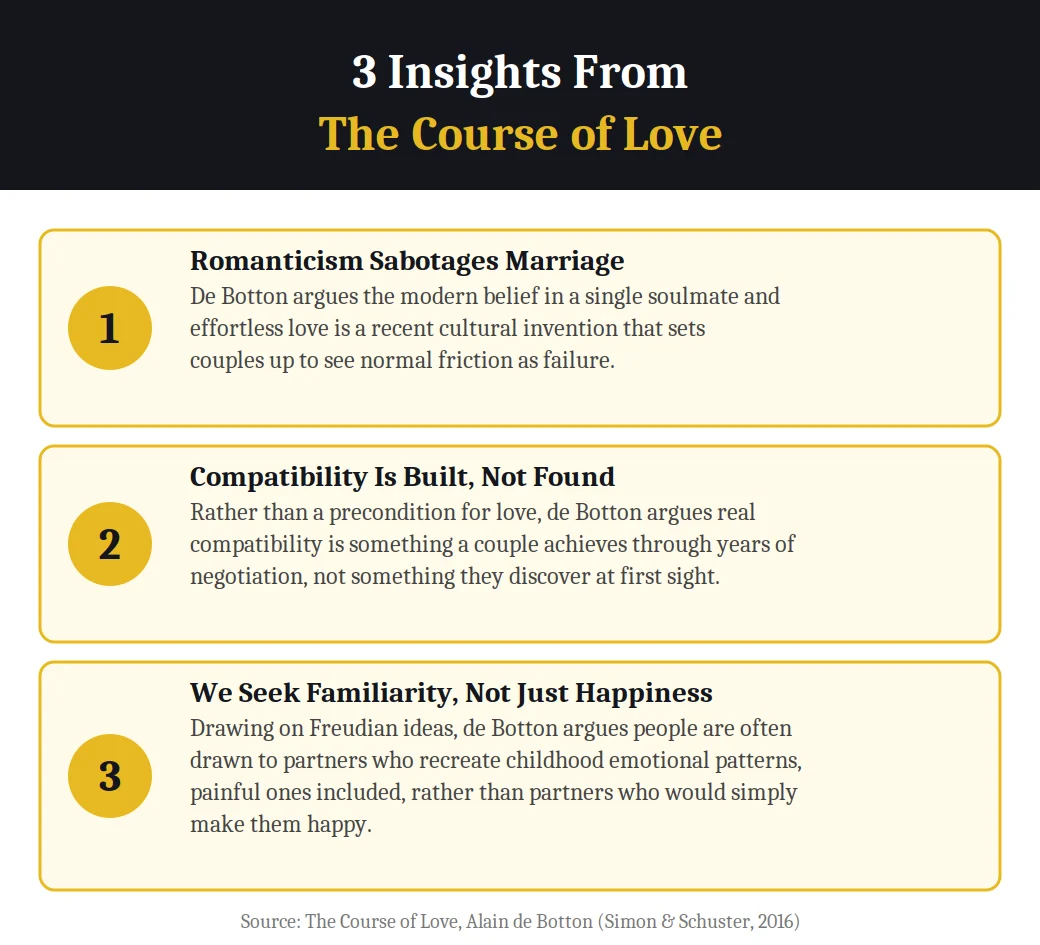
- Falling in love is only the beginning: de Botton argues the real, harder work of love begins after the wedding, not before it — a phase modern culture has almost no vocabulary for.
- “Romanticism” is a recent, sabotaging ideology: the belief in a single soulmate, effortless connection, and intuitive understanding is historically recent and sets couples up to see normal friction as failure.
- Compatibility is achieved, not discovered: de Botton argues real compatibility is built through years of negotiation, and shouldn’t be treated as a precondition for choosing a partner.
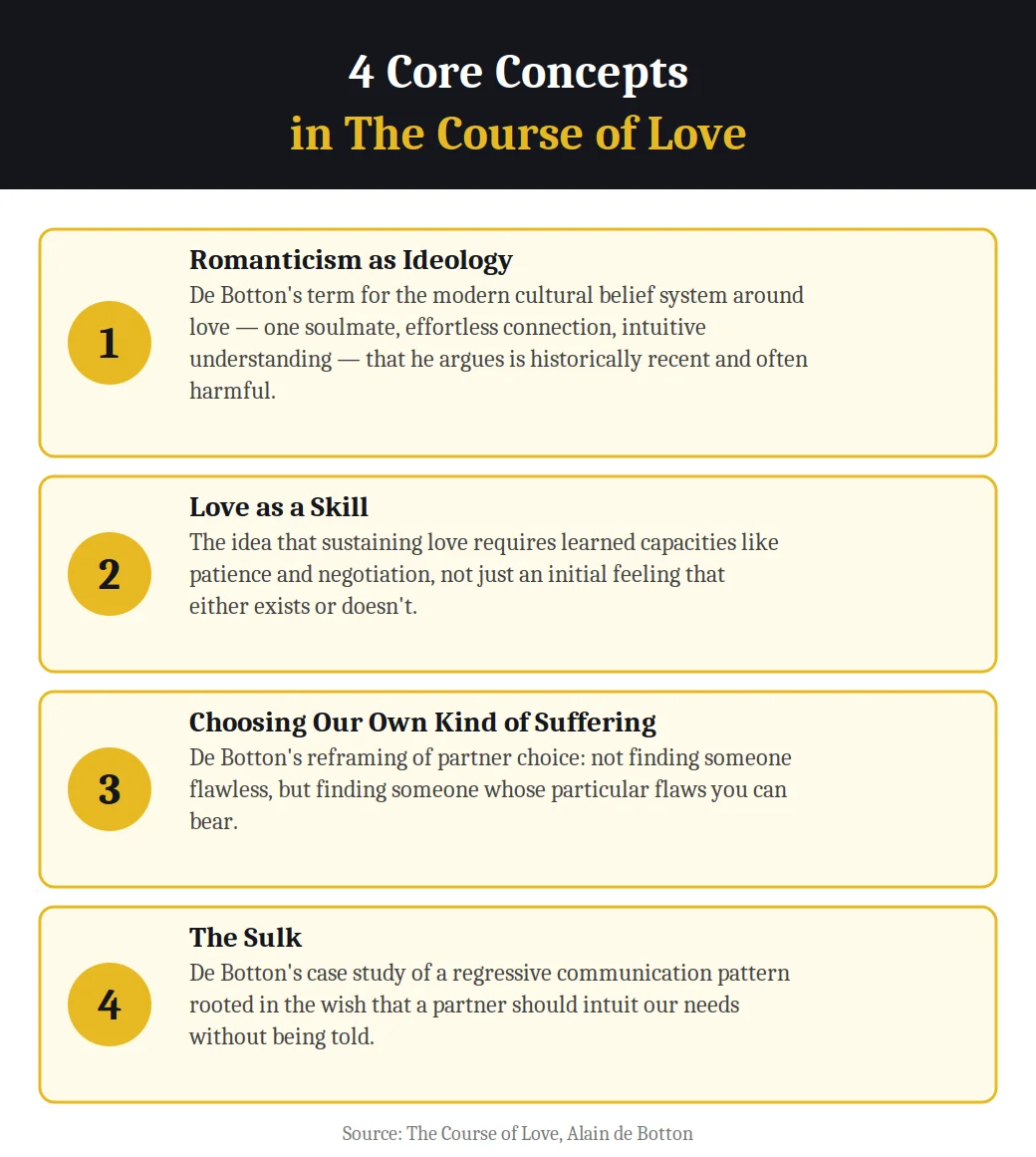
- Love is a skill, not just a feeling: sustaining a relationship requires learned capacities — patience, negotiation, self-awareness — much like a musical instrument, rather than an initial spark that either exists or doesn’t.
- Choosing a partner means choosing a kind of suffering: de Botton reframes partner selection away from finding someone flawless, toward finding someone whose particular flaws you can bear.
- We often seek familiarity over happiness: drawing on Freudian ideas, de Botton argues people are drawn to partners who recreate childhood emotional patterns, painful ones included.
- The “sulk” reveals a wish to be understood without words: de Botton’s case study of sulking shows a regressive hope that a partner should intuit our needs without our having to explain them.
- Small domestic fights are usually about something larger: arguments over furniture or the thermostat function as stand-ins for deeper unmet needs that haven’t been named directly.
- Sticking together is itself an achievement: de Botton frames a marriage’s mere endurance, especially through parenthood’s practical strain, as something genuinely remarkable rather than assumed.
What is The Course of Love about?
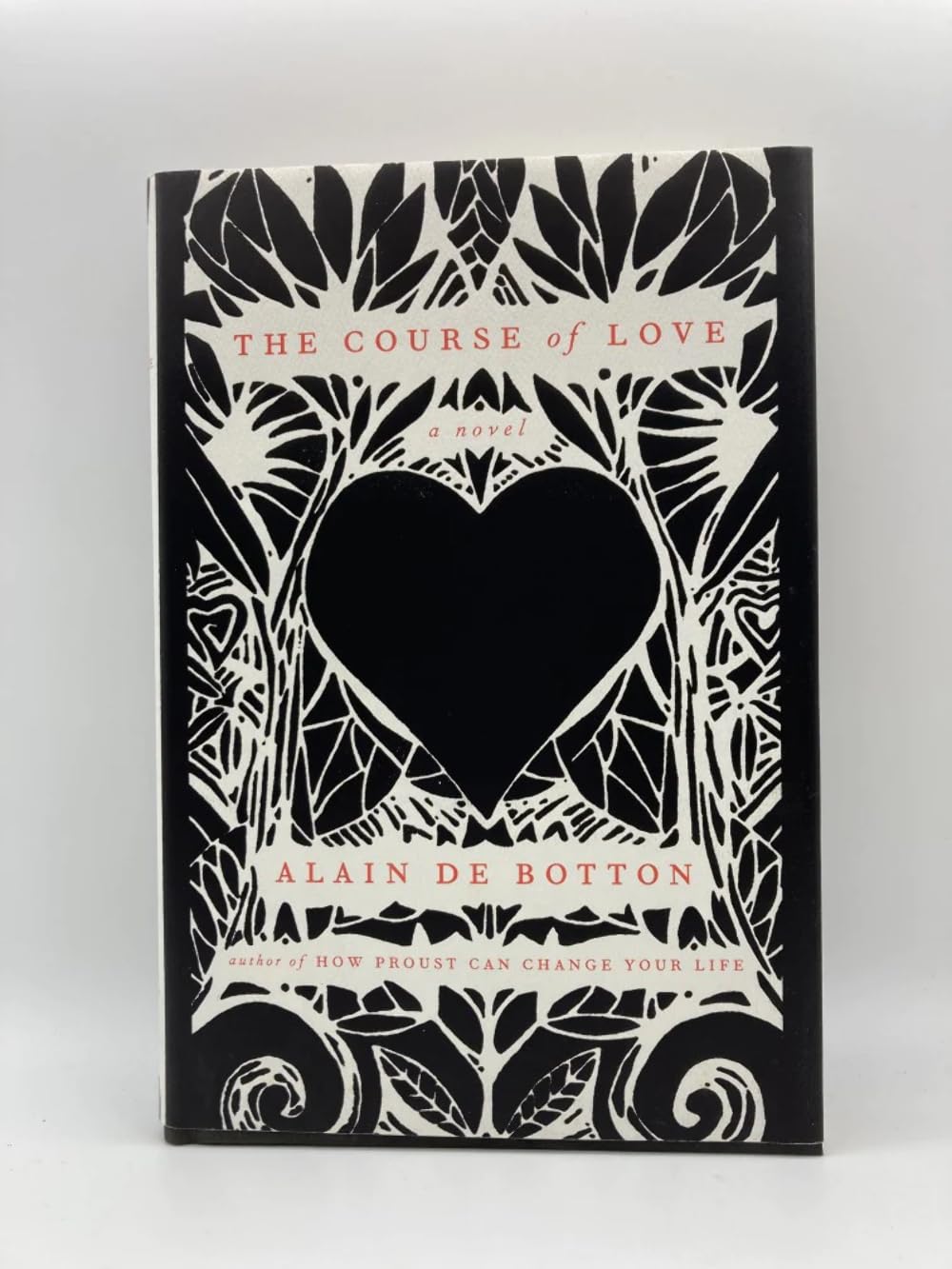
The Course of Love is Alain de Botton’s hybrid novel and philosophical treatise following Rabih and Kirsten’s marriage from Edinburgh courtship through roughly thirteen years of parenthood, financial strain, and infidelity, using their story to argue that Western culture drastically over-romanticizes the beginning of relationships while offering almost no guidance for sustaining love afterward. De Botton names the cultural belief system responsible “Romanticism” — the idea of a single soulmate, effortless connection, and intuitive mutual understanding — and argues it actively sabotages marriages by making ordinary friction feel like proof of failure. Structured as fictional narrative chapters alternating with short, italicized philosophical passages, the book functions as a spiritual sequel to de Botton’s 1993 debut On Love, this time examining what happens after the wedding rather than the falling-in-love phase itself. Published in 2016 by Simon & Schuster, the novel reframes love as a skill requiring negotiation and self-awareness rather than a feeling that either exists or doesn’t.
About the author
Alain de Botton is a Swiss-born British philosopher, essayist, and novelist known for applying philosophical ideas to everyday concerns like love, work, travel, and status. He founded The School of Life in 2008, an organization devoted to “emotional education” through books, talks, and therapy-adjacent programming. The Course of Love functions as a spiritual sequel to his 1993 debut novel, Essays in Love (published in the US as On Love), which covered the falling-in-love phase in the same hybrid form of narrative fiction interspersed with philosophical commentary; The Course of Love picks up where that book left off, examining what happens to love after the wedding. Explore all Alain de Botton book summaries →
Key concepts at a glance
| Concept | What it means | Use it when |
|---|---|---|
| Romanticism as Ideology | The modern belief in a single soulmate, effortless love, and intuitive understanding | You’re evaluating whether your expectations of a partner are realistic or idealized |
| Love as a Skill | Sustaining love requires learned capacities like patience and negotiation | You’re facing a recurring conflict and want to treat it as something to work on, not a sign of failure |
| Choosing Our Own Kind of Suffering | Partner selection reframed as choosing bearable flaws, not finding a flawless match | You’re evaluating a relationship against an ideal of “the perfect partner” |
| The Sulk | A regressive pattern rooted in wanting to be understood without explaining yourself | You notice yourself withdrawing instead of naming what you need |
| Seeking Familiarity | Being drawn to partners who recreate childhood emotional patterns, not just happiness | You’re trying to understand a recurring, frustrating pattern in who you’re attracted to |
Part 1: Romanticism and the myth of the soulmate
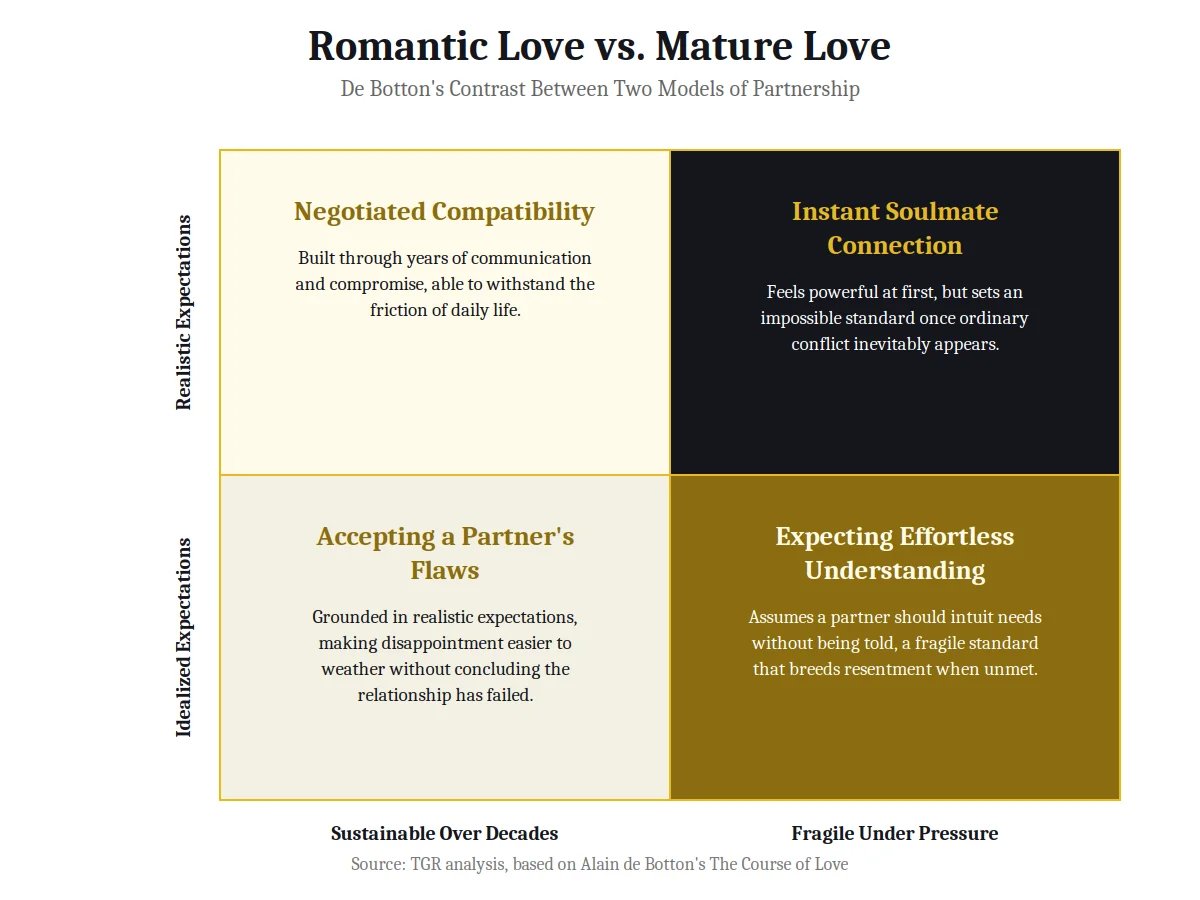
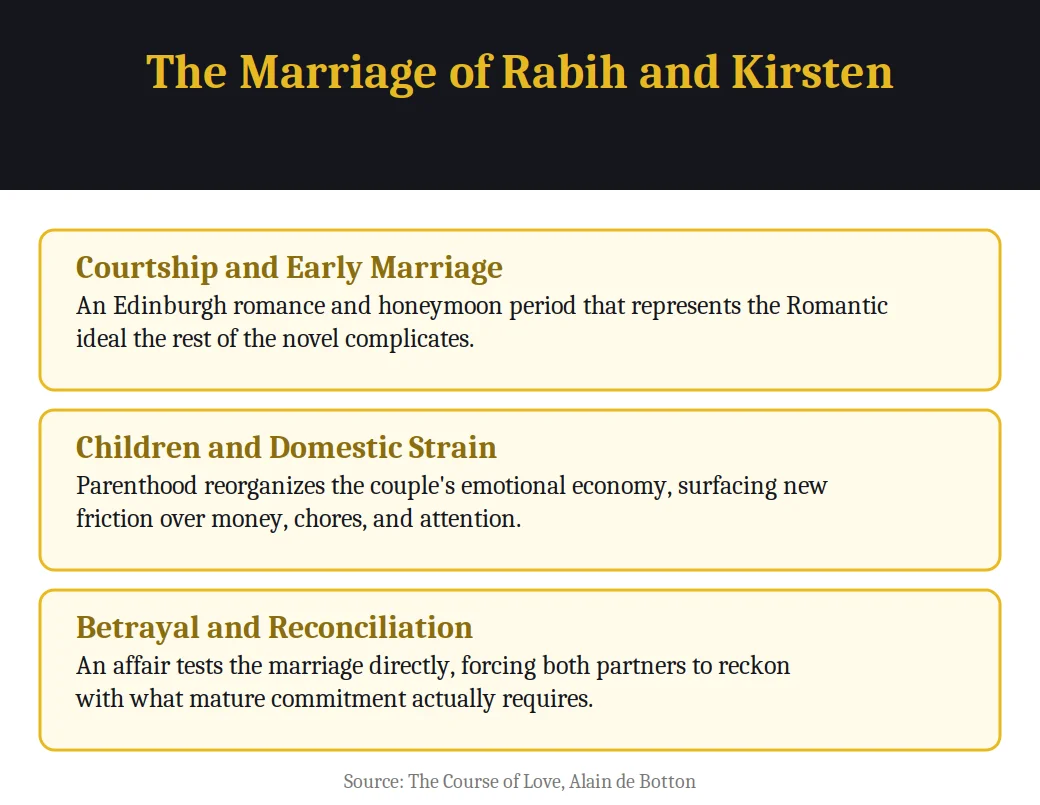
De Botton’s foundational argument is that “Romanticism” — the belief that there is one perfect soulmate, that true love should feel effortless, and that a good partner will intuitively understand us without explanation — is not timeless human nature but a relatively recent cultural invention, dating roughly to the 18th century. He argues this ideology actively sabotages marriages by setting an impossible standard: when ordinary friction and disappointment inevitably arrive, couples raised on Romantic ideals interpret it as evidence they chose the wrong person, rather than as the normal texture of any long-term relationship. Rabih and Kirsten’s Edinburgh courtship and Paris honeymoon represent this Romantic high point — deliberately placed early in the book so the rest of the novel can complicate and undercut it.
TGR Note: De Botton’s case that mature love requires deliberate skill-building echoes Platonic‘s argument that friendship, too, needs intentional effort rather than assumed chemistry — both push back on the idea that real connection should simply happen on its own.
Part 2: Compatibility, suffering, and the sulk
Against the Romantic ideal, de Botton argues real compatibility is an achievement of sustained love, not a precondition for choosing a partner — couples become compatible through years of negotiation rather than discovering it fully formed at first sight. This reframes partner selection itself: rather than searching for someone flawless, de Botton argues the honest task is choosing whose particular flaws and neuroses you can bear, since “everyone is crazy” in their own specific way. The book’s recurring case study of “the sulk” illustrates this dynamic in miniature — a withdrawal rooted in the wish that a partner should intuit our unspoken needs, an infantile hope that inevitably produces more distance and misunderstanding than direct communication would have.
Part 3: Parenthood, infidelity, and endurance
Children reorganize Rabih and Kirsten’s emotional economy in the novel, surfacing new friction over money, chores, and attention, and revealing that Rabih performs a warmer, more patient version of himself for their daughter than he offers his wife. The marriage is tested directly by Rabih’s affair, which de Botton uses to interrogate the Romantic assumption that honesty is always the more loving choice — Rabih’s decision to conceal rather than confess becomes a vehicle for questioning whether truth-telling can itself be a form of self-serving cruelty. Years later, a rare dinner alone together lets the couple recognize their marriage’s mere endurance — surviving parenting, betrayal, and ordinary domestic grind — as a genuinely remarkable achievement rather than something to be taken for granted.
Who is The Course of Love best for — and who should read something else first?
This book is best for readers already in a long-term relationship who want philosophical language for the unglamorous, unphotographed work of sustaining love — the domestic negotiations, disappointments, and repairs that Romantic culture rarely depicts. Readers looking for a purely plot-driven novel, or an uplifting portrait of romance, may find de Botton’s frequent philosophical interjections more didactic than they’d like; some critics have found the book reads more like a treatise than fiction.
If you want a complementary look at how deliberate effort shapes connection beyond romance specifically, Platonic applies a similar “connection requires skill, not just chemistry” argument to adult friendship.
Questions to reflect on
- Which Romantic beliefs about love — a soulmate, effortless connection, intuitive understanding — have you assumed without questioning?
- Have you ever mistaken ordinary relationship friction for evidence that you chose the wrong partner?
- What’s a small domestic argument in your own life that might really be standing in for a larger, unnamed need?
- Do you recognize the pattern of sulking — wanting to be understood without having to explain yourself?
- How would you describe your own particular “craziness,” and what kind of partner could realistically bear it?
🔥 Ready to see love as a skill rather than a feeling?
This guide covers the core philosophy — the novel gives you Rabih and Kirsten’s full story and de Botton’s complete philosophical commentary.
How to apply The Course of Love (7-day plan)
- Day 1: Notice one Romantic belief about love you’ve been carrying — a soulmate myth, an effortless-connection standard — and question it.
- Day 2: Identify a recurring small argument in your relationship and consider what larger need it might be masking.
- Day 3: Practice naming a need directly instead of expecting your partner to intuit it.
- Day 4: Reflect on your own “particular craziness” and how it shows up in your relationships.
- Day 5: Notice a moment where you catch yourself sulking, and try direct communication instead.
- Day 6: Reflect on a disappointment in your relationship and consider it as normal texture rather than proof of failure.
- Day 7: Acknowledge one way your relationship’s endurance — through ordinary friction — is itself an achievement.
Frequently asked questions
Is The Course of Love a novel or a self-help book?
Both — it’s a novel following one couple’s marriage, interspersed with short philosophical passages generalizing about love.
What does de Botton mean by “Romanticism”?
A modern cultural belief system holding that there’s one soulmate, effortless love, and intuitive understanding between partners.
Does the book reveal the plot upfront?
Yes — de Botton discloses the marriage’s entire arc early on, deliberately shifting focus away from suspense toward philosophy.
Is this a sequel to another book?
It’s a spiritual sequel to de Botton’s 1993 debut, On Love, which covered the falling-in-love phase.
Does someone have an affair in the book?
Yes — Rabih has an affair, which de Botton uses to question Romantic assumptions about honesty and betrayal.
What is “the sulk” in the book?
A regressive communication pattern rooted in wanting a partner to intuit your needs without being told.
How is this different from Platonic?
Platonic focuses on adult friendship through attachment theory; The Course of Love focuses on marriage through philosophy and fiction.
Related summaries
If The Course of Love resonated, these dig further into related territory: Platonic on the skill of building adult connection, and other titles in our best relationship books pillar page.
How we analyze books: We work from the full book — reconstructing its core arguments in our own words, adding commentary that connects it to related research and other books in our library, and pressure-testing the advice in a practical 7-day plan. Ratings weigh usefulness, readability, and evidence quality. Read our full methodology.