We read and scored the most influential money and investing books — these 26 are the ones that actually change how you save, invest, and think about wealth. Every title was ranked with the same transparent 5-point rubric: lasting impact, evidence quality, practical application, writing, and reader consensus. Whether you’re drowning in debt, opening your first brokerage account, or just tired of feeling anxious every time you check your balance, one of these books was written for exactly your situation. Each links to a free in-depth summary you can read in fifteen minutes before committing to the full book.
The 26 Best Money Books, Ranked
Counting down from #26 to our #1 pick. Each book links to a free, in-depth summary.

The Ascent of Money
Niall Ferguson
★★★★★4.6/5
The book that explains why every market crash, bailout, and boom feels like it’s happened before — because it has.
Ferguson, a Harvard historian, turns five thousand years of financial history into one sweeping argument: banks, bonds, stocks, insurance, and mortgages didn’t corrupt civilization, they built it. He traces the Medici to the Rothschilds to the 2008 subprime collapse, showing that every financial breakthrough eventually produces its own bubble. What sets this book apart from more tactical money books is scope — it’s less about managing your own money and more about understanding the machinery of money itself, which makes market headlines suddenly make sense.
Best for: Readers who want the historical “why” behind interest rates, bailouts, and market crashes — not another book about budgeting
“Behind every great historical phenomenon lies a financial secret.”

The One-Page Financial Plan
Carl Richards
★★★★★ 4.6/5
The New York Times “Sketch Guy” distills financial planning into one honest page — your why, your numbers, your gap, and one next step — and shows why closing the emotional “behavior gap” matters more than picking the perfect investment.
Best for: Anyone overwhelmed by budgeting apps or a 40-page advisor plan they never open.
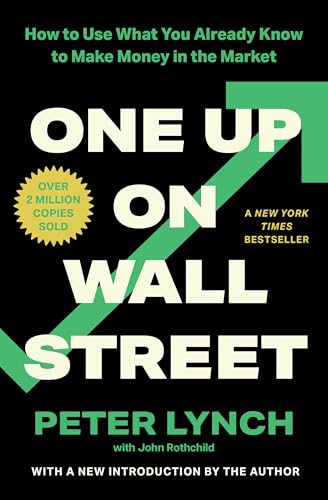
One Up On Wall Street
Peter Lynch
★★★★☆ 4.5/5
Lynch turned a simple observation — that everyday consumers spot winning companies before Wall Street analysts do — into the most approachable stock-picking framework ever written, backed by the 29.2% average annual return he delivered running Fidelity Magellan from 1977 to 1990. He sorts every stock into six categories (Slow Growers, Stalwarts, Fast Growers, Cyclicals, Turnarounds, Asset Plays), each with its own buy-and-sell rules, and reduces the vetting process to a two-minute drill covering earnings growth, P/E ratio, debt, and insider buying.
Best for: Beginning-to-intermediate investors who want a practical, jargon-free framework for picking individual stocks.

The Big Short
Michael Lewis
★★★★★ 4.7/5
The true story of the outsiders who saw the 2008 subprime crisis coming and bet against Wall Street, using credit default swaps to profit from a housing market almost everyone else trusted. A character-driven lesson in incentives, conflicts of interest, and why complexity often hides risk rather than managing it.
Best for: Readers who want to understand financial crises, systemic risk, and how misaligned incentives quietly distort entire markets.
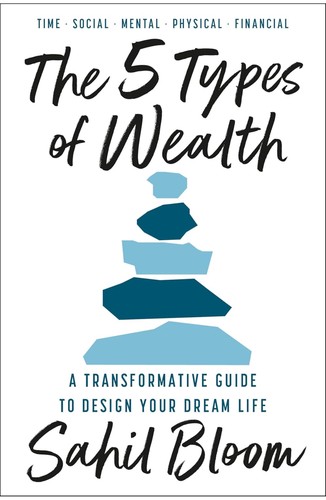
The 5 Types of Wealth
Sahil Bloom
★★★★★4.6/5
A 2025 instant bestseller arguing real wealth spans five compounding dimensions, not just your bank account.
Bloom’s contribution to the money-book canon is refusing to treat financial wealth as the finish line. Where most books on this list optimize your net worth in isolation, The 5 Types of Wealth forces you to define Time, Social, Mental, and Physical wealth first, then size your financial target around what those four actually require. The Wealth Score and Life Razor exercises make the abstract idea of “balance” into something you can actually measure and act on, which is why this instant New York Times bestseller earns a spot even on a list built for money-first readers.
Best for: Financially successful professionals who feel something is still missing
“Never let the quest for more distract you from the beauty of enough.”
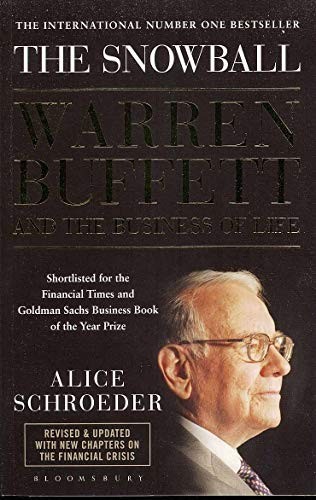
The Snowball
Alice Schroeder
★★★★★4.7/5
Alice Schroeder’s authorized biography argues that Warren Buffett’s fortune was built less by genius than by starting the compounding clock decades before anyone else in the room.
Schroeder spent five years with unmatched access to Buffett’s private files, family, and decades of his own time, and it shows: this is the rare investing book that reads like a character study. The investing content — Circle of Competence, Margin of Safety, Mr. Market, float — is all here, but it’s inseparable from the human story: the Salomon Brothers crisis, a marriage that quietly reshaped itself, and a 2006 decision to give almost everything away. It’s the long way around to the same lessons, but the story sticks.
Best for: Long-term investors and readers who want the full human story behind the investing wisdom, not just a highlight reel
“Someone’s sitting in the shade today because someone planted a tree a long time ago.”

Secrets of the Millionaire Mind
T. Harv Eker
★★★★☆3.9/5
Eker’s central claim is disarmingly simple: your financial thermostat was set in childhood, and no budget will outrun it until you reset it.
Eker maps the subconscious “money blueprint” — inherited from what you saw, heard, and experienced growing up — that quietly caps how much wealth you’re willing to hold onto. His 17 contrasting Wealth Files (rich people believe X, poor people believe Y) work as an uncomfortable mirror, while the practical six-jar money-management system gives you something concrete to act on immediately. It’s less rigorous than the data-driven books further up this list, and the seminar-pitch tone won’t suit everyone, but for readers who intellectually know what to do with money yet keep sabotaging themselves, this is the book that finally explains why.
Best for: Readers who intellectually know what to do with money but emotionally keep repeating the same patterns
“It’s not about the money. It’s never been about the money. It’s about who you are being while you are doing what you’re doing with the money.”
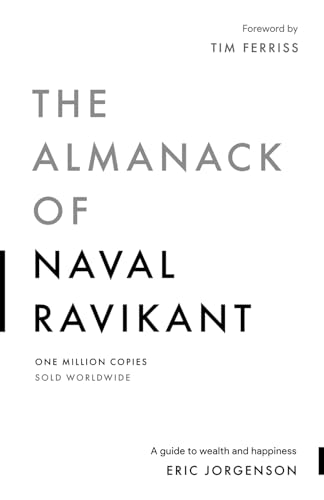
The Almanack of Naval Ravikant
Eric Jorgenson
★★★★☆4.0/5
A distilled anthology of Naval Ravikant’s sharpest ideas on wealth, leverage, and specific knowledge — dense enough to reread every year.
Compiled from Naval’s tweets, podcasts, and essays, the book splits neatly into two halves: wealth creation (specific knowledge, accountability, leverage, judgment) and happiness (desire as a choice to suffer, identity, meditation). His “productize yourself” framework and the distinction between wealth games (positive-sum) and status games (zero-sum) are among the most clarifying mental models on this list. It isn’t a step-by-step system like Ramsey or Sethi — there’s no worksheet — but as a philosophical operating manual for anyone building a career or portfolio from first principles, nothing else here matches its idea density.
Best for: Aspiring entrepreneurs and independent thinkers who want a philosophical framework for building wealth and contentment
“Seek wealth, not money or status. Wealth is having assets that earn while you sleep.”
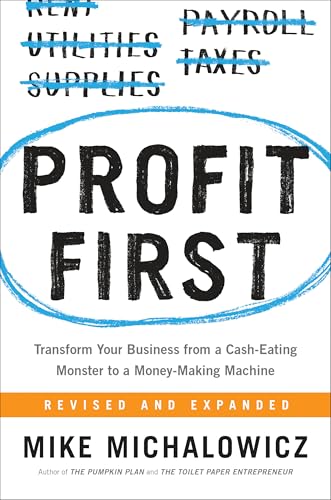
Profit First
Mike Michalowicz
★★★★☆4.1/5
Michalowicz flips the accounting formula — Sales minus Profit equals Expenses — so profit gets paid before a single bill does.
Using five dedicated bank accounts and fixed percentage allocations, the system harnesses Parkinson’s Law (expenses expand to consume available cash) by simply making less cash available for expenses in the first place. It’s the only book on this list written specifically for business owners rather than individual earners, and it solves a problem GAAP accounting quietly creates: healthy-looking revenue with zero cash left over at the end of the month. The four-step “instant assessment” alone is worth the price of the book for any founder who has ever wondered where the money went.
Best for: Small-business owners and freelancers earning good revenue but struggling with actual profitability
“A business that doesn’t consistently generate profit is inherently broken.”
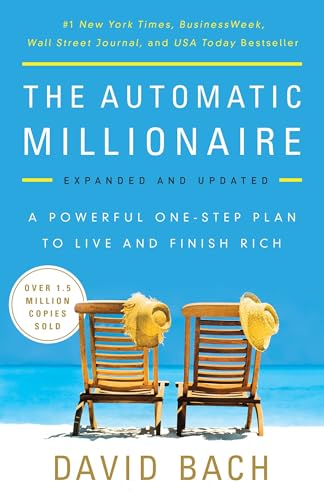
The Automatic Millionaire
David Bach
★★★★☆4.2/5
A dead-simple automation system for building wealth without budgeting, willpower, or financial expertise — set it up once and forget it.
Bach’s central insight is that budgets fail because they depend on daily discipline, and discipline is an unreliable resource. Instead, he shows how to automate savings, investing, debt repayment, and even charitable giving so wealth accumulates without a single willpower-dependent decision. The Latte Factor concept — small recurring expenses that quietly consume your investing capacity — helped launch a cottage industry of imitators, and the “pay yourself first” sequencing remains one of the cleanest behavioral hacks in personal finance. The whole system can be implemented in a single weekend, which is exactly the point.
Best for: Anyone who has tried and failed with budgets, or who wants a set-it-and-forget-it wealth system
“You have to pay yourself first, and you have to make it automatic.”
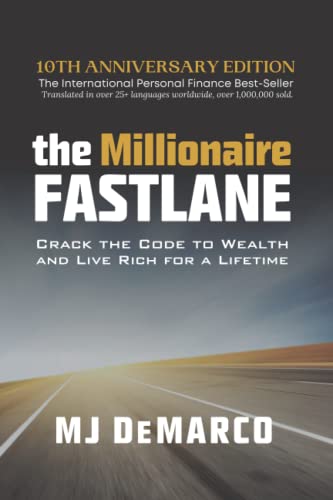
The Millionaire Fastlane
MJ DeMarco
★★★★☆4.2/5
A brash, contrarian rebuttal to the “save 10% for 40 years” playbook, arguing real wealth comes from building scalable systems, not salaries.
DeMarco calls the slow-and-steady path the “Sidewalk” — you’ll get there eventually, if you live to 65. His alternative, the Fastlane, is built on the CENTS framework (Control, Entry, Need, Time, Scale), a genuinely useful filter for evaluating whether a business idea has real wealth-building potential or is just a job in disguise. The tone is combative and occasionally overconfident, and it will grate on readers who prefer the patience of Collins or Bogle — but for anyone who feels index-fund investing alone won’t get them where they want to go fast enough, this is the permission slip to think bigger.
Best for: Aspiring entrepreneurs frustrated with the save-and-invest timeline
“Wealth is not a single event. It’s an unfolding process, a compounding effect of decisions and actions that grow over time.”
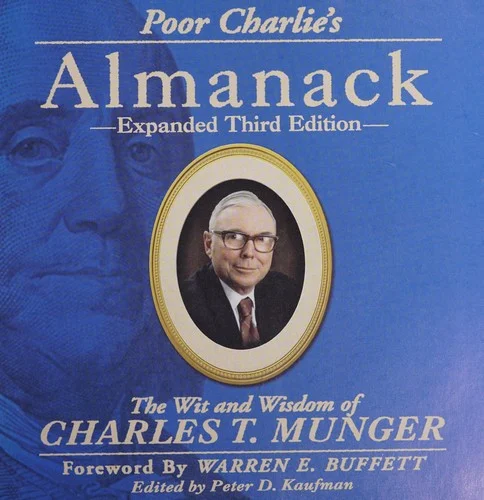
Poor Charlie’s Almanack
Charles T. Munger
★★★★★4.6/5
Warren Buffett’s late business partner distilled decades of investing wisdom into a single framework: think in mental models, then invert the problem.
Munger’s collected speeches and essays cover roughly 100 cognitive biases and mental models drawn from psychology, economics, biology, and physics — the “latticework of models” he credits for his and Buffett’s investing edge. His concept of inversion (instead of asking how to succeed, ask what guarantees failure and avoid that) is one of the most quietly powerful ideas on this entire list. It’s denser and less linear than most personal finance books — closer to a collected-works anthology than a single argument — but for readers who’ve already absorbed the basics and want to think more clearly about risk and rationality, nothing else compares.
Best for: Intermediate to advanced investors who want mental models for thinking clearly about risk, not another budgeting system
“Knowing what you don’t know is more useful than being brilliant.”
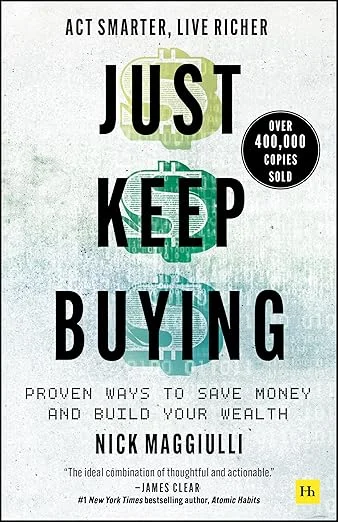
Just Keep Buying
Nick Maggiulli
Liar’s Poker Summary & Review: Read the Incentives, Not the Pitch
★★★★☆4.5/5
Maggiulli uses hard data, not motivational stories, to prove that consistent, unglamorous investing beats almost every attempt to time the market.
Backed by decades of market data, Maggiulli dismantles the guilt-driven savings advice that dominates personal finance (“cut the lattes”) and replaces it with a rules-based approach: save what you reasonably can, then dollar-cost-average into the market on a fixed schedule regardless of headlines. His research shows that trying to time entries — waiting for dips, holding cash “just in case” — underperforms simply buying on schedule the vast majority of the time. It’s the most quantitatively rigorous book in the Top 20 that isn’t specifically about stock-picking, and a useful corrective for anyone paralyzed by market-timing anxiety.
Best for: Data-minded savers who keep waiting for the “right time” to invest
“Time in the market beats timing the market — but only if you actually keep buying.”
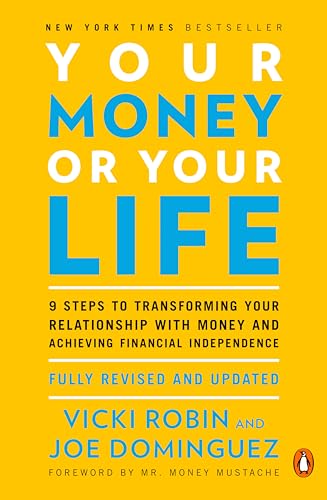
Your Money or Your Life
Vicki Robin
★★★★☆4.3/5
The book that launched the FIRE movement, reframing every purchase as a trade of your finite life energy.
Robin’s nine-step program redefines money as life energy — the hours of your one life you traded to earn it — and asks you to track every dollar against that standard. The famous “crossover point,” where investment income permanently exceeds expenses, gives FIRE-curious readers their first concrete numerical target, decades before the modern FIRE blogosphere existed. It’s more philosophical and slower-paced than the tactical automation books on this list, and some of the 1990s-era advice needs updating, but the core reframe — money as life energy, not a scoreboard — is the single most transformative idea in the whole genre.
Best for: Anyone who wants to fundamentally transform their relationship with money and time, not just optimize a budget
“It’s not how much money you make. It’s how much of that money you keep, and how much that money works for you.”
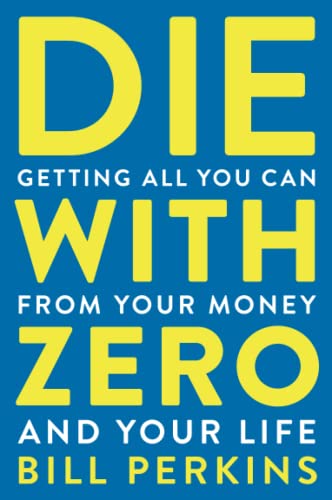
Die With Zero
Bill Perkins
★★★★★4.6/5
A hedge-fund manager and poker player makes the uncomfortable case against open-ended saving: your ability to enjoy money peaks well before your wealth does.
Perkins argues that money’s only value is what it converts into — experiences, memories, time with people you love — and that most disciplined savers die with far more money than they’ll ever need, having quietly under-lived for decades to get there. His “memory dividend” concept (experiences pay you back every time you recall them) and time-bucketing framework (some experiences are only physically possible at certain ages) are genuinely novel additions to a genre that mostly just tells you to save more. It’s a necessary counterweight to almost every other book in the Top 20.
Best for: Disciplined savers in their 30s–50s who’ve never questioned whether “save more” still applies to them
“The whole point of making money is to enjoy it more — to convert your life energy into memorable experiences.”
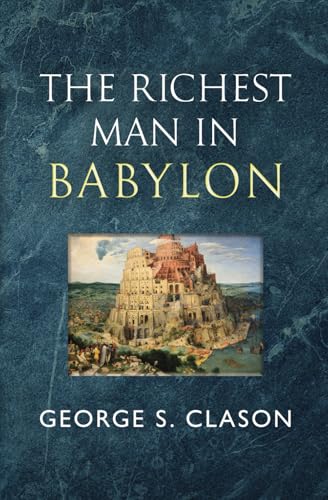
The Richest Man in Babylon
George S. Clason
★★★★★4.6/5
A century-old parable that proves the fundamentals of wealth-building have never actually changed.
Told through Arkad, “the richest man in Babylon,” and a cast of characters learning from him, the book teaches the Seven Cures for a Lean Purse and the Five Laws of Gold through memorable ancient-world storytelling rather than modern spreadsheets. Its genius is compression: every principle — pay yourself first, invest only in what you understand, seek expert counsel — can be grasped in minutes and applied the same day. Nearly a hundred years after publication, it remains the shortest path from zero financial literacy to the mental model every other book on this list is elaborating on.
Best for: Anyone beginning their financial journey or wanting a refresher on the fundamentals that never change
“A part of all you earn is yours to keep.”
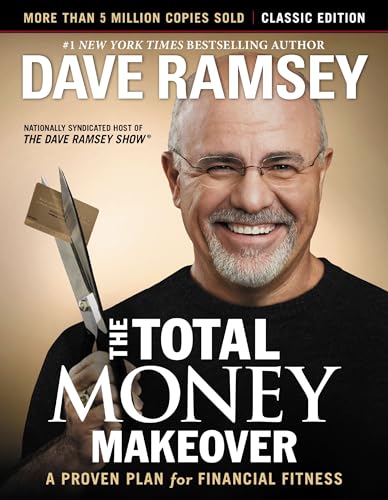
The Total Money Makeover
Dave Ramsey
★★★★☆4.2/5
Ramsey’s 7 Baby Steps turn getting out of debt from an overwhelming abstraction into a sequential checklist anyone can follow.
Starting with a $1,000 emergency fund, moving through the debt snowball (smallest balance first, for psychological momentum, not mathematical optimization) and ending with a paid-off home, Ramsey’s system has helped millions of families climb out of consumer debt by focusing on behavior change rather than financial sophistication. His core insight — personal finance is 80% behavior and 20% head knowledge — explains why so many financially literate people still stay broke. It’s the most prescriptive, least flexible book in the Top 20, and the anti-credit-card absolutism won’t suit every reader, but for anyone drowning in debt who needs a clear, non-negotiable sequence to follow, nothing else works as fast.
Best for: Anyone in consumer debt who needs a clear, sequential plan, and couples who fight about money
“You must gain control over your money or the lack of it will forever control you.”
Think and Grow Rich
Napoleon Hill
★★★★☆4.3/5
The 1937 classic that shaped a century of success literature by treating desire, belief, and persistence as trainable skills.
After studying more than 500 of America’s wealthiest people over two decades, Hill distilled their shared traits into 13 principles: burning desire, definite purpose, specialized knowledge, and the “Master Mind” alliance among them. Some of the framing is dated — the mystical language around auto-suggestion and thought vibrations hasn’t aged as well as the practical goal-setting exercises underneath it — but strip away the era-specific packaging and you’re left with the foundational template that every modern goal-setting book still borrows from. It rewards readers who actually do the written exercises, not just the ones who read it cover to cover.
Best for: Readers who want the original success classic and are willing to do the goal-setting exercises, not just read passively
“Whatever the mind can conceive and believe, it can achieve.”
The Millionaire Next Door
Thomas J. Stanley & William D. Danko
★★★★☆4.1/5
Two researchers surveyed America’s actual millionaires and found teachers and plumbers living below their means, not the flashy spenders you’d expect.
Stanley and Danko’s decades of survey data demolish the cultural image of a millionaire as someone driving a luxury car in a mansion — most of the wealthy people they studied drive used cars, live in modest homes, and would be invisible in a crowd. Their PAW/UAW framework (Prodigious vs. Under Accumulators of Wealth, based on expected net worth for your age and income) gives readers an objective yardstick for their own progress that has nothing to do with how rich they look. It’s the most rigorously data-backed book in the Top 20 outside the pure investing titles, and it permanently changes how you evaluate other people’s spending — and your own.
Best for: Anyone who confuses looking rich with being rich
“Much of the glitter of the affluent lifestyle is bought with borrowed money.”
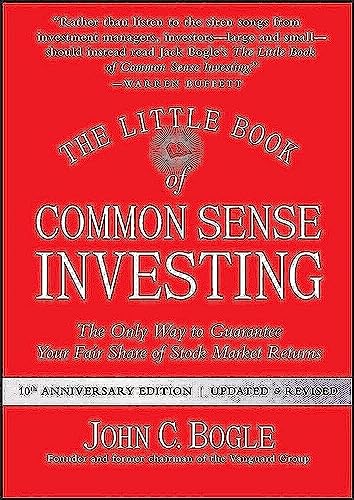
The Little Book of Common Sense Investing
John C. Bogle
★★★★★4.6/5
Written by the man who invented the index fund, this is the clearest, shortest case for index investing ever published.
Vanguard founder Jack Bogle distills 60-plus years of market wisdom into a slim volume proving that low-cost index funds beat the vast majority of actively managed funds over any meaningful time horizon. His Cost Matters Hypothesis shows that, before costs, investors collectively earn exactly the market return — so after fees, the average investor necessarily falls behind, and the “tyranny of compounding costs” means a seemingly modest 1% annual fee can consume over a third of your ending wealth across 40 years. The solution he proposes is almost insultingly simple: buy the whole market, keep costs near zero, and stop trying to be clever.
Best for: Anyone who wants to stop overthinking investing and start building wealth with a proven, one-fund strategy
“Don’t look for the needle in the haystack. Just buy the haystack.”
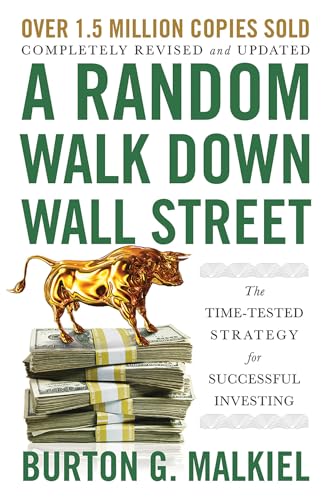
A Random Walk Down Wall Street
Burton G. Malkiel
★★★★☆4.4/5
The definitive academic case for index investing, refined across thirteen editions and five decades of accumulating evidence.
Princeton economist Malkiel walks through every major investing strategy — technical analysis, fundamental analysis, behavioral finance — and shows, with data rather than opinion, why none of them consistently beats a simple index fund after costs. The book traces market bubbles from Dutch tulip mania to modern cryptocurrency speculation, demonstrates why roughly 90% of active fund managers underperform their benchmark over long periods, and closes with a practical life-cycle investment guide that adjusts allocation recommendations by age and risk tolerance. First published in 1973 and continuously updated since, it remains the academic reference every other index-investing book on this list ultimately cites.
Best for: New and intermediate investors who want the rigorous academic foundation for why index funds win
“A random walk is one in which future steps or directions cannot be predicted on the basis of past history.”
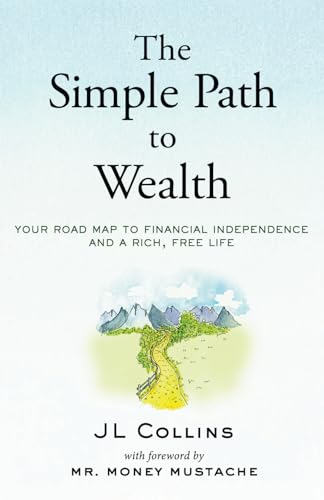
The Simple Path to Wealth
JL Collins
★★★★☆4.5/5
The clearest, most actionable single-fund investing strategy on this list — spend less than you earn, avoid debt, and let VTSAX do the rest.
Originally written as letters to Collins’s daughter, the book distills decades of investing experience into one uncomplicated strategy: build “F-you money” (enough savings to walk away from any situation on your own terms), then invest everything into a single total stock market index fund. Collins demolishes the financial industry’s manufactured complexity by showing that the vast majority of professional fund managers can’t beat a fund that requires zero ongoing decisions. His treatment of the 4% withdrawal rule, the psychological difference between the wealth-accumulation and wealth-preservation phases, and the discipline required to stay invested through crashes make this the most complete beginner-to-intermediate investing book on the list.
Best for: Anyone who wants a proven, simple investment strategy without the noise of stock-picking or financial advisor fees
“You are not the sum of the things you have accumulated. If wealth is having your investments cover your basic living expenses forever, less is more.”

I Will Teach You to Be Rich
Ramit Sethi
★★★★☆4.5/5
A 6-week, no-guilt automation system for your entire financial life — no budgeting lectures, no latte-shaming, just setup steps.
Sethi’s system replaces the willpower-dependent budget with automation: optimize your credit cards for rewards without carrying debt, negotiate fees down, automate transfers into savings and index funds, and then spend guilt-free on the things you actually love. The Conscious Spending Plan is the book’s genuine innovation — instead of restricting all spending equally, it identifies the two or three categories you care about and cuts ruthlessly everywhere else. It’s the single most tactically detailed, done-in-a-weekend book in the Top 20, written with a directness that occasionally reads as brash but never wastes your time with vague generalities.
Best for: 20s–40s earners who want a done-in-a-weekend system rather than a philosophy to slowly absorb
“A Rich Life is about knowing why you’re spending your money, and knowing that it’s OK to spend extravagantly on the things you love.”
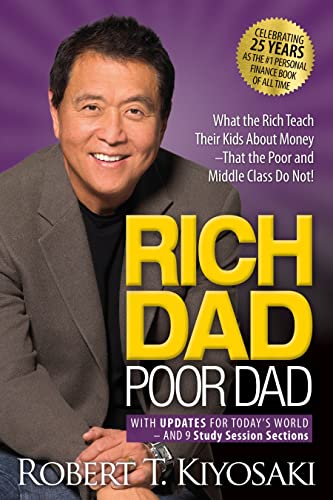
Rich Dad Poor Dad
Robert T. Kiyosaki
★★★★☆4.2/5
The single mindset shift that has launched more wealth-building journeys than any other book on this list: assets buy freedom, liabilities buy chains.
Kiyosaki contrasts his own credentialed-but-financially-stuck father with his best friend’s self-made “rich dad,” distilling the difference into one deceptively simple test: does this purchase put money in your pocket, or take money out? Whatever you make of the specific real-estate and business tactics — and some of them deserve real skepticism — the core distinction between assets and liabilities has permanently rewired how millions of readers evaluate every dollar they spend, including the house they live in. Read it for the mindset reset, not as a tactical investing manual, and pair it with a systems book like I Will Teach You to Be Rich for the “how.”
Best for: Beginners who need the “why” before the “how,” and anyone who’s never been taught how money actually works
“It’s not how much money you make that matters, it’s how much money you keep.”
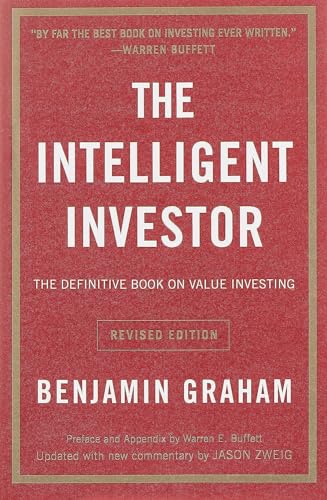
The Intelligent Investor
Benjamin Graham
★★★★★4.8/5
Warren Buffett calls it the best book on investing ever written, and eight decades after publication, nothing on this list challenges that claim.
Graham’s foundational text on value investing teaches you to think about stocks as ownership stakes in real businesses rather than flickering ticker symbols, to demand a margin of safety between price and underlying value, and to treat the market as a moody servant (his “Mr. Market” allegory) rather than an oracle to obey. His defensive investor framework — diversify broadly, balance stocks and bonds, keep costs low — remains the wisest default for the overwhelming majority of individual investors, professional or not. The book’s real gift isn’t a stock-picking formula; it’s emotional discipline — the capacity to stay rational when everyone around you is either panicking or euphoric, which explains why it earns the single highest rating on this entire list.
Best for: Anyone who invests money, from beginners building their first portfolio to experienced investors sharpening their framework
“The intelligent investor is a realist who sells to optimists and buys from pessimists.”
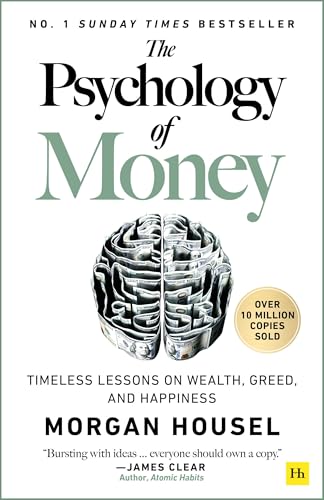
The Psychology of Money
Morgan Housel
★★★★★4.6/5
No money book has changed more readers’ relationship with their bank account in the last five years than this one.
Housel’s 19 short essays make a case that almost no other book on this list fully embraces: doing well with money has very little to do with how smart you are, and almost everything to do with how you behave. Compounding rewards patience over brilliance, wealth is genuinely invisible (it’s the money not spent, not the car in the driveway), and “enough” is the single hardest word in personal finance to define for yourself. Unlike the tactical systems from Ramsey or Sethi, or the technical rigor of Graham and Bogle, Housel’s book works at the layer underneath all of them — the psychological operating system that determines whether any of that other advice actually sticks. It’s the one book on this list we’d recommend to literally every reader, which is exactly why it’s #1.
Best for: Every reader — beginner or seasoned investor, deep in debt or already retired
“Doing well with money has a little to do with how smart you are and a lot to do with how you behave.”
How to Choose Your First Money Book
Not sure where to begin? Match the book to your current bottleneck — one book applied beats ten books skimmed.
Still unsure? Preview any book with our free in-depth summaries — test-drive the ideas in fifteen minutes before committing to three hundred pages.
Recommended Reading Paths
Not sure where to start? Pick the path that matches where you are right now.
🌱 The Beginner’s Path
New to personal finance entirely? Read these five in order — each one builds on the last.
📈 The Investing Path
Ready to actually put money to work? These five take you from foundational theory to advanced mental models.
🧠 The Mindset & Wealth-Building Path
Already saving but want to change how you think about money and building wealth? Start here.
More Top-Rated Books
High-scoring books just outside the top 20 — each links to our full summary and review.
 The Most Important Thing
Howard Marks
★★★★☆ 4.5
 The Wealthy Barber
David Chilton
★★★★☆ 4.4
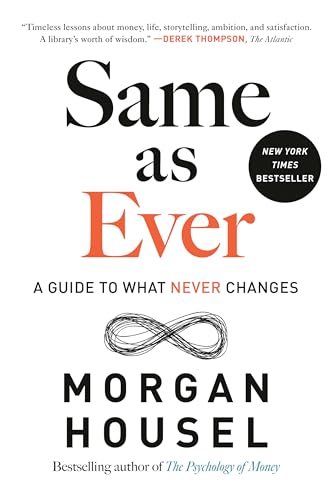 Same as Ever
Morgan Housel
★★★★☆ 4.4
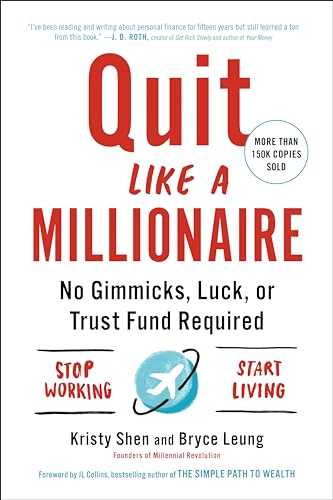 Quit Like a Millionaire
Kristy Shen & Bryce Leung
★★★★☆ 4.4
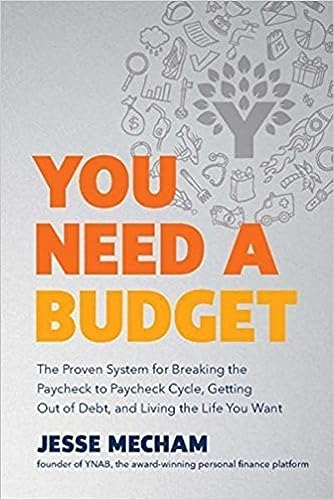 You Need a Budget
Jesse Mecham
★★★★☆ 4.3
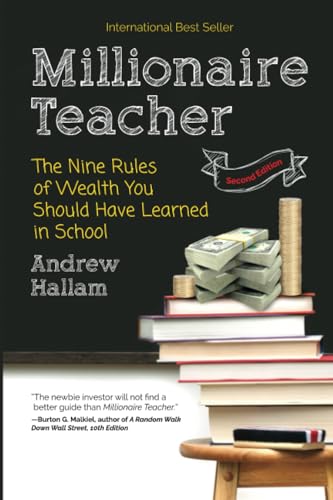 Millionaire Teacher
Andrew Hallam
★★★★☆ 4.3
 The Millionaire Mind
Thomas J. Stanley
★★★★☆ 4.3
 Financial Freedom
Grant Sabatier
★★★★☆ 4.3
 The Warren Buffett Way
Robert G. Hagstrom
★★★★☆ 4.2
 The Algebra of Wealth
Scott Galloway
★★★★☆ 4.2
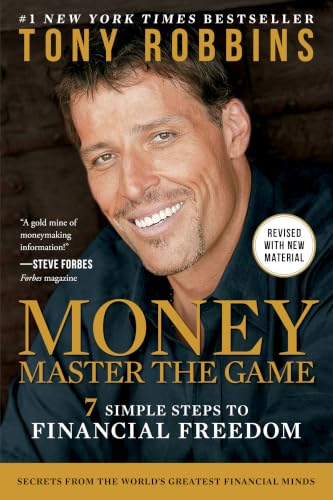 Money: Master the Game
Tony Robbins
★★★★☆ 3.7
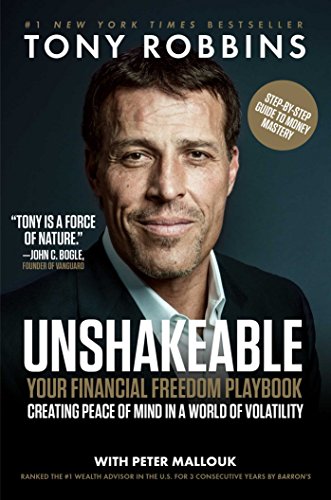 Unshakeable
Tony Robbins
★★★★☆ 3.5


The Wealth of Nations Summary & Review: Why Specialization Makes Nations Rich
The Authors Behind These Books
The researchers, writers, and thinkers who shaped modern personal finance.



Best Books by Category
Ready to go deeper on one area? Each category page ranks the best books on that topic — all with free summaries.
How We Rank: The 5-Point Rubric
Every book on The Growth Reads is evaluated against five weighted criteria. This isn’t a popularity contest — it’s a rubric designed to surface the books that actually change how people save, invest, and think about money.
Lasting Impact
Does this book change financial behavior years after reading, or just during a motivated weekend?
Evidence Quality
Is the advice grounded in data, market history, and verifiable research — or just anecdotes and hustle-culture assertions?
Practical Application
Can you start applying the ideas with your very next paycheck, or does it take a total lifestyle overhaul?
Writing & Originality
Is it well-written, engaging, and does it bring a genuinely new angle to money advice?
External Consensus
How do other financial experts, reviewers, and the broader reading community rate this book?
We re-evaluate rankings annually as new books publish and older ones prove their staying power. Every book listed here has a free in-depth summary on our site, so you can preview the ideas before committing to the full read. Read the full methodology →
Frequently Asked Questions
What is the #1 best money book of all time?
Based on our five-criteria rubric — lasting impact, evidence quality, practical application, writing originality, and expert consensus — The Psychology of Money by Morgan Housel is the #1 best money book of all time. It fixes the behavioral foundations — patience, humility, and knowing what “enough” means — that determine whether any other financial advice you read actually works for you. Read our full Psychology of Money summary →
What money books do investors like Warren Buffett recommend?
Warren Buffett has called The Intelligent Investor by Benjamin Graham “by far the best book on investing ever written,” and he has sent Poor Charlie’s Almanack by his late business partner Charlie Munger to shareholders as recommended reading. Buffett has also praised the approach in Common Stocks and Uncommon Profits by Philip Fisher for shaping his “quality over cheapness” approach to buying businesses. If you only read one, start with The Intelligent Investor.
Is Rich Dad Poor Dad actually a good money book?
Yes, but treat it as a mindset book rather than a tactical investing manual. Rich Dad Poor Dad’s core distinction — assets put money in your pocket, liabilities take money out — has launched more wealth-building journeys than almost any other title on this list, and it remains genuinely useful for readers who’ve never had anyone explain how money actually works. Its specific real-estate and business advice is dated and should be treated with more skepticism; pair it with a systems book like I Will Teach You to Be Rich for the “how.”
What is the best money book for beginners?
For total beginners, start with The Psychology of Money for the mindset, then move to I Will Teach You to Be Rich by Ramit Sethi for a literal 6-week action plan, or The Richest Man in Babylon if you want the fundamentals compressed into a short, memorable parable. All three can be read and applied without any existing financial knowledge.
How many money books should I read?
Quality beats quantity. We recommend 3–5 money books read deeply and applied, rather than a dozen skimmed. Start with one behavioral book (The Psychology of Money), one tactical system (I Will Teach You to Be Rich or The Total Money Makeover), and one investing foundation (The Simple Path to Wealth or The Intelligent Investor). Our reading paths above are built for exactly this approach.
What money book should I start with?
The Psychology of Money by Morgan Housel is the best first money book for almost everyone — it’s short, jargon-free, and fixes the behavioral foundations before you touch a single tactic. If you’re specifically deep in debt, start with The Total Money Makeover instead; if you’re ready to invest immediately, start with The Simple Path to Wealth.
Are money books actually worth reading?
Yes, with a caveat: the value is in the application, not the reading. A single idea — automate your savings, buy the index, know your “enough” — can be worth hundreds of thousands of dollars over a lifetime if you actually act on it. The trap is reading money books as a substitute for opening an account or making a trade. Our advice: read one book, implement its system for 30 days, then decide if you need another.
Rich Dad Poor Dad vs. The Psychology of Money — which should I read first?
They’re complementary, not competing. Rich Dad Poor Dad gives you the mindset shift — assets vs. liabilities — that gets you motivated to change your relationship with money. The Psychology of Money gives you the behavioral discipline — patience, humility, avoiding “enough” creep — that determines whether you actually stick with any system once you have one. Read Rich Dad Poor Dad first if you need the “why”; read Psychology of Money first if you’re already motivated but keep sabotaging your own progress.
What money books does Warren Buffett or Charlie Munger recommend?
Beyond Graham’s Intelligent Investor and his own Poor Charlie’s Almanack, Munger frequently recommended reading widely across psychology, history, and business biography rather than personal-finance books specifically — his “latticework of mental models” philosophy. Buffett has also praised The Warren Buffett Way by Robert Hagstrom as an accurate distillation of his own investment framework, and the approach in Common Stocks and Uncommon Profits by Philip Fisher for shaping how he evaluates management quality.
What is the best short money book?
The Richest Man in Babylon by George S. Clason is the shortest, most compressed classic on this list — every core principle fits in a handful of pages of parable. The Psychology of Money is also fast (19 short essays you can read in an afternoon), and The Latte Factor by David Bach is a 160-page story designed to be finished in a single sitting. Read our Richest Man in Babylon summary →
All Money Book Summaries on The Growth Reads
66 in-depth summaries & reviews
A Random Walk Down Wall Street Summary & Review: The Evidence-Based Case for Index Investing
Broke Millennial Summary & Review: Master Your Money Without the Boring Lectures
Capital in the Twenty-First Century Summary & Review: When r Beats g
Cashflow Quadrant Summary & Review: Your Guide to Financial Freedom
Confessions of an Economic Hit Man Summary & Review: Read the Forecast That Sells the Loan
Das Kapital Summary & Review: See How Profit Is Really Made
Die With Zero Summary & Review: How to Spend Your Money Before You Run Out of Time
Financial Freedom Summary & Review: A Proven Path to All the Money You Will Ever Need
Fooled by Randomness Summary & Review: Why Luck Looks Like Skill
Freakonomics Summary and Review
Get Good with Money Summary & Review: Ten Steps to Financial Wholeness
Happy Money Summary & Review: The Japanese Art of Making Peace with Your Finances
I Will Teach You to Be Rich Summary & Review: The 6-Week Money Automation System
Just Keep Buying Summary & Review: Data-Driven Wealth Building Made Simple
Millionaire Teacher Summary & Review: Nine Rules of Wealth
Money: Master the Game Summary & Review: 7 Steps to Financial Freedom From 50 Billionaires
Naked Economics Summary and Review
One Up On Wall Street Summary & Review: How Everyday Investors Beat the Pros
Poor Charlie’s Almanack Summary & Review: Munger’s Masterclass in Worldly Wisdom
Poor Economics Summary and Review
Profit First Summary & Review: Take Your Profit Before Paying Bills
Quit Like a Millionaire Summary & Review: The Math Behind Making Work Optional
Rich Dad Poor Dad Summary & Review: The Asset Mindset That Actually Builds Wealth
Richer, Wiser, Happier Summary & Review: Timeless Lessons From the Greatest Investors
Same as Ever Summary & Review: A Guide to What Never Changes
Secrets of the Millionaire Mind Summary & Review: Reset Your Financial Thermostat
Set for Life Summary & Review: Build Wealth to Quit Your Day Job
Skin in the Game Summary and Review
The 5 Types of Wealth Summary & Review: Money Is Only One Piece
The Algebra of Wealth Summary & Review: A Simple Formula for Financial Security
The Almanack of Naval Ravikant Summary & Review: Build Wealth From First Principles
The Automatic Millionaire Summary & Review: Build Wealth on Autopilot
The Barefoot Investor Summary & Review: The Only Money Plan You Need
The Behavior Gap Summary & Review: Stop Sabotaging Your Returns
The Big Short Summary & Review: The Outsiders Who Saw the Crash Coming
The Black Swan Summary and Review
The Bogleheads’ Guide to Investing Summary & Review: The Index Fund Playbook for Building Wealth
The Dhandho Investor Summary & Review: Low-Risk Value Investing That Works
The Four Pillars of Investing Summary & Review: Master Theory, History, Psychology, and Business
The Intelligent Investor Summary & Review: Timeless Wisdom for Building Wealth
The Latte Factor Summary & Review: Turn Daily Spending Into Lifelong Wealth
The Little Book That Still Beats the Market Summary and Review
The Millionaire Fastlane Summary & Review: Build Wealth Fast
The Millionaire Mind Summary & Review: What Self-Made Millionaires Actually Think
The Millionaire Next Door Summary & Review: How Wealth Is Actually Built
The Most Important Thing Summary & Review: Uncommon Sense for Thoughtful Investors
The One-Page Financial Plan Summary & Review: One Honest Page Beats a 40-Page Forecast
The Psychology of Money Summary & Review: Why Your Mindset Matters More Than Your Portfolio
The Richest Man in Babylon Summary & Review: Timeless Wealth Principles That Still Work
The Simple Path to Wealth Summary & Review: One Fund, Zero Complexity, Total Freedom
The Snowball Summary & Review: Warren Buffett and the Business of Life
The Total Money Makeover Summary & Review: 7 Steps to Financial Freedom
The Undercover Economist Summary and Review
The Warren Buffett Way Summary & Review: 12 Tenets of the Greatest Investor
The Wealthy Barber Summary & Review: The Simple Habits That Build Real Wealth
Think and Grow Rich Summary & Review: Napoleon Hill’s Timeless Success Formula
Unshakeable Summary & Review: Your Financial Freedom Playbook
Why Nations Fail Summary & Review: Inclusive Institutions Make Nations Rich
Winning the Loser’s Game Summary and Review
You Are a Badass at Making Money Summary & Review: Master the Mindset of Wealth
You Need a Budget Summary & Review: Break the Paycheck Cycle With Four Simple Rules
Your Money or Your Life Summary & Review: 9 Steps to Freedom