

Money
The Psychology of Money Summary & Review: Why Behavior Beats Brains With Money
Morgan Housel's finance classic distilled: how psychology, not intelligence, actually drives wealth — key takeaways plus a 7-day plan to apply his…
Read Summary →"The financial writer who studies human behavior more than the markets."
Morgan Housel is a former financial journalist and a partner at Collaborative Fund whose writing focuses on the psychology of money — why smart people make irrational financial decisions and why financial success has less to do with what you know than with how you behave. Rather than offering formulas or stock picks, Housel writes about the emotional, historical, and behavioral forces that shape our relationship with money, drawing on decades of financial history to show that things that have never happened before happen all the time. His two books on this site, The Psychology of Money and Same as Ever, share a throughline: he's less interested in predicting the future than in understanding the timeless, unchanging aspects of human behavior — greed, fear, envy, and the desire for certainty — that repeat across every market cycle. Note: the site currently has two posts for The Psychology of Money; this page links to the more complete, recently updated version.
Our in-depth summaries and reviews of his work
Morgan Housel's finance classic distilled: how psychology, not intelligence, actually drives wealth — key takeaways plus a 7-day plan to apply his…
Read Summary →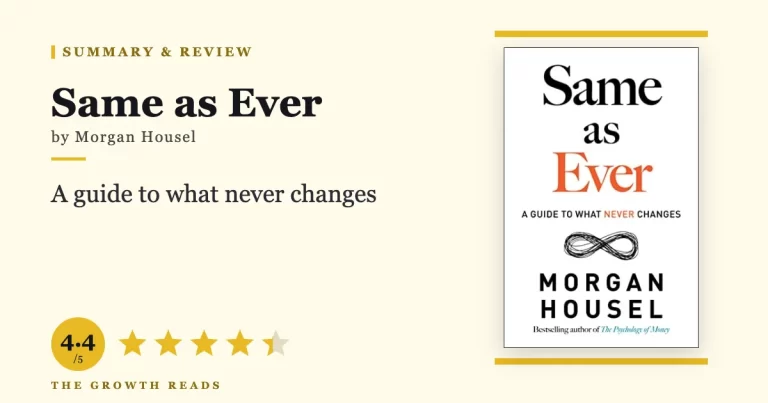
Morgan Housel's guide to building better strategies by focusing on timeless human behaviors — greed, fear, stories, risk, and the expectations gap.
Read Summary →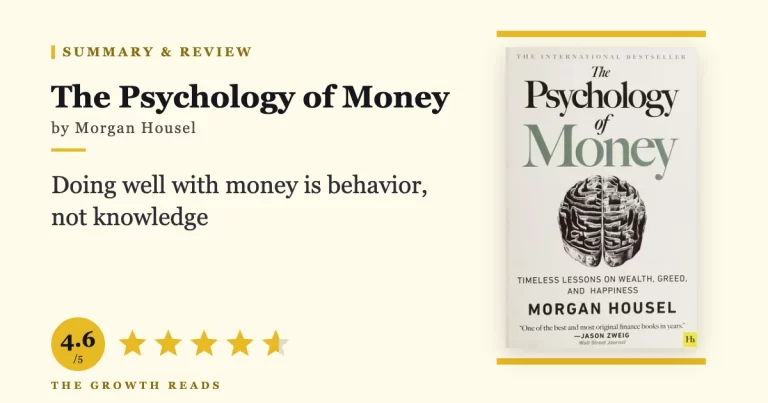
Doing well with money is about behavior, not brains. Our full Psychology of Money summary covers Morgan Housel's key lessons, takeaways, FAQs,…
Read Summary →Housel argues that the greatest intrinsic value of money isn't status or possessions, but the ability to control your own time — to do what you want, when you want, with whoever you want.
Financial success is not primarily a function of what you know; it's a function of how you behave over long periods of time — patience, humility, and restraint matter more than raw analytical skill.
In Same as Ever, Housel argues that while the specific events of history never repeat exactly, the underlying human behaviors — greed, fear, overconfidence, the desire for certainty — are constant across every era.
"Money's greatest intrinsic value — and this can't be overstated — is its ability to give you control over your time."— The Psychology of Money
"Spending money to show people how much money you have is the fastest way to have less money."— The Psychology of Money
"Today's economy is good at generating three things: wealth, the ability to show off wealth, and great envy for other people's wealth."— Same as Ever
"People don't want accuracy. They want certainty."— Same as Ever
Morgan Housel's finance classic distilled: how psychology, not intelligence, actually drives wealth — key takeaways plus a 7-day plan to apply his lessons this week.
Morgan Housel's guide to building better strategies by focusing on timeless human behaviors — greed, fear, stories, risk, and the expectations gap.
Doing well with money is about behavior, not brains. Our full Psychology of Money summary covers Morgan Housel's key lessons, takeaways, FAQs, and a 7-day plan.

