

Productivity
Outwitting the Devil Summary & Review: Stop Drifting
Napoleon Hill’s hidden 1938 manuscript: why drifting — not a bad plan — empties the year, and the seven principles that put…
Read Summary →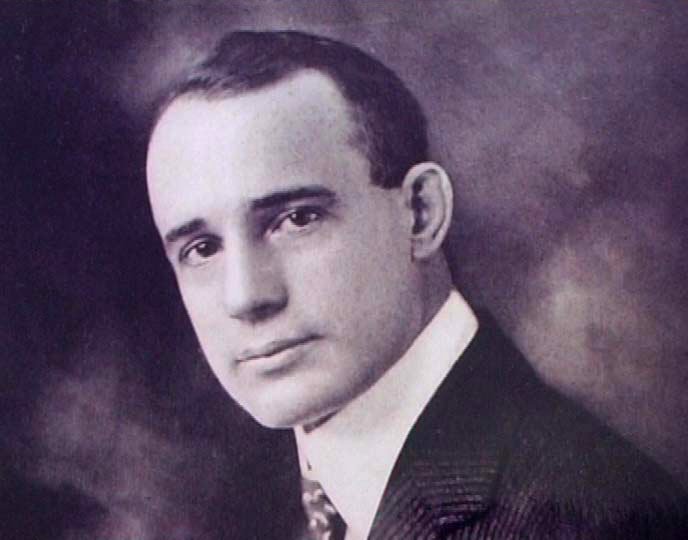
"The Depression-era journalist who turned Andrew Carnegie's success formula into a philosophy of achievement."
Napoleon Hill was an American author and journalist whose 1937 book, Think and Grow Rich, became one of the best-selling self-help and personal-success books of all time. Commissioned by steel magnate Andrew Carnegie to study the habits of America's most successful people, Hill spent roughly two decades interviewing industrialists, inventors, and entrepreneurs — including Carnegie, Thomas Edison, and Henry Ford — to distill a philosophy of achievement built around desire, faith, persistence, and what he called a “definite chief aim.” Writing in the depths of the Great Depression, Hill argued that thoughts are a form of energy that, organized with sufficient desire and backed by a specific plan, can be translated into material riches. His work predates and heavily influenced the modern self-help and personal-development genre, and his emphasis on mindset, persistence, and clearly defined goals remains a foundational reference point for authors writing about success nearly a century later.
Our in-depth summaries and reviews of his work
Napoleon Hill’s hidden 1938 manuscript: why drifting — not a bad plan — empties the year, and the seven principles that put…
Read Summary →
Napoleon Hill distilled 20 years of research into 500 successful people into 13 principles. Complete summary, key takeaways, and 7-day application plan.
Read Summary →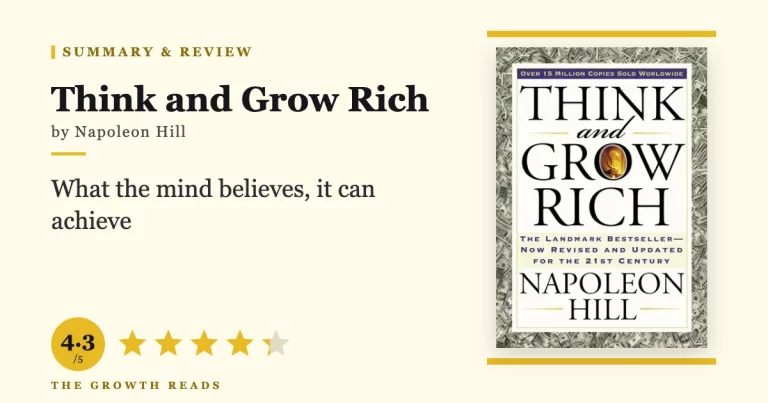
Napoleon Hill's 1937 classic distilled the mindset of 500 wealthy achievers. Our full Think and Grow Rich summary covers the 13 principles,…
Read Summary →Hill argues that a burning, specific desire — not a vague wish — is the essential first step of any achievement, and that weak desire produces weak results.
Hill insists that success requires converting desire into a specific, written goal backed by a plan and a deadline, rather than leaving ambition undefined.
Hill frames failure as a normal and even necessary precursor to success, arguing that most people quit at the exact moment they are closest to a breakthrough.
Hill argues that living without a written definite purpose lets fear and other people’s urgency spend the week.
Thought becomes act, act becomes habit, and the habit hardens into a year that feels inevitable — helpful or not.
A definite aim, self-mastery, lessons from adversity, chosen environment, time, harmony, and caution form Hill’s anti-drift checklist.
"The starting point of all achievement is DESIRE. Keep this constantly in mind. Weak desire brings weak results, just as a small fire makes a small amount of heat."— Think and Grow Rich
"You are the master of your destiny. You can influence, direct and control your own environment. You can make your life what you want it to be."— Think and Grow Rich
"Set your mind on a definite goal and observe how quickly the world stands aside to let you pass."— Think and Grow Rich
"Drifting is the most common cause of failure."— Outwitting the Devil
"Definiteness of purpose is the starting point from which one must begin."— Outwitting the Devil
Napoleon Hill’s hidden 1938 manuscript: why drifting — not a bad plan — empties the year, and the seven principles that put one definite purpose back in charge.
Napoleon Hill distilled 20 years of research into 500 successful people into 13 principles. Complete summary, key takeaways, and 7-day application plan.
Napoleon Hill's 1937 classic distilled the mindset of 500 wealthy achievers. Our full Think and Grow Rich summary covers the 13 principles, the 6-step method, FAQs and a 7-day plan.
