

★★★★☆ 4.3/5 — a thirty-second stance that makes every other habit easier to keep.
Best for: People who cheer for everyone except the face in the mirror
Reading time: ~6 hours (256 pages) · this guide ~12 min
Difficulty to apply: Easy to do — awkward for about a week
The High 5 Habit in one minute
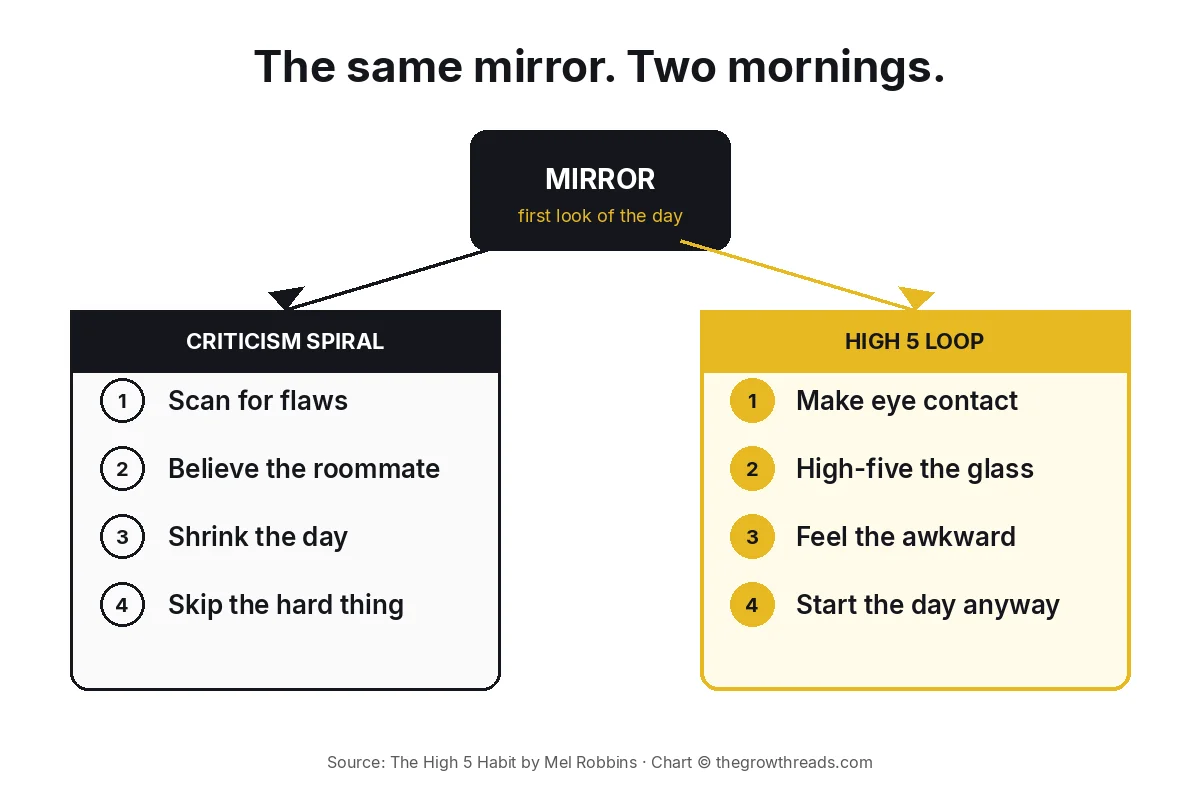
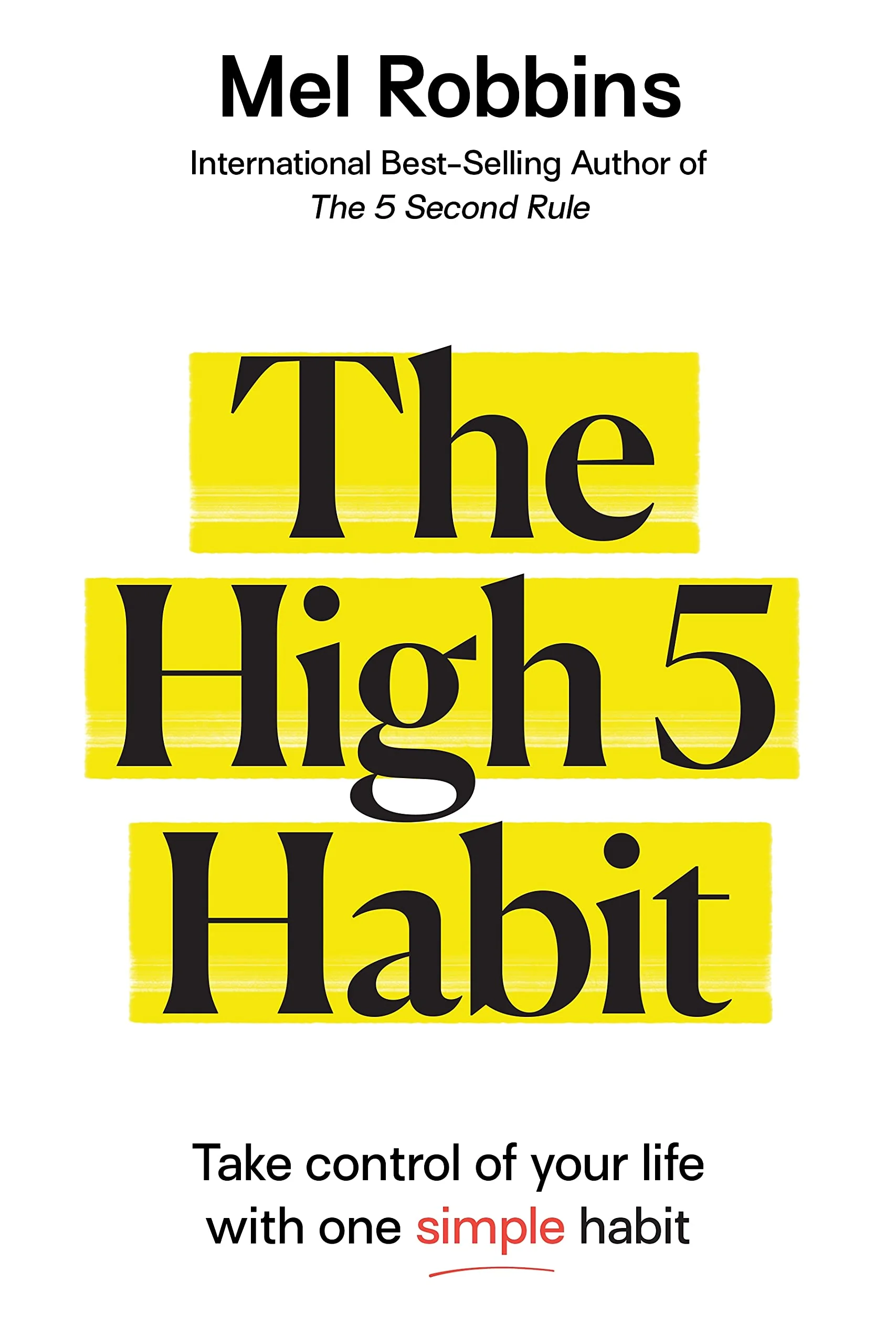
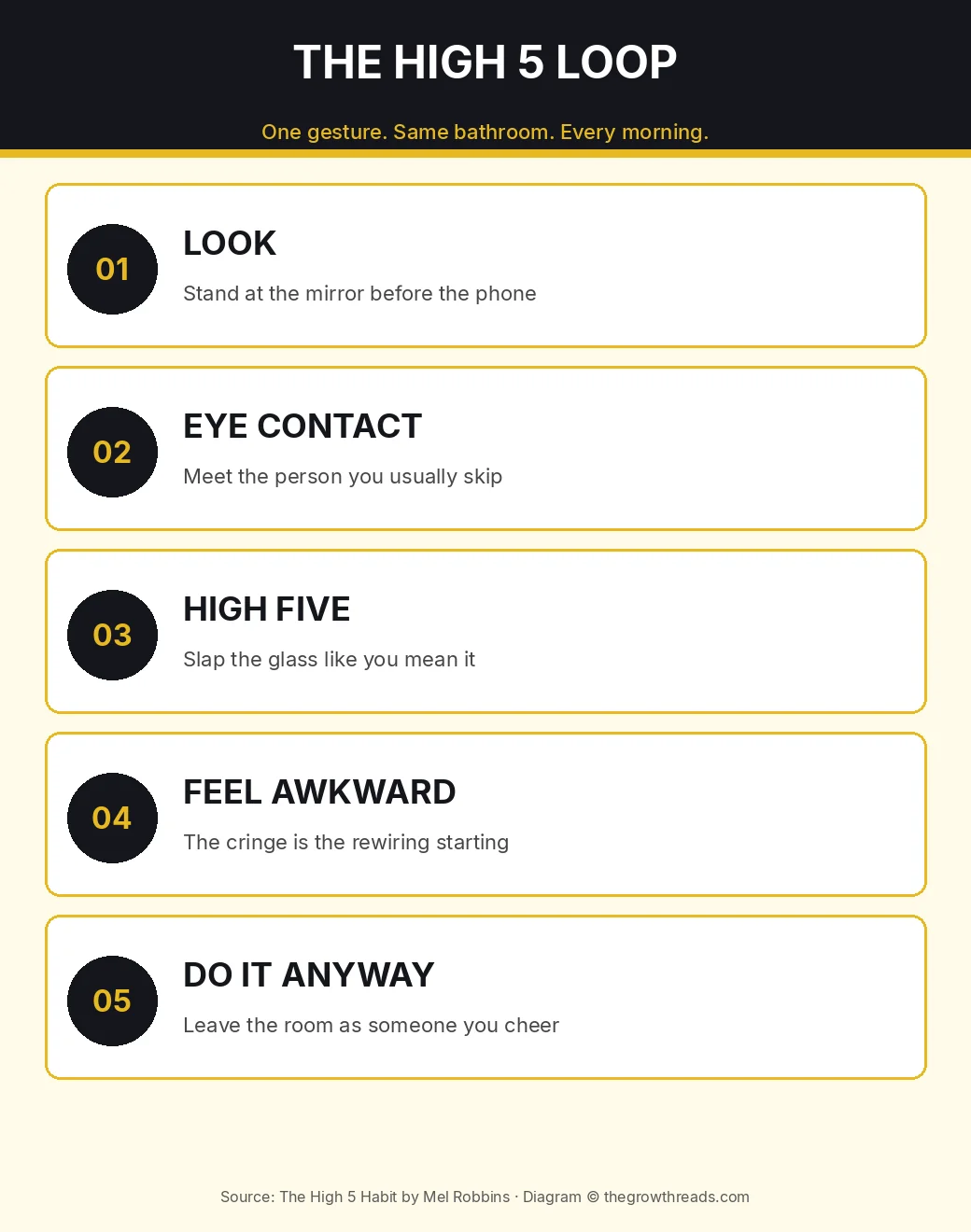
You already know how to high-five. You have just never aimed it at yourself. Mel Robbins’ The High 5 Habit (Hay House, 2021) is the sequel to the countdown that made her famous. The 5 Second Rule gets you to start. This book gets you to stop prosecuting the person who started. The practice is almost insultingly small: look in the mirror, make eye contact, and high-five the glass before the phone, the scale, or the inner roommate gets a vote. It feels silly. That is the point. Celebration is already wired. Robbins just wants you to spend it at home.
Key takeaways
- High-five the mirror first: Same place, before the inbox. The gesture is the method.
- You already cheer for other people: Teams, kids, finish lines. The skill is not missing. The target is.
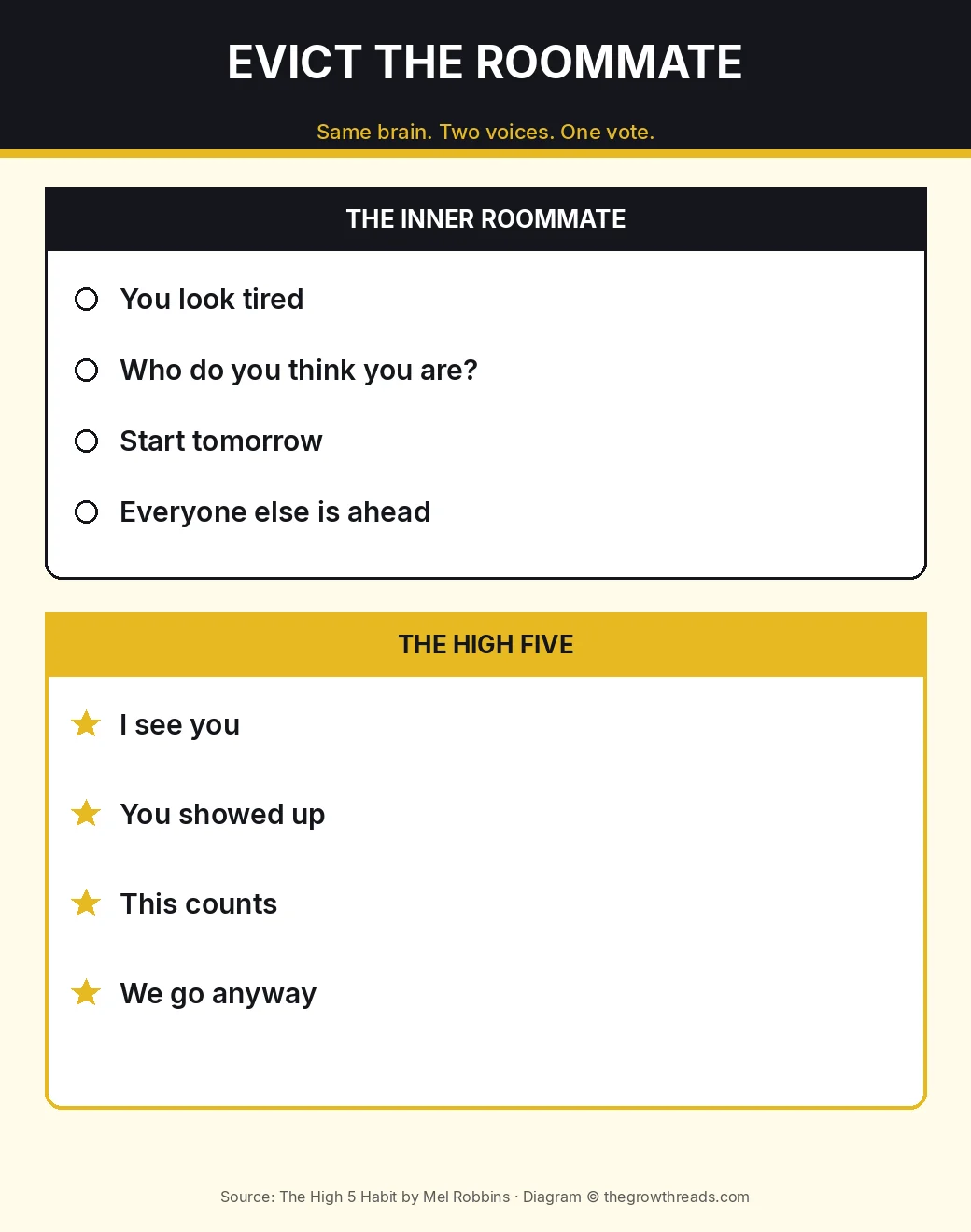
- The inner roommate is not you: The defect scan is a habit of attention, not proof you are broken.
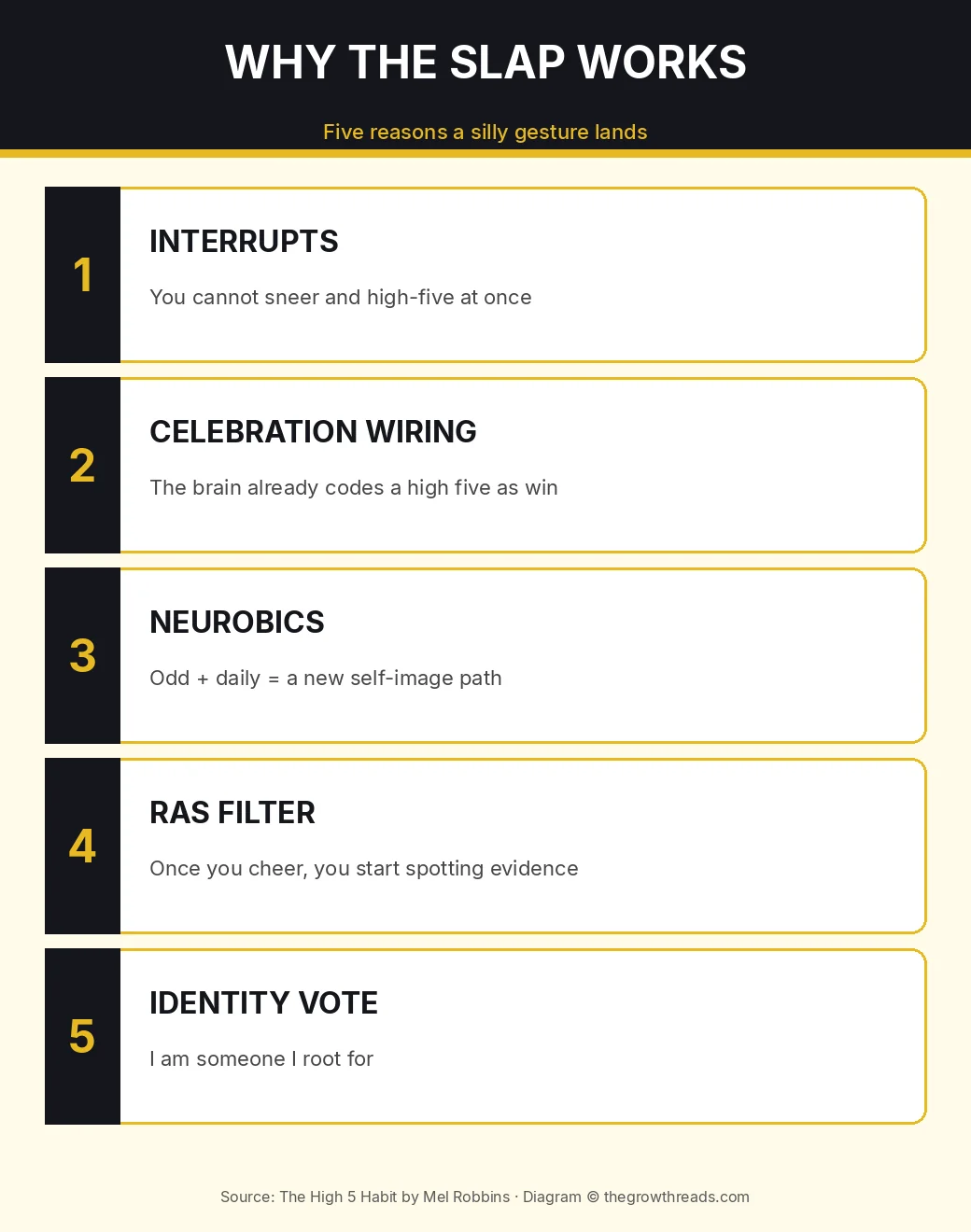
- You cannot sneer and slap at once: Celebration and prosecution cannot share the same second.
- Awkward is the rewiring: An odd move stacked on a daily routine cuts a new self-image path.
- The RAS starts hunting hearts: After you vote for yourself, you notice more evidence you showed up.
- Comparison is a tax, not data: “Why is it easy for them?” is a mood, not a plan.
- Silence is not kindness: People-pleasing often abandons the person in the mirror.
- “I’ll start tomorrow” is a prosecution: Pair the slap with 5-4-3-2-1 if the day still will not move.
- The 5 Second Rule starts you; the High 5 keeps you: Action without a kinder narrator is a faster way to hate the work.
What is The High 5 Habit about?
The High 5 Habit is Mel Robbins’ 2021 argument that confidence is a byproduct of how you treat yourself in ordinary minutes, not a mood you wait to feel. Using a morning mirror high-five as the drill, she shows how celebration — a gesture you already give other people — can interrupt self-criticism, retune attention, and make the rest of your systems easier to run. It is a stance book with one physical cue, not a new productivity stack.
About the author
Mel Robbins is an American author, speaker, and former CNN legal analyst who turned a private countdown into a public tool. The 5 Second Rule (2017) made her the person people cite when they need to get off the couch before the brain talks them out of it. She hosts The Mel Robbins Podcast, packs rooms as a keynote speaker, and writes in the same blunt, story-first register she talks in: a messy morning, a specific gesture, a reason the nervous system might care. The High 5 Habit arrived in 2021 from Hay House as the relational sequel to that countdown. The Let Them Theory followed later, aimed at other people’s opinions rather than your own voice. She is not a laboratory researcher. She is a translator who takes one physical move and asks you to repeat it until your face in the mirror stops being the enemy. Explore all Mel Robbins book summaries →
Key concepts at a glance
| Concept | What it means | Use it when |
|---|---|---|
| The High 5 Habit | Morning eye contact plus a high five to your reflection | The day starts with a defect scan |
| Inner roommate | The narrator that comments, compares, and delays | You hear a voice that is meaner than you would use on a friend |
| Pattern interrupt | A gesture that cannot coexist with the sneer | You catch yourself mid-prosecution |
| Neurobics | Odd + daily = a new neural path | Affirmations bounce off and you need something physical |
| Reticular activating system | Attention filter that hunts what you just voted for | You only notice what went wrong |
| Celebration wiring | The brain already codes a high five as “this person is worth backing” | You cheer for everyone except yourself |
| Not broken | Self-attack is learned; it is not proof you are defective | You are waiting to feel worthy before you start |
| Start tomorrow | Delay as self-punishment, not planning | The calendar is full of Mondays that never arrive |
Part 1: You deserve a High 5 life — and the science of the slap
Robbins opens on a bathroom, not a stage. She was cataloguing what was wrong — face, life, list — then did something she already did for other people: she high-fived the woman in the glass. It was not a strategy. It was the same burst she would have given a tired friend. The book is her refusing to treat that leak as a one-off.
The gesture is not a demand that you love yourself by Friday, and it is not a substitute for skill or sleep. It transfers a script you already run. You can slap a teammate’s palm after a messy point. You freeze when the person who needs that burst is you.
The science chapter is translator mode. Celebration is different weather than criticism. Short self-affirmation can change how people then take on work. Neurobics is the practical cousin: stack an odd move (a slap aimed inward) on a routine you already have (mirror, teeth, light). Repeat the doorway and you are cutting a path, not “thinking positive.” Touching the glass is optional. Eye contact is not. First thing beats the phone. Her challenge is five days, not a personality transplant.
TGR Note: If the problem is getting the body to move at all, start with our 5 Second Rule summary — same author, different job. The countdown launches the task. The high five changes the narrator who has to live with the task. If you want the environment to carry the load instead of a gesture, Tiny Habits is the stacking book. Do not collect all three as a new way to wait.
Part 2: Why you torture yourself (and why you are not broken)
The middle is less cute than the title. A text from her daughter — a kid who could not take in love that was already being sent — opens a wider pattern. Adults file compliments as clerical errors. The roommate files defects. External proof bounces. Prosecution sticks. That is practice, not a birth defect.
Childhood pages explain modeling, not a custody trial. If a roommate talked to you the way you talk to you at 7:10 a.m., you would change the locks. You do not, because the voice is wearing your face. “Am I broken?” is the load-bearing chapter. Broken is why the high five should wait until you earn it. Not-broken lets the slap go first. You change the action. Self-image limps after it, the way motivation limps after a first win in The Motivation Myth.
Do not argue with the roommate. Arguments feed it. A high five starves the second it needs. That is why the practice looks underpowered on paper and feels oddly sharp in the body: you are interrupting a rehearsed show with a gesture from the show where people are on your side.
TGR Note: If the inner picture is the whole game and you want a tighter mental-rehearsal manual, our Psycho-Cybernetics summary is the older sibling. If you need louder self-permission in money and identity, You Are a Badass is the pep. Robbins is the physical cue. Use one narrator book, not a stack of them.
Part 3: Hearts, comparison, silence, and “I’ll start tomorrow”
Once the slap is in the morning, attention moves. Robbins writes about suddenly seeing hearts that were always there. That is the reticular activating system, not a magnet. You stop filtering evidence out. After the high five, name one boring thing that already worked yesterday.
“Why is life so easy for them?” looks like data. It is a mood. Other people’s highlight reels are not a verdict on your unfinished morning and not a project plan. The high five is how you exit that dashboard without a speech. Silence is the people-pleaser’s tax: say nothing, need nothing. If you can advocate for a colleague and not for your own calendar, the slap is the missing first vote.
“I’ll start tomorrow” is where this book meets the 5 Second Rule without merging into it. Tomorrow keeps the identity of someone-who-will, which is cheaper than someone-who-did. High-five the version of you about to delay, then move a body part before the speech ends. Countdown if you must. Slap either way.
TGR Note: Comparison and delay are also identity problems. Atomic Habits is the tiny repeat that does not wait on a mood. The Motivation Myth is the order-of-the-feeling book: act, see a win, then want it. Robbins is the thirty seconds before those systems have a chance. If the pain is other people, not your own voice, jump to our Let Them Theory review instead of stacking two Mel books in one week.
Part 4: Approval, failure stories, and a life you can high-five
Later chapters name scripts that make a high five feel undeserved. Do you like me? How come I screw everything up? Can I actually handle this? Approval-seeking turns other faces into the scoreboard. A failure story turns one miss into a brand. Capacity panic turns a hard week into proof you should never have tried. The slap does not answer those questions. It keeps them from the first word.
If the slap only happens on good-hair days, you built a reward, not a habit. The days you do not want it are the job. High-five the miss and the unfinished, not only the win. You do not feel like “someone I root for” and then act like it. You act like it in a thirty-second doorway until the feeling is late and still sits down. Same sequence as motivation after a win and habits after a repeat — applied to the narrator. The last pages are not a better app. They are a less cruel morning, then more life.
TGR Note: If you want compounding without a pep talk, our Compound Effect summary is the math. If the inner fight is closer to combat sports than a bathroom mirror, Can’t Hurt Me is a different temperature. Stay with Robbins when the gap is kindness, not grit.
Who is The High 5 Habit best for — and who should read something else first?
Best for operators who are generous in public and precise with a knife in private. Parents, managers, founders, senior ICs — anyone who can give a perfect pep talk and then dismantle themselves at the sink. It is also the right second Mel Robbins book if the 5 Second Rule got your body moving and the narrator did not come along for the ride.
Read something else first if you do not have a next action. Capture still beats celebration. If the environment is the enemy, Atomic Habits or Tiny Habits will move more than a gesture. If the wound is other people’s opinions, The Let Them Theory is the later Robbins book. If you cannot start at all, the 5 Second Rule is shorter. Come back here when you can start and still hate the person who did.
Questions to reflect on
- What is the first sentence the roommate says when you see your face in the morning?
- Who in your life gets a high five from you without having to earn a perfect day?
- Where do you already stack a morning habit that could hold a ten-second slap?
- When did “I’ll start tomorrow” last protect you from a five-minute action you already knew?
- If you high-fived a miss this week instead of a win, which miss would actually change the story?
🔥 Ready to cheer for the person in the mirror?
Get The High 5 Habit, then run the 7-day plan before you add another system.
How to apply The High 5 Habit (7-day plan)
- Day 1 — One slap, no speech. After you brush your teeth, look at your eyes and high-five the glass. Do not add an affirmation paragraph. Leave the room.
- Day 2 — Catch the first line. Same slap. Write the roommate’s first sentence on a sticky note. Do not argue with it. You are collecting data.
- Day 3 — High-five a miss. Pick one thing that already went sideways this week. Slap the glass for the person who is still in the room, not for the outcome.
- Day 4 — Pair with a countdown. After the high five, pick one avoided task and run 5-4-3-2-1 into the first physical step. Stance, then start.
- Day 5 — Spend one high five outward. Cheer for someone else on purpose, then do not skip your own. The point is the ratio, not a new personality.
- Day 6 — Hunt one heart. After the slap, name one boring piece of evidence that you showed up yesterday. Put it next to the sticky note.
- Day 7 — Vote on a streak. Keep the doorway ritual for thirty days or drop it honestly. Do not upgrade it into a journal, an app, or a brand.
Frequently asked questions
What is The High 5 Habit about in one paragraph?
The High 5 Habit is Mel Robbins’ 2021 case that the most neglected relationship in a productive life is the one with yourself. You already know how to cheer: you high-five teammates, kids, and strangers who finish a race. You almost never aim that same burst of celebration at the face in the mirror. Robbins’ tool is deliberately small. Each morning you make eye contact with your reflection and high-five the glass. The slap interrupts the inner roommate long enough for you to start the day as someone you root for, not someone you prosecute. This summary shows how to install that gesture without turning it into a new performance.
How does the High 5 Habit actually work?
Robbins treats the high five as a pattern interrupt plus a celebration cue. Your nervous system already codes a high five as “someone worth backing.” When you aim it at yourself, you cannot sneer and slap at the same time. Repeat it in the same place — usually the bathroom mirror before the phone — and the brain starts pairing your face with encouragement instead of a defect scan. She borrows from neurobics: an odd move stacked on a daily routine carves a new path. Over days you notice more evidence that you showed up. The point is not a mood. It is a vote.
Is The High 5 Habit just the 5 Second Rule with a slap?
No. The 5 Second Rule is a start trigger: count 5-4-3-2-1 and physically move before hesitation wins. The High 5 Habit is a stay-kind trigger. It does not launch the task. It changes who you are while you launch it. Plenty of people can force a start and still spend the rest of the morning prosecuting themselves for how it looked. Robbins wants the countdown for action and the high five for the relationship that has to survive the action. Read the 5 Second Rule first if you cannot begin. Use this book when you can begin and still hate the person who did.
Do I have to touch the mirror, and what if it feels fake?
Touching the glass is optional. Eye contact is not. Robbins’ FAQ in the book is blunt: the bathroom is private, the mirror is already in the routine, and the awkwardness is data, not a verdict that you are doing it wrong. If it feels fake, you are early, not broken. Celebration aimed at yourself is a skill most adults never practiced. Do the five-day streak anyway. The fake days are the ones that teach the roommate it does not get a veto. If a full slap is too much on day one, raise the hand and meet your eyes. Scale the contact, not the skip.
Who should read The High 5 Habit — and who should start elsewhere?
Read it if you are competent in public and cruel in private: managers, parents, operators, anyone who can pep-talk a team and then dismantle themselves in the bathroom. It is also the right sequel if the 5 Second Rule got you moving and you still narrate every move as a defect. Start elsewhere if you need a system more than a stance. Atomic Habits and Tiny Habits design the environment. Getting Things Done captures the open loops. Let Them Theory is the book when the pain is other people’s opinions, not your own voice. This one is the self-celebration drill.
How long does it take to read The High 5 Habit?
The Hay House hardcover is 256 pages. Most readers finish it in five to seven hours. It is a talker, not a textbook: stories, questions, and a short science chapter rather than dense citations. You can install the habit the same morning you start the book. The value is not finishing all sixteen chapter titles. The value is five honest slaps in a row. This guide is built as a twelve-minute pass so you can use the practice today and return to the stories when you want Robbins’ voice in full. Do not wait for a free weekend to high-five a mirror.
Does the High 5 Habit replace therapy, habits, or a real plan?
No, and Robbins does not sell it that way. A morning slap will not metabolize trauma, fix a broken calendar, or replace skill. It changes the narrator who walks into those other tools. If the inner roommate is loud, therapy and a doctor are still the grown-up move. If the work is undefined, capture systems still win. If the environment is hostile, design beats pep. Use the High 5 Habit as the first thirty seconds of the day so those heavier tools are not asked to also be your cheerleader. Celebration is the stance. The plan is still a plan.
Related summaries
- The 5 Second Rule — the countdown that starts the body
- Atomic Habits — the tiny repeat that does not wait on a mood
- The Motivation Myth — act, win small, feel it later
- Tiny Habits — stack the slap onto a sink you already use
- Best productivity books — the full silo list
How we analyze books: every book on The Growth Reads is read cover to cover, summarized in thousands of words of original analysis, and rated against our five-criteria rubric (lasting impact, evidence quality, practical application, writing & originality, external consensus). Read our full methodology.