

★★★★☆ 4.2/5 — A sweeping, functional-medicine case that obesity, pre-diabetes, and Type 2 diabetes are one condition — “diabesity” — driven by insulin resistance, with a structured six-week plan to address it at the root.
Best for: readers who want a systems-level view of metabolic health and are willing to work through a dense, comprehensive program · Reading time: ~9 hrs (this guide: ~11 min) · Difficulty to apply: Moderate to high — the six-week plan is thorough but involves diet, supplement, and lifestyle changes across multiple fronts
The Blood Sugar Solution in one minute
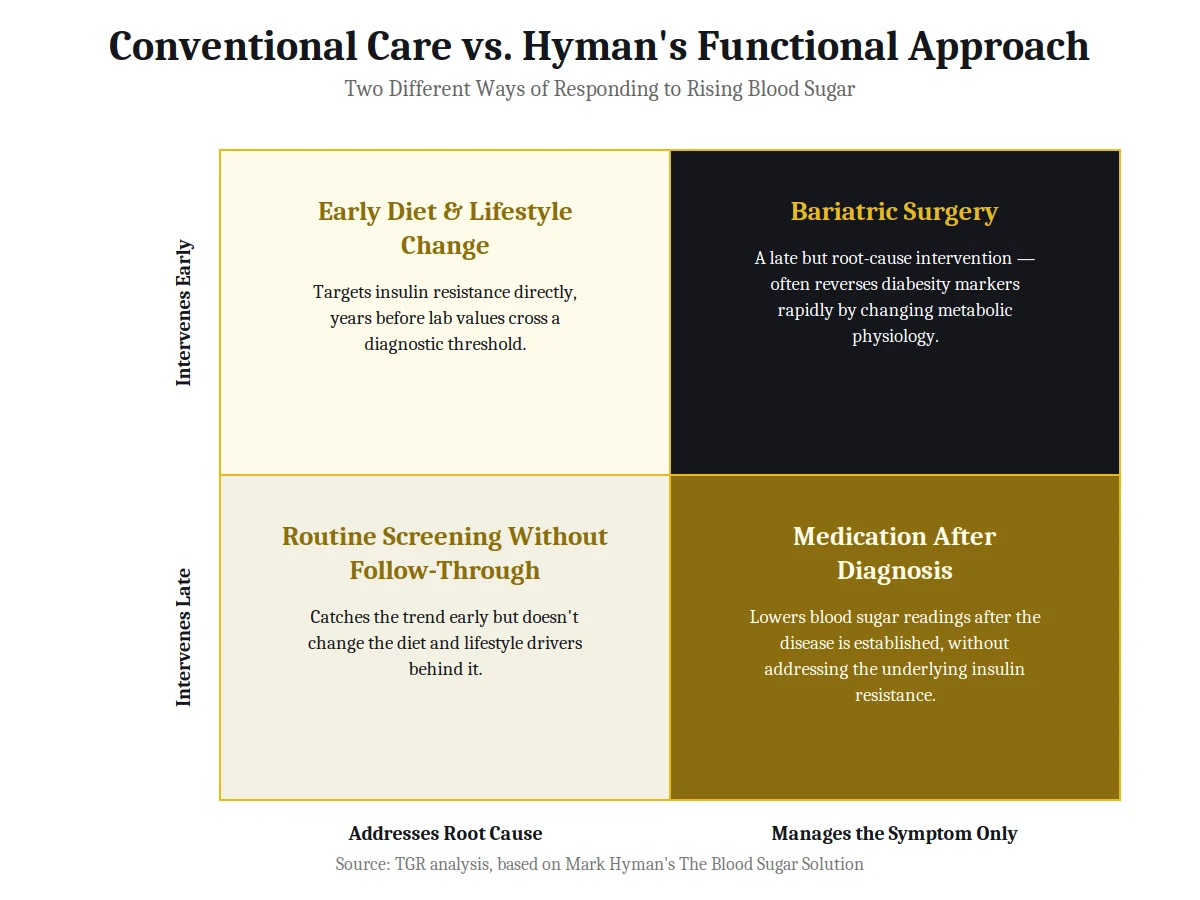
Mark Hyman, MD, argues that obesity, pre-diabetes, metabolic syndrome, and Type 2 diabetes aren’t separate diagnoses — they’re stages on a single continuum he calls “diabesity,” and nearly all of it traces back to one root cause: chronically elevated insulin. Rather than waiting for blood sugar to cross an arbitrary diagnostic threshold, Hyman argues intervention should start decades earlier, when insulin resistance first begins — and that conventional medicine’s habit of treating diabesity as a blood-sugar-numbers problem, managed with medication once diagnosed, treats the symptom while leaving the underlying cause untouched. His functional-medicine framework maps diabesity onto seven interconnected physiological systems — nutrition, hormones, inflammation, digestion, detoxification, energy metabolism, and mind-body health — and translates that framework into a structured six-week action plan covering nutrition basics, targeted supplements, stress reduction, exercise, environmental toxin reduction, and personalization. Published in 2012, the book also puts real weight on the food environment itself: Hyman points to an industrial food supply engineered around cheap sugar and refined flour, enabled by government subsidy policy, arguing that willpower is a smaller lever than the food system people are actually operating inside.
Key takeaways
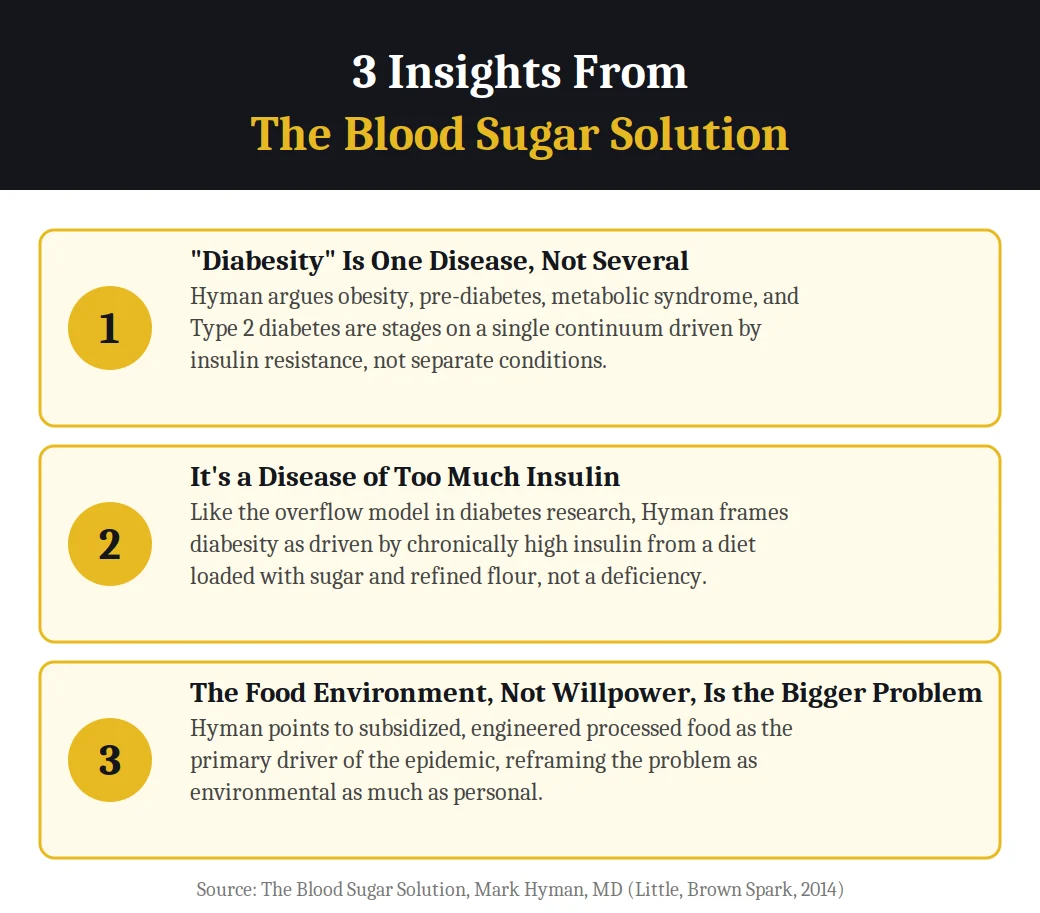
- “Diabesity” is one disease, not several: obesity, pre-diabetes, metabolic syndrome, and Type 2 diabetes are stages on a single continuum driven by insulin resistance, not separate, unrelated conditions.
- It’s a disease of too much insulin, not too little: chronically elevated insulin, driven by a diet loaded with sugar and refined flour, is what drives fat storage and inflammation — mirroring the “overflow” framing used elsewhere in metabolic-health research.
- Diagnosis waits too long: Hyman argues the medical system only “counts” people once lab values cross an arbitrary threshold, when intervention should start years or decades earlier.
- The food environment is a bigger lever than willpower: subsidized, industrially engineered processed food is framed as the primary driver of the epidemic, not simply individual choices.
- The Seven Steps reframe treatment as systems-based: nutrition, hormones, inflammation, digestion, detoxification, energy metabolism, and mind-body health are treated as interconnected, not organ-by-organ silos.
- The Six-Week Action Plan structures the change: from nutrition basics and supplements in early weeks to stress reduction, exercise, and reducing environmental toxins later on.
- Food is treated as information, not just calories: a core functional-medicine premise that what you eat sends signals shaping genes, hormones, and inflammation, not just energy intake.
- Insulin resistance is framed as a driver of disease well beyond diabetes: Hyman connects it to heart disease and other chronic conditions, not just blood sugar control.
- Systemic change is part of the prescription: the book closes by arguing individual change alone isn’t enough — food policy and the broader food system need to shift too.
What is The Blood Sugar Solution about?
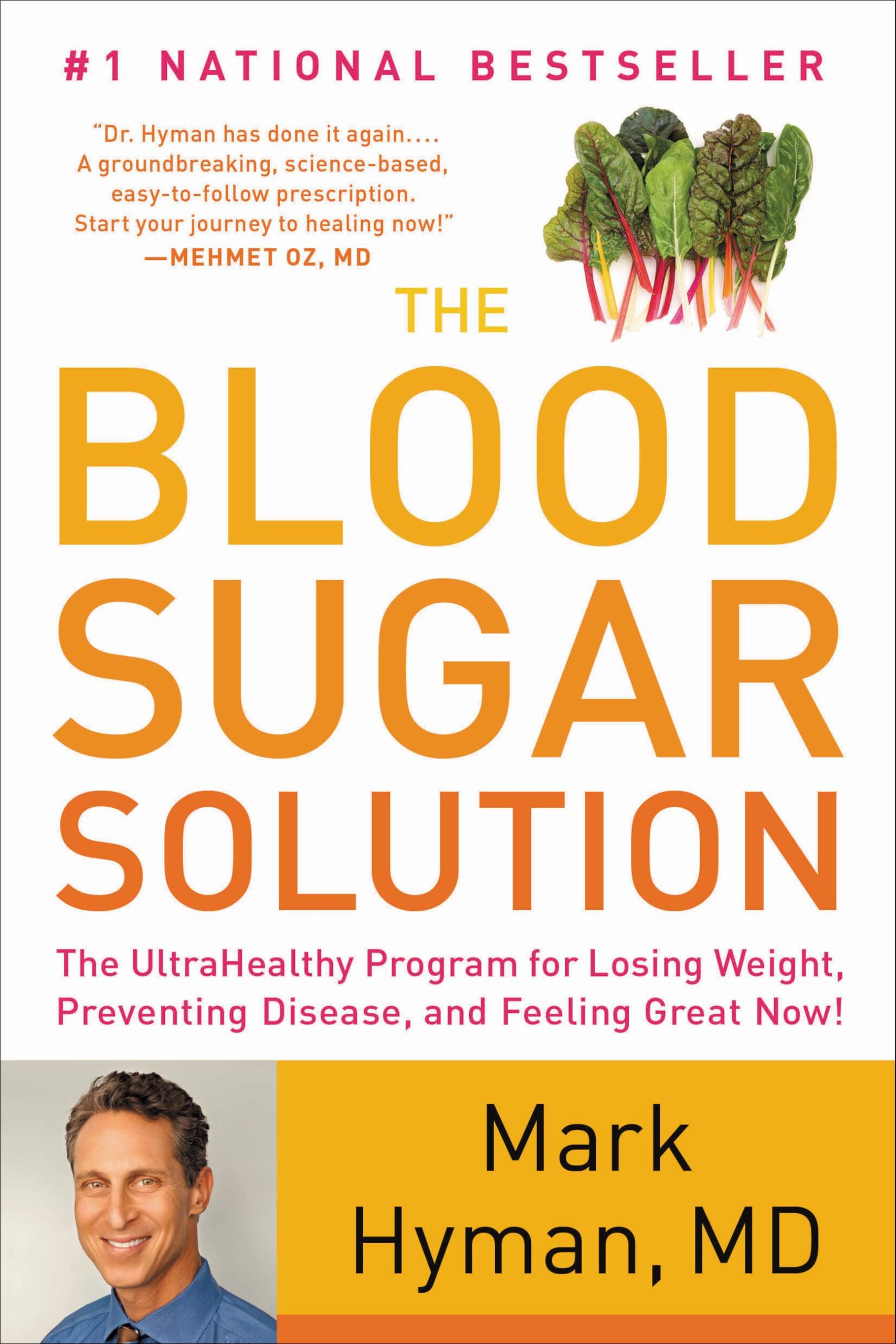
The Blood Sugar Solution is Mark Hyman’s functional-medicine case that obesity, pre-diabetes, metabolic syndrome, and Type 2 diabetes are one condition — “diabesity” — driven primarily by chronically elevated insulin, and that treating it requires addressing root physiological causes rather than just managing blood sugar readings with medication. Structured around a “Seven Steps” systems framework and a practical Six-Week Action Plan, the book walks readers through nutrition changes, targeted supplementation, stress reduction, exercise, and reducing environmental toxin exposure, while also making a broader argument about the food environment and subsidy policy that Hyman believes enables the epidemic in the first place. Published in 2012 by Little, Brown and Company (reissued in paperback by Little, Brown Spark in 2014), the book combines patient case studies, program instructions, and meal plans into a comprehensive — if dense — guide to reversing insulin resistance.
About the author
Mark Hyman, MD, is a family physician, functional-medicine practitioner, and founder of the UltraWellness Center in Lenox, Massachusetts. A ten-time #1 New York Times bestselling author, Hyman has served as a senior advisor at the Cleveland Clinic’s Center for Functional Medicine and is a prominent voice in the movement to treat chronic disease by addressing root biochemical causes rather than isolated symptoms. His broader body of work, including The Blood Sugar Solution, argues that most chronic disease traces back to a small number of underlying imbalances — insulin resistance chief among them — and that systemic factors like food policy and the industrial food supply are as important to treating disease as individual choices. Explore all Mark Hyman, MD book summaries →
Key concepts at a glance
| Concept | What it means | Use it when |
|---|---|---|
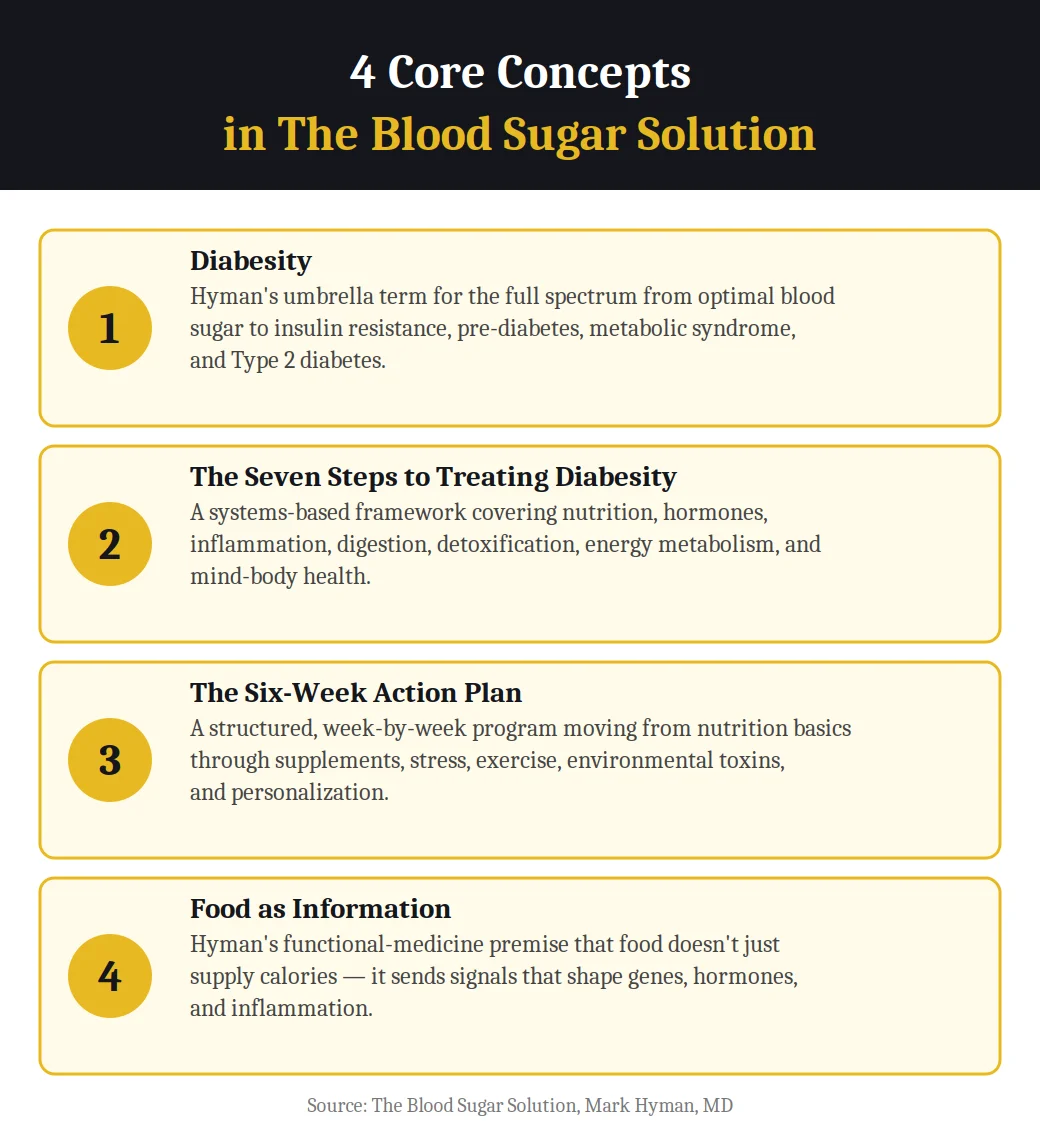
| Diabesity | The full spectrum from optimal blood sugar to insulin resistance, pre-diabetes, metabolic syndrome, and Type 2 diabetes | You want to understand where you or a loved one sits on the metabolic-health continuum |
| The Seven Steps to Treating Diabesity | A systems-based framework covering nutrition, hormones, inflammation, digestion, detoxification, energy metabolism, and mind-body health | You’re trying to organize a comprehensive approach rather than a single diet change |
| The Six-Week Action Plan | A structured, week-by-week program moving from nutrition basics through supplements, stress, exercise, and environmental toxins | You want a concrete, sequenced program to follow rather than a list of principles |
| Food as Information | The premise that food sends signals shaping genes, hormones, and inflammation, not just calories | You’re deciding what to eat based on more than calorie counts alone |
| The Toxic Food Environment | Subsidized, industrially engineered processed food framed as a primary driver of the epidemic | You’re trying to understand why the problem feels bigger than individual willpower |
Part 1: Diabesity as one continuous disease
Hyman’s foundational reframe is that obesity, pre-diabetes, metabolic syndrome, and Type 2 diabetes aren’t separate diagnoses to be treated by different specialists — they’re stages on a single continuum he calls “diabesity,” unified by chronically elevated insulin. He’s critical of a medical system that only “counts” someone as having a problem once specific lab values cross an arbitrary diagnostic line, arguing that insulin resistance can be identified — and addressed — years or decades before a formal diabetes diagnosis. This connects to a broader idea found across metabolic-health research: that the disease is driven by too much insulin, not too little, so treatments that simply add more insulin to the system risk deepening the resistance that’s actually driving the problem.
TGR Note: Hyman’s “diabesity” framing overlaps closely with The Diabetes Code‘s overflow model — both treat excess insulin, not blood sugar readings alone, as the real problem to solve.
Part 2: The Seven Steps and the Six-Week Action Plan
Rather than a single diet or supplement, Hyman organizes his treatment approach into “Seven Steps to Treating Diabesity” — nutrition, hormones, inflammation, digestion, detoxification, energy metabolism, and mind-body health — reflecting a functional-medicine belief that these systems are interconnected rather than siloed by specialty. He translates this into a practical Six-Week Action Plan: early weeks focus on nutrition fundamentals and targeted supplementation, middle weeks address stress and exercise, and later weeks tackle environmental toxin reduction before a final week of personalizing the program to the individual. Hyman is explicit that this isn’t a quick fix — it’s a comprehensive, sequenced program meant to address diabesity from multiple angles simultaneously rather than relying on any single lever.
Part 3: The food environment and the scale of the epidemic
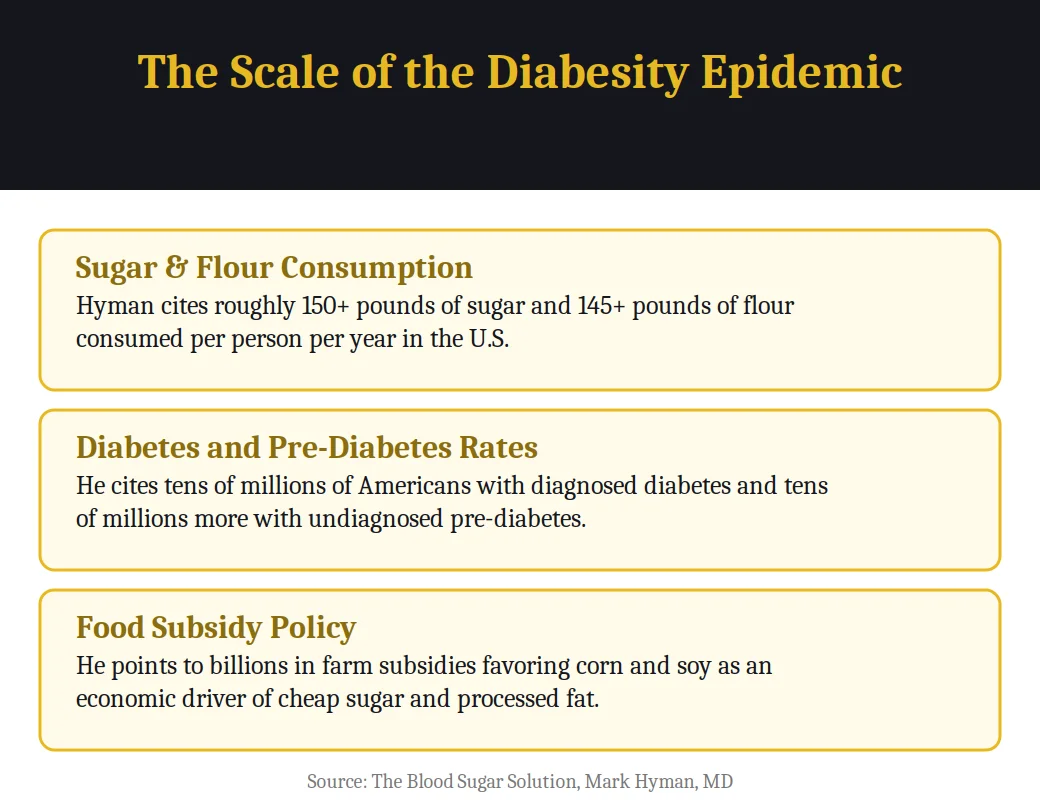
Hyman devotes significant attention to the food environment itself, arguing that Americans consume far more sugar and refined flour per year than the body evolved to handle, and that this isn’t purely a matter of individual choice — it’s enabled by farm subsidy policy that makes corn- and soy-derived ingredients artificially cheap. He frames processed food companies in terms similar to the tobacco industry: engineering products for maximum craving and profit, with limited incentive to reformulate around health. This systemic framing is central to why Hyman closes the book arguing for policy-level change alongside individual behavior change — in his view, expecting willpower alone to overcome a food supply engineered for overconsumption sets people up to fail through no fault of their own.
Who is The Blood Sugar Solution best for — and who should read something else first?
This book is best for readers who want a comprehensive, systems-level view of metabolic health and are willing to work through a dense, multi-part program covering diet, supplements, stress, and exercise together, rather than readers looking for a single simple fix. Because Hyman recommends specific supplement protocols and lab tests, it’s worth discussing any significant changes with your own physician, particularly if you’re currently on diabetes medication.
If you want a tighter, more narrowly focused case specifically about insulin and diabetes reversal, The Diabetes Code covers similar root-cause territory with a more concentrated clinical focus.
Questions to reflect on
- Where would you place yourself on the diabesity spectrum, even if you’ve never been formally diagnosed with anything?
- How much of your current diet is shaped by convenience and cost rather than deliberate choice — and how might that connect to Hyman’s food-environment argument?
- Which of the Seven Steps (nutrition, hormones, inflammation, digestion, detoxification, energy metabolism, mind-body health) feels most neglected in your own life right now?
- If you tried the Six-Week Action Plan, which week’s focus would be hardest for you to sustain?
- Do you agree that food policy, not just personal willpower, needs to change to meaningfully address this epidemic?
🔥 Ready to treat diabesity as one problem instead of five separate diagnoses?
This guide covers the core framework — the book gives you Hyman’s full Six-Week Action Plan, supplement protocols, and meal plans.
How to apply The Blood Sugar Solution (7-day plan)
- Day 1: Write down your most recent blood sugar, insulin, and A1c numbers, or schedule labs if you don’t have recent ones.
- Day 2: Cut one major source of added sugar or refined flour from your day and notice how you feel.
- Day 3: Read up on the Seven Steps framework and identify which system (nutrition, hormones, inflammation, etc.) feels most relevant to you.
- Day 4: Plan one meal built around whole, unprocessed foods rather than packaged ingredients.
- Day 5: Add one stress-reduction practice — even five minutes of quiet breathing — to your day.
- Day 6: Take a 20-30 minute walk and notice its effect on your energy and mood.
- Day 7: Decide which single week of Hyman’s Six-Week plan you’ll start with, and set a date to begin.
Frequently asked questions
What does “diabesity” mean?
Hyman’s term for the full spectrum from optimal blood sugar to insulin resistance, pre-diabetes, metabolic syndrome, and Type 2 diabetes.
What are the Seven Steps to Treating Diabesity?
A systems-based framework covering nutrition, hormones, inflammation, digestion, detoxification, energy metabolism, and mind-body health.
What is the Six-Week Action Plan?
A structured, week-by-week program moving from nutrition basics through supplements, stress, exercise, and environmental toxins.
Is diabesity caused by too much insulin or too little?
Hyman argues it’s driven by chronically elevated insulin, not a shortage of it.
Does the book blame individuals for the epidemic?
No — Hyman puts significant weight on the food environment and subsidy policy as systemic drivers, not just individual choices.
What does “food is information” mean?
The idea that food sends signals shaping genes, hormones, and inflammation, not just supplying calories.
How is this different from The Diabetes Code?
The Diabetes Code focuses narrowly on insulin and diabetes reversal; this book covers a broader functional-medicine program across diet, supplements, stress, and exercise.
Related summaries
If The Blood Sugar Solution resonated, these dig further into related territory: The Diabetes Code on insulin resistance and diabetes reversal, and other titles in our best health books pillar page.
How we analyze books: We work from the full book — reconstructing its core arguments in our own words, adding commentary that connects it to related research and other books in our library, and pressure-testing the advice in a practical 7-day plan. Ratings weigh usefulness, readability, and evidence quality. Read our full methodology.