Relationships
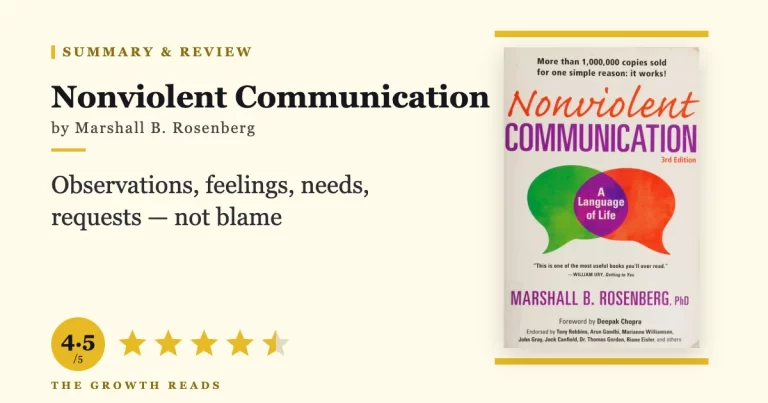
Nonviolent Communication Summary & Review: Replace Blame With Connection
Learn Marshall Rosenberg’s four-step NVC process — observation, feeling, need, request — to transform blame into connection in every relationship.
Read Summary →
"The psychologist whose four-step communication method has been used to mediate conflicts from classrooms to war zones."
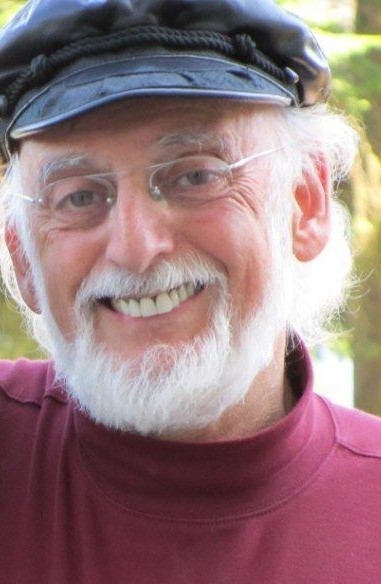
Marshall B. Rosenberg was an American psychologist and mediator who developed Nonviolent Communication (NVC), a communication framework designed to defuse conflict by connecting people's words to their underlying feelings and needs. After earning his PhD in clinical psychology and working on desegregation efforts in schools and organizations across the American South in the 1960s, Rosenberg founded the Center for Nonviolent Communication, teaching the method to educators, prisoners, corporations, and conflict zones worldwide, including in the Middle East and Rwanda. His book "Nonviolent Communication: A Language of Life," first published in 1999, distilled decades of mediation work into a four-step process—observation, feeling, need, and request—that has become widely used in therapy, education, and conflict resolution.
Our in-depth summaries and reviews of his work
Learn Marshall Rosenberg’s four-step NVC process — observation, feeling, need, request — to transform blame into connection in every relationship.
Read Summary →Rosenberg's NVC framework moves conversations away from blame and judgment toward naming the underlying feeling and unmet need driving a person's reaction.
Rosenberg argues that people convince themselves their pain comes from others and therefore that those others deserve punishment—a pattern NVC is designed to interrupt.
Rather than treating anger as proof someone wronged you, Rosenberg reframes it as a signal pointing toward a need that isn't being fulfilled.
"What I want in my life is compassion, a flow between myself and others based on a mutual giving from the heart."— Nonviolent Communication
"All violence is the result of people tricking themselves into believing that their pain derives from other people and that consequently those people deserve to be punished."— Nonviolent Communication
"At the core of all anger is a need that is not being fulfilled."— Nonviolent Communication
"We are dangerous when we are not conscious of our responsibility for how we behave, think, and feel."— Nonviolent Communication
Learn Marshall Rosenberg’s four-step NVC process — observation, feeling, need, request — to transform blame into connection in every relationship.