
Technology
Machines of Loving Grace Summary & Review: The Hidden Fork Behind Every AI Debate
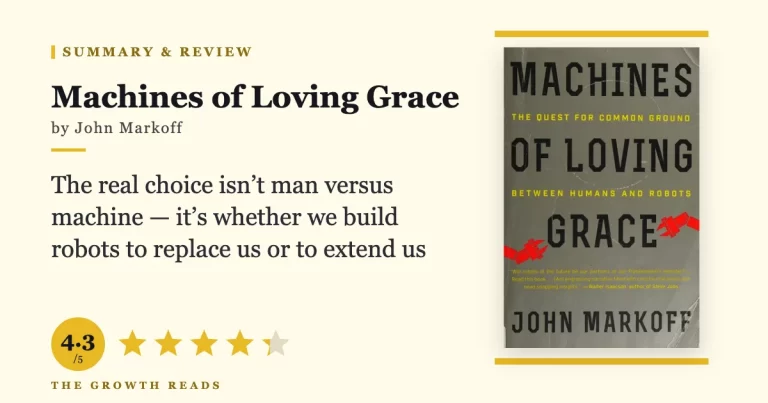
John Markoff traces AI and human-centered computing to the same 1960s Bay Area labs — and argues the fork between 'replace' and…
Read Summary →
"Veteran tech journalist tracing the hidden fork between AI and human-centered computing."
John Markoff spent 28 years covering technology and science for The New York Times, retiring in 2016 after breaking some of the era's defining stories, including the earliest coverage of the World Wide Web and a long-running series on hacker Kevin Mitnick. He was part of the reporting team that won the 2013 Pulitzer Prize for Explanatory Reporting. His earlier book, What the Dormouse Said, traced the cultural roots of Silicon Valley's personal computer revolution; Machines of Loving Grace extends that reporting into the parallel history of artificial intelligence and robotics, built on original interviews with the researchers who lived it. He lives in San Francisco.
Our in-depth summaries and reviews of his work
John Markoff traces AI and human-centered computing to the same 1960s Bay Area labs — and argues the fork between 'replace' and…
Read Summary →Artificial Intelligence and Intelligence Augmentation emerged as rival philosophies from the same 1960s Bay Area research culture — one chasing autonomy, the other chasing human amplification.
Humans mentally disengage from systems that seem reliable, then get called back to make split-second decisions exactly when they're least prepared.
Keeping humans meaningfully involved in automated systems should be a defended design value, not a temporary stage on the way to full autonomy.
"The AI story was never one story, but two — and the fork happened decades before anyone called it 'AI safety.'"— Machines of Loving Grace
"Understand which philosophy is baked into the tools you use and build."— Machines of Loving Grace
John Markoff traces AI and human-centered computing to the same 1960s Bay Area labs — and argues the fork between 'replace' and 'augment' is a design choice we're still making today.