

★★★★☆ 4.3 / 5 — A groundbreaking exploration of how trauma reshapes the brain and body, with practical pathways to healing.
Best for: Anyone interested in understanding trauma, mental health professionals, people seeking body-based healing approaches, and readers curious about the neuroscience of stress and recovery.
Reading time: ~12 hours (464 pages) · This summary: 18 min
Difficulty to apply: Moderate — the science is dense but the practical takeaways are accessible. Some therapeutic approaches require professional guidance.
This summary contains affiliate links at no extra cost to you.
The Body Keeps the Score in one minute
Trauma literally reshapes the brain and body — and talk therapy alone cannot undo what the body remembers. Bessel van der Kolk draws on over thirty years of clinical research to show that traumatic experiences leave physical imprints on the organism, changing brain circuits, the immune system, and the capacity for self-regulation. The book traces how trauma manifests as hypervigilance, flashbacks, dissociation, and chronic health problems — then maps a range of innovative treatments from EMDR and neurofeedback to yoga, theater, and mindfulness. Van der Kolk’s central argument is both simple and revolutionary: because trauma is stored in the body, healing must involve the body. Understanding this connection transforms not only clinical practice but also the way we think about stress, relationships, education, and resilience in everyday life.
Key takeaways
- Trauma changes the brain physically: The amygdala becomes hyperactive, the medial prefrontal cortex shrinks, and the brain’s alarm system gets stuck on high alert — making the world feel permanently dangerous.
- The body stores what the mind suppresses: Unexpressed traumatic energy lodges in muscles, organs, and the nervous system, producing chronic pain, autoimmune disorders, and unexplained medical symptoms.
- Flashbacks are not memories — they are re-experiences: During a flashback the brain’s time-keeping regions go offline, so the person literally relives the event rather than remembering it from a safe distance.
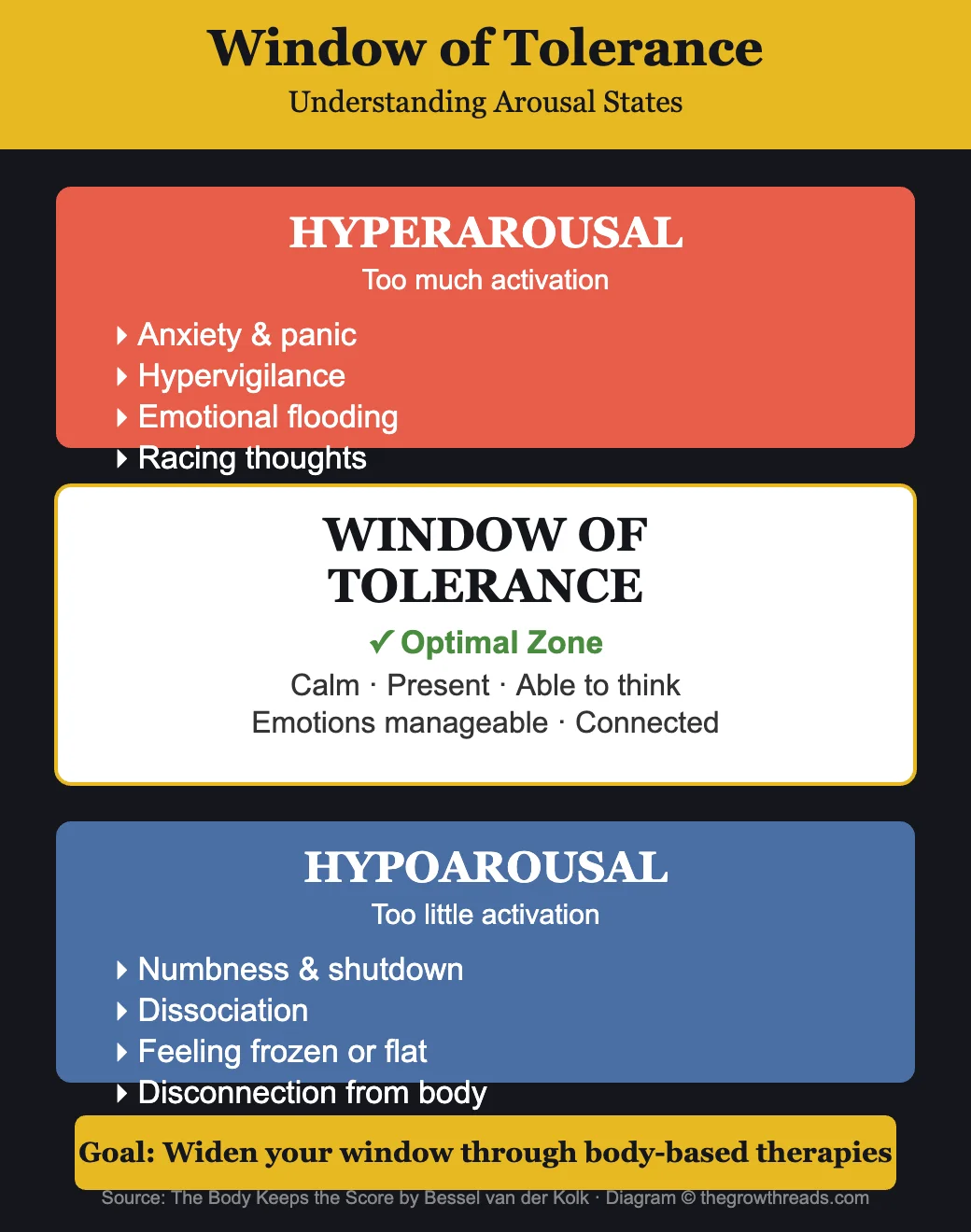
- The “window of tolerance” defines daily functioning: Traumatized individuals oscillate between hyperarousal (panic, rage) and hypoarousal (numbness, shutdown) with little access to the calm middle zone where learning and connection happen.
- Attachment shapes our stress response: Early caregiving patterns wire the nervous system’s capacity to self-regulate; insecure attachment in childhood predicts difficulty managing stress throughout life.
- Talk therapy has limits: While cognitive approaches help with insight, they often cannot reach the subcortical brain regions where trauma is encoded — the body needs a different language.
- EMDR works by unlocking frozen memories: Bilateral stimulation (eye movements) appears to mimic REM sleep processing, allowing traumatic memories to be integrated rather than relived.
- Yoga rewires the relationship with the body: Trauma survivors who practiced yoga showed measurable decreases in PTSD symptoms by learning to tolerate physical sensations without panic.
- Neurofeedback retrains the brain directly: By giving the brain real-time feedback on its own electrical activity, patients can learn to shift out of fear-based patterns without medication.
- Community and play are therapeutic: Theater, music, martial arts, and group activities help trauma survivors reclaim agency, rhythm, and social connection — three things trauma destroys.
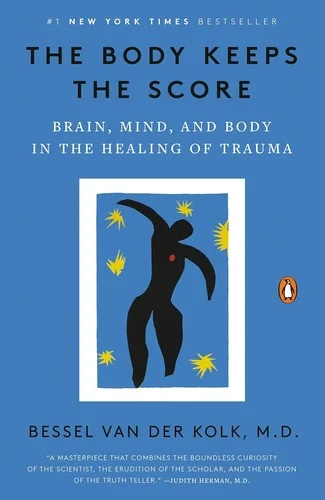
What is The Body Keeps the Score about?
The Body Keeps the Score explains how traumatic stress literally reshapes the brain, the body, and the immune system. Psychiatrist Bessel van der Kolk shows why traditional talk therapy often falls short and presents evidence-based alternatives — including EMDR, yoga, neurofeedback, and community-based approaches — that help trauma survivors reclaim ownership of their bodies and their lives.
About the author
Bessel van der Kolk, M.D. is a Dutch-born psychiatrist who has spent over four decades researching and treating trauma. He founded the Trauma Center in Brookline, Massachusetts, and served as a professor of psychiatry at Boston University Medical School. His research on PTSD began in the late 1970s at the VA, where he worked with Vietnam veterans and began noticing how profoundly trauma affected the body — not just the mind. Van der Kolk has published over 150 peer-reviewed scientific papers and was instrumental in getting developmental trauma recognized as a distinct clinical phenomenon. His work bridges neuroscience, attachment theory, and body-based therapies, and he is widely regarded as one of the world’s leading authorities on traumatic stress. The Body Keeps the Score, published in 2014, spent years on the New York Times bestseller list and has been translated into over 40 languages. Explore all Bessel van der Kolk book summaries →
Key concepts at a glance
| Concept | What it means | Use it when |
|---|---|---|
| Triune brain model | The brain has three processing levels: survival (brainstem), emotional (limbic), and rational (prefrontal cortex) | You want to understand why logic fails during panic |
| Window of tolerance | The zone of arousal where you can think clearly and connect with others | You notice yourself swinging between anxiety and numbness |
| Body memory | Trauma is encoded in physical sensations, not just cognitive narratives | Unexplained physical symptoms persist despite medical clearance |
| Dissociation | The mind disconnects from the body or present moment as a survival mechanism | You feel detached, foggy, or “not really here” during stress |
| EMDR | Eye movement therapy that helps the brain reprocess traumatic memories | A specific traumatic memory keeps replaying intrusively |
| Interoception | The ability to sense and interpret internal body signals | You want to rebuild trust in your own physical sensations |
| Developmental trauma | Chronic childhood adversity that shapes the developing brain differently than single-event PTSD | Patterns of difficulty started in childhood, not from one event |
| Neuroplasticity | The brain can form new pathways at any age, making recovery possible | You feel stuck and wonder if healing is still possible |
Part 1: The rediscovery of trauma
Van der Kolk opens with his early work at the Veterans Administration in the late 1970s, where he encountered Vietnam veterans whose nightmares, flashbacks, and explosive anger did not fit neatly into any existing psychiatric diagnosis. These men were not simply anxious or depressed — their entire nervous systems had been reorganized by combat. One veteran described how the smell of diesel fuel could transport him instantly back to a burning vehicle in Da Nang, complete with the heat on his skin and the screams in his ears. This was not a memory in any ordinary sense; it was a full-body re-experience.
This observation led Van der Kolk to a crucial insight: traumatic memories are encoded differently from ordinary ones. Normal memories are processed through the hippocampus and stored with a time stamp — you know the event happened in the past. Traumatic memories bypass this system. They are stored as fragmented sensory impressions — images, sounds, smells, physical sensations — without a narrative structure or temporal context. When triggered, the brain cannot distinguish past from present.
Van der Kolk traces the history of trauma research from the railroads of the 1860s (when “railway spine” first appeared in medical literature) through Freud’s early work with hysteria, the shell shock of World War I, and the eventual creation of the PTSD diagnosis in 1980. Along the way, he shows a disturbing pattern: each generation discovers the reality of trauma, then promptly forgets it. The political and emotional discomfort of acknowledging that ordinary people can be permanently changed by overwhelming experiences has repeatedly led society to minimize, deny, or pathologize survivors.
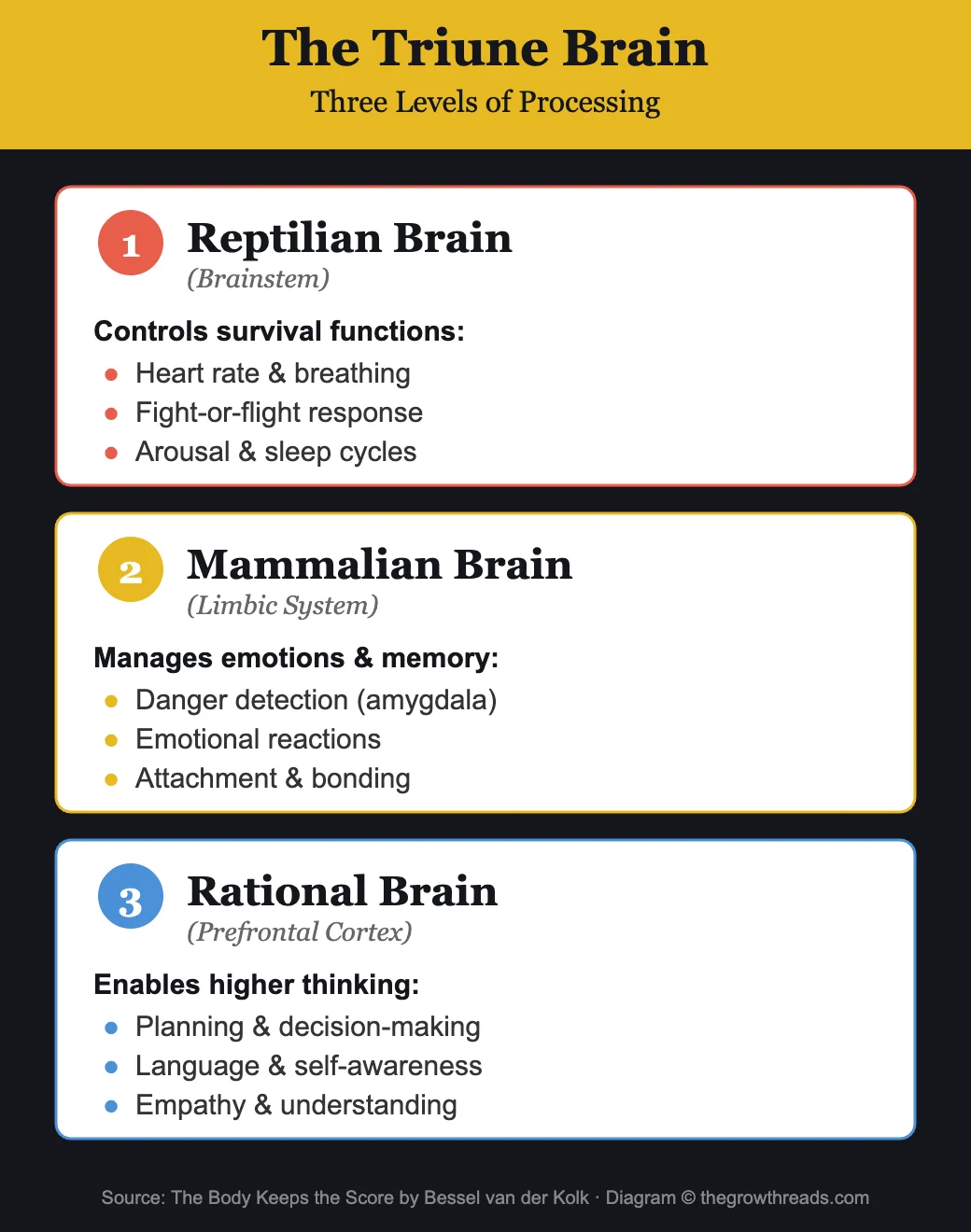
The triune brain model helps explain why trauma responses feel so overwhelming. When the brainstem detects danger, it hijacks the entire system — flooding the body with stress hormones, shutting down digestion, and overriding the rational brain’s protests that “everything is fine now.” Understanding this architecture is the first step toward compassion: people are not choosing to overreact; their survival systems are operating exactly as designed, just in the wrong context.
📝 TGR Note
Van der Kolk’s emphasis on the body echoes what James Clear describes in Atomic Habits — that lasting change happens through physical systems and environment design, not willpower alone. Both authors recognize that the body’s automatic responses are more powerful than conscious intention, and that reprogramming those responses requires working at the level of sensation and habit rather than pure cognition.
Part 2: The brain on trauma
The second section dives deep into the neuroscience. Van der Kolk and his colleagues were among the first researchers to use brain imaging technology to study PTSD, and their findings were startling. Brain scans of traumatized individuals revealed three consistent patterns. First, the amygdala — the brain’s smoke detector — was hyperactive, firing at the slightest provocation. Second, Broca’s area (responsible for speech) went offline during flashbacks, which explains why trauma survivors often literally cannot put their experiences into words. Third, the medial prefrontal cortex — the brain’s watchtower, responsible for self-awareness and rational assessment — showed reduced activity.
This neurological trifecta creates a devastating feedback loop: the alarm system screams danger, the speech center shuts down so you cannot articulate what is happening, and the rational brain that could calm things down goes dark. The body is left in a state of wordless terror.
Van der Kolk explains the concept of the “window of tolerance” — the zone of arousal where a person can function effectively, think clearly, and connect with others. For traumatized individuals, this window narrows dramatically. They swing between hyperarousal (panic, rage, hypervigilance) and hypoarousal (numbness, collapse, dissociation) with little access to the calm middle ground. Simple events that most people barely notice — a door slamming, a raised voice, a certain facial expression — can send them crashing out of their window.
The chapter on developmental trauma is particularly powerful. Van der Kolk argues that children who grow up with chronic neglect or abuse suffer a fundamentally different kind of injury than adults who experience a single traumatic event. Their developing brains wire around danger: they learn to read micro-expressions for threat, to suppress their own needs, and to dissociate from physical sensations as a survival strategy. The landmark ACE (Adverse Childhood Experiences) study showed that childhood trauma predicted not just psychological problems but also obesity, heart disease, cancer, and early death — proving that the body truly keeps the score across a lifetime.
📝 TGR Note
The window of tolerance concept connects directly to Daniel Kahneman’s System 1 / System 2 framework in Thinking, Fast and Slow. When someone is outside their window of tolerance, System 1 (fast, automatic, emotional) completely dominates, and System 2 (slow, deliberate, rational) goes offline. Both books suggest that managing our automatic responses is far more important than we realize.
Part 3: The minds of children
Van der Kolk devotes significant attention to how trauma affects children, arguing that this may be the book’s most urgent message. He describes working with children in foster care who had been diagnosed with ADHD, oppositional defiant disorder, or bipolar disorder — when in reality their symptoms were responses to overwhelming environments. A child who cannot sit still in class may not have an attention deficit; she may be scanning the room for danger because that is what kept her alive at home.
The section on attachment is particularly illuminating. Drawing on the work of John Bowlby and Mary Ainsworth, Van der Kolk shows how secure attachment — the experience of having a calm, attuned caregiver who helps you regulate your emotions — literally shapes the developing brain. Children with secure attachment develop robust stress-response systems, the ability to self-soothe, and the capacity for empathy. Those without it develop brains wired for survival: hypervigilant, reactive, and unable to trust that the world is safe.
Van der Kolk presents compelling case studies of children whose behavior transformed when they were given consistent, safe relationships. He describes a boy named Anthony whose violent outbursts in school stopped not through punishment or medication but through a specialized classroom where teachers were trained to recognize his triggers and help him regulate his nervous system. The lesson is clear: relationship is the primary vehicle for healing, especially for children.
He also tackles the controversial topic of psychiatric medication for traumatized children. While acknowledging that medication can provide short-term relief, Van der Kolk argues that pills cannot teach a child how to feel safe in their own body, how to form trusting relationships, or how to develop a coherent sense of self. These capacities must be built through experience — through safe touch, play, rhythm, and attuned caregiving.
📝 TGR Note
The emphasis on childhood attachment and environmental design mirrors insights from Outlive by Peter Attia, who argues that emotional health is a cornerstone of longevity. Both Van der Kolk and Attia point to childhood experience as a root cause of adult health problems — and both argue that addressing these roots requires going far beyond conventional medical treatment.
Part 4: The imprint of trauma — paths to recovery
The final and longest section of the book is where Van der Kolk’s vision for healing becomes most concrete and most hopeful. He surveys a range of innovative treatments, each grounded in the principle that because trauma lives in the body, healing must involve the body.
EMDR (Eye Movement Desensitization and Reprocessing) gets perhaps the most detailed treatment. Van der Kolk describes how Francine Shapiro discovered that bilateral stimulation — originally through guided eye movements — could help traumatic memories become “unstuck.” During EMDR sessions, patients hold a traumatic memory in mind while following a moving light or tapping pattern. Something remarkable happens: the memory begins to transform. It does not disappear, but it loses its emotional charge. Patients report that the scene feels further away, less vivid, more like a normal memory than a live reexperience. Brain scans confirm what patients describe — after successful EMDR, the amygdala calms down and Broca’s area comes back online.
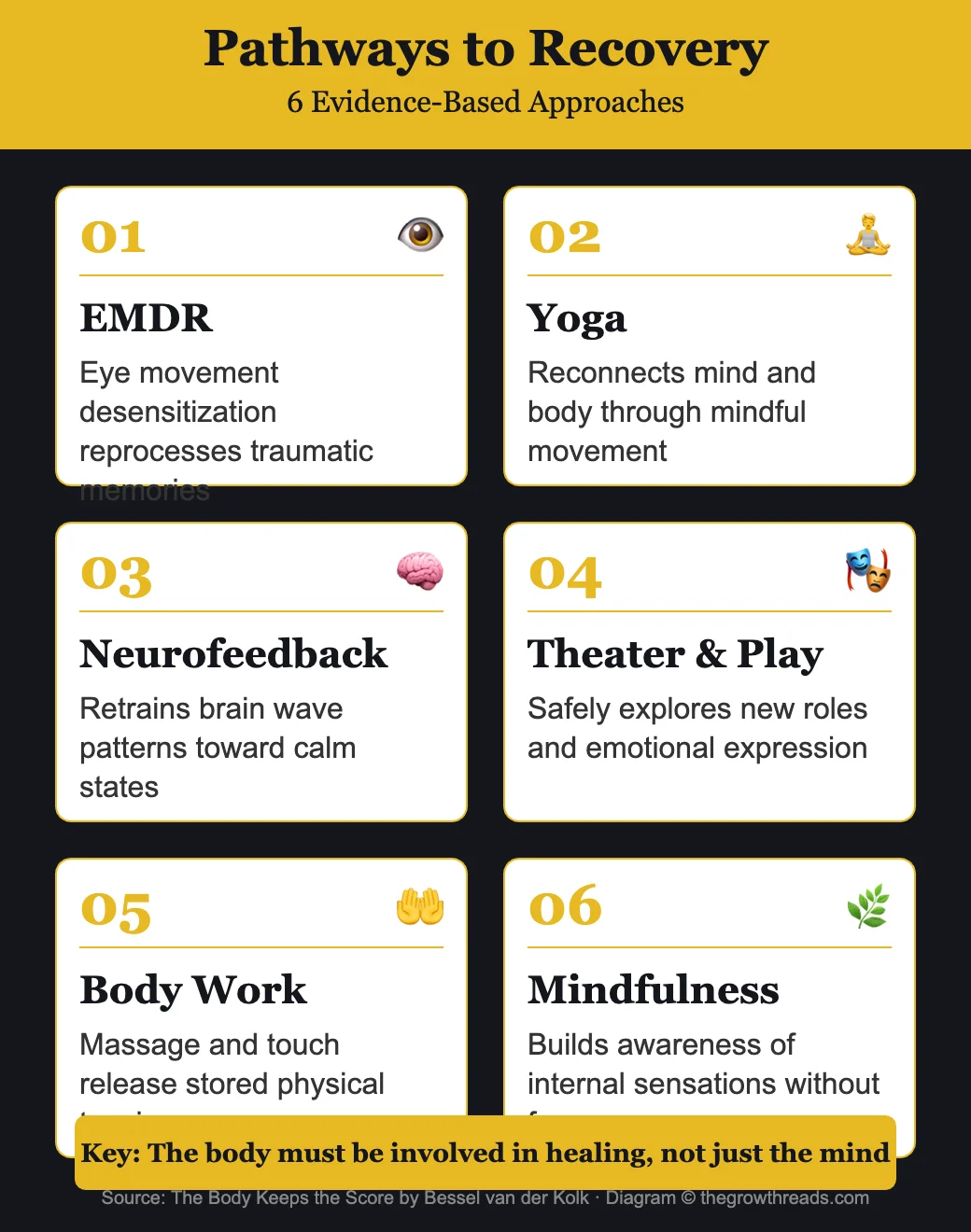
Yoga emerged as one of Van der Kolk’s most powerful tools. His research team conducted the first randomized controlled study of yoga for PTSD and found that trauma-sensitive yoga was more effective than any medication that had been studied for the condition. The key was not the physical postures themselves but the experience of noticing body sensations without being overwhelmed by them — learning, perhaps for the first time, that a racing heart does not necessarily mean danger. The yoga program taught participants interoception: the capacity to feel what is happening inside the body and to respond with curiosity rather than fear.
Neurofeedback offers a more technological approach. By placing sensors on the scalp and displaying brain-wave patterns on a screen, therapists can help patients learn to produce calmer brain states. Van der Kolk describes children who could not sit still for five minutes learning to sustain focused, calm brain activity — and carrying that capacity into their daily lives. The approach is particularly promising for people whose trauma occurred before they had language, making talk-based therapies less effective.
Theater and communal rhythms may be the most surprising entries in Van der Kolk’s toolkit. He describes working with inner-city adolescents through Shakespeare productions — watching them come alive as they inhabited characters, practiced emotional expression in a safe context, and experienced the cohesion of working toward a shared goal. Rhythm and music tap into the brainstem’s regulatory circuits directly, bypassing the rational mind entirely. Drumming circles, choir singing, martial arts — all of these give traumatized people access to the experience of being safely in their bodies and in sync with others.
📝 TGR Note
Van der Kolk’s evidence for yoga’s effectiveness pairs well with the longevity research in Why We Sleep by Matthew Walker. Both authors demonstrate that seemingly simple physical practices — sleep hygiene, breathing exercises, mindful movement — produce measurable changes in brain architecture and immune function. The implication is that healing and health optimization operate on the same neurobiological pathways.
Who is The Body Keeps the Score best for — and who should read something else first?
Read this if: You want to understand the science of trauma and how the body stores stress. This is essential reading for therapists, counselors, social workers, teachers, parents, and anyone who works with people who have experienced adversity. It is equally valuable for individuals who recognize patterns of hypervigilance, numbness, or difficulty with relationships in their own lives and want to understand why.
Consider reading something else first if: You are currently in acute crisis and need immediate coping strategies rather than deep neuroscience. In that case, start with something more immediately actionable like Can’t Hurt Me by David Goggins for building mental resilience through gradual challenges, or The Power of Now by Eckhart Tolle for grounding techniques. If you prefer a gentler entry point into mind-body connection, Ikigai offers a lighter framework. Return to The Body Keeps the Score when you are ready for the full scientific picture.
Questions to reflect on
- When you feel stressed, where do you notice it first in your body — chest tightness, stomach knots, jaw clenching, shallow breathing? What does this physical pattern tell you about your nervous system’s default response?
- Think about a moment this week when you felt genuinely calm and present. What were the conditions — who were you with, what were you doing, and what sensations did you notice in your body?
- Van der Kolk argues that the body keeps score of every experience. What “score” might your body be keeping that your conscious mind has not fully acknowledged?
- Consider your own window of tolerance. Do you tend more toward hyperarousal (anxiety, restlessness, irritability) or hypoarousal (numbness, zoning out, fatigue)? What activities help you return to center?
- If you could choose one body-based practice from the book — yoga, rhythmic movement, breathing exercises, or creative expression — to experiment with for the next month, which would it be, and what draws you to it?
🔥 Ready to understand the science of healing?
Discover how trauma reshapes the brain and body — and what you can do about it.
How to apply The Body Keeps the Score (7-day plan)
- Day 1 — Body scan baseline: Set a timer for 10 minutes. Sit quietly and scan your body from head to toe, noting areas of tension, numbness, or sensation without trying to change anything. Write down what you notice in a journal.
- Day 2 — Map your window of tolerance: Throughout the day, check in with yourself hourly. Rate your arousal on a 1-10 scale (1 = numb/flat, 5 = calm/engaged, 10 = panicked/enraged). Note what events pushed you toward either extreme.
- Day 3 — Breathing anchor: Practice 5 minutes of slow diaphragmatic breathing (4 counts in, 6 counts out). Do this once in the morning and once before bed. Notice how your body responds to the extended exhale.
- Day 4 — Sensory grounding: When you notice stress rising, try the 5-4-3-2-1 technique: identify 5 things you see, 4 you hear, 3 you can touch, 2 you smell, 1 you taste. This engages your prefrontal cortex and pulls you back into the present.
- Day 5 — Mindful movement: Spend 15 minutes doing gentle yoga, stretching, or walking while paying close attention to physical sensations. Focus on what feels good or neutral in your body rather than what feels tense.
- Day 6 — Social rhythm: Engage in a rhythmic group activity — a walk with a friend, cooking with a partner, or even singing along to music. Notice how synchronizing with another person affects your sense of safety.
- Day 7 — Integration review: Review your week’s journal entries. Identify which practices helped you stay in your window of tolerance, which situations pushed you out of it, and create a personal “regulation toolkit” of 3 go-to strategies.
Frequently asked questions
What is The Body Keeps the Score about in simple terms?
The Body Keeps the Score explains how traumatic experiences change the brain and body in lasting ways. Psychiatrist Bessel van der Kolk shows that trauma is not just a psychological problem but a physical one — stored in the nervous system, muscles, and immune system. The book then presents a range of healing approaches that work through the body, including EMDR, yoga, neurofeedback, and creative therapies, arguing that recovery requires more than talk therapy alone.
Is The Body Keeps the Score worth reading if I have not experienced trauma?
Absolutely. The book offers valuable insights for anyone interested in how the brain and body interact, how stress affects health, and how early experiences shape adult behavior. Parents, teachers, managers, and healthcare workers will find the sections on attachment and developmental trauma particularly relevant. Understanding the neuroscience of stress and regulation improves your ability to support others and manage your own wellbeing, regardless of your personal trauma history.
How long does it take to read The Body Keeps the Score?
The book is 464 pages and takes most readers about 12 to 15 hours to complete. However, this is not a book to rush through. The clinical descriptions can be emotionally intense, and many readers find it helpful to read a chapter or two at a time, pausing to reflect and integrate the material. The audiobook, narrated by Sean Pratt, runs about 16 hours and is an excellent alternative for those who prefer listening.
What is the main argument of The Body Keeps the Score?
Van der Kolk’s central argument is that trauma fundamentally reorganizes the way the brain and body manage perceptions and that this reorganization is physical, not just psychological. Because trauma is stored in the body — in muscle tension, nerve pathways, immune responses, and brain circuitry — healing must also involve the body. Talk therapy alone cannot reach the subcortical brain regions where traumatic imprints live. Recovery requires approaches that directly address physical sensation and autonomic nervous system regulation.
What are the best treatments for trauma according to the book?
Van der Kolk presents six primary evidence-based approaches: EMDR (eye movement desensitization and reprocessing) for reprocessing traumatic memories; yoga for rebuilding the relationship with the body; neurofeedback for retraining brain-wave patterns; theater and communal activities for reclaiming agency and social connection; body-based therapies like massage and somatic experiencing; and mindfulness meditation for developing interoceptive awareness. He emphasizes that no single approach works for everyone and that the most effective treatment plans combine multiple modalities.
Is The Body Keeps the Score evidence-based or just theory?
The book is heavily evidence-based. Van der Kolk draws on decades of peer-reviewed research, including brain-imaging studies (fMRI and PET scans), randomized controlled trials of EMDR and yoga for PTSD, the landmark ACE (Adverse Childhood Experiences) study involving over 17,000 participants, and his own published clinical research. While some therapeutic approaches he discusses (like neurofeedback) are still building their evidence base, the core neuroscience of trauma is well-established and supported by hundreds of peer-reviewed studies.
How does The Body Keeps the Score compare to other trauma books?
The Body Keeps the Score stands out for its combination of rigorous neuroscience, clinical case studies, and breadth of treatment approaches. Compared to Peter Levine’s Waking the Tiger, Van der Kolk’s book is more comprehensive and research-heavy. Compared to Judith Herman’s Trauma and Recovery, it places more emphasis on body-based therapies and brain imaging. It is often recommended as the definitive introduction to trauma because it bridges the gap between academic research and practical understanding in a way that is accessible to both professionals and general readers.
Related summaries
If you found The Body Keeps the Score valuable, explore these related summaries from our Health collection:
- Why We Sleep Summary — Matthew Walker reveals how sleep deprivation damages the brain and body in ways that mirror trauma’s effects, and what to do about it.
- Outlive Summary — Peter Attia’s framework for longevity includes emotional health as a core pillar, with direct connections to childhood adversity and stress management.
- Ikigai Summary — The Japanese approach to finding purpose and longevity through community, gentle movement, and mindful living complements Van der Kolk’s emphasis on rhythm and connection.
Explore all our reviews on the Best Health & Wellness Books pillar page.
How we analyze books at The Growth Reads: Every summary is built from a careful reading of the original text, cross-referenced with the author’s published research and public interviews. We paraphrase all ideas in our own words, add original frameworks (TGR Notes, 7-day plans, infographics), and link to related summaries to help you build a connected understanding across books. We never reproduce copyrighted material beyond brief attributed quotes. Read our full methodology.
Related Health Summaries
Exercised Summary & Review: Why Something We Never Evolved to Do Is Essential
Keep Sharp Summary & Review: Build a Better Brain at Any Age
The Hungry Brain Summary & Review: Why Your Brain, Not Your Willpower, Decides What You Eat
The Longevity Diet Summary & Review: Valter Longo’s Science-Backed Plan for Living Longer
You Are the Placebo Summary & Review: How Your Mind Rewires Your Body