

★★★★★ (4.6/5) — a generous, practical guide to the lost art of truly seeing other people.
Best for: Anyone who wants deeper friendships, a stronger marriage, or to become the person others open up to.
Reading time: ~7 hrs to read the book · ~12 min to read this guide
Difficulty to apply: Moderate — the ideas are simple, but the habits take real practice.
How to Know a Person in one minute
Most of us are worse listeners than we think we are — and it is costing us our closest relationships. In How to Know a Person, New York Times columnist David Brooks argues that the single most important skill you can build is the ability to see other people clearly and make them feel understood. Brooks calls people who do this well “Illuminators” and people who habitually make others feel invisible “Diminishers.” Drawing on psychology, sociology, and his own painful experience of feeling unseen during a difficult period of his life, he lays out concrete practices — asking better questions, sitting with hard emotions, resisting the urge to fix or advise too quickly — that turn ordinary conversations into moments where someone genuinely feels known. It is less a book of theory than a field manual for paying attention.
Key takeaways
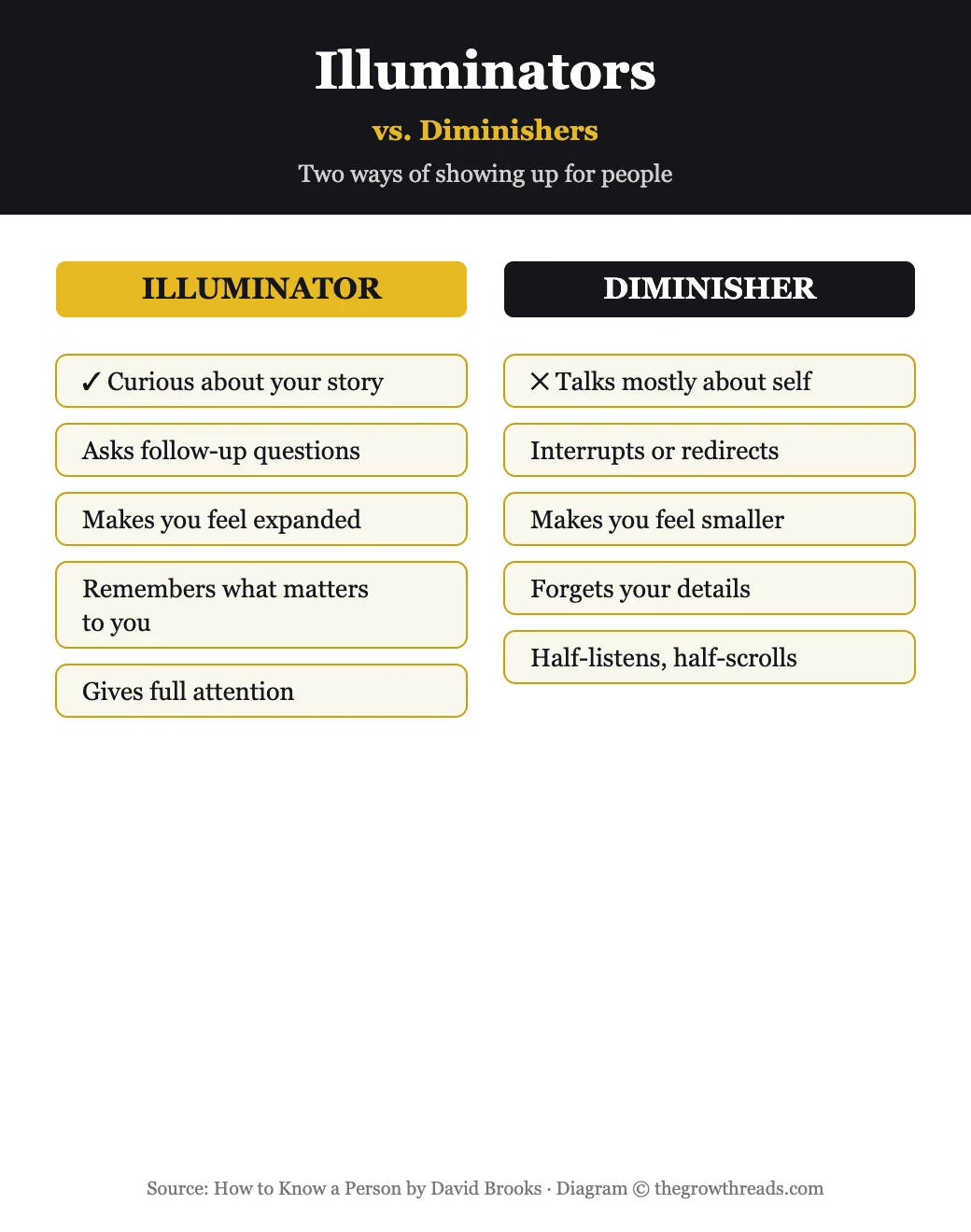
- Illuminators vs. Diminishers: Illuminators make you feel bigger and more yourself after talking with them; Diminishers make you feel smaller. Everyone falls somewhere on this spectrum, and it is a set of habits, not a fixed personality.
- Attention is the deepest form of generosity: The most valuable thing you can give another person is not advice or solutions — it is your full, undivided attention.
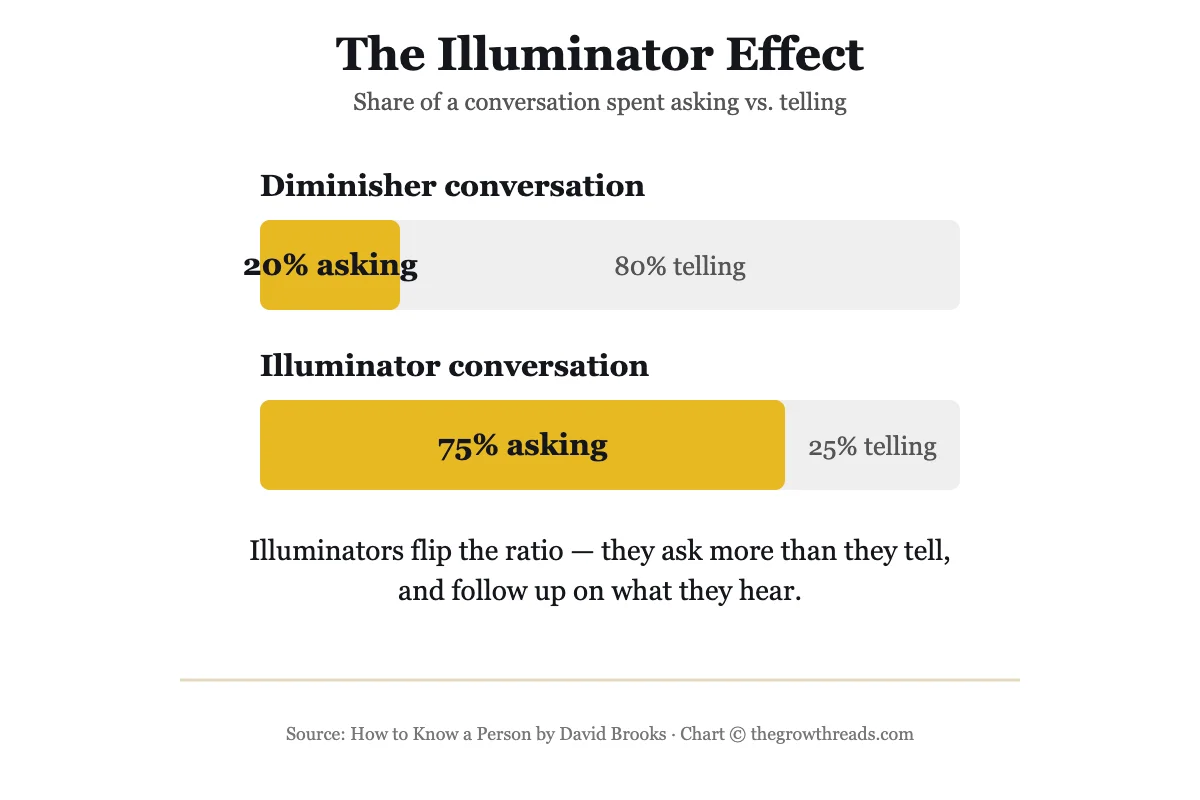
- Ask more, tell less: Illuminators flip the normal ratio of a conversation, asking far more than they tell, and following up on what they hear instead of pivoting back to themselves.
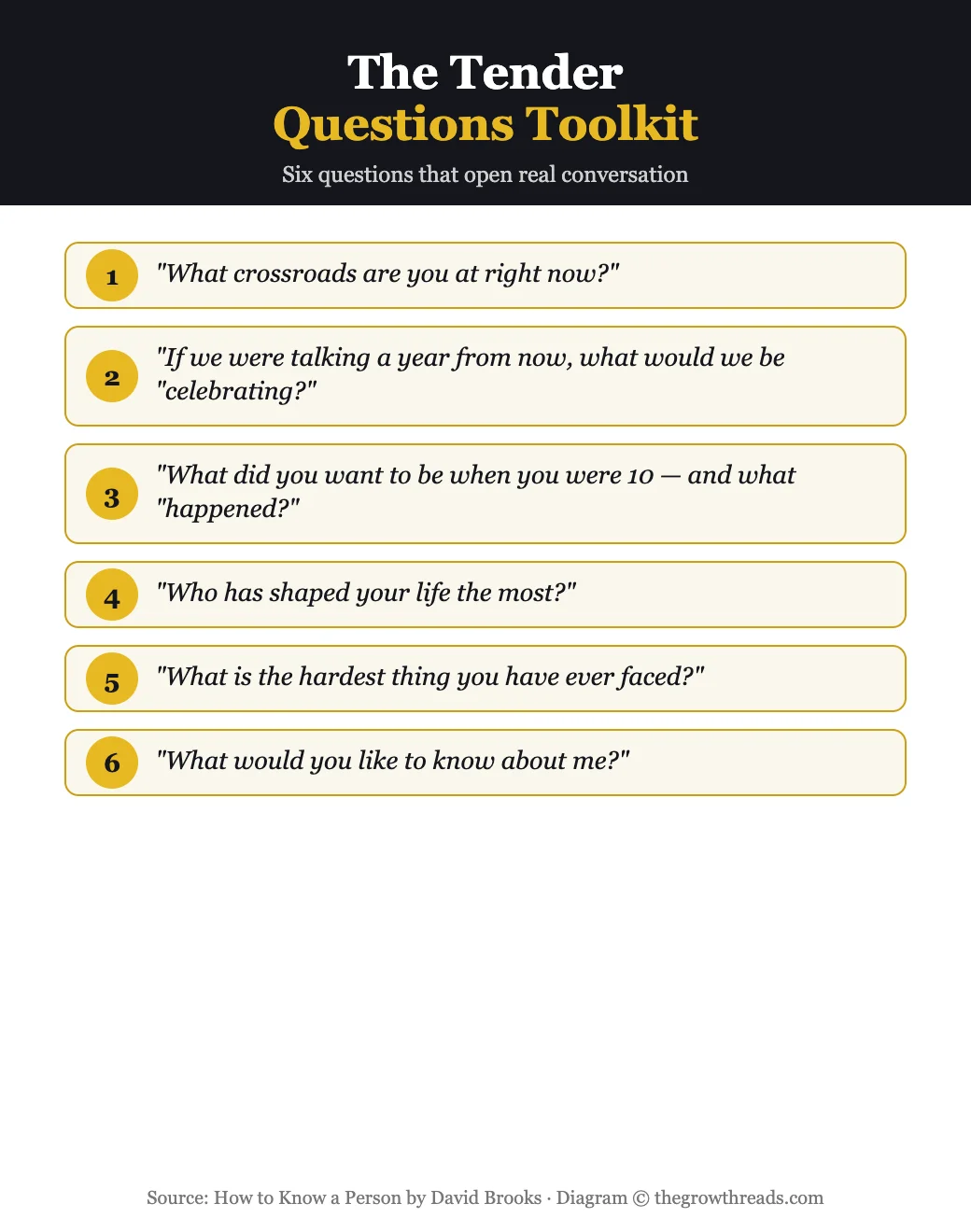
- Tender questions unlock real answers: Specific, open-ended questions like “What crossroads are you at right now?” produce far more honest conversation than generic small talk.
- People are made of stories, not traits: To know someone well is to understand the story they tell about their own life, not just to list their personality traits.
- Hard conversations need accompaniment, not advice: When someone is grieving, anxious, or in crisis, the instinct to fix the problem often gets in the way. What most people need first is company.
- Everyone is a little unknowable — respect the mystery: Real understanding stays humble. You never fully “figure out” another person, and pretending otherwise flattens them.
- Personality frameworks are starting points, not verdicts: Tools like the Big Five can describe tendencies, but they should open curiosity about a person, not close it down.
- Being known changes you: People who feel deeply seen by others become more open, more generous, and more resilient — the effect compounds over a relationship.
What is How to Know a Person about?
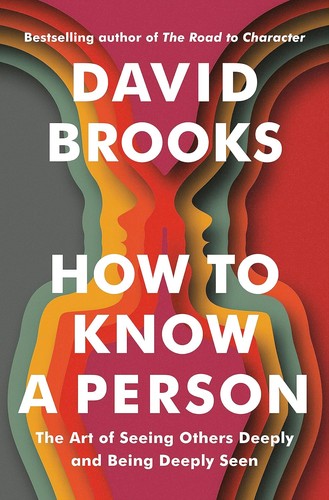
How to Know a Person is David Brooks’s 2023 book on the lost art of truly seeing other people. It argues that the core skill of a good life is learning to make others feel understood — through better questions, patient attention, and comfort with hard emotions — rather than through advice, status, or cleverness.
About the author
David Brooks is a New York Times columnist, PBS NewsHour commentator, and the author of several bestselling books on culture, character, and the moral life, including The Road to Character and The Second Mountain. Before turning to social and cultural criticism, he worked as a reporter and editor at The Wall Street Journal, The Washington Times, and The Weekly Standard. Brooks teaches at Yale University and is a member of the Aspen Institute. Explore all David Brooks book summaries →
How to Know a Person grew out of his own experience of feeling unseen during a painful period of his life, and out of years spent studying what separates people who make others feel understood from those who leave them feeling invisible.
Key concepts at a glance
| Concept | What it means | Use it when |
|---|---|---|
| Illuminator | Someone whose attention makes you feel bigger, clearer, more yourself | You want to be the kind of friend, partner, or leader people open up to |
| Diminisher | Someone who, often without meaning to, makes others feel smaller or unheard | You notice a conversation pattern you want to break |
| Tender question | A specific, open-ended question that invites someone to tell you something true | Small talk is stuck and you want a real conversation |
| Accompaniment | Staying present with someone in a hard season instead of rushing to fix it | A friend is grieving, anxious, or in crisis |
| Looping | Restating what you heard in your own words to confirm understanding | You want to check that you actually understood someone, not just heard them |
| Epistemic humility | Holding your read of a person loosely, since people are never fully knowable | You catch yourself certain you have someone “figured out” |
| Big Five personality traits | A five-factor framework (openness, conscientiousness, extraversion, agreeableness, neuroticism) for describing tendencies | You want language for differences, not a box to put someone in |
Part 1: I See You — Illuminators and Diminishers
Brooks opens with a distinction that runs through the whole book: some people leave you feeling illuminated after a conversation, and some leave you feeling diminished. Illuminators are curious about your specific situation. They ask follow-up questions. They remember what you told them last time. Diminishers, often without any bad intent, steer conversations back to themselves, offer premature advice, or listen with half their attention while planning what to say next.
The distinction matters because it is learnable. Brooks is not describing an innate trait like extraversion — he is describing a set of habits: how you enter a room, how you ask questions, how you handle silence, how you respond when someone tells you something vulnerable. He traces the habits back to a simple orientation: do you approach other people assuming there is something interesting to discover, or do you approach them already believing you understand who they are?
He is careful to note that becoming an Illuminator does not require charisma or extra time. Some of the best Illuminators he interviewed were quiet, even shy — what set them apart was not social energy but attention. They looked at the person in front of them like there was something there worth finding.
TGR Note: This illuminator/diminisher lens pairs well with the active-listening research in How We Love — both books land on the same core finding: people feel loved through attention, not through being managed or fixed.
Part 2: Hard Conversations
The second part of the book tackles the conversations most of us actively avoid — with someone who is depressed, grieving, or in crisis. Brooks argues that our instinct to “fix” the problem is often exactly the wrong move. Advice can feel, to someone in pain, like being told their problem is simple and they are failing to solve it. What most people in crisis need first is not a solution — it is company.
He introduces the idea of “accompaniment”: staying present with someone through a hard stretch without needing to resolve it. This might mean simply sitting with a grieving friend, asking what they need rather than assuming, or tolerating the discomfort of not having anything useful to say. Brooks draws on hospice workers, chaplains, and grief counselors, who have built entire practices around the skill of being present without trying to fix.
He also gives concrete tools for opening these conversations: tender questions that invite honesty without demanding it. “What crossroads are you at right now?” tends to produce more truth than “How are you doing?” “What is the hardest thing you’ve ever faced?” opens a door that “Tell me about yourself” never will. The specificity is what does the work — vague questions get vague, defended answers.
TGR Note: If this chapter resonates, our summary of I Don’t Want to Talk About It goes deeper on why silence, especially among men, often stands in for real conversation about pain.
Part 3: Wisdom
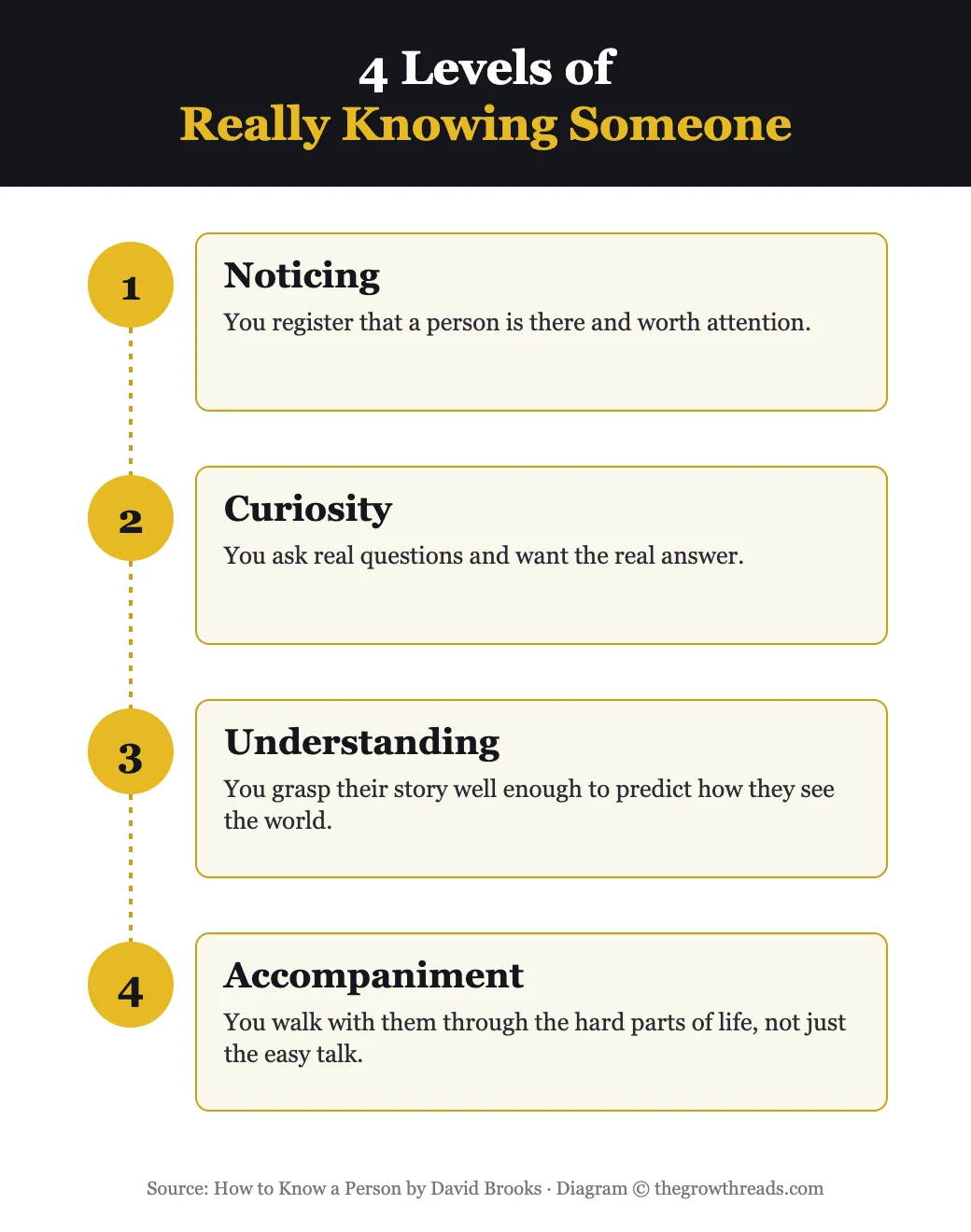
The third part zooms out to ask what it means to really know someone over the long run — not just in a single good conversation, but across years. Brooks walks through the stages people move through in getting to know one another: from noticing that someone is worth attention, through curiosity, to an understanding deep enough that you can predict how they will see a situation, and finally to accompaniment — showing up for the hard parts of their life, not just the easy conversation.
He also engages seriously with personality frameworks, especially the Big Five (openness, conscientiousness, extraversion, agreeableness, and neuroticism), while warning against turning any framework into a verdict on a person. The point of a personality model, he argues, is to open curiosity — to notice that someone’s caution or intensity is a pattern worth understanding — not to file someone away as a “type” and stop looking.
Running underneath this section is a theme of epistemic humility: no matter how well you know someone, they remain partly unknowable, and that mystery deserves respect rather than resolution. The people we think we understand best are often the ones we have stopped asking about.
TGR Note: Brooks’s caution about personality frameworks echoes a point we made in our Attached summary: attachment styles are a lens for curiosity, not a label to hide behind when a relationship gets hard.
Part 4: Becoming a Better Illuminator
The final section turns from diagnosis to practice. Brooks offers a set of concrete habits that, done consistently, shift someone from Diminisher toward Illuminator: entering conversations assuming there is something to learn, asking one more follow-up question than feels natural, “looping” back what you heard in your own words to confirm you understood it, and resisting the urge to relate every story back to your own experience.
He is candid that this is uncomfortable at first. Genuine attention is effortful, and most of us default to autopilot in conversation because it is easier. But he frames the payoff clearly: relationships built on real attention are sturdier, more honest, and more durable under stress than relationships built on shared activities or surface pleasantries alone.
The chapter closes with a reminder that becoming an Illuminator is not a one-time fix but a practice — the same conversation skill, applied again and again, in small moments, until it becomes a default way of being with people.
TGR Note: For a complementary practice-based approach to relationship habits, see our summary of The 5 Love Languages — both books agree that consistent small actions matter more than occasional grand gestures.
Who is How to Know a Person best for — and who should read something else first?
This book is best for people who already have decent relationships but want to go deeper — better friends, better partners, better managers, better parents of teenagers. It is especially useful if you sense that your conversations tend to stay surface-level, or if you avoid checking in with people who are struggling because you do not know what to say.
If you are dealing with an actively difficult or conflict-heavy relationship, you may get more immediate traction from Crucial Conversations, which focuses more narrowly on high-stakes disagreements. And if your primary interest is romantic attachment specifically, Attached is a more targeted starting point.
Questions to reflect on
- Think of the last person who made you feel truly seen. What specifically did they do?
- Where in your life are you currently a Diminisher without meaning to be?
- Is there someone in your life going through something hard whom you have been avoiding, because you don’t know what to say?
- What is one tender question you could ask someone this week instead of “How are you”?
- Who do you think has “figured you out” — and where might they actually be wrong?
🔥 Ready to become someone people actually open up to?
Get the full book and start practicing the habits this summary only sketches out.
How to apply How to Know a Person (7-day plan)
- Day 1: In one conversation today, ask one more follow-up question than feels natural, and actually wait for the full answer.
- Day 2: Practice “looping” — after someone tells you something important, restate it in your own words to confirm you understood.
- Day 3: Ask one tender question (see the toolkit above) with someone you already know well.
- Day 4: Notice one moment today when you interrupted or redirected a conversation back to yourself. Just notice it, without judgment.
- Day 5: Reach out to someone going through a hard time. Do not offer advice — just ask what they need and listen.
- Day 6: Have a conversation with someone you think you already “understand.” Ask a question you assume you already know the answer to, and really listen to the answer.
- Day 7: Reflect on the week: which habit felt most unnatural, and which conversation felt most different because of it?
Frequently asked questions
What is the main idea of How to Know a Person?
The main idea is that the most important skill in life is learning to see other people clearly and make them feel understood — through attentive questions, patience with hard emotions, and comfort with not fully “figuring someone out.” Brooks calls people who do this well Illuminators, and contrasts them with Diminishers, who habitually make others feel unseen.
What does David Brooks mean by “Illuminator” and “Diminisher”?
An Illuminator is someone whose attention makes another person feel bigger, clearer, and more themselves — through curiosity, follow-up questions, and full presence. A Diminisher, often unintentionally, makes people feel smaller by redirecting conversations to themselves, offering quick advice, or only half-listening. Brooks presents these as learnable habits rather than fixed personality types.
Is How to Know a Person based on scientific research?
Yes, though it is written for a general audience rather than as an academic text. Brooks draws on psychology, sociology, and interviews with therapists, chaplains, and researchers on attention and empathy. Some readers have noted that a few anecdotes and studies are used illustratively rather than as rigorous proof — the practical advice on listening and asking better questions is the part that holds up most consistently across reviewers.
What are “tender questions” in How to Know a Person?
Tender questions are specific, open-ended questions designed to invite someone to share something true about their life, rather than to make small talk. Examples include “What crossroads are you at right now?” and “What is the hardest thing you have ever faced?” Brooks argues that specificity, not just openness, is what makes a question effective at unlocking real conversation.
How is this book different from other communication books?
Unlike books focused narrowly on conflict resolution or negotiation tactics, How to Know a Person is broader — it is about the everyday posture of attention you bring to any relationship, not just difficult conversations. It leans more toward philosophy and character than scripts or techniques, though it does offer concrete practices like looping and tender questions.
Can this book help with a difficult relationship or an argument?
It can help build the underlying skill of attentive listening, which supports any relationship, but it is not primarily a conflict-resolution book. If you are dealing with a specific high-stakes disagreement, a more targeted resource like Crucial Conversations may give you faster, more tactical help alongside the deeper listening habits from Brooks.
How long does it take to read How to Know a Person?
The full book takes roughly 7 hours to read at an average pace, or about 6 hours as an audiobook. This summary and review can be read in around 12 minutes and covers the core frameworks, but the book itself includes many more stories, studies, and nuances worth reading directly.
Related summaries
- Attached — a deeper dive into romantic attachment styles
- How We Love — on active listening and connection in marriage
- I Don’t Want to Talk About It — on why silence often replaces honest conversation
- The 5 Love Languages — on consistent small habits in relationships
- Best Relationship Books — our full ranked list
How we analyze books: every TGR summary is built from a full read of the source material, cross-checked against the author’s interviews and published essays, and organized around what a reader can actually apply — not just what the book says. Read our full methodology.
Related Relationships Summaries
How to Not Die Alone Summary & Review: The Science of Finding Love
The Dance of Anger Summary & Review: Turn Anger Into Real Change
The Let Them Theory Summary & Review: Mel Robbins on the Power of Letting Go
The Mastery of Love Summary & Review: Build Relationships Without Fear
The Road Less Traveled Summary & Review: Why Growth Demands Embracing Difficulty