

TGR Verdict: ★★★★☆ 4.3/5
A clear, memorable framework that translates attachment theory into five named love styles, making it easy for couples to spot exactly which old childhood pattern is driving their current fight.
How We Love in one minute
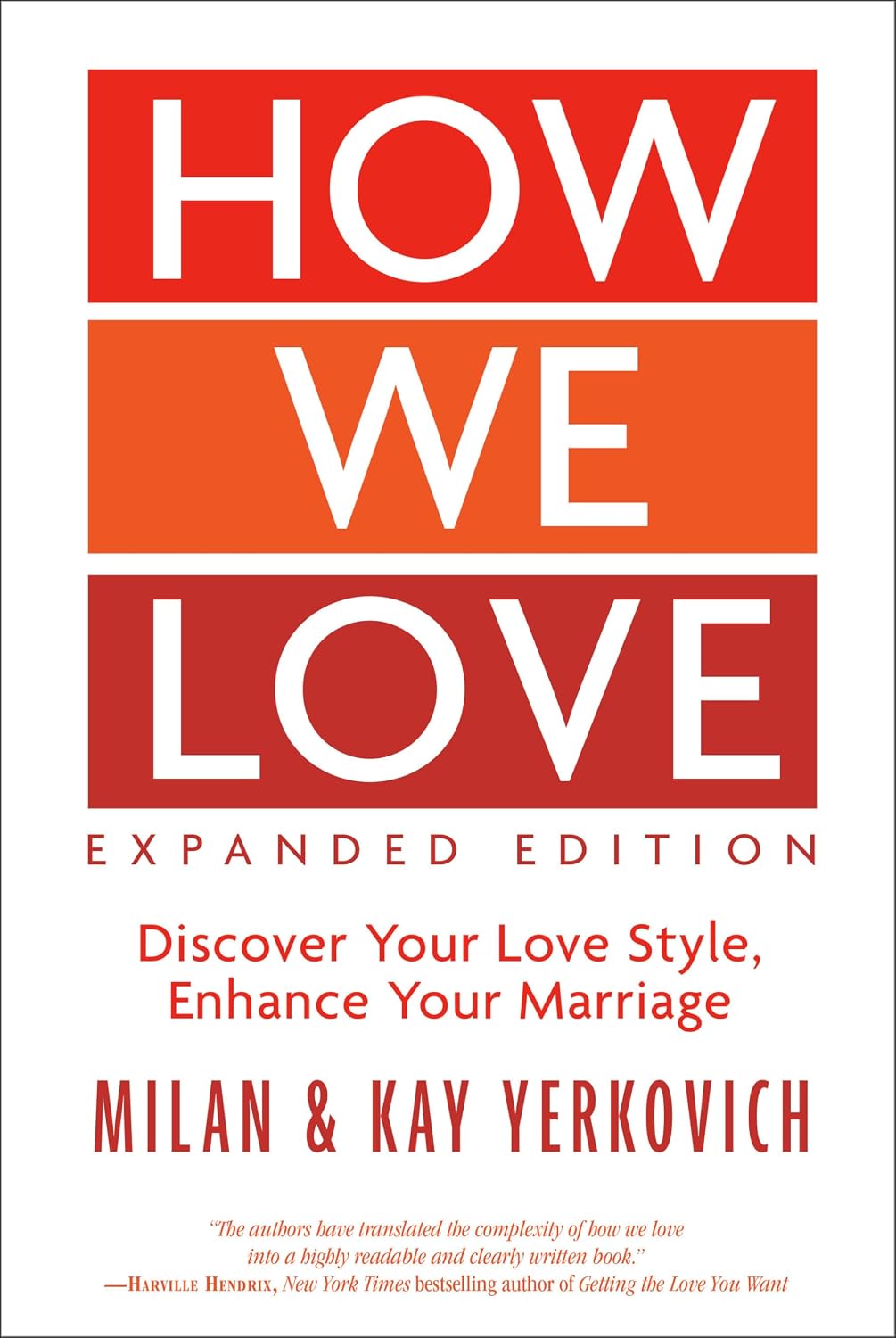
Milan and Kay Yerkovich, a married couple with backgrounds in pastoral counseling and licensed marriage therapy, argue that the way you argue, withdraw, or cling in marriage isn’t random — it’s a childhood attachment “imprint” replaying itself. The book identifies five wound-based “love styles” — Avoider, Pleaser, Vacillator, Controller, and Victim — each rooted in a specific kind of childhood home, and shows how two partners’ styles combine into a predictable “Core Pattern”: a reactive cycle where each person unintentionally triggers the other’s deepest insecurities. Rather than treating this as incompatibility, the Yerkoviches argue couples can become each other’s healer once they understand the pattern, using a structured listening tool called the Comfort Circle to build a calmer, corrective way of responding to old triggers.
Key takeaways
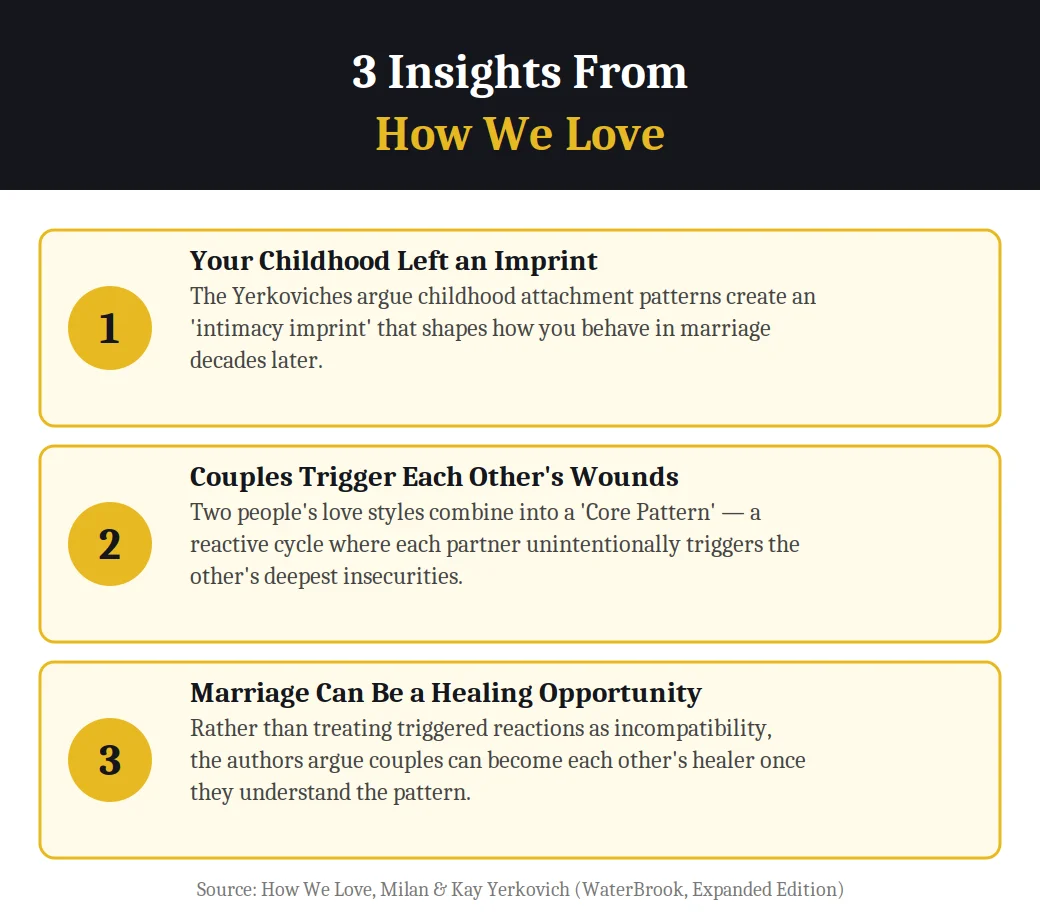
- Childhood attachment patterns create an “intimacy imprint” that shapes how you behave in marriage decades later.
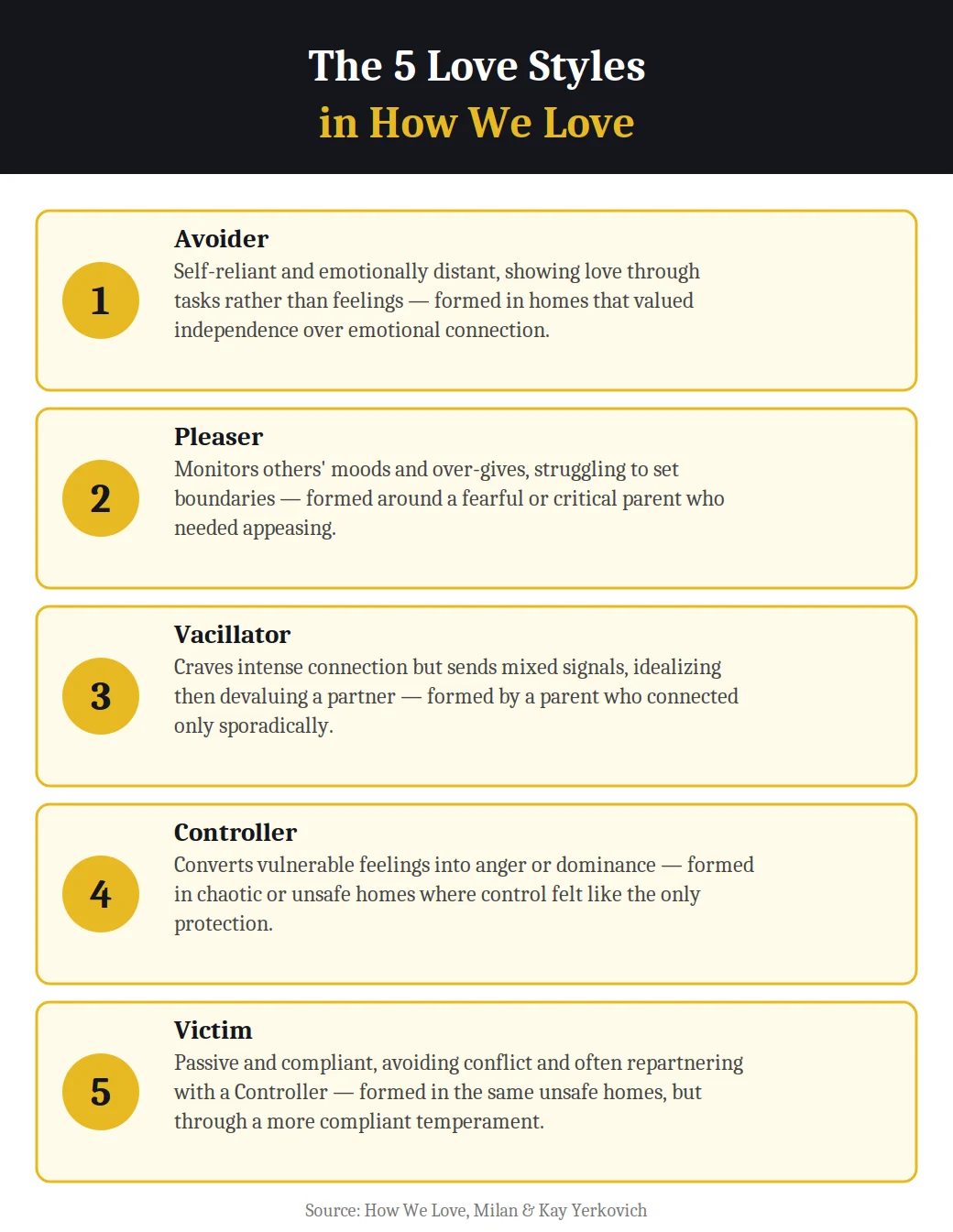
- There are five wound-based love styles: Avoider, Pleaser, Vacillator, Controller, and Victim, each formed by a specific kind of childhood home environment.
- The Avoider is self-reliant and emotionally distant, showing love through tasks rather than feelings.
- The Pleaser monitors others’ moods and over-gives, struggling to set boundaries.
- The Vacillator craves intense connection but sends mixed signals, idealizing then devaluing a partner.
- The Controller converts vulnerable feelings into anger or dominance, while the Victim stays passive and often repartners with a Controller.
- Two partners’ styles combine into a “Core Pattern” — a reactive cycle where each unintentionally triggers the other’s deepest insecurities.
- The “Comfort Circle” is an asymmetrical listener/speaker structure designed to interrupt fight, flight, or freeze reactions and build emotional safety.
- Marriage can be a healing opportunity: once a couple understands their Core Pattern, they can build a corrective experience together rather than repeating the wound.
What is How We Love about?
How We Love takes attachment theory — the idea that early childhood bonds with caregivers shape adult relationship patterns — and translates it into five plain-language “love styles” that readers can recognize in themselves and their partners. The Yerkoviches argue that most marital conflict isn’t really about the surface-level disagreement; it’s two old childhood wounds colliding, each partner reacting from a pattern formed decades before they met. The book walks through each love style’s origin, how it shows up in adult relationships, and how specific style pairings (like a Vacillator married to an Avoider) create predictable, repeating conflict cycles, before offering a structured tool — the Comfort Circle — to interrupt those cycles and build new, safer patterns of connection.
About the authors
Milan Yerkovich is an ordained minister and pastoral counselor with more than 30 years of experience in marriage and family ministry. Kay Yerkovich is a licensed Marriage and Family Therapist with a clinical focus on attachment theory. Together they founded the How We Love organization, which offers workshops, an online love-style quiz, and counselor training built around the framework introduced in this book, first published in 2006 and later released in an expanded edition with additional diagrams and material.
Key concepts at a glance
| Concept | What it means |
|---|---|
| Intimacy Imprint | The lasting pattern childhood attachment experiences leave on how you behave in adult romantic relationships. |
| The Five Love Styles | Avoider, Pleaser, Vacillator, Controller, and Victim — wound-based patterns rooted in specific childhood home environments. |
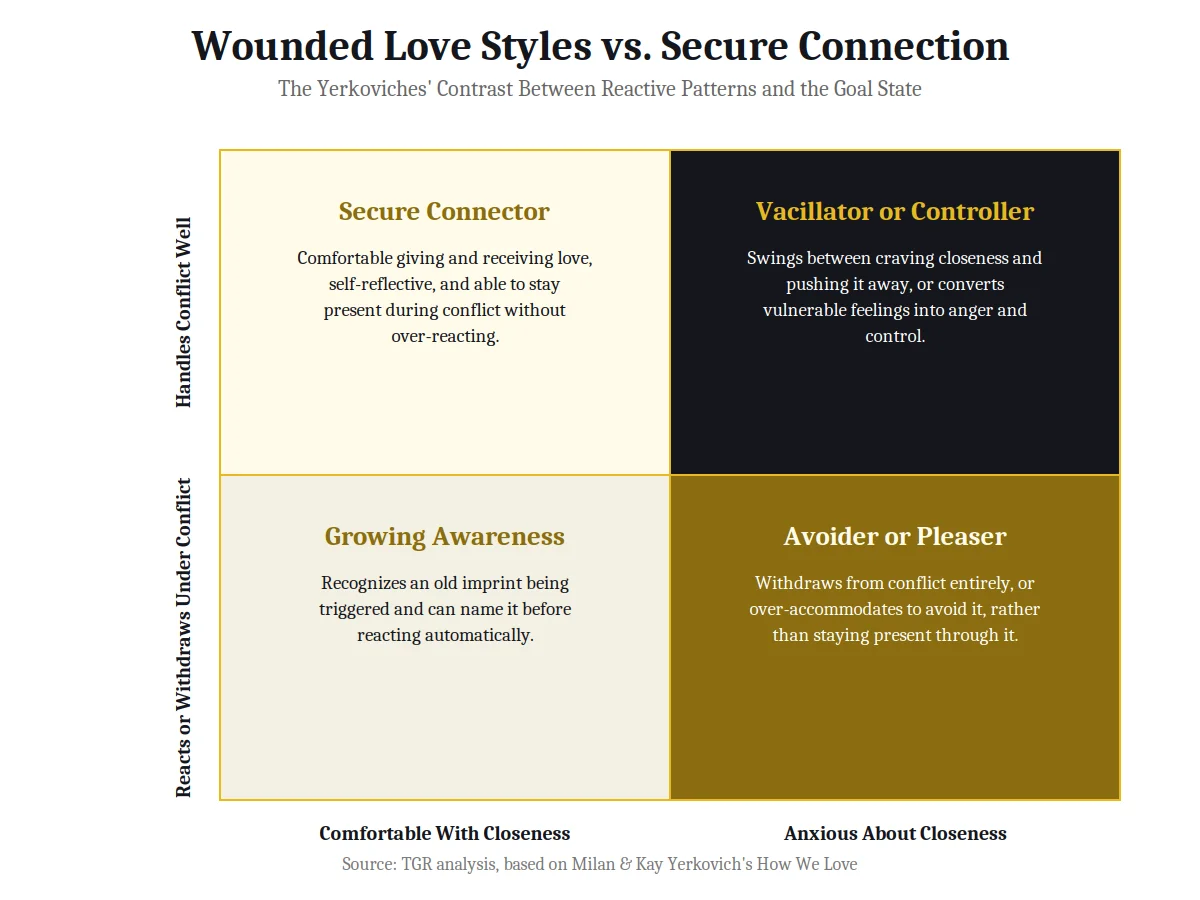
| Secure Connector | The book’s healthy goal state: comfortable giving and receiving love, self-reflective, and able to stay present during conflict. |
| Core Pattern | The specific reactive cycle created when two partners’ love styles combine and repeatedly trigger each other. |
| The Comfort Circle | An asymmetrical listener/speaker structure designed to interrupt fight, flight, or freeze reactions and build emotional safety. |
Part 1: The five love styles and their origins
The book’s foundation is its typology of five love styles, each traced back to a specific kind of childhood environment. The Avoider grows up in a home that values independence and performance over emotional connection, learning to be self-reliant and to dismiss neediness in themselves and others. The Pleaser forms around a fearful or critical parent, becoming a peacekeeper who monitors moods and over-gives to avoid conflict. The Vacillator’s parent connected only sporadically and on their own terms, leaving the child craving intense connection while distrusting its consistency. The Controller and the Victim both emerge from chaotic or unsafe homes — a feisty temperament leads to controlling behavior as protection, while a more compliant temperament leads to passive appeasement instead.
TGR Note: This idea that a childhood attachment pattern quietly drives adult relationship behavior parallels David Schnarch’s concept of differentiation in our Passionate Marriage summary, though Schnarch frames the goal as psychological maturity rather than a specific named style.
Part 2: How love styles combine into a Core Pattern
The Yerkoviches argue that a couple’s real conflict isn’t the surface disagreement about dishes or money — it’s their two love styles colliding into a predictable “Core Pattern.” A Vacillator paired with an Avoider, for instance, tends to produce an escalating cycle: the Vacillator pursues closeness and reassurance, the Avoider withdraws under the pressure, which increases the Vacillator’s anxiety and pursuit, which drives the Avoider further away. Recognizing your specific Core Pattern, the authors argue, is what allows a couple to stop blaming each other’s character and start seeing two old wounds reacting to each other in real time.
TGR Note: This cycle of pursuit and withdrawal is the same dynamic Harriet Lerner examines from an anger lens in The Dance of Anger, describing similar pursuer-distancer patterns rooted in family systems rather than individual attachment styles.
Part 3: The Comfort Circle and building a corrective experience
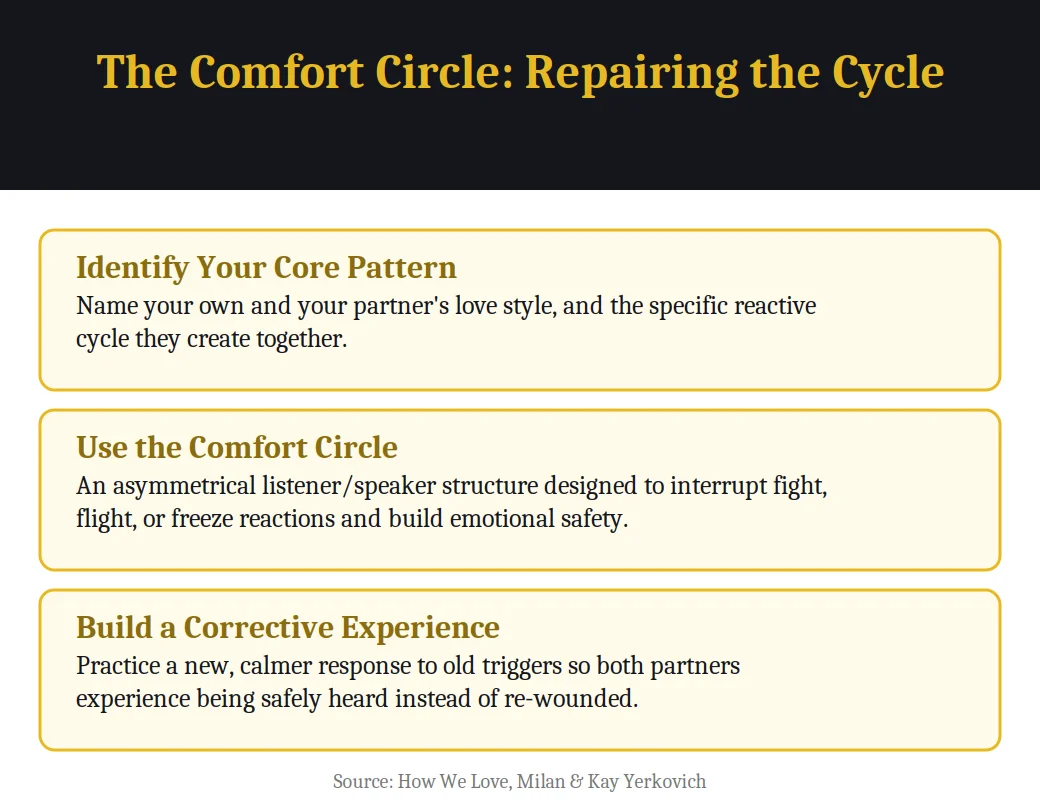
Rather than leaving couples stuck in their Core Pattern, the book offers the Comfort Circle — a structured, asymmetrical listening exercise where one partner speaks about a triggered feeling while the other listens without immediately defending or fixing, interrupting the usual fight, flight, or freeze reaction. Practiced repeatedly, the authors argue this builds a “corrective attachment experience”: moments where an old wound gets met with safety and understanding instead of the same painful response it received in childhood, gradually shifting both partners toward what the book calls Secure Connection.
Who is How We Love best for?
This book is best for married or committed couples who keep having the same fight in different clothing and want language for the underlying pattern rather than just better communication tips. Its Christian-market framing and workshop-based approach make it especially accessible for couples looking for a structured, guided process rather than a purely clinical text.
It pairs well with our Passionate Marriage summary for a more clinically oriented take on differentiation and intimacy, or our The Dance of Anger summary for more on the pursuer-distancer conflict cycle.
Questions to reflect on
- Which of the five love styles — Avoider, Pleaser, Vacillator, Controller, or Victim — sounds most like your default pattern?
- What was the emotional climate of your childhood home, and how might it have shaped that pattern?
- Can you name your and your partner’s specific Core Pattern — the reactive cycle you fall into together?
- Do you tend to react automatically to a trigger, or can you pause and name the old wound being activated?
- What would it look like to practice the Comfort Circle’s listening structure the next time a familiar conflict starts up?
How to apply How We Love (7-day plan)
- Day 1: Take stock of your own behavior in conflict and identify which of the five love styles fits you best.
- Day 2: Reflect on your childhood home and how it may have shaped that style.
- Day 3: Identify your partner’s likely love style and name your combined Core Pattern together.
- Day 4: Notice the next time your Core Pattern activates in real time, without trying to fix it yet.
- Day 5: Practice the listener role of the Comfort Circle: let your partner speak about a triggered feeling without defending or fixing.
- Day 6: Practice the speaker role: name an old trigger calmly, without blaming your partner’s character.
- Day 7: Reflect on what a “corrective experience” would feel like the next time this pattern comes up.
Frequently asked questions
What are the five love styles in How We Love?
The five love styles are Avoider, Pleaser, Vacillator, Controller, and Victim — each a wound-based pattern rooted in a specific kind of childhood home environment.
What is a “Core Pattern” in How We Love?
A Core Pattern is the specific reactive cycle created when two partners’ love styles combine, such as a Vacillator’s pursuit triggering an Avoider’s withdrawal, which in turn increases the Vacillator’s anxiety.
What is the Comfort Circle?
The Comfort Circle is an asymmetrical listener/speaker structure designed to interrupt fight, flight, or freeze reactions during conflict and build emotional safety between partners.
Is How We Love based on attachment theory?
Yes — the authors translate clinical attachment theory concepts into five plain-language love styles, mapping Avoider to dismissive-avoidant attachment, Pleaser and Vacillator to anxious attachment patterns, and Controller and Victim to disorganized attachment.
Who are Milan and Kay Yerkovich?
Milan Yerkovich is an ordained minister and pastoral counselor, and Kay Yerkovich is a licensed Marriage and Family Therapist with a clinical focus on attachment theory; together they founded the How We Love organization and workshops.
What is “Secure Connector” in How We Love?
Secure Connector is the book’s healthy goal state — comfortable giving and receiving love, self-reflective, and able to stay present during conflict without over-reacting.
Is How We Love a religious or secular book?
It was published by a Christian-market imprint and is used widely in church and small-group settings, though its attachment-theory framework and practical tools are applicable to any couple regardless of religious background.
Related summaries
If you found How We Love valuable, read our Passionate Marriage summary for more on attachment and intimacy, or explore our full list of best relationship books.
Our methodology: TGR book summaries are researched using the original text, publisher materials, author interviews, and critical reception, then structured to give you the core arguments, practical applications, and an honest verdict on who the book is best for.
Related Relationships Summaries
Love Sense Summary & Review: The Revolutionary Science of Romantic Love
Loving Bravely Summary and Review
Rising Strong Summary & Review: How to Get Back Up When Vulnerability Knocks You Down
The Course of Love Summary and Review
Why Marriages Succeed or Fail Summary & Review: The Science Behind Lasting Love