

⭐⭐⭐⭐ 4.0/5 — A provocative, paradigm-challenging guide that makes a compelling case against lectins — backed by clinical results, even if the broader science remains debated.
Best for: Anyone with unexplained weight gain, autoimmune issues, or digestive problems who wants to explore whether common “healthy” foods might be the hidden culprit.
Reading time: ~7 hours (416 pages)
Difficulty to apply: Moderate to High — the dietary overhaul is significant, but the 3-phase program provides clear structure.
The Plant Paradox in one minute
The foods you have been told are the healthiest — whole grains, beans, tomatoes, brown rice — may actually be damaging your gut and driving weight gain, inflammation, and disease. That is the explosive thesis of Dr. Steven Gundry, a former heart surgeon who spent decades studying the relationship between diet and disease. His argument centers on lectins — proteins found in many plants that evolved as a defense mechanism against being eaten. Gundry claims that lectins bind to the gut lining, break open the tight junctions between cells (creating “leaky gut”), and trigger an immune response that leads to chronic inflammation, autoimmune conditions, obesity, and brain fog. The book provides a 3-phase elimination program, extensive “Yes” and “No” food lists, and meal plans designed to remove the most damaging lectins from your diet while preserving the plant foods that are genuinely beneficial.
Key takeaways
- Lectins are plant defense proteins: Plants cannot run away from predators, so they evolved chemical warfare — lectins are sticky proteins that damage the digestive systems of animals (including humans) who eat them.
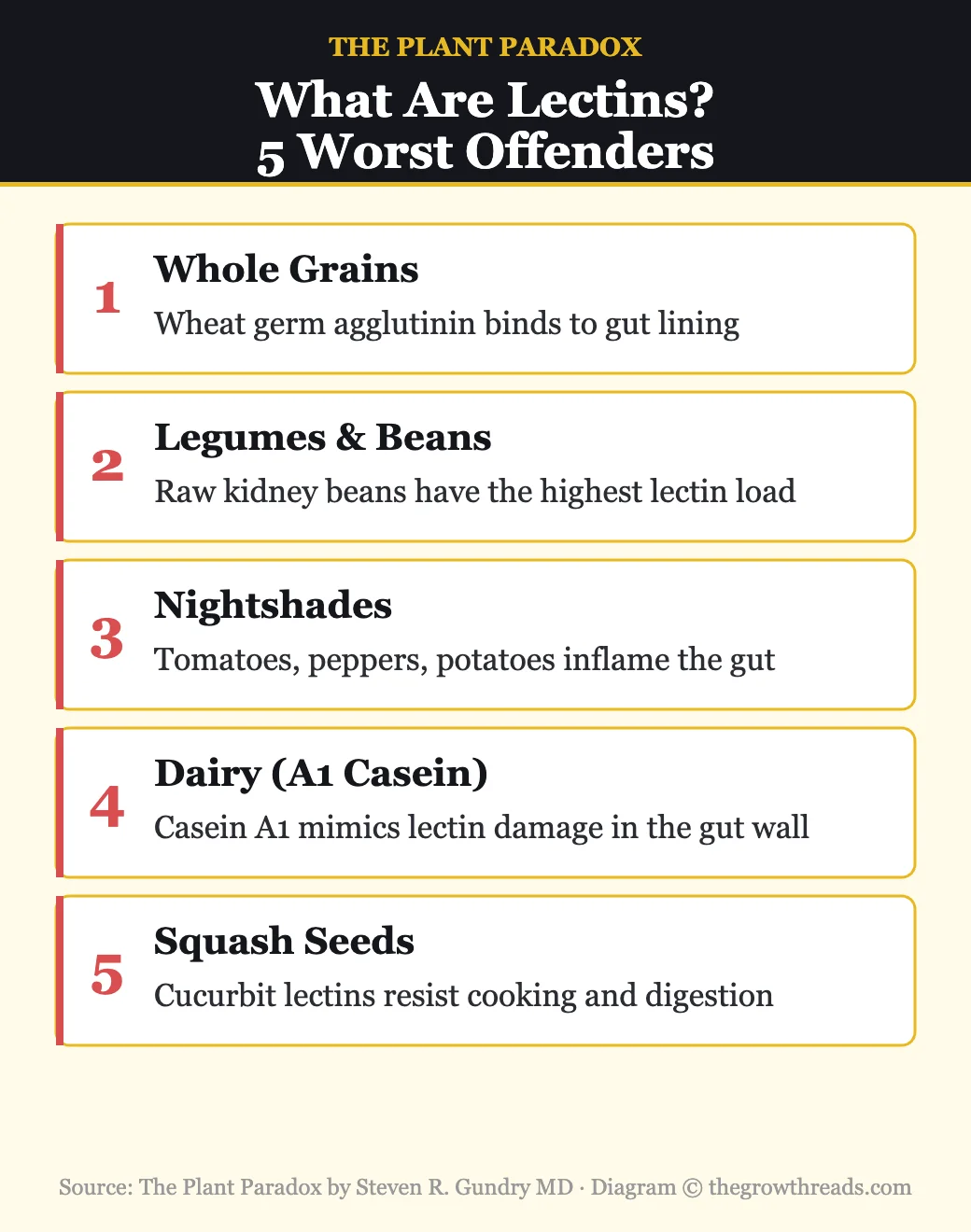
- Not all plants are created equal: While vegetables are generally healthy, many common “health foods” — whole wheat, brown rice, kidney beans, tomatoes, peppers, and squash — contain lectins that Gundry argues are actively harmful.
- Leaky gut is the gateway to disease: Lectins pry open the tight junctions between intestinal cells, allowing undigested proteins and bacterial fragments to enter the bloodstream and trigger chronic immune responses.
- Your microbiome is running the show: The trillions of bacteria in your gut communicate directly with your brain and immune system — lectins disrupt this communication by damaging the gut ecosystem.
- Whole grains are not health foods: Wheat germ agglutinin (WGA), found in whole wheat, is one of the most damaging lectins — it mimics insulin, promotes fat storage, and crosses the blood-brain barrier.
- Nightshades are a major problem: Tomatoes, peppers, potatoes, and eggplant all contain lectins that many people react to without realizing the connection.
- Pressure cooking neutralizes most lectins: Unlike boiling, pressure cooking destroys lectins in beans and grains, making them safe to eat — this is why traditional cultures that ate beans thrived.
- A1 casein dairy acts like a lectin: Most commercial cow milk contains casein A1, which Gundry argues damages the gut similarly to lectins — switching to A2 milk, goat, or sheep dairy eliminates this problem.
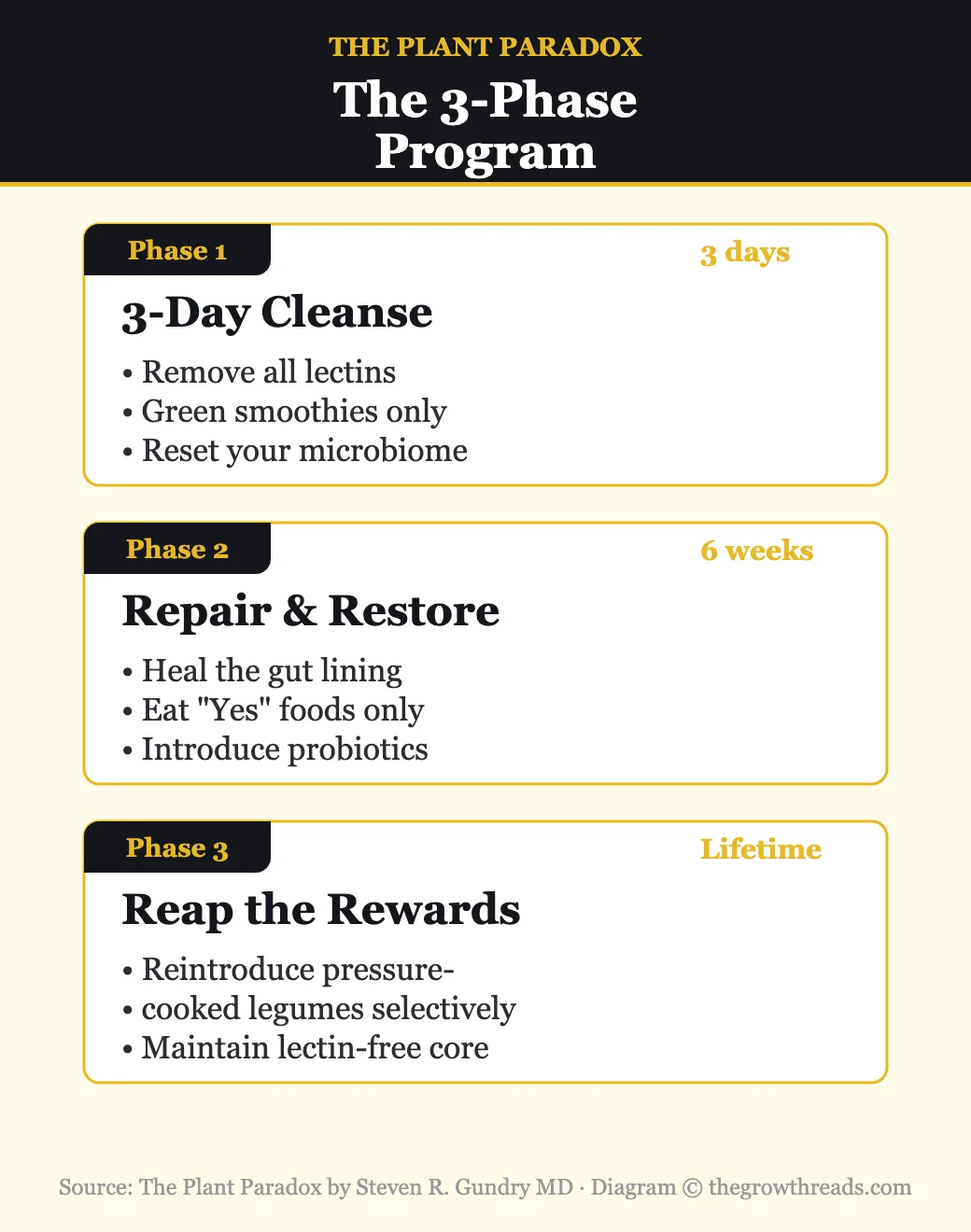
- The 3-phase program works progressively: Phase 1 is a 3-day cleanse, Phase 2 repairs the gut over 6 weeks, Phase 3 is a sustainable lifetime eating pattern with selective reintroductions.
- Healthy fats are your friend: Olive oil, avocados, nuts (especially walnuts and macadamias), and omega-3 fats from wild fish are the foundation of the lectin-free diet.
What is The Plant Paradox about?
The Plant Paradox argues that lectins — defensive proteins found in many common plants including grains, beans, nightshades, and some dairy — damage the gut lining, cause leaky gut, and drive chronic inflammation, weight gain, and autoimmune disease. It provides a 3-phase elimination program to remove the most harmful lectins while keeping the plant foods that support health.
About the author
Dr. Steven R. Gundry is a former cardiac surgeon and current director of the International Heart and Lung Institute in Palm Springs, California, and the Center for Restorative Medicine in Palm Springs and Santa Barbara. He performed pediatric heart surgery at Loma Linda University for over a decade and holds more than 300 peer-reviewed publications to his name. After a personal health transformation through dietary changes — he lost 70 pounds by eliminating lectin-heavy foods — Gundry pivoted his career to focus on the relationship between diet, the microbiome, and disease. He has since treated thousands of patients with lectin-avoidance protocols and published several bestselling books including The Longevity Paradox and The Energy Paradox. Explore all Steven R. Gundry MD book summaries →
Key concepts at a glance
| Concept | What it means | Use it when |
|---|---|---|
| Lectins | Sticky plant proteins that bind to gut cells and disrupt digestion | You eat “healthy” but still have digestive issues, fatigue, or joint pain |
| Leaky gut | Lectins open tight junctions, letting toxins into the bloodstream | You have autoimmune symptoms or unexplained inflammation |
| WGA (wheat germ agglutinin) | Lectin in whole wheat that mimics insulin and promotes fat storage | You cannot lose weight despite eating “whole grains” |
| Nightshade sensitivity | Tomatoes, peppers, potatoes contain gut-irritating lectins | You have joint pain, skin issues, or digestive problems with no clear cause |
| A1 vs. A2 casein | Most commercial cow milk has casein A1, which acts like a lectin | You react to dairy but tolerate goat/sheep cheese |
| Pressure cooking | Destroys lectins that survive normal boiling | You want to safely eat beans and certain grains |
| The 3-phase program | Cleanse (3 days) → Repair (6 weeks) → Lifetime maintenance | You want a structured path to a lectin-free lifestyle |
| Polyphenols | Beneficial plant compounds that feed good gut bacteria | Choosing which plant foods to keep in your diet |
Part 1: The plant predator problem
Gundry opens by inverting conventional nutritional wisdom. We have been taught that plants are unconditionally good for us — eat your vegetables, choose whole grains, add more beans. But plants, he argues, did not evolve to be eaten. They evolved to survive. And their primary survival strategy is chemical warfare.
Lectins are the centerpiece of this defense system. These large, sticky proteins bind to sugar molecules on the surface of cells — particularly the cells lining the gut. In animals (including humans), lectins can disrupt digestion, damage the intestinal wall, and interfere with cell-to-cell communication. Some lectins, like the phytohaemagglutinin in raw kidney beans, are so toxic that just a handful of undercooked beans can cause severe food poisoning.
Gundry traces the evolutionary timeline. For most of human history, our ancestors ate a limited range of plants and had millennia to co-adapt with the lectins those plants contained. But two relatively recent events — the introduction of grains about 10,000 years ago during the Agricultural Revolution, and the arrival of New World plants (tomatoes, peppers, potatoes, squash) after Columbus in 1492 — flooded the human diet with lectins that our bodies had no evolutionary experience with.
He draws on his own clinical experience to reinforce the argument. After years as a heart surgeon, Gundry began testing lectin-avoidance diets with patients who had intractable autoimmune conditions, obesity, and heart disease. The results, he claims, were transformative — patients lost weight, their biomarkers improved, and autoimmune conditions went into remission. This clinical experience became the foundation for the Plant Paradox program.
Part 2: Leaky gut and the immune cascade
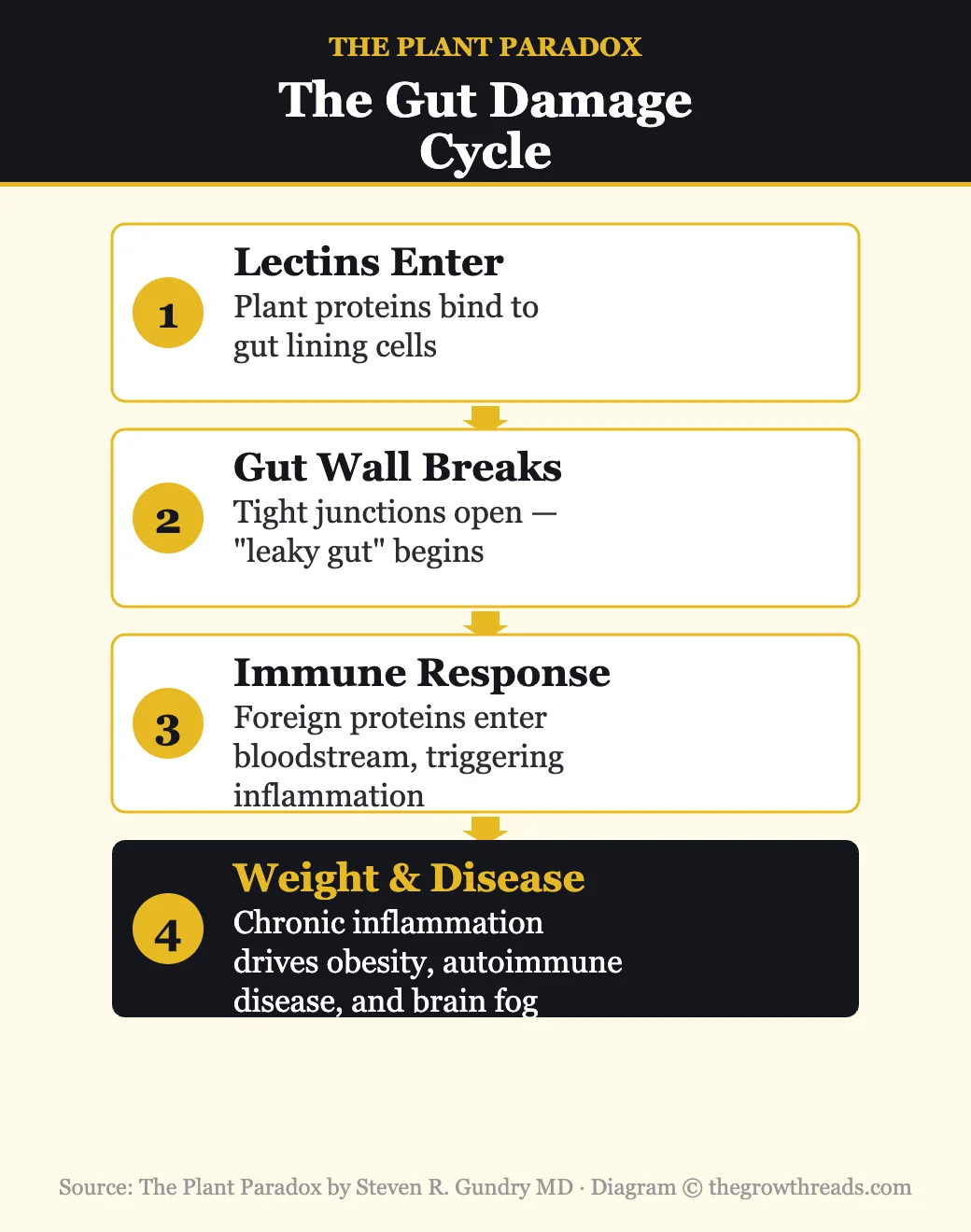
The mechanistic heart of the book is Gundry’s explanation of how lectins cause disease. The argument follows a chain: lectins damage the gut wall, which creates “leaky gut” (increased intestinal permeability), which triggers a systemic immune response, which drives chronic inflammation, which manifests as weight gain, autoimmune disease, brain fog, joint pain, skin problems, and fatigue.
The gut lining, Gundry explains, is only one cell thick — the thinnest barrier between the outside world and your bloodstream. The cells are held together by “tight junctions,” protein structures that act like zippers. Lectins bind to these tight junctions and pry them open. Once the barrier is breached, fragments of bacteria (called lipopolysaccharides, or LPS), undigested food proteins, and lectins themselves cross into the bloodstream. The immune system, detecting these foreign substances, launches an inflammatory attack.
This is not a one-time event — it is a cycle. Every meal containing high-lectin foods re-damages the gut wall, keeps the immune system in a state of chronic activation, and perpetuates inflammation. Gundry argues that this explains why so many modern diseases — rheumatoid arthritis, lupus, Hashimoto’s thyroiditis, type 2 diabetes, coronary artery disease, even Parkinson’s — share the common thread of chronic inflammation.
He singles out wheat germ agglutinin (WGA) as particularly dangerous. WGA is a small lectin that survives digestion, crosses the gut wall easily, mimics insulin by binding to insulin receptors (promoting fat storage), and can even cross the blood-brain barrier. This, Gundry argues, is why many people experience mental clarity within days of removing wheat from their diet — the inflammatory molecule that was fogging their brain is gone.
Part 3: The “Yes” and “No” lists
The most practically useful section of the book is Gundry’s detailed categorization of foods into those that support gut health and those that damage it. The lists are extensive and, for many readers, surprising.
The “No” list includes foods widely considered healthy: whole grains (wheat, rice, corn, oats, quinoa), legumes (all beans, lentils, peanuts, cashews, soybeans), nightshades (tomatoes, peppers, potatoes, eggplant, goji berries), squash (zucchini, pumpkin), most dairy (anything from A1 casein cows), and all refined sugars and artificial sweeteners. Corn and soy are flagged as particularly problematic because they appear in nearly every processed food as corn syrup, soybean oil, or lecithin.
The “Yes” list emphasizes leafy greens (spinach, kale, lettuce, cruciferous vegetables), healthy fats (extra-virgin olive oil, avocado oil, coconut oil, MCT oil, perilla oil), resistant starches (green bananas, sweet potatoes, taro, cassava), nuts (walnuts, macadamias, pistachios, pecans — but not cashews or peanuts), wild-caught fish and pasture-raised meats in moderation, and A2 dairy products (goat cheese, sheep cheese, buffalo mozzarella, certain A2 cow milk brands).
Gundry provides a crucial middle category: foods that are safe if prepared correctly. Beans and lentils, for example, are acceptable if pressure-cooked (a traditional preparation method used by cultures that thrived on legumes for millennia). The pressure cooker destroys the lectins that survive ordinary boiling. Similarly, peeling and deseeding nightshades removes much of the lectin content — Italian grandmothers who peeled and deseeded tomatoes for their sauce were intuitively practicing lectin avoidance.
Part 4: The Plant Paradox program
The practical program unfolds in three phases. Phase 1 is a 3-day cleanse designed to quickly reduce the lectin load and begin resetting the gut microbiome. During this phase, you consume only green smoothies (from approved leafy greens), approved vegetables, small amounts of approved proteins, and plenty of olive oil. The goal is to starve the “bad” gut bacteria that thrive on sugar and lectins while giving the gut lining a chance to begin healing.
Phase 2 is the core repair phase, lasting a minimum of six weeks. This is where you follow the “Yes” and “No” lists strictly. Gundry provides detailed meal plans, recipes, and supplement recommendations (including vitamin D, omega-3s, prebiotics, and specific probiotic strains). The gut lining, he explains, can regenerate relatively quickly — most patients begin feeling significantly better within two to three weeks. By the end of six weeks, many of the tight junctions have resealed, the immune system has calmed down, and weight loss is well underway.
Phase 3 is the maintenance phase — a lifetime eating pattern with some flexibility. Once the gut has healed, you can cautiously reintroduce some previously eliminated foods, one at a time, to test for individual tolerance. Pressure-cooked legumes, peeled and deseeded nightshades, and certain traditionally fermented foods may be tolerable for many people. The key principle is paying attention to how your body responds — if a reintroduced food causes bloating, fatigue, joint pain, or skin issues, it goes back on the “No” list.
Who is The Plant Paradox best for — and who should read something else first?
This book is most valuable for people with persistent health problems — autoimmune conditions, unexplained weight gain, chronic fatigue, digestive issues, joint pain, brain fog — who have already tried conventional dietary advice without results. If you have “eaten healthy” and exercised but still feel terrible, Gundry’s lectin hypothesis is worth exploring. The book is also useful for anyone interested in the evolving science of the gut microbiome and its connection to systemic health.
If you are looking for a more mainstream evidence-based approach to nutrition, start with In Defense of Food by Michael Pollan or How Not to Die by Michael Greger. If gut health is your primary interest but you want a less restrictive framework, Gut by Giulia Enders provides a fascinating introduction without the strict elimination protocol. Note: as with any significant dietary change, consult a healthcare professional before starting the Plant Paradox program.
Questions to reflect on
- Do any of the symptoms Gundry associates with lectin sensitivity — bloating, brain fog, joint pain, skin issues, stubborn weight — match your current experience?
- Which foods on the “No” list would be hardest for you to eliminate? What does that resistance tell you about your relationship with those foods?
- Have you noticed any correlation between eating specific “healthy” foods (whole wheat, tomatoes, beans) and feeling worse afterward?
- How would you design a personal experiment to test whether lectin avoidance makes a difference for your body, without committing to a permanent overhaul?
- What traditional food preparation methods in your culture (fermenting, peeling, pressure cooking) might already be reducing lectin exposure without you realizing it?
🔥 Ready to rethink what “healthy eating” means?
Gundry’s provocative guide could explain the health problems that conventional advice has failed to solve.
How to apply The Plant Paradox (7-day plan)
- Day 1 — Audit your current lectin exposure: Go through your pantry and fridge. Flag every item that appears on Gundry’s “No” list — whole wheat bread, brown rice, pasta, canned beans, peanut butter, tomato sauce, corn chips. Do not throw anything out yet; just see the full picture.
- Day 2 — Stock up on “Yes” foods: Buy extra-virgin olive oil, avocados, leafy greens, cruciferous vegetables (broccoli, cauliflower, Brussels sprouts), sweet potatoes, wild-caught fish, and walnuts. These become your dietary foundation.
- Day 3 — Start the 3-day cleanse: Follow Gundry’s Phase 1 green smoothie protocol. Blend leafy greens with avocado, lemon, and mint. Eat approved vegetables and small portions of wild fish or pasture-raised chicken. No grains, beans, nightshades, or dairy.
- Day 4 — Continue the cleanse and journal symptoms: Note your energy, digestion, mental clarity, and any changes in joint pain or skin. Most people notice improved mental clarity by day 2–3 of lectin elimination.
- Day 5 — Transition to Phase 2 eating: Follow the full “Yes” list. Cook with olive oil generously. Use cauliflower rice instead of grain rice. Replace regular pasta with sweet potato noodles or hearts of palm pasta.
- Day 6 — Invest in a pressure cooker: If you love beans and want to keep them in your diet safely, a pressure cooker destroys the lectins that survive boiling. Cook a batch of black beans or lentils and freeze portions for the week.
- Day 7 — Plan your next 5 weeks: The full gut repair takes at least 6 weeks. Map out a rough meal plan using Gundry’s recipes. Identify your biggest lectin triggers and find satisfying replacements for each one.
Frequently asked questions
What are lectins and why does Gundry say they are harmful?
Lectins are large, sticky proteins found in many plants — especially grains, beans, nightshades, and squash — that evolved as a defense mechanism against being eaten. Gundry argues that lectins bind to the cells lining your gut, pry open the tight junctions between them (creating “leaky gut”), and allow bacterial fragments and undigested proteins to enter your bloodstream. This triggers a chronic immune response that manifests as inflammation, weight gain, autoimmune conditions, brain fog, and fatigue.
Is The Plant Paradox scientifically proven?
Gundry bases his argument on a combination of evolutionary biology, cell biology research on lectins, and his own clinical experience with thousands of patients. Some of the underlying mechanisms — leaky gut, the role of WGA, the inflammatory effects of LPS — are supported by peer-reviewed research. However, many nutrition scientists argue that the benefits of whole grains and legumes outweigh the theoretical lectin risk, especially when foods are properly cooked. The practical advice is sound for many patients with autoimmune or inflammatory conditions, but not everyone needs to avoid lectins.
Does cooking destroy lectins?
Regular boiling reduces but does not eliminate all lectins — raw kidney beans, for example, are toxic but become safe after prolonged boiling. However, Gundry emphasizes that pressure cooking is far more effective than boiling at destroying lectins in beans and grains. A pressure cooker reaches temperatures above 212°F (100°C), which denatures lectin proteins that survive normal cooking. Traditional cultures that ate beans — like Mexican, Indian, and Mediterranean cuisines — typically used pressure cooking or prolonged soaking and fermentation methods.
What foods can you eat on The Plant Paradox diet?
The “Yes” list includes leafy greens and cruciferous vegetables, avocados, extra-virgin olive oil, coconut oil, wild-caught fish, pasture-raised poultry and eggs, A2 dairy (goat, sheep, buffalo), resistant starches (sweet potatoes, green bananas, taro), approved nuts (walnuts, macadamias, pistachios, pecans), dark chocolate (72% or higher), and certain fruits in moderation (berries, citrus, pomegranate). The emphasis is on healthy fats, leafy greens, and polyphenol-rich foods that feed beneficial gut bacteria.
How quickly will I see results on the Plant Paradox program?
Gundry reports that most patients notice improved mental clarity, reduced bloating, and better energy within the first week of lectin elimination. Measurable weight loss typically begins in weeks 2–3. Autoimmune markers and inflammatory biomarkers often improve significantly by the 6-week mark. Full gut lining repair may take several months. The speed of results varies based on the degree of existing gut damage, how strictly the program is followed, and individual biology — some people feel dramatically better in days, while others need the full 6-week protocol.
Can you eat beans on The Plant Paradox diet?
Yes — but only if they are pressure-cooked. Gundry does not permanently ban beans; he bans improperly prepared beans. A pressure cooker destroys the lectins that survive conventional boiling, making beans safe and even beneficial (they are a good source of resistant starch that feeds healthy gut bacteria). Canned beans, slow-cooked beans, and beans cooked in a regular pot are not safe enough according to Gundry because they retain significant lectin content. This is one of the book’s more practical and nuanced points.
How is The Plant Paradox different from other elimination diets?
Most elimination diets focus on common allergens (gluten, dairy, soy, eggs, nuts). The Plant Paradox targets a different mechanism entirely — lectins, which are not traditional allergens but proteins that Gundry argues cause damage through gut permeability rather than IgE-mediated allergic reactions. This means the “problem” foods are different: The Plant Paradox eliminates tomatoes, peppers, and brown rice, which most elimination diets allow, while permitting A2 dairy and properly prepared nuts that some diets restrict. The biological mechanism and the food lists are distinct from Whole30, AIP, or standard elimination protocols.
Related summaries
- How Not to Die Summary — Greger’s evidence-based case for a whole-food, plant-based diet (a contrasting perspective on grains and legumes).
- Gut Summary — Enders’ accessible guide to the digestive system and the microbiome’s role in health.
- The Obesity Code Summary — Fung’s insulin-focused approach to weight loss (complementary to Gundry’s lectin framework).
- In Defense of Food Summary — Pollan’s simpler rules for eating well without restrictive protocols.
📚 Explore more: This book is part of our Best Health Books collection — see the full ranked list for our top picks across nutrition, fitness, sleep, and longevity.
Related Health Summaries
Eat to Live Summary & Review: The Nutrient Density Blueprint
How Not to Age Summary & Review: The Science of Living Longer, Better
How to Change Your Mind Summary & Review: The Science Behind the Psychedelic Renaissance
Salt Sugar Fat Summary & Review: How the Food Giants Hooked Us
You Are the Placebo Summary & Review: How Your Mind Rewires Your Body