Health
The Plant Paradox Summary & Review: Are “Healthy” Foods Making You Sick?
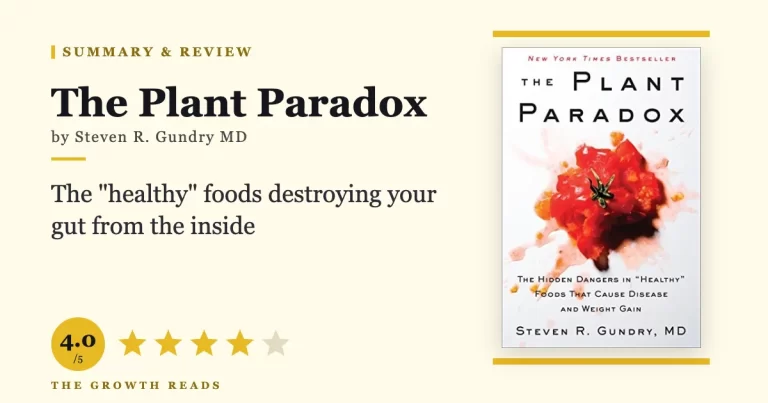
Dr. Gundry argues lectins in grains, beans, and nightshades damage your gut and drive disease. A provocative guide with a 3-phase elimination…
Read Summary →
"The surgeon-turned-nutritionist making the controversial case against lectins."
Steven R. Gundry is a former cardiac surgeon who shifted his career to nutrition and preventive medicine, and the author of The Plant Paradox, a controversial book arguing that certain plant compounds called lectins — found in grains, legumes, and nightshade vegetables — can contribute to inflammation, weight gain, and other health problems in some people. Gundry challenges the conventional wisdom that whole grains and many raw vegetables are unambiguously healthy, arguing instead that lectins act as a natural plant defense mechanism that can irritate the gut lining and provoke an immune response. His prescribed approach involves reducing or specially preparing high-lectin foods (through peeling, deseeding, or pressure-cooking) and building meals around a curated list of lower-lectin alternatives. Gundry's claims are widely debated within nutrition science, and readers should note that his lectin-avoidance framework is a minority view within mainstream nutrition research rather than settled scientific consensus.
Our in-depth summaries and reviews of his work
Dr. Gundry argues lectins in grains, beans, and nightshades damage your gut and drive disease. A provocative guide with a 3-phase elimination…
Read Summary →Gundry argues that lectins, a natural plant defense compound found in grains, legumes, and nightshades, can irritate the gut lining and provoke inflammation in some people, despite these foods' reputation as universally healthy.
Gundry challenges the conventional health halo around whole grains, arguing that for lectin-sensitive individuals, these foods may contribute to weight gain and other issues rather than support health.
Gundry's practical recommendations include peeling, deseeding, and pressure-cooking high-lectin foods to reduce their potential impact, rather than eliminating plant foods altogether.
"I will go so far as to say that if you're overweight, there's a good chance that it's because you're a believer in the myth of 'whole-grain goodness.'"— The Plant Paradox
"The lectins in the nightshade family include solanine, a neurotoxin."— The Plant Paradox
"In addition to the potential to cause health problems, lectins can also stimulate weight gain."— The Plant Paradox
Dr. Gundry argues lectins in grains, beans, and nightshades damage your gut and drive disease. A provocative guide with a 3-phase elimination program.