
Decision Paralysis: The Freeze at Commit, Not at Start
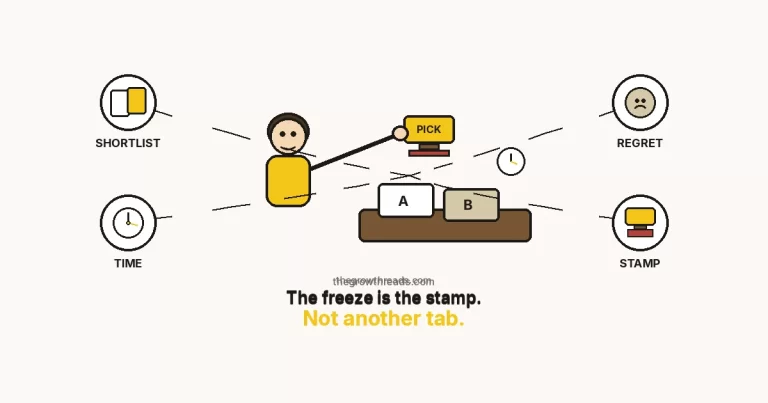
Decision paralysis is the freeze at the moment of committing — not missing data, and not the freeze before starting. What the evidence shows, and how to stamp one option.
Decision paralysis is the freeze at the moment of committing — not missing data, and not the freeze before starting. What the evidence shows, and how to stamp one option.
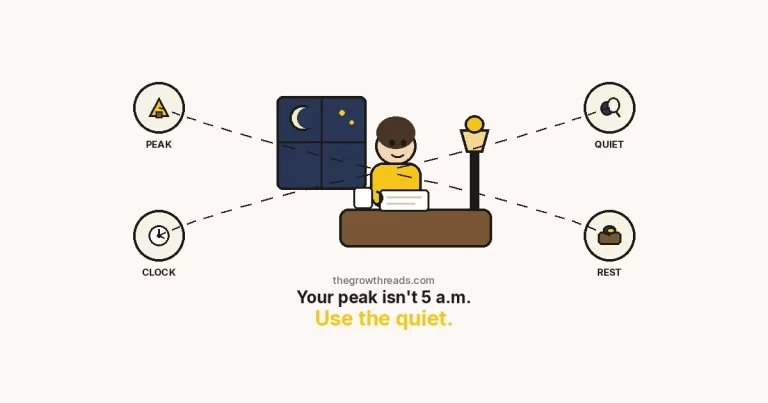
You are more productive at night when a later chronotype, a quiet room, or both finally line up — not because a late hour manufactures willpower. The studies, the social-jetlag cost, and what to do with mornings.
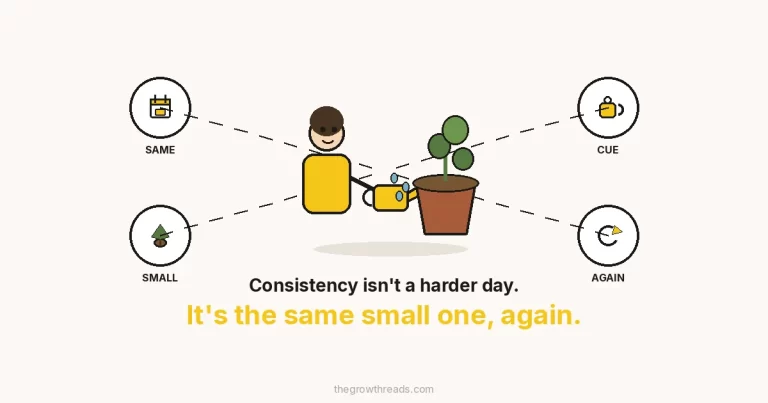
Consistency is repeating one small action in the same context until it needs less fresh thought — not a harder workout, and not a perfect streak.
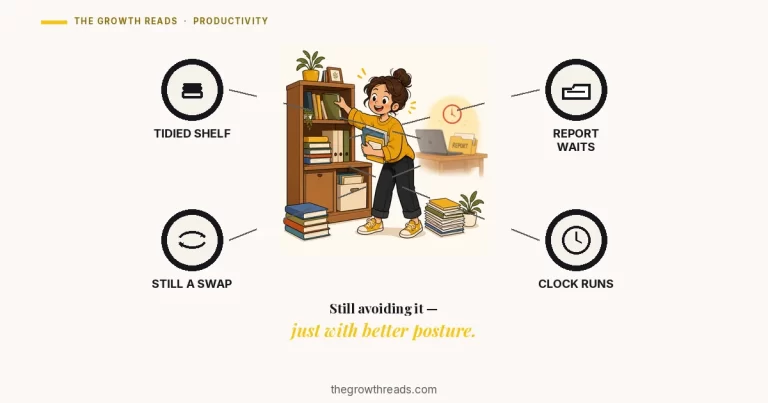
Productive procrastination is delaying the priority task by doing a different, useful one instead. What the research on active procrastination shows, why the swap still has a cost, and how to use it on purpose.
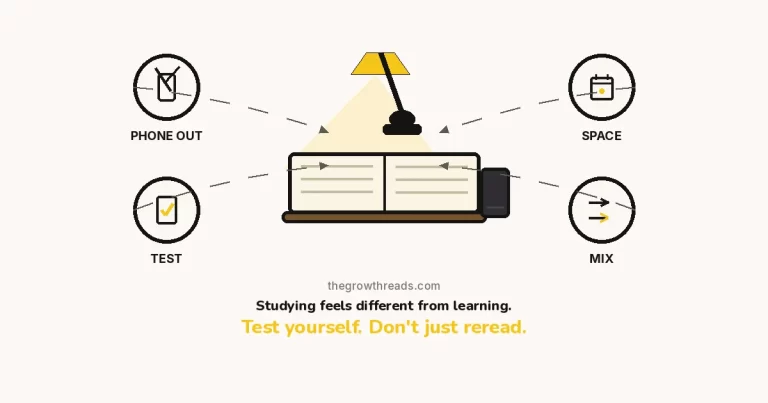
Focus during study fails less from a discipline gap than from techniques that feel productive but don’t build retrieval. Six evidence-backed steps — phone distance, self-testing, spacing, and interleaving — that actually stick.
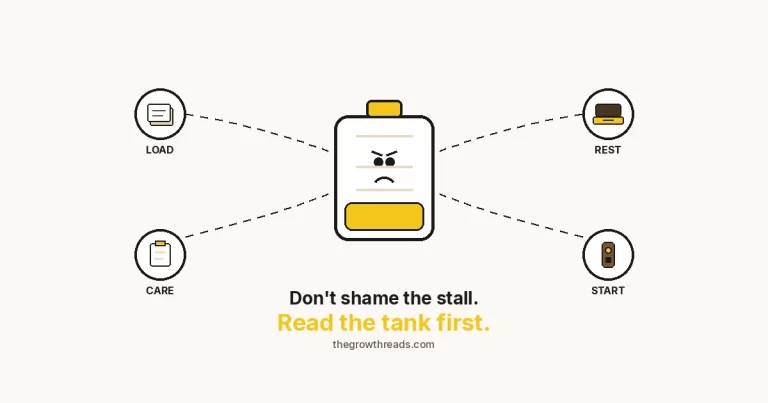
Burnout vs laziness is a work-energy split: depletion is still caring after the tank has run down; what people call laziness is unused capacity.
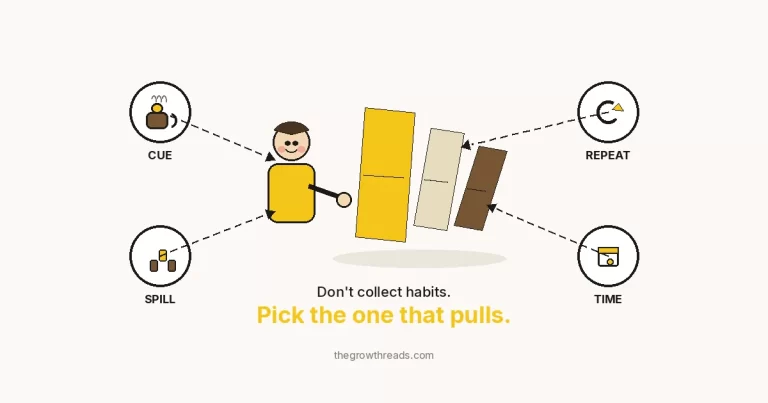
A keystone habit is the load-bearing one that pulls other habits with it. What the evidence actually shows, how to pick yours, and why a cascade is not guaranteed.
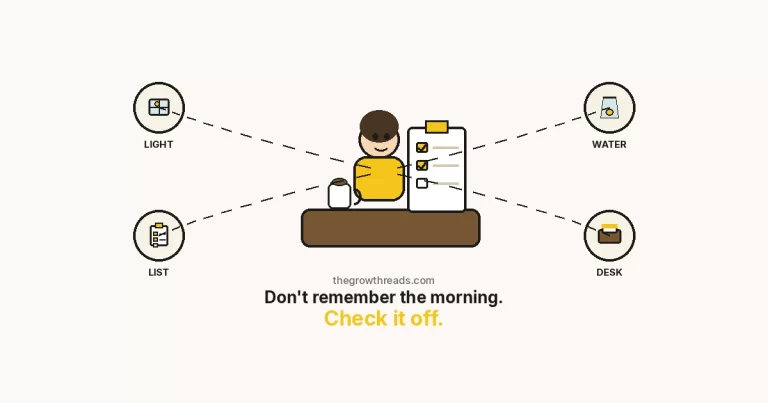
A morning routine checklist is a short written run-sheet you tick after you wake — not a 90-minute stack and not a rewrite of how to build a morning routine. Eight lines, the studies behind a written list, and the mistakes that kill it.
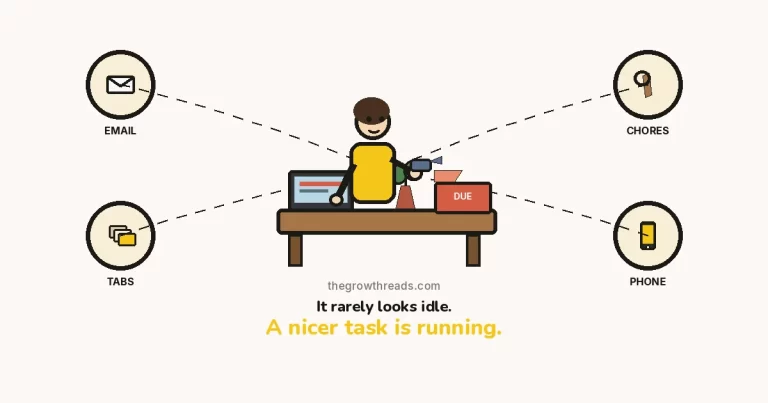
Procrastination examples are delays of an intended task that still look busy — email, chores, extra tabs, a late sprint — not an empty sofa. Steel’s test, real pictures, and the studies behind them.
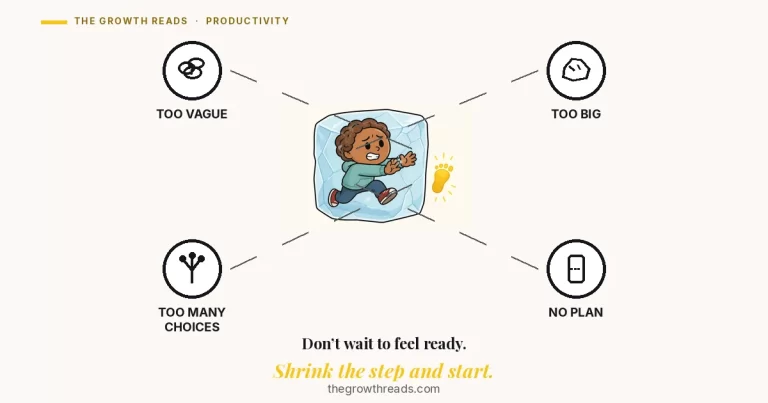
Task paralysis is the freeze before starting a task, not a diagnosis. Why vague or oversized goals stall the brain, what the evidence shows, and how to shrink the first step until starting is easy.
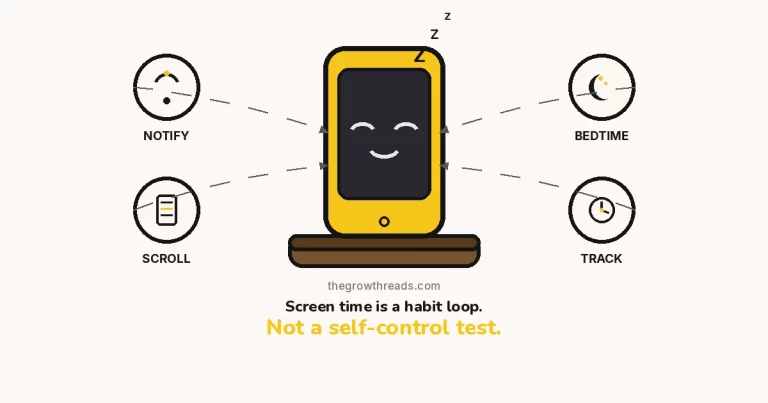
Screen time isn’t a willpower problem — it’s a checking loop built by notifications, variable rewards, and passive scrolling. Six evidence-backed steps to cut it, minus the shame.
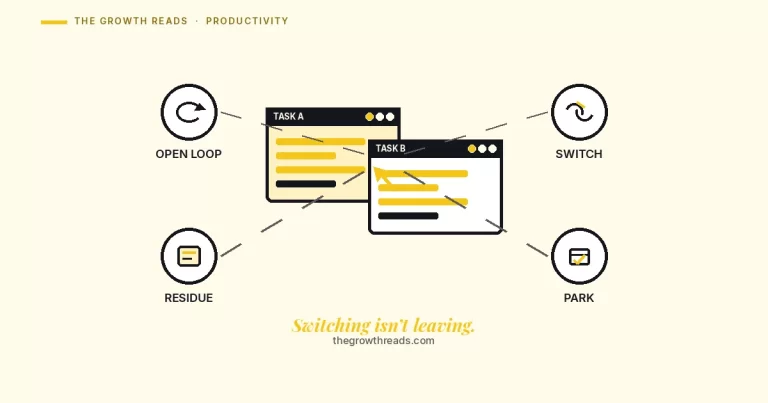
Attention residue is leftover attention from a previous task that lowers performance on the next one. What Leroy measured, how to park a switch, and when a resume note is not enough.