

★★★★☆ 4.5/5 — The fasting guide that finally accounts for female hormones.
Best for: Women who’ve tried fasting and found it left them exhausted, moody, or stalled
Reading time: ~7 hrs (352 pages) · Guide read: ~14 min
Difficulty to apply: Moderate — requires tracking your cycle and adjusting week to week
Fast Like a Girl in one minute
Most fasting advice was designed by men, studied on men, and handed to women anyway — and it’s failing millions of them. Dr. Mindy Pelz’s Fast Like a Girl argues that a woman’s body runs on a roughly 28-day hormonal cycle, not a rigid 24-hour clock, so a fasting plan that ignores where she is in that cycle can spike cortisol, suppress thyroid function, and disrupt the very hormones it’s supposed to balance. The fix isn’t to abandon fasting — it’s to sync it: fast harder in the first half of the cycle when estrogen is climbing and the body tolerates stress well, then ease off in the two weeks before a period, when steady fuel supports progesterone instead of fighting it. Pelz pairs this cycle-syncing framework with two food philosophies — Ketobiotic for fat-burning weeks and Hormone Feasting for the days that call for more carbohydrates — plus a 30-day reset and goal-specific protocols for weight loss, gut healing, and long-term metabolic health.
Key takeaways
- Fasting isn’t gender-neutral: a woman’s fluctuating estrogen, progesterone, and cortisol change how her body responds to skipping meals.
- Four fasting-relevant phases: Power (Days 1–10), Manifestation (11–15), Luteal (16–19), and Nurture (20–28) each call for a different fasting intensity.
- Longer fasts belong early in the cycle: 24–72 hour fasts are best attempted when hormones are more stable and resilient to fasting stress.
- The two weeks before a period are the worst time to push: fasting hard here can spike cortisol and worsen PMS, bloating, and sleep.
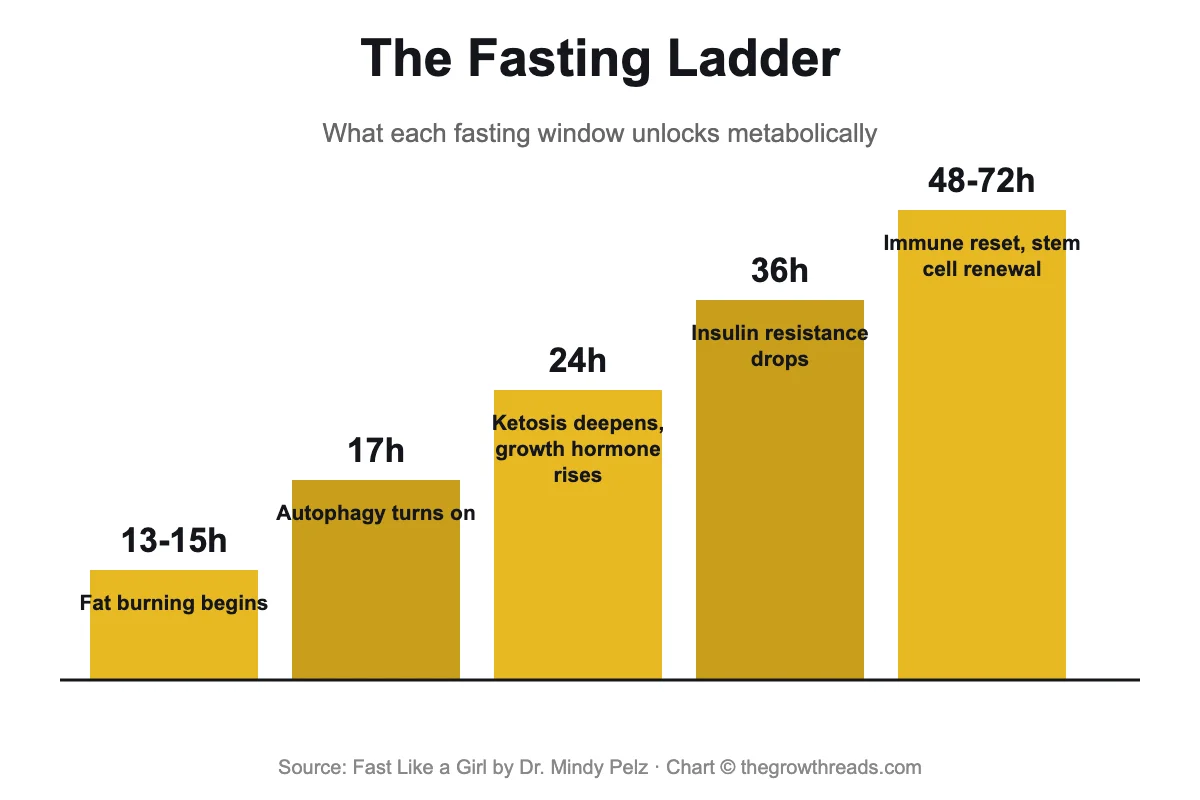
- Fasting length determines what happens biologically: fat burning starts within hours, autophagy switches on around 17 hours, and deeper cellular repair kicks in past 48 hours.
- Two eating styles, not competing diets: Ketobiotic (low-carb, high-fat) and Hormone Feasting (higher-carb, cycling) each have a place in the month.
- No period? No problem: women in perimenopause or menopause can cycle-sync fasting to a simulated 30-day “hormone-mimicking” calendar.
- Small hacks extend a fast comfortably: MCT oil in coffee, electrolytes, and apple cider vinegar without breaking its metabolic benefits.
- How you break a fast matters: the wrong foods can spike blood sugar and undo hours of metabolic progress.
- Fasting is a tool to personalize, not a rulebook: the real goal is learning to read your own body’s signals.
What is Fast Like a Girl about?
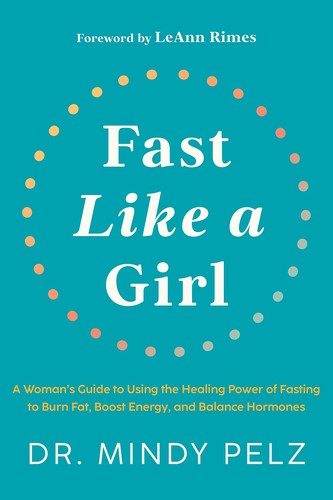
Fast Like a Girl is Dr. Mindy Pelz’s guide to fasting for women, arguing that intermittent and extended fasting should be timed to the four phases of the menstrual cycle rather than followed on a fixed daily schedule, pairing specific fasting windows with two eating styles to balance hormones, burn fat, and boost energy.
About the author
Dr. Mindy Pelz is a functional-health practitioner, chiropractor, and nutrition expert who has spent more than two decades helping patients address the root causes of chronic illness rather than just treating symptoms. After years in a traditional health practice, she became increasingly focused on how conventional fasting and diet advice — largely researched on and designed for men — was failing the women she treated. That observation led her to study the interplay between fasting, blood sugar, and the female hormone cycle, work she now shares through her Resetter Podcast and a YouTube channel that has become one of the most-followed resources on fasting for women. Fast Like a Girl, published in 2022, became a New York Times, Wall Street Journal, and Publishers Weekly bestseller and sits alongside The Menopause Reset and Eat Like a Girl in her Reset trilogy. Explore all Dr. Mindy Pelz book summaries →
Key concepts at a glance
| Concept | What it means | Use it when |
| Cycle-syncing | Matching fasting length and intensity to your menstrual cycle phase | Anytime you have a period, or are simulating one |
| Power Phase | Days 1–10; estrogen is rising, the best window for longer fasts | Early cycle, when attempting 24–72 hr fasts |
| Nurture Phase | Days 20–28; progesterone-dependent, needs steady fuel | The week before your period |
| Ketobiotic eating | Low-carb, high-fat meals that support ketosis | Power Phase and general fat-loss stretches |
| Hormone Feasting | Higher-carb eating that supports progesterone production | Luteal Phase, roughly Days 16–19 |
| Autophagy | The body’s cellular “clean-up” process, recycling damaged proteins | Triggered by fasts of 17+ hours |
| 30-Day Reset | Pelz’s structured month-long fasting and eating calendar | Starting the plan for the first time |
| Menopause fasting calendar | A simulated 30-day cycle for women without periods | Perimenopause, menopause, or post-hysterectomy |
Part 1: Why Fasting Advice Has Been Failing Women
Most popular fasting protocols — 16:8, OMAD, alternate-day fasting — were developed and clinically tested largely on male subjects. Pelz argues that’s a meaningful gap, because a man’s hormones cycle on a roughly 24-hour clock while a woman’s cycle unfolds over about a month. Layer a rigid daily fasting rule on top of that monthly rhythm and, for many women, the result isn’t the promised fat loss and mental clarity — it’s rising cortisol, suppressed thyroid hormone, irregular or missed periods, worsened PMS, hair thinning, and a metabolism that plateaus despite doing everything “right.”
To make her case, Pelz walks through the basic mechanics of what fasting actually does inside the body. After a meal, insulin rises to shuttle glucose into cells, and the body draws first on stored glycogen for roughly the first 12 to 24 hours of a fast. Once glycogen runs low, the body shifts toward burning fat for fuel — a metabolic state called ketosis. Around the 17-hour mark, a cellular “clean-up” process called autophagy ramps up, in which the body recycles damaged proteins and cellular debris. These stages aren’t controversial; they’re well-documented fasting physiology. What’s missing from most popular fasting guidance, Pelz argues, is any acknowledgment that a woman moving through these stages while her estrogen and progesterone are also shifting week to week experiences fasting very differently depending on where she is in her cycle.
TGR Note: The autophagy and ketosis mechanics Pelz describes echo the fasting research covered in our Outlive summary and Lifespan summary — this book’s contribution is layering the female hormone cycle on top of that same biology.
Part 2: The Cycle-Syncing Framework
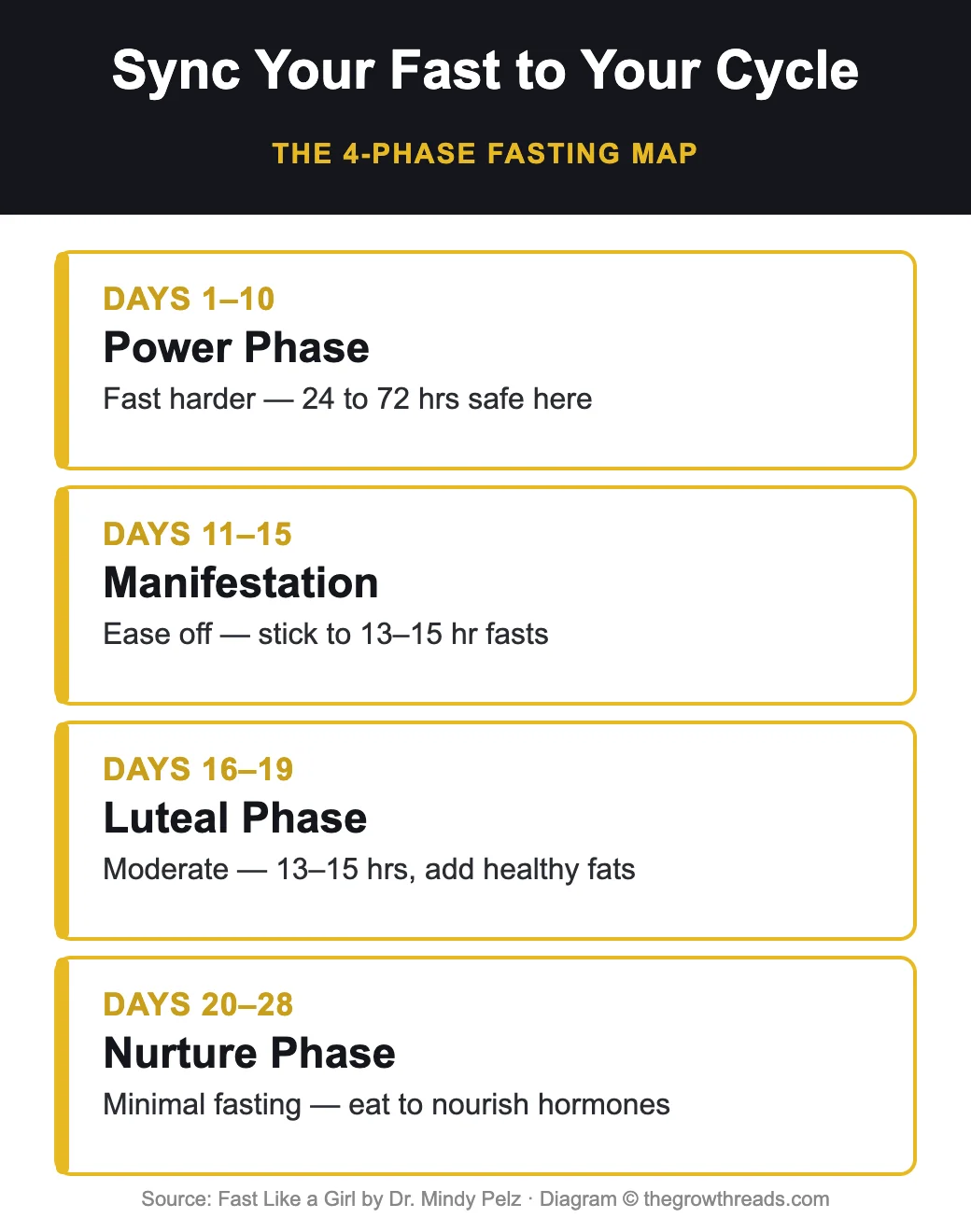
The heart of the book is a four-phase map. In the Power Phase (roughly Days 1–10, counting from the first day of a period), estrogen is climbing and the body handles the stress of fasting well — this is the window for attempting longer fasts of 24, 36, or even 72 hours. Around ovulation, in the Manifestation Phase (Days 11–15), Pelz recommends easing back to shorter 13–15 hour fasts, since a fertility-related hormone surge makes the body more sensitive to stress. The Luteal Phase (Days 16–19) calls for moderate 13–15 hour fasts paired with more healthy fats. Finally, the Nurture Phase (Days 20–28, the stretch leading into a period) is when Pelz advises minimal to no fasting at all — progesterone production needs steady glucose, and restrictive eating here tends to worsen PMS symptoms and spike cortisol rather than deliver any metabolic benefit.
For women without a natural cycle — due to menopause, a hysterectomy, or certain forms of birth control — Pelz doesn’t leave them out of the framework. She recommends simulating the same rhythm across a calendar month, treating the first ten days as a Power Phase and the last week as a Nurture Phase, so the cycle-syncing logic still applies even without a period to track.
TGR Note: The book’s core 30-Day Reset works best as a first pass through this framework — read it as a trial run, not a permanent prescription, before adjusting the exact windows to your own energy and sleep, a theme we also cover in our The Circadian Code summary.
Part 3: What to Eat — Ketobiotic and Hormone Feasting
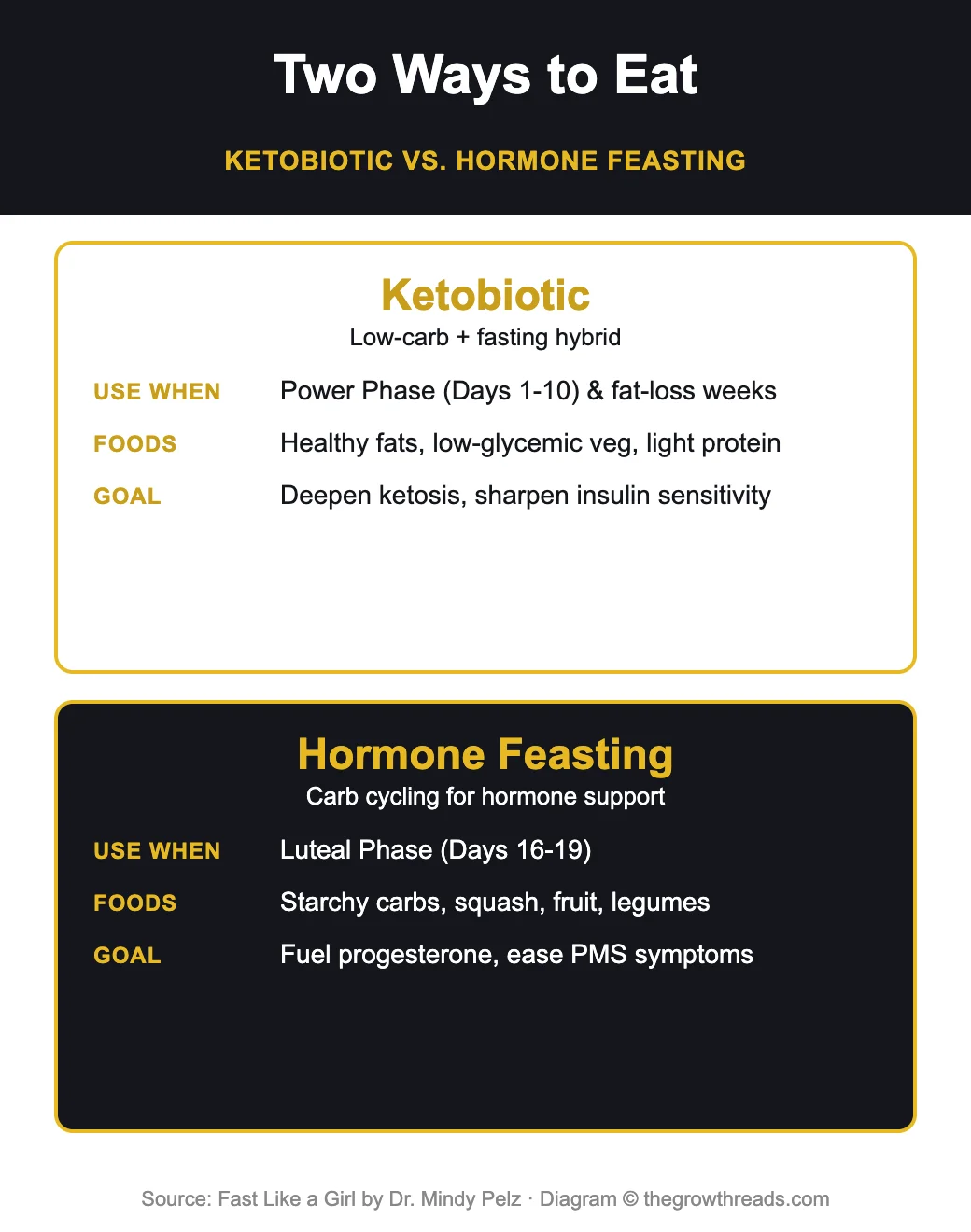
Ketobiotic eating combines a low-carbohydrate, high-fat approach with fasting to deepen ketosis and keep insulin low — think healthy fats, low-glycemic vegetables, and modest protein. It’s the default during the Power Phase and any stretch focused on fat loss. Hormone Feasting flips the ratio: more starchy vegetables, fruit, and legumes, introduced deliberately during the Luteal Phase because synthesizing progesterone requires more glucose than a strict low-carb diet supplies. Pelz frames this as the missing piece for women who stay low-carb all month and can’t figure out why they feel worse — more bloated, more fatigued, hungrier — in the days before their period: their body is asking for carbohydrates it isn’t getting.
Across both styles, food quality stays constant: whole, minimally processed ingredients, and steering away from refined sugar regardless of which phase or protocol is in play. The point isn’t to pick one eating style and stick with it forever — it’s to alternate deliberately, using each tool in the window where it does the most good.
TGR Note: Hormone Feasting’s carbohydrate-timing logic pairs well with the blood-sugar strategies in our Glucose Revolution summary — both books land on the same idea that when you eat carbs matters as much as how many.
Part 4: Matching Your Fast to Your Goal
The back half of the book breaks fasting down by goal. For weight loss, Pelz leans on 17-hour fasts paired with Ketobiotic eating during the Power Phase. For hormone imbalances like PCOS or irregular cycles, she recommends a gentler approach that leans more heavily on Hormone Feasting and shorter fasting windows. For gut healing, occasional 48–72 hour fasts are used to give the digestive lining a rest, followed by a fiber-rich refeed. For brain fog and mental clarity, moderate fasts paired with MCT oil supply the brain with ketones as an alternative fuel source. And for longevity, periodic 3–5 day extended fasts — done rarely, and only once a woman understands how her body responds — are framed as a way to trigger deeper autophagy and stem cell regeneration.
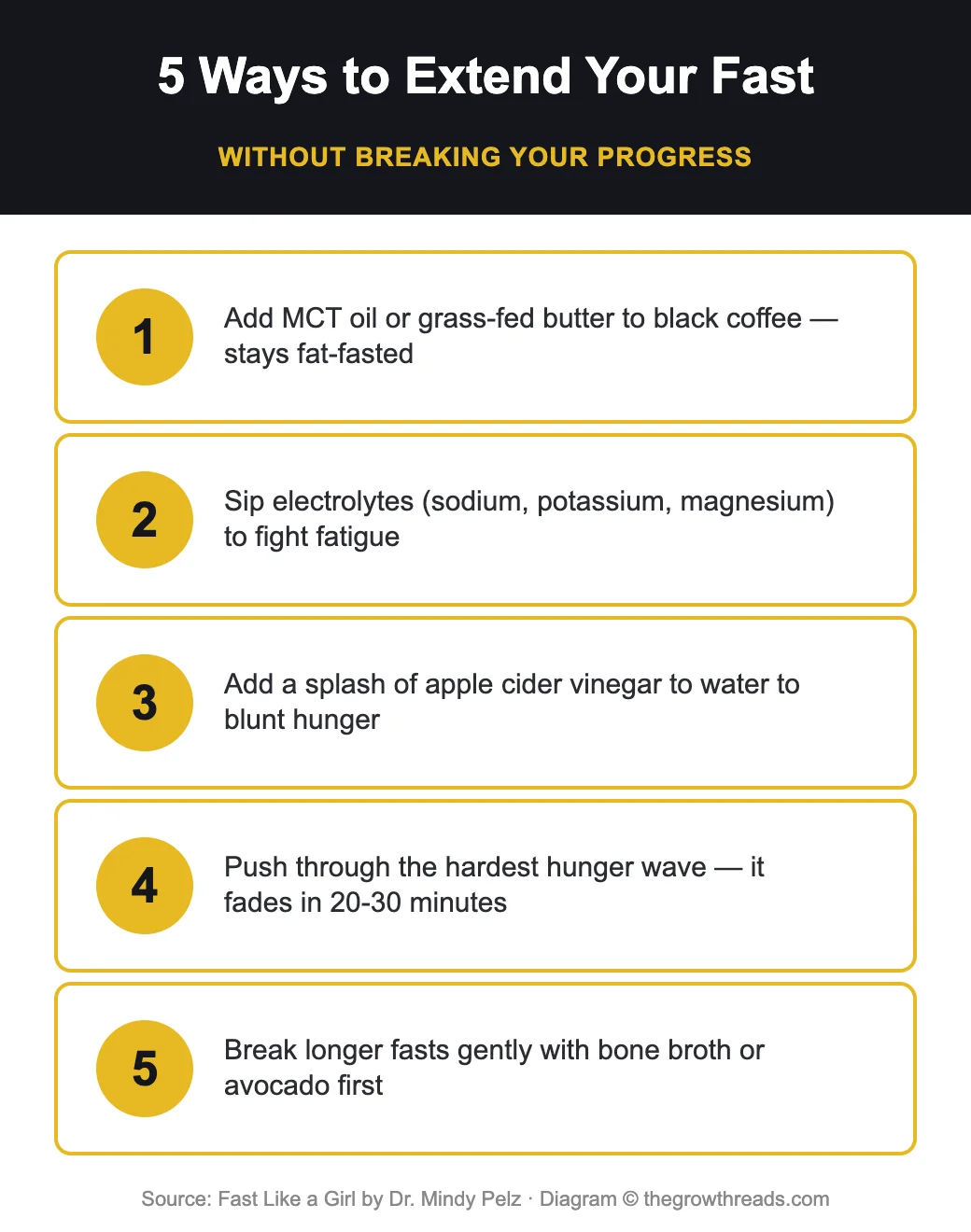
To make longer fasts more sustainable, Pelz offers practical hacks: black coffee with a splash of MCT oil or grass-fed butter, electrolytes to fight fatigue and headaches, and a splash of apple cider vinegar in water to blunt hunger — all without meaningfully breaking a fast’s metabolic benefits. Just as important is how a fast ends: breaking it with protein and fiber (eggs, avocado, leafy greens) rather than something sugary avoids the blood sugar spike — and the crash and rebound hunger that follows it — that can undo hours of careful fasting.
TGR Note: Pelz’s point about fasting hacks not being “cheats” mirrors the practical, sustainability-first approach in our How Not to Diet summary — small adjustments that keep a plan livable tend to beat rigid purity every time.
Who is Fast Like a Girl best for — and who should read something else first?
Best for: women who’ve tried standard 16:8 or OMAD fasting and found it left them tired, moody, or stalled — especially those navigating PCOS, perimenopause, or a stubborn weight plateau, and anyone curious about how hormones and metabolism interact.
Read something else first: if you’re brand new to fasting altogether and want the mechanics without the cycle-specific layer, our The Diabetes Code summary covers fasting and insulin resistance in more general terms. Readers looking for weight-loss nutrition science without a cycle framework may prefer our How Not to Diet summary.
Questions to reflect on
- Where am I in my cycle right now, and does my current eating or fasting pattern actually match what my hormones need this week?
- Have I ever pushed through fatigue, irritability, or a missed period while dieting and assumed it was just normal willpower failure?
- Which of the two eating styles — Ketobiotic or Hormone Feasting — have I never consciously tried?
- What’s one hack (electrolytes, apple cider vinegar, MCT oil) I could test this week to make fasting more sustainable?
- If I don’t have a natural cycle, could I map a simulated 30-day rhythm onto my calendar month and see how it feels?
🔥 Ready to fast smarter, not harder?
Get the exact fasting windows, foods, and 30-day calendar to sync fasting to your hormones.
How to apply Fast Like a Girl (7-day plan)
- Day 1: Track where you are in your cycle — or pick a start date on the calendar if you don’t have periods — and mark it somewhere simple.
- Day 2: If you’re in the first half of your cycle, try a 15–17 hour fast; if you’re in the two weeks before your period, skip fasting today and eat balanced meals instead.
- Day 3: Add one Ketobiotic meal — swap a carb-heavy dinner for a plate built around healthy fats, low-glycemic vegetables, and a modest portion of protein.
- Day 4: Test one fast-extending hack — black coffee with a splash of MCT oil, or electrolytes in water — during your morning fasting window.
- Day 5: Practice breaking a fast properly — start your first meal with protein and fiber (eggs, avocado, greens) instead of reaching for something sweet.
- Day 6: If you’re in your Luteal Phase this week, add a Hormone Feasting meal — squash, sweet potato, or legumes — and notice how your energy responds.
- Day 7: Reflect and plan next week’s fasting windows based on where your cycle will be, noting any changes in energy, mood, or sleep from this week’s experiment.
Frequently asked questions
Is Fast Like a Girl safe for beginners to fasting?
Yes, with caveats. Pelz recommends starting with shorter 13–15 hour fasts — essentially an extended overnight fast — before attempting anything longer, and to eat if symptoms like dizziness, extreme fatigue, or a missed period show up. The book stresses starting slow and cycle-syncing from day one rather than jumping into 48–72 hour fasts, which are positioned as an advanced step for later, once a woman understands how her own body responds. Pregnant or breastfeeding women, anyone with a history of disordered eating, or anyone with an underlying medical condition should talk to a doctor before starting.
Do I need to track my period to use this method?
Not strictly. Pelz includes a simulated 30-day fasting calendar for women without a natural cycle — due to menopause, a hysterectomy, or hormonal birth control — that mimics the four phases across a calendar month. For cycling women, though, tracking even loosely with a period app or paper calendar makes the approach far more precise, since fasting windows are matched to specific cycle days rather than guessed at.
What’s the difference between Ketobiotic and Hormone Feasting?
Ketobiotic combines a low-carbohydrate, high-fat way of eating with fasting to deepen ketosis and keep insulin low; it’s the go-to during the Power Phase and general fat-loss stretches. Hormone Feasting is a higher-carbohydrate approach — more starchy vegetables, fruit, and legumes — used mainly in the Luteal Phase because progesterone production needs more glucose. Alternating between the two, rather than staying low-carb all month, is central to the book’s philosophy.
Can men use the fasting protocols in this book?
The core frameworks — fasting windows, autophagy timelines, Ketobiotic eating — apply to men too, since the underlying metabolic science isn’t gender-specific. What’s tailored to women is the cycle-syncing layer: matching fasting intensity to the menstrual cycle. Men, and women without a cycle, can simply follow the fasting-length guidance in Parts 1 and 4 without the phase-specific calendar.
Will fasting like this help with weight loss?
Many readers pick up the book primarily for weight loss, and Pelz frames fat loss as one of several benefits of properly timed fasting, alongside steadier energy and better insulin sensitivity. That said, results vary — the book treats fasting as one lever among several, since food quality, sleep, and stress all matter, and pushing fasting too hard in the wrong cycle phase can stall progress rather than accelerate it.
Is the science in this book settled, or still debated?
Fasting’s core mechanisms — ketosis, autophagy, insulin sensitivity — are well supported by a growing body of research, though the specific evidence on syncing fasting to menstrual cycle phases is newer and still developing, drawn heavily from Pelz’s own clinical observations. Readers wanting a strictly peer-reviewed academic treatment may want to pair this book with primary research, but the practical framework has resonated with a large community of women who report feeling better following it.
How long does it take to see results?
The book’s 30-Day Fasting Reset is designed to give most readers a full cycle’s worth of experience with the method, which Pelz suggests is usually enough to notice changes in energy, digestion, and how clothes fit. Deeper hormonal shifts — more regular cycles, less PMS — are described as often taking two to three full cycles, roughly two to three months, of consistent practice before they become noticeable.
Related summaries
- Outlive Summary & Review
- Lifespan Summary & Review
- Glucose Revolution Summary & Review
- The Circadian Code Summary & Review
- Best Health Books — Full Reading List
How we analyze books: Every TGR summary is built from a full read of the source material, cross-checked against the author’s public talks and interviews, and structured around practical application rather than just recap. Read our full methodology.