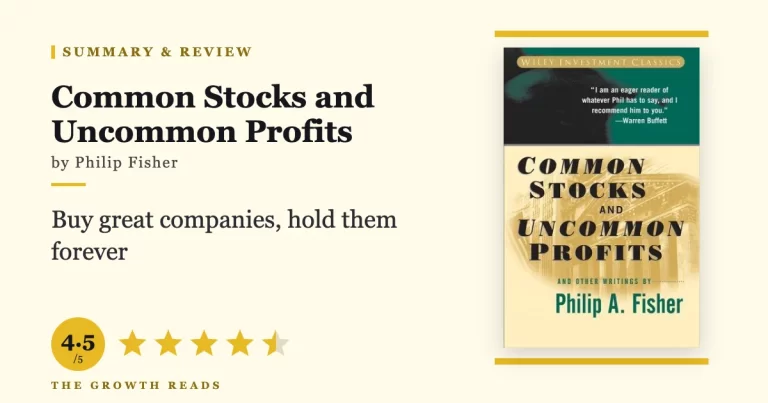
Philip A. Fisher

"The scuttlebutt investor whose qualitative method shaped Warren Buffett's philosophy."

Philip A. Fisher was a pioneering growth-stock investor whose 1958 book Common Stocks and Uncommon Profits laid out one of the earliest systematic frameworks for what would later be called 'qualitative' investing — evaluating a company's management quality, research capability, and competitive position rather than relying solely on financial statements. Fisher developed a rigorous method he called 'scuttlebutt,' gathering firsthand insight from a company's customers, competitors, suppliers, and former employees to judge its true prospects. His emphasis on finding truly outstanding companies and holding them patiently through market fluctuations, rather than trading frequently, profoundly influenced generations of investors — most famously Warren Buffett, who has said Fisher's ideas shaped roughly 15 percent of his own investing philosophy, layered on top of Benjamin Graham's value-investing foundation.

1 book·Growth Investing

Books by Philip A. Fisher

Our in-depth summaries and reviews of his work

Key Ideas & Recurring Themes

The scuttlebutt method

Fisher advocated researching a company by talking directly to its customers, competitors, suppliers, and former employees to get a firsthand read on its true quality — not just relying on published financials.

Find outstanding companies and hold them

Fisher argued that the greatest investment rewards come from identifying the rare company that can grow sales and profits far beyond the industry average, then staying with it through market fluctuations rather than trading in and out.

Judge management, not just the balance sheet

Fisher placed heavy weight on qualitative factors — the integrity and long-term vision of management, the strength of a company's research and development — as core determinants of investment quality.

Notable Quotes

"Even in those earlier times, finding the really outstanding companies and staying with them through all the fluctuations of a gyrating market proved far more profitable to far more people than did the more colorful practices."
— Common Stocks and Uncommon Profits
"Never promote someone who hasn't made some bad mistakes, because if you do, you are promoting someone who has never done anything."
— Common Stocks and Uncommon Profits
"The only true test of whether a stock is “cheap” or “high” is not its current price in relation to some former price, but whether the company's fundamentals are significantly more or less favorable than the current price reflects."
— Common Stocks and Uncommon Profits

New to Philip A. Fisher?

Start with our most popular summary of their work.

Read the Summary

Book Author Philip A. Fisher