Michael Kearns
"The computer scientist who wants ethics built into the math, not bolted on after"
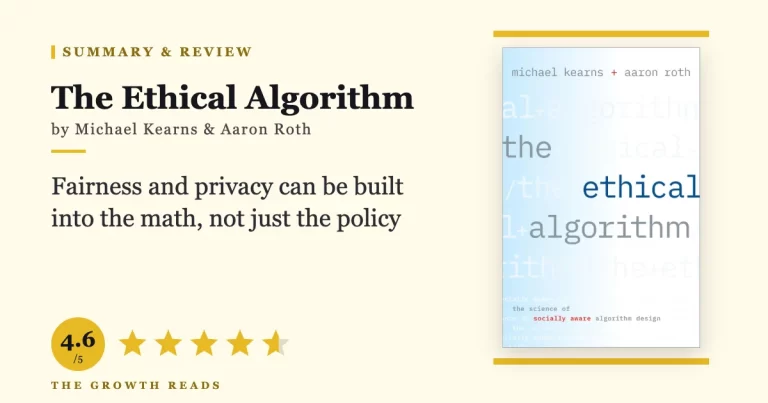
Michael Kearns is a computer scientist and the National Center Chair Professor in the Computer and Information Science Department at the University of Pennsylvania, with a secondary appointment in Statistics and Data Science at the Wharton School. He is a pioneer of computational learning theory — the mathematical study of what machines can and cannot learn — and has spent decades at the intersection of machine learning, algorithmic game theory, and quantitative finance, including senior technical roles at Bell Labs, SoftBank, and Morgan Stanley. Kearns founded Penn's Networked and Social Systems Engineering program and its Warren Center for Network and Data Sciences. With longtime collaborator Aaron Roth, he co-authored The Ethical Algorithm, making the case that fairness and privacy can be engineered into code with the same rigor used to guarantee an algorithm's speed or accuracy.
1 book·Algorithmic Fairness & Privacy