
Productivity
How Will You Measure Your Life Summary & Review: Your Calendar Is the Strategy
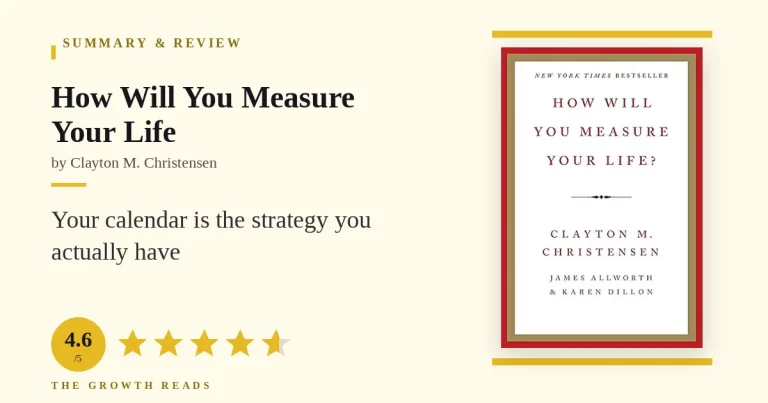
How Will You Measure Your Life summary: Christensen’s three questions on career, family, and integrity — and why your calendar is the…
Read Summary →
"Disruptive technologies typically enable new markets to emerge."
Clayton Christensen was a Harvard Business School professor whose 1997 book The Innovator's Dilemma introduced the theory of disruptive innovation, one of the most influential business ideas of the past three decades. He showed how well-run, well-managed companies can still fail — not from bad decisions, but from doing exactly what good management theory tells them to do while a cheaper, simpler competitor grows underneath them.
Our in-depth summaries and reviews of his work
How Will You Measure Your Life summary: Christensen’s three questions on career, family, and integrity — and why your calendar is the…
Read Summary →
Clayton Christensen’s foundational theory of disruptive innovation explains why well-managed companies fail — and what leaders can do to avoid the trap.
Read Summary →New entrants often start with simpler, cheaper products aimed at overlooked customers, then improve until they overtake the market leaders who dismissed them as not worth competing with.
Christensen's central paradox: the very processes that make companies excellent at serving their best customers — careful resource allocation, listening to existing clients — are what make them blind to disruptive threats.
Because disruptive products are initially inferior on the metrics incumbents care about, Christensen argues the winning response is often to find new markets and use cases for them, not to out-engineer them.
What you say you want is a speech. Where time, energy, and money actually go is the strategy. If they disagree, the calendar wins.
"Disruptive technologies typically enable new markets to emerge."— The Innovator's Dilemma
"Disruptive technology should be framed as a marketing challenge, not a technological one."— The Innovator's Dilemma
"To succeed consistently, good managers need to be skilled not just in choosing, training, and motivating the right people for the right job, but in choosing, building, and preparing the right organization for the job as well."— The Innovator's Dilemma
"It's easier to hold to your principles 100 percent of the time than it is to hold to them 98 percent of the time."— How Will You Measure Your Life
How Will You Measure Your Life summary: Christensen’s three questions on career, family, and integrity — and why your calendar is the strategy you actually have.
Clayton Christensen’s foundational theory of disruptive innovation explains why well-managed companies fail — and what leaders can do to avoid the trap.
