

★★★★★ 4.6/5 — Fat isn’t a math problem. It’s a hormone problem — and this book explains why.
Best for: Anyone who’s lost weight on a diet and watched it come back, prediabetics and type 2 diabetics, and low-carb/keto-curious readers who want the “why,” not just the “what.”
Reading time: ~6.5 hrs to read the book (296 pages) · ~22 min to read this guide
Difficulty to apply: Moderate — you’re changing when you eat, not just counting what you eat.
The Obesity Code in one minute
Obesity isn’t a failure of willpower — it’s a hormonal signal working exactly as designed. In The Obesity Code, Toronto nephrologist Dr. Jason Fung argues that the “calories in, calories out” model of weight loss is fighting the wrong enemy. The real driver of fat storage is insulin: the hormone that tells your cells whether to burn fuel or bank it as fat. Eat refined carbs and sugar all day — three meals plus snacks — and insulin never gets a chance to fall, so your body never gets the signal to release stored fat. Fung’s fix isn’t a new food pyramid. It’s timing: give your body regular, deliberate breaks from eating (intermittent fasting) so insulin can drop and fat can flow back out of storage. The book walks through the biology, the history of how “eat less, move more” became gospel despite mounting evidence against it, and a practical menu of fasting windows anyone can adapt.
Key takeaways
- Obesity is a hormonal disorder, not a math problem: insulin — not calorie counting — determines whether your body stores fat or burns it.
- The calorie model can’t explain long-term regain: when people lose weight by restriction alone, the body fights back by lowering metabolism and raising hunger hormones until the weight returns.
- Insulin resistance is self-reinforcing: high insulin causes resistance, and resistance forces the pancreas to release even more insulin — a spiral that gets worse over time.
- Not all calories act the same on insulin: refined carbs and sugar spike insulin far more than fat or protein, even at equal calorie counts.
- Frequency matters as much as quantity: constant snacking and “eat six small meals a day” advice keeps insulin elevated around the clock.
- Fructose is a hidden driver: excess fructose from soda and processed sugar is metabolized differently than glucose and converted to fat in the liver.
- Cortisol and poor sleep sabotage progress: chronic stress and sleep deprivation raise cortisol, which raises insulin, even if your diet is otherwise on track.
- Intermittent fasting is the lever, not a gimmick: giving insulin a daily or weekly break is, according to Fung, the fastest way to reverse insulin resistance.
- Drugs and surgery treat symptoms, not causes: without addressing insulin, weight-loss interventions tend to be temporary or require ongoing escalation.
- Obesity is a treatable condition, not a life sentence: Fung’s clinical experience suggests most patients can meaningfully improve their metabolic health once insulin is addressed directly.
What is The Obesity Code about?
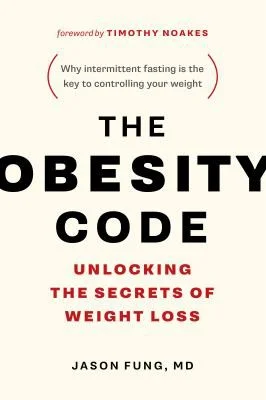
The Obesity Code argues that obesity results from chronically elevated insulin, driven by refined carbohydrates and near-constant eating — not from overeating or laziness. Dr. Jason Fung, a Toronto nephrologist, makes the case that intermittent fasting and a whole-food, low-refined-carb diet lower insulin, reverse insulin resistance, and produce weight loss that lasts.
About the author
Dr. Jason Fung is a Canadian nephrologist (kidney specialist) who trained at the University of Toronto and completed his residency and fellowship at UCLA. Treating patients with diabetic kidney disease, he noticed that managing blood sugar with medication alone never reversed the underlying metabolic damage — which pushed him to study obesity and insulin resistance directly. In 2012, he co-founded the Intensive Dietary Management (IDM) Program in Toronto with dietitian Megan Ramos, one of the first clinics in North America to use therapeutic fasting to treat type 2 diabetes and obesity. The Obesity Code (2016) became an international bestseller translated into dozens of languages, followed by The Diabetes Code and The Complete Guide to Fasting. Fung continues to see patients at the Toronto Metabolic Clinic. Explore all Jason Fung book summaries →
Key concepts at a glance
| Concept | What it means | Use it when |
|---|---|---|
| Insulin resistance | Cells stop responding normally to insulin, forcing the pancreas to produce more of it | Explaining why past diets stopped working over time |
| Hormonal model of obesity | Fat gain is regulated by insulin and cortisol, not simple calorie math | Deciding what to eat, not just how much |
| Intermittent fasting | Deliberately extending the gap between meals so insulin can fall | Breaking a weight-loss plateau or reversing insulin resistance |
| Glycemic load / refined carbs | How quickly a food raises blood sugar and insulin | Choosing which carbs to cut first |
| Fructose overload | Excess fructose (soda, processed sugar) is converted to fat in the liver | Identifying hidden culprits beyond obvious “junk food” |
| Cortisol–insulin interplay | Chronic stress and poor sleep raise cortisol, which raises insulin | Troubleshooting stalled progress despite eating well |
| Meal timing over meal size | How often you eat matters as much as how much | Designing a daily eating window |
| Set weight | The body actively defends a baseline weight by adjusting hunger and metabolism | Understanding why willpower alone fails after a diet ends |
Part 1: The Epidemic and the Calorie Myth
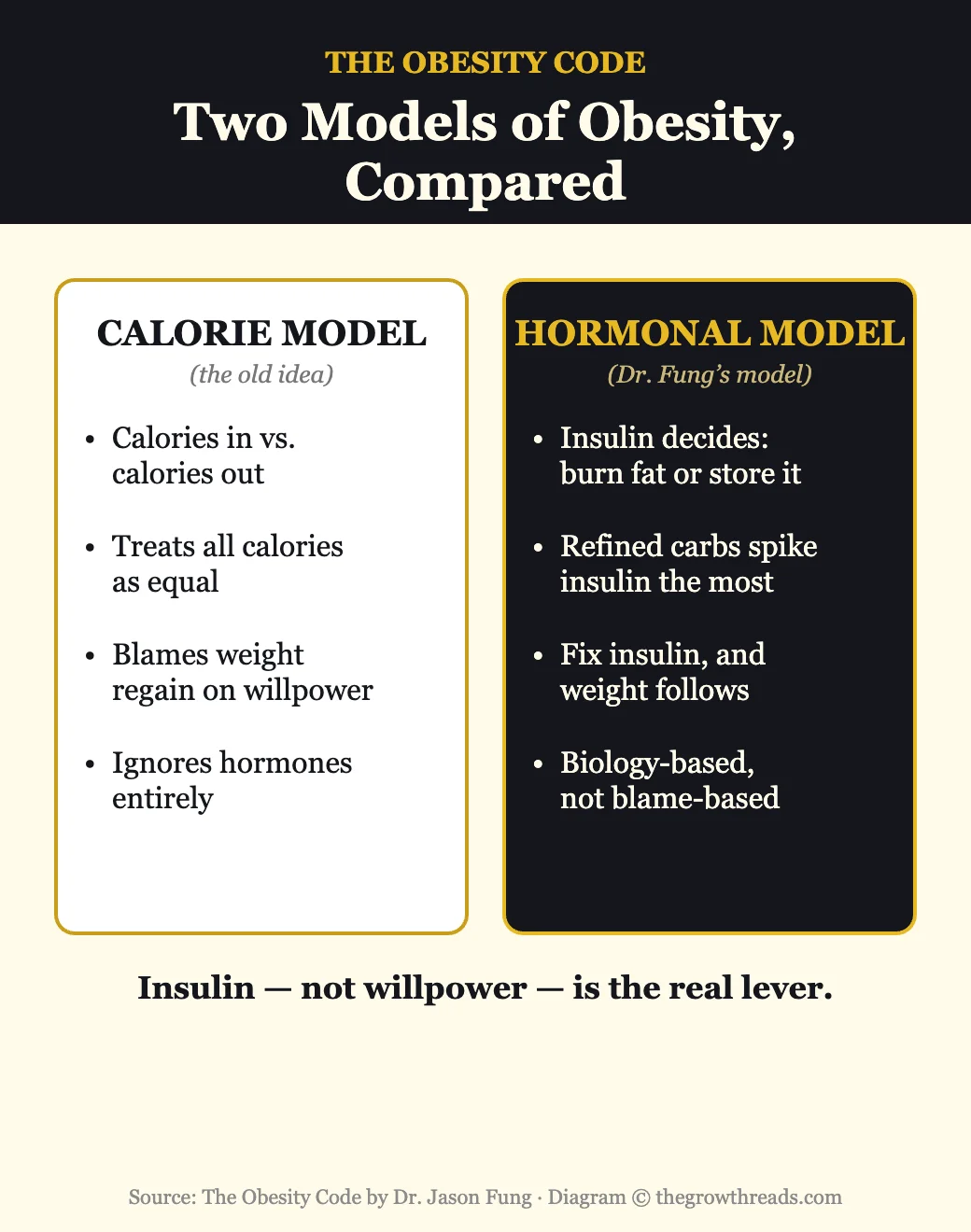
Fung opens by tracing how obesity went from rare to routine across just a few decades — too fast to be explained by genetics, and too widespread to be explained by a sudden collective loss of willpower. The dominant explanation since the 1970s has been the calorie model: weight is simply calories eaten minus calories burned, so anyone who gains weight must be eating too much, moving too little, or both.
Fung lays out where that model breaks down. First, it fails to explain the way the body responds to restriction: when people cut calories hard, resting metabolism drops and hunger hormones rise, so the body actively resists the deficit rather than passively burning fat at a fixed rate. Long-running weight-loss trials — including years of tracking “The Biggest Loser” contestants — found that metabolism stayed suppressed long after the show ended, which is part of why so much regained weight follows dramatic short-term loss. Second, controlled overfeeding studies (people deliberately fed a fixed calorie surplus) found that individuals gained wildly different amounts of fat on the exact same excess calories — some barely gained at all. If a calorie were only ever a calorie, that variation shouldn’t exist. Third, the “exercise myth”: population data shows a huge rise in gym membership and structured exercise since the 1980s running in parallel with rising obesity, and clinical trials of exercise-only interventions consistently produce only modest weight loss, because the body compensates by eating more or moving less elsewhere in the day.
None of this means calories are irrelevant — but it means treating them as the root cause, rather than a downstream effect of what’s driving hunger and fat storage, has kept the conventional advice from working for most people long-term. Fung also points to timing: national dietary guidelines shifted toward “eat less fat, more carbohydrates” messaging in the late 1970s, right around the point obesity rates started their steep climb. He isn’t arguing the guidelines alone caused the epidemic, but he uses the timeline to question why a model that predicts steady, easy fat loss from calorie deficits has coincided with fifty years of rising obesity rather than falling rates.
TGR Note: The idea that the body actively defends a baseline weight shows up again in our Why We Sleep summary — poor sleep raises cortisol and appetite hormones the same way chronic dieting does, which is one reason “eat less, sleep less, push through” plans tend to backfire twice over.
Part 2: A New Hormonal Model — Insulin, Cortisol, and Resistance
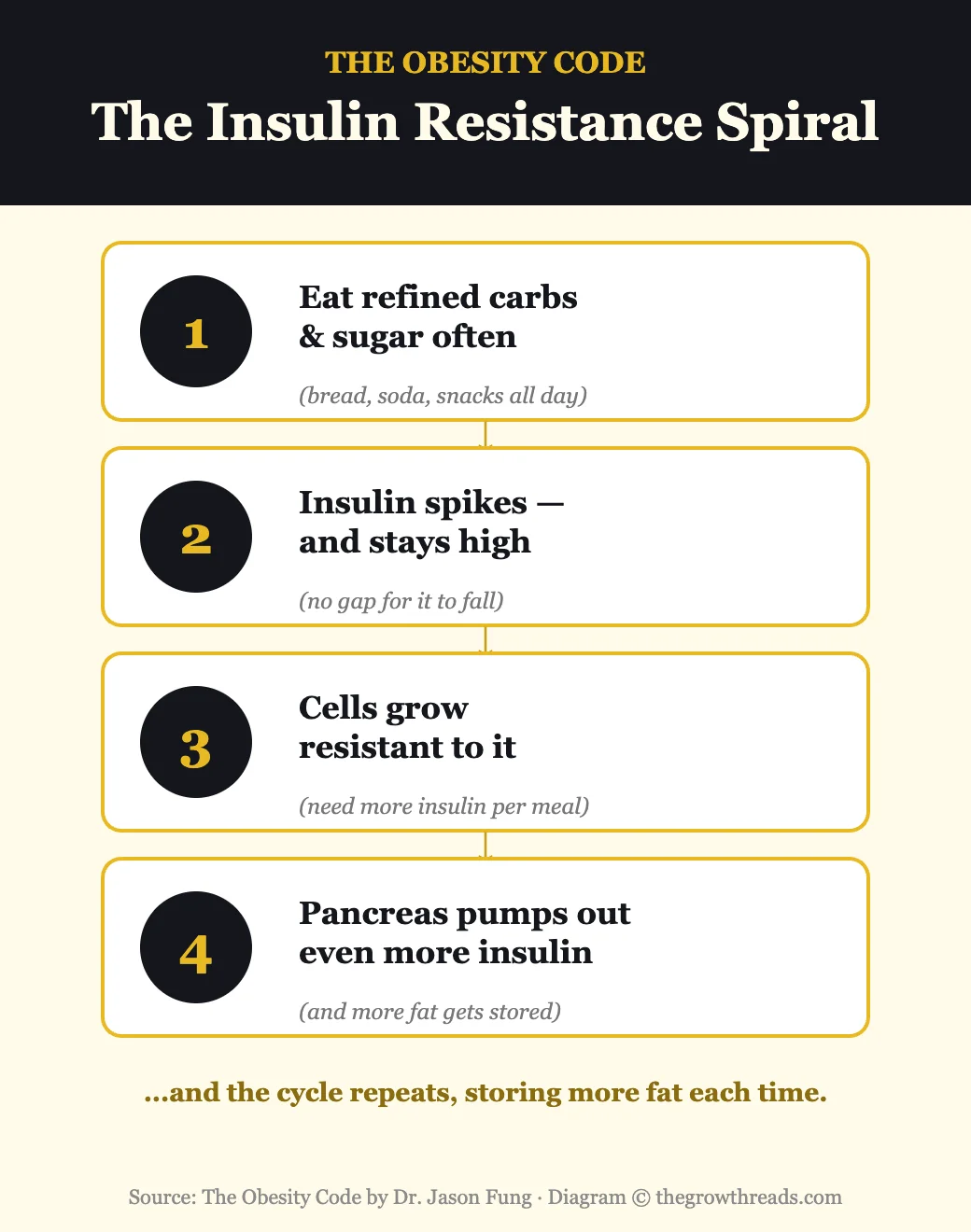
If calories aren’t the root cause, what is? Fung’s answer is insulin. Insulin is released whenever you eat, and its job is to move glucose out of the bloodstream — either into cells for energy or into fat cells for storage. The more refined and sugary the food, the sharper the insulin spike. Fat and protein raise insulin much less.
The trouble starts when insulin stays elevated too often, for too long. Cells exposed to constant high insulin gradually become less sensitive to it — insulin resistance — so the pancreas compensates by producing even more insulin to get the same effect. That higher baseline insulin, in turn, keeps telling the body to store fat rather than release it, and makes cells more resistant still. It’s a feedback loop that tightens over years, which is why insulin resistance so often shows up alongside slowly climbing weight, then prediabetes, then type 2 diabetes.
Fung also revisits the history of low-carbohydrate eating, including Robert Atkins’ much-mocked diet from the 1970s, arguing that later research vindicated the core mechanism even though Atkins was dismissed by mainstream nutrition guidance at the time. He adds cortisol to the picture: the stress hormone rises with poor sleep, chronic anxiety, and overtraining, and elevated cortisol independently raises insulin — meaning someone can eat “perfectly” by the book’s standards and still stall out if stress and sleep aren’t addressed. Fung also distinguishes insulin resistance from simple overconsumption: he describes it as a “two-hit” process, where constant food intake keeps insulin elevated (hit one) while the resulting resistance forces even higher insulin levels to compensate (hit two), which is why he treats it as a distinct condition worth targeting directly rather than a side effect that will resolve on its own once weight drops.
TGR Note: The insulin/mTOR signaling pathway Fung describes here is also central to the aging research covered in our Lifespan summary — David Sinclair connects the same nutrient-sensing pathways to longevity, and both authors land on periods of fasting as a lever worth pulling.
Part 3: What’s Really Making Us Fat — Fructose, Ultra-Processed Food, and Social Forces
Fung zeroes in on fructose as a particularly overlooked culprit. Unlike glucose, which most cells in the body can use directly for energy, fructose is processed almost entirely by the liver — and in excess (mainly from soda, juice, and processed foods sweetened with high-fructose corn syrup), it’s readily converted into fat, some of which accumulates in the liver itself. This, Fung argues, helps explain why sugar-sweetened beverages track so closely with obesity and fatty liver disease across populations, independent of total calorie intake.
He also pushes back on the low-fat era of dietary advice, tracing how national guidelines shifted people away from natural fats and toward refined carbohydrates starting in the late 1970s and 1980s — precisely when obesity rates began climbing. Protein and natural fat, he argues, were never the problem; the problem was what replaced them on the plate. The book also examines social and economic drivers: processed, shelf-stable, carbohydrate-heavy food is often the cheapest and most accessible option in lower-income neighborhoods, and even infant feeding choices — formula versus breastfeeding — appear to influence a child’s early insulin response and later obesity risk. Fung is careful to frame this as a systemic problem rather than a personal-failing one: when the cheapest, most heavily marketed, most shelf-stable calories in a grocery store are also the ones that spike insulin hardest, individual willpower is competing against food engineering and economics at the same time, which is part of why he resists blaming patients for a condition he sees as biologically driven.
TGR Note: Our How Not to Die summary reaches a different macronutrient conclusion — Dr. Greger emphasizes whole-food, plant-based eating over low-carb — but both authors agree on the real villain: ultra-processed food and constant snacking, not fat or protein.
Part 4: The Solution — What and When to Eat
Fung’s practical program has two halves. The first is what to eat: whole, minimally processed foods, natural fats, adequate protein, fiber-rich vegetables, and vinegar (which appears to blunt post-meal blood sugar spikes) — while sharply cutting refined carbohydrates, sugar, and fructose-heavy drinks. None of this requires special products or strict macro tracking.
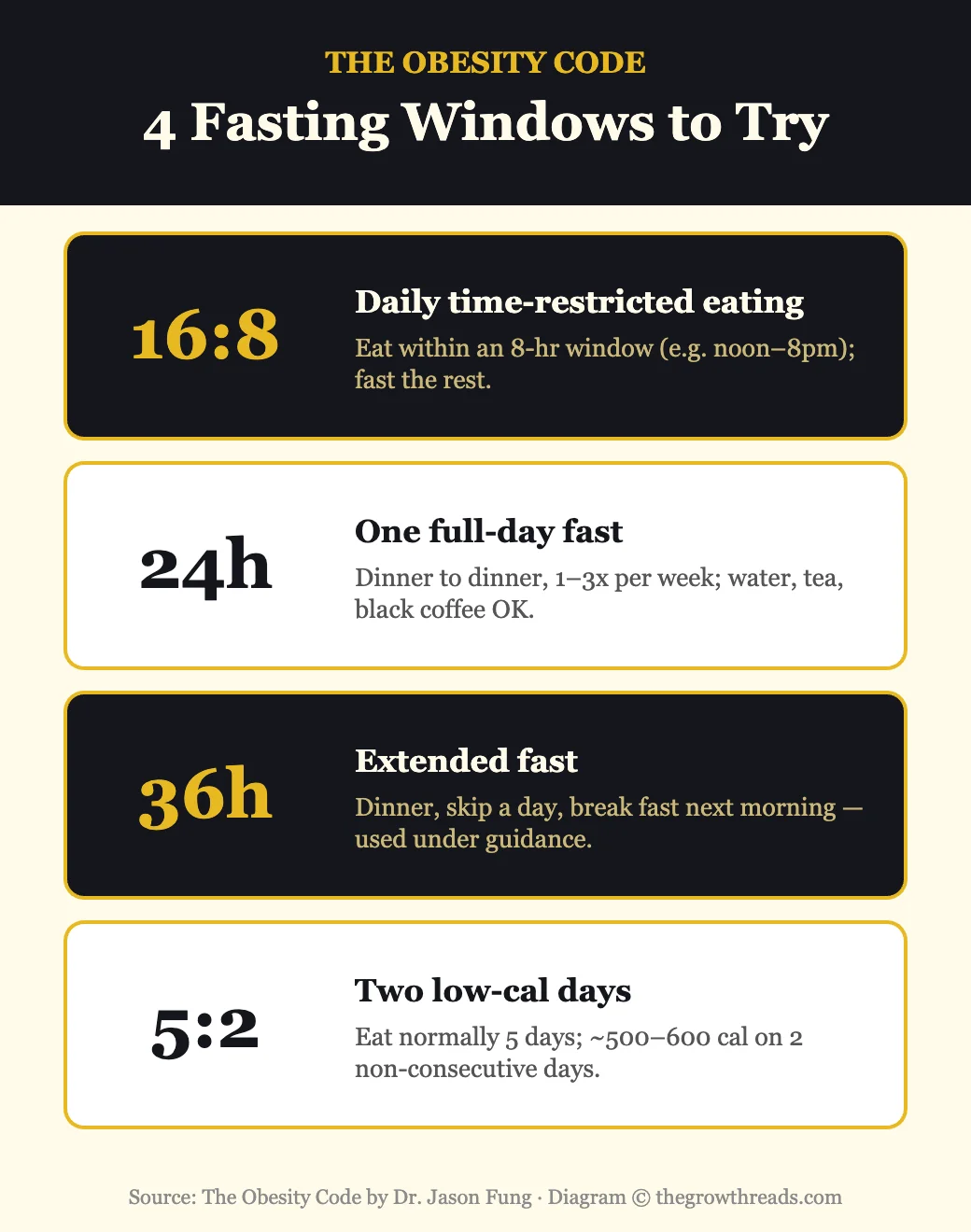
The second, and more distinctive, half is when to eat. Fung presents intermittent fasting not as an extreme measure but as a flexible, free tool for lowering insulin on a schedule that fits real life — from a simple daily eating window to longer fasts used more occasionally. He’s careful to frame fasting as something the body is well-adapted to (humans fasted involuntarily for most of history) and addresses common objections: hunger typically comes in waves and passes, black coffee/tea/water are fine during a fast, and electrolytes matter more than most people expect on longer fasts. He also draws on outcomes from his own IDM Program patients, many of whom reduced or eliminated diabetes medications alongside sustained weight loss. One point Fung returns to repeatedly: fasting costs nothing and requires no special products, which makes it accessible in a way that many commercial diet programs and prescription weight-loss drugs are not — though he’s equally clear that it isn’t the only valid approach, just the one his clinical experience has found most effective for reversing insulin resistance specifically.
TGR Note: Knowing the protocol is the easy part — sticking with a new eating window long enough to see results is the hard part. Our Atomic Habits summary pairs well here: treat your fasting window as an identity (“I’m someone who eats on a schedule”) rather than a rule you’re white-knuckling through.
Who is The Obesity Code best for — and who should read something else first?
The Obesity Code is best for readers who’ve already tried calorie counting or portion control, watched the weight come back, and want to understand the biology behind why — plus anyone managing prediabetes, type 2 diabetes, or PCOS who wants a dietary framework beyond “eat less.” It’s also a strong pick for low-carb or keto-curious readers who want the underlying mechanism, not just a meal plan.
If you want a broader whole-food, plant-forward approach instead of a low-refined-carb one, start with How Not to Die. If sleep and stress feel like your bigger blocker than diet itself, Why We Sleep is a better entry point. If your main interest is longevity science rather than weight loss specifically, try Lifespan. And if you already know your goal but keep abandoning new routines within a few weeks, Atomic Habits will help more than another diet book will.
Questions to reflect on
- When during the day do you feel hungriest — and is that biological hunger, or habit and boredom?
- What’s the longest gap you currently go between your first and last bite of the day, and could you stretch it by even two hours?
- Which “low-fat” or “diet” product in your kitchen is actually high in refined carbs or added sugar?
- How has your weight responded to past calorie-restriction diets — did it come back, and how quickly?
- What non-food stressors — poor sleep, work pressure, anxiety — might be keeping your cortisol, and insulin, elevated?
🔥 Ready to fix your metabolism instead of fighting it?
Get Dr. Fung’s full case for intermittent fasting and see why insulin — not willpower — is the real lever.
How to apply The Obesity Code (7-day plan)
- Day 1 — Observe: Track your current eating window (first bite to last bite) without changing anything yet.
- Day 2 — Cut liquid sugar: Replace soda and juice with water, black coffee, or plain tea for the whole day.
- Day 3 — Push breakfast back: Delay your first meal by 1–2 hours; only eat when you’re actually hungry.
- Day 4 — Try 16:8: Eat within an 8-hour window (e.g., noon–8pm) across two meals instead of three.
- Day 5 — Swap one refined carb: Replace bread, rice, or pasta at dinner with a non-starchy vegetable.
- Day 6 — Add a walk: Take a short walk after your largest meal to blunt the post-meal insulin spike.
- Day 7 — Reflect and decide: Compare hunger, energy, and cravings to Day 1, then decide whether to extend your eating window next week.
Frequently asked questions
Is The Obesity Code just another low-carb diet book?
Not exactly. Most low-carb books focus on macronutrient ratios; Fung’s central argument is about hormones and timing. He does recommend cutting refined carbs because they spike insulin the most, but the book’s distinctive contribution is intermittent fasting as a tool for lowering insulin directly, which is a different lever than swapping food categories alone. You can apply the hormonal framework with several different eating styles, not just strict low-carb.
What is intermittent fasting exactly, and is it safe?
Intermittent fasting means deliberately extending the gap between meals — from a daily 16:8 window to occasional 24- or 36-hour fasts — rather than restricting what you eat. For most healthy adults, shorter daily fasting windows are considered low-risk, but longer fasts, and fasting alongside diabetes medication, blood pressure medication, or during pregnancy, should be discussed with a doctor first, since medication doses may need adjusting.
Do I have to give up carbs completely?
No. Fung’s target is refined carbohydrates and added sugar — white bread, white rice, pastries, sugary drinks — not carbohydrates as a broad category. Vegetables, legumes, and minimally processed whole grains raise insulin far less than their refined, stripped-of-fiber counterparts, and Fung encourages plenty of non-starchy vegetables throughout the book. The practical goal is reducing insulin spikes and the frequency of eating, not eliminating an entire macronutrient or food group from your diet.
Does the science behind the insulin model fully hold up?
It’s genuinely debated. Most metabolism researchers agree insulin and hormones matter, but there’s active disagreement over how much they matter compared to total calorie balance — the “carbohydrate-insulin model” Fung champions is not universally accepted as the dominant mechanism. What’s much less controversial, and supported by multiple clinical trials, is that intermittent fasting produces real weight loss and metabolic improvements for many people, whichever mechanism explains it.
Is fasting safe for women, diabetics, or people on medication?
It can be, but it isn’t universal advice. People on insulin or sulfonylurea medications risk dangerous blood sugar drops if they fast without adjusting doses under medical supervision. Some women report disrupted menstrual cycles with aggressive fasting schedules and may do better easing in gradually. This book is not a substitute for medical advice — anyone with a health condition or on medication should talk to a doctor before starting.
How is this different from keto?
Keto restricts a macronutrient — carbohydrates — tightly enough to shift the body into ketosis, tracking grams of carbs, protein, and fat daily. Intermittent fasting, as Fung presents it, restricts a time window instead, without requiring you to track macros at all during your eating period. Both target the same underlying lever — lowering insulin — which is why many people combine a lower-carb style of eating with a fasting schedule, but you can practice either one independently: fast without going strict keto, or eat keto on a normal three-meal schedule.
What if I get hungry or have low energy during a fast?
Fung describes hunger as coming in waves that build and pass rather than climbing endlessly, and notes most people adapt within one to two weeks as their body shifts to burning stored fat more readily. Staying hydrated and getting enough electrolytes (sodium, potassium, magnesium) helps with energy dips, especially on longer fasts. Starting with a shorter window, like 14:10, and extending gradually is an easier entry point than jumping straight to a 24-hour fast.
Related summaries
- How Not to Die Summary & Review
- Why We Sleep Summary & Review
- Lifespan Summary & Review
- Outlive Summary & Review
- See all the best health books →
How we analyze books: We read the full text, cross-check factual and scientific claims against other research and reporting, and build original frameworks (diagrams, application plans, reflection questions) rather than reproducing the author’s content. We never rate a book we haven’t fully read. Read our full methodology.
Related Health Summaries
Food Fix Summary & Review: How to Save Health and Planet One Bite at a Time
Good Energy Summary & Review: Fix Your Metabolism to Unlock Limitless Health
Spark Summary & Review: The Science of Exercise and the Brain
The Comfort Crisis Summary & Review: Embrace Discomfort to Reclaim Your Health
The Wim Hof Method Summary & Review: Breathe, Embrace the Cold, Transform Your Health