

★★★★☆ 4.0/5
One-liner: The food system is broken — it is making us sick, destroying the planet, and bankrupting the economy — and fixing it is the single most impactful thing we can do for human and planetary health.
Best for: Health-conscious readers, policy enthusiasts, and anyone who wants to understand why the modern food system produces chronic disease and what practical steps individuals and societies can take to fix it.
Reading time: ~7 hours (400 pages)
Difficulty to apply: Low for personal diet changes; high for the systemic policy reforms the book advocates.
Food Fix in One Minute
The food we eat is the number one cause of death, disease, and suffering on the planet — and fixing the food system is the most impactful solution available. Dr. Mark Hyman makes a sweeping case that the modern industrialized food system is simultaneously causing an epidemic of chronic disease, driving climate change and environmental destruction, undermining economic productivity, and perpetuating social inequality. Drawing on medical research, agricultural science, and policy analysis, Hyman argues that food is not just a personal health issue — it is the single most important lever for addressing the interconnected crises of healthcare costs, climate change, and social justice. The book provides both personal dietary guidance and a detailed policy roadmap for transforming the food system from a disease-producing machine into a health-producing one.
Key Takeaways
- Food is the top cause of chronic disease: Diet-related illness — heart disease, diabetes, obesity, cancer — is the leading cause of death and the primary driver of healthcare costs worldwide.
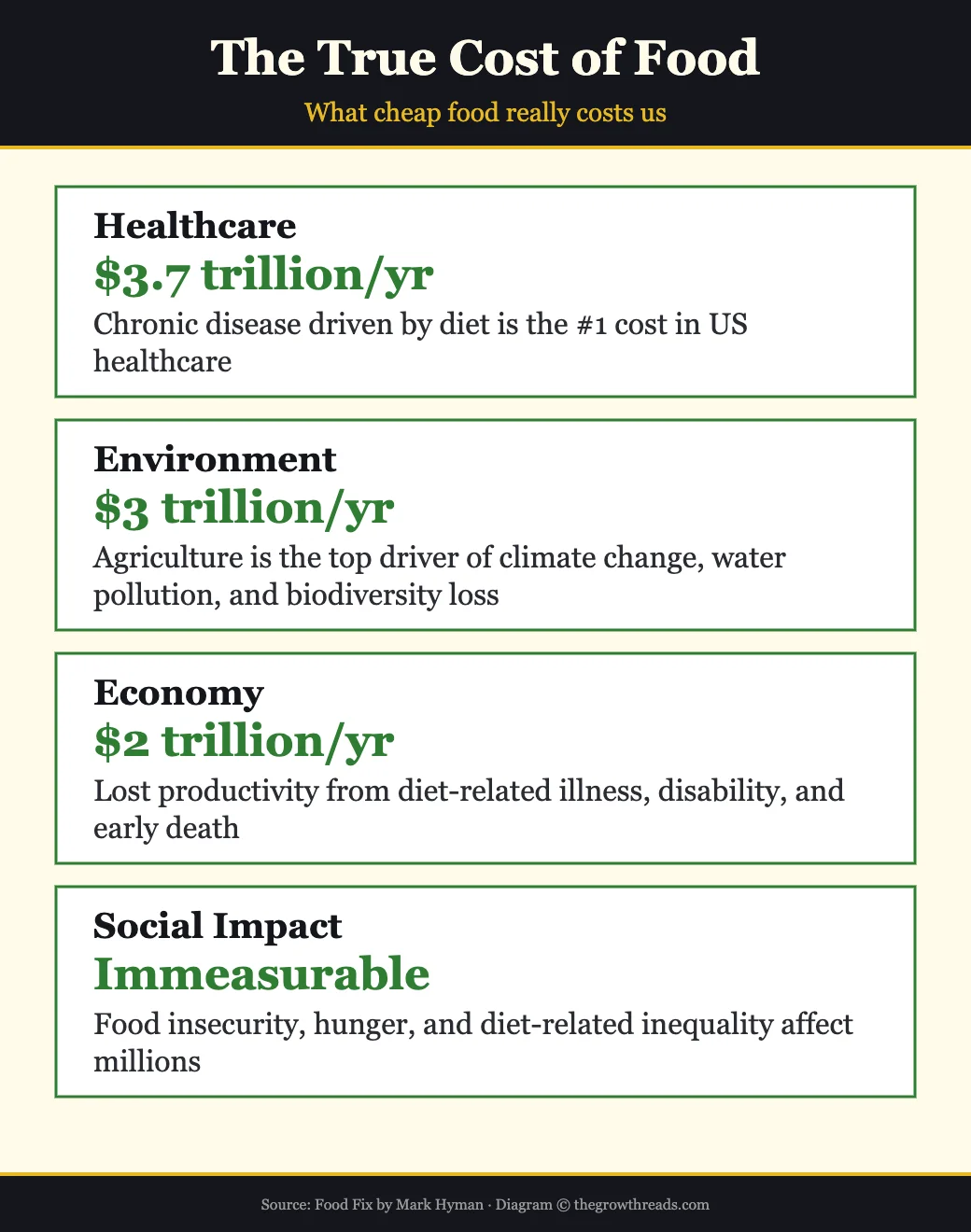
- The true cost of food is hidden: Cheap processed food appears affordable but its real costs — healthcare, environmental damage, lost productivity — run into trillions of dollars annually.
- Ultra-processed food is engineered to addict: Food companies design products to maximize consumption, not nutrition, using combinations of sugar, fat, and salt that override normal appetite regulation.
- Agriculture drives climate change: Industrial farming is a leading contributor to greenhouse gas emissions, deforestation, water pollution, and biodiversity loss — more than transportation in many analyses.
- Regenerative agriculture can reverse the damage: Farming practices that rebuild soil health can sequester carbon, restore biodiversity, and produce more nutritious food simultaneously.
- Food policy is health policy: Government subsidies, school meal programs, food marketing regulations, and agricultural policy directly determine what people eat and how healthy they are.
- Food is the most powerful medicine: Dietary changes can prevent, treat, and in many cases reverse chronic diseases more effectively than drugs — and with fewer side effects.
- Individual choices matter: While systemic change is essential, personal dietary decisions — eating whole foods, avoiding ultra-processed products, choosing regeneratively grown food — create immediate health benefits.
What Is Food Fix About?
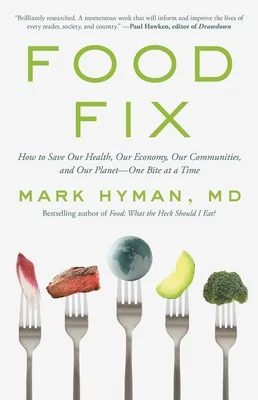
Food Fix argues that the modern food system is the root cause of chronic disease, environmental destruction, and economic waste. Dr. Mark Hyman presents both personal dietary strategies and policy solutions for transforming food from a driver of illness into the most powerful form of medicine available.
About the Author
Dr. Mark Hyman is a practicing functional medicine physician, fourteen-time New York Times bestselling author, and the head of strategy and innovation at the Cleveland Clinic Center for Functional Medicine. He has advised multiple governments, the Clinton Foundation, and the World Economic Forum on food and health policy. Hyman’s clinical practice focuses on treating chronic disease through nutrition, and his personal experience reversing patients’ diabetes, heart disease, and autoimmune conditions through dietary changes drives his conviction that food is the most underutilized form of medicine. He is not medical advice — this is educational content about Hyman’s published arguments. Explore all Mark Hyman book summaries →
Key Concepts at a Glance
| Concept | What It Means | Use It When |
|---|---|---|
| True Cost Accounting | Measuring the full cost of food including health, environment, and social impacts | You want to understand why cheap food is actually expensive |
| Food as Medicine | Using dietary changes as first-line treatment for chronic disease | You want to address health issues through nutrition before medication |
| Regenerative Agriculture | Farming that rebuilds soil health, sequesters carbon, and increases biodiversity | You want to support food systems that heal rather than harm the environment |
| Pegan Diet | Hyman’s hybrid approach combining paleo and vegan principles | You want a practical dietary framework focused on whole foods |
| Ultra-Processed Food | Industrial food products engineered for overconsumption | You want to identify and eliminate the most harmful foods in your diet |
| Food Policy Reform | Government-level changes to subsidies, marketing, and school meals | You want to advocate for systemic changes to the food system |
Part 1: The Problem — How Food Is Making Us Sick
Hyman opens with a comprehensive indictment of the modern food system. The statistics are staggering: diet-related chronic disease is the leading cause of death globally, responsible for more deaths than smoking, alcohol, and physical inactivity combined. In the United States alone, healthcare costs driven primarily by diet-related conditions exceed three trillion dollars annually. Yet the food industry spends billions marketing the very products that cause these diseases, and government agricultural subsidies support the production of corn, soy, and wheat — the raw materials of ultra-processed food — rather than the fruits and vegetables that would improve public health.
The problem extends beyond individual health. Industrial agriculture is a leading driver of climate change, contributing more greenhouse gas emissions than the entire transportation sector in some analyses. It is the primary cause of deforestation, the largest consumer of fresh water, and the biggest source of water pollution. The food system that produces cheap calories is simultaneously destroying the ecosystems that make food production possible in the long term.
Hyman documents how ultra-processed foods — products engineered with precise combinations of sugar, fat, salt, and artificial flavors — are designed to override the brain’s natural appetite regulation. These products are not food in any traditional sense; they are consumable products optimized for addictive overconsumption. The result is an epidemic of obesity, diabetes, and metabolic disease that is spreading from wealthy nations to the developing world as the industrial food system goes global.
Part 2: The Solution — Food as Medicine
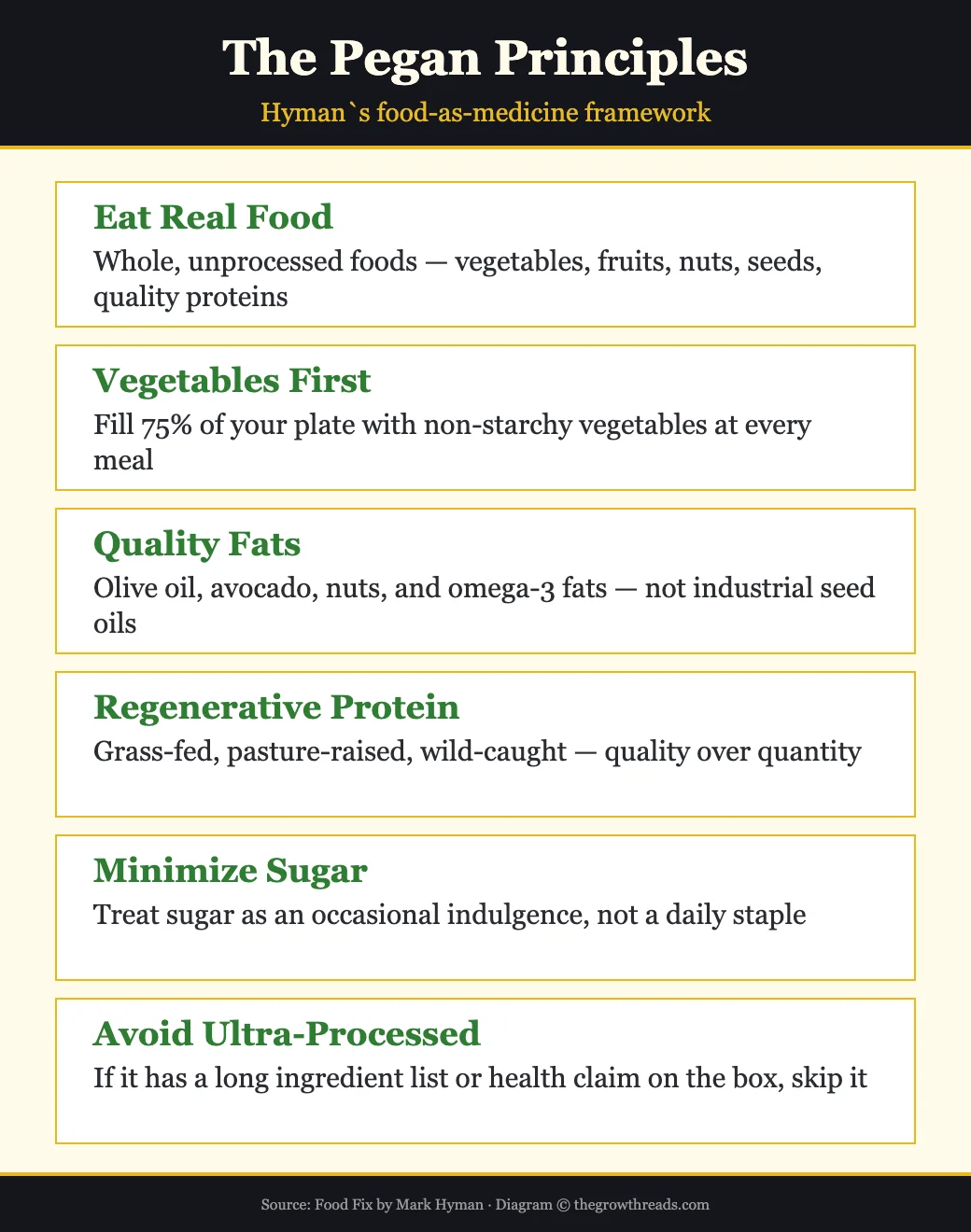
The middle section shifts from diagnosis to prescription, operating at two levels: personal dietary changes and systemic food policy reform. On the personal level, Hyman advocates what he calls the “pegan” approach — a hybrid of paleo and vegan principles focused on whole, unprocessed foods. The practical framework is straightforward: fill seventy-five percent of your plate with non-starchy vegetables, eat quality proteins from regeneratively raised sources, use healthy fats like olive oil and avocados, minimize sugar and refined grains, and avoid ultra-processed products entirely.
Hyman presents extensive clinical evidence that dietary changes can prevent, treat, and in many cases reverse chronic diseases including type 2 diabetes, heart disease, autoimmune conditions, and metabolic syndrome. He argues that food should be treated as a first-line medical intervention — not a complementary one — and that the current healthcare system’s focus on pharmaceutical treatment rather than dietary prevention is both medically inferior and economically unsustainable.
Part 3: The Policy — Fixing the System
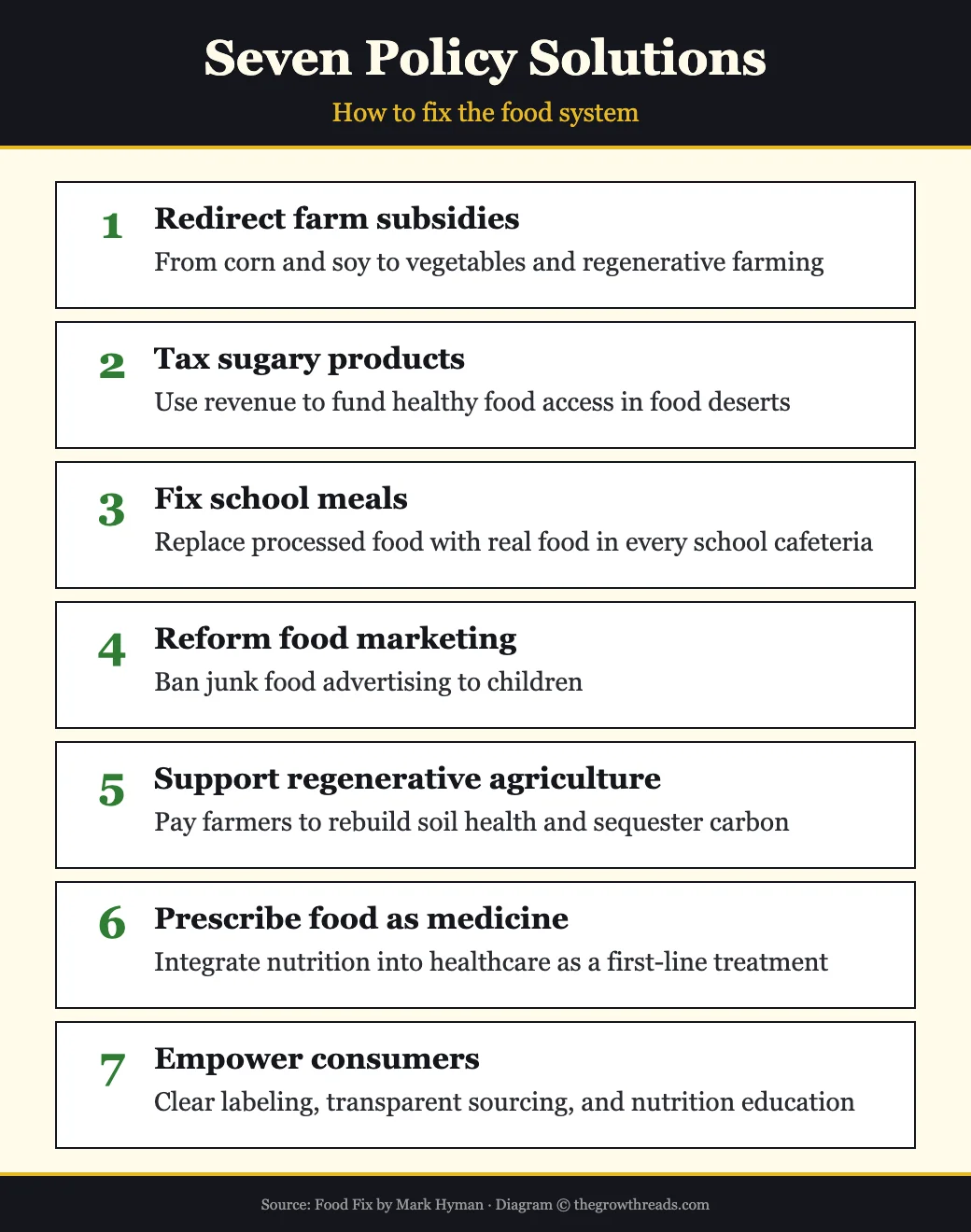
The final section addresses systemic reform. Hyman presents seven major policy proposals: redirecting agricultural subsidies from commodity crops to fruits, vegetables, and regenerative farming; taxing sugary products and using revenue to fund healthy food access; reforming school meal programs to serve real food; banning junk food marketing to children; supporting regenerative agriculture through carbon credits and soil health incentives; integrating nutrition prescriptions into mainstream healthcare; and empowering consumers through transparent labeling and nutrition education.
He devotes significant attention to regenerative agriculture — farming practices that rebuild soil health, sequester atmospheric carbon, restore biodiversity, and produce more nutritious food. Hyman argues that transitioning from industrial to regenerative agriculture would simultaneously address climate change, improve public health, and create more resilient food systems. The economics are favorable in the long term, but the transition requires policy support because industrial agriculture benefits from decades of embedded subsidies and infrastructure.
Who Is Food Fix Best For — and Who Should Read Something Else First?
Food Fix is ideal for readers who want to understand the big picture of how food, health, environment, and policy intersect. It works for health-conscious individuals, aspiring advocates, and anyone who senses that something is fundamentally wrong with the modern food system and wants to understand what and why.
If you want a more focused guide to personal nutrition, In Defense of Food by Michael Pollan is more concise. If your primary interest is metabolic health and weight management, The Obesity Code goes deeper on that specific dimension. This is educational content, not medical advice — consult a healthcare provider for personal health decisions.
Questions to Reflect On
- What percentage of your diet comes from ultra-processed foods — and what would it take to reduce that by half?
- Do you know where the food you eat most often actually comes from and how it was produced?
- If food is medicine, are you treating yourself well or poorly with what you eat every day?
- What one dietary change would have the biggest positive impact on your health right now?
- Would you pay more for food that was produced regeneratively if it meant better health and a healthier planet?
🔥 Ready to Fix Your Food?
Discover how the food system is making us sick — and the personal and policy changes that can fix it.
How to Apply Food Fix (7-Day Plan)
- Day 1 — Audit your kitchen: Check your pantry and fridge. Identify every ultra-processed item (long ingredient lists, added sugars, industrial oils). Note what percentage of your food supply it represents.
- Day 2 — Eat one whole-food meal: Prepare one meal using only whole, unprocessed ingredients — vegetables, quality protein, healthy fat. Notice how you feel afterward compared to your usual meals.
- Day 3 — Read labels on five foods: Pick five packaged foods you buy regularly. Read the ingredient lists. If you cannot pronounce an ingredient or it lists added sugar in the first three items, flag it for replacement.
- Day 4 — Visit a farmers market: Buy at least three items directly from a local producer. Ask about their farming practices. Notice the taste and quality difference compared to supermarket equivalents.
- Day 5 — Cook from scratch: Prepare all three meals today using whole ingredients. No packages, no takeout. Use vegetables as the foundation of each plate.
- Day 6 — Educate yourself on sourcing: Research where your most-consumed animal products come from. Look for regeneratively raised, grass-fed, or pasture-raised options at your local stores.
- Day 7 — Make one permanent swap: Replace one ultra-processed food you eat regularly with a whole-food alternative. Make this swap permanent — one small change that compounds over time.
Frequently Asked Questions
What is the main argument of Food Fix?
Hyman argues that the modern food system is the root cause of chronic disease, environmental destruction, and economic waste. Fixing the food system — through both personal dietary changes and policy reform — is the single most impactful action available for improving human and planetary health. The book makes the case that food is not just a personal choice but a systemic issue requiring coordinated action at every level.
What is the pegan diet?
The pegan diet is Hyman’s hybrid approach combining elements of paleo and vegan eating. It emphasizes whole, unprocessed foods with vegetables making up seventy-five percent of the plate, complemented by quality proteins, healthy fats, and minimal sugar and refined grains. It is not strictly paleo or vegan but takes what Hyman considers the best evidence-based elements of both approaches while avoiding their respective extremes.
What is regenerative agriculture?
Regenerative agriculture is a set of farming practices that actively rebuild soil health, increase biodiversity, and sequester atmospheric carbon. Key practices include cover cropping, reduced tillage, crop rotation, composting, and integrating livestock. Unlike conventional agriculture, which depletes soil over time, regenerative farming improves the land with each growing season. Hyman argues it is the key to producing healthier food while addressing climate change simultaneously.
Can food really reverse chronic disease?
Hyman presents clinical evidence that dietary changes can prevent, treat, and in many cases reverse conditions including type 2 diabetes, heart disease, and metabolic syndrome. He argues that food should be treated as first-line medicine, not a complement to drugs. While the evidence for dietary intervention is strong for metabolic conditions, individual results vary and serious health conditions should be managed with professional medical guidance.
Is healthy eating more expensive?
Hyman addresses this directly: ultra-processed food appears cheap at the checkout but its true costs — healthcare, environmental damage, lost productivity — are enormous. On a per-nutrient basis, whole foods often provide better value. He also advocates policy changes to make healthy food more affordable, including redirecting subsidies from commodity crops to fruits and vegetables and improving access in food deserts.
How does Food Fix compare to In Defense of Food?
Both books argue for eating real, whole foods and avoiding processed products. Michael Pollan’s In Defense of Food is shorter, more philosophical, and focused on personal eating principles (“Eat food. Not too much. Mostly plants.”). Food Fix is more comprehensive, covering the science of chronic disease, environmental impacts, policy solutions, and a detailed personal action plan. Pollan changed the conversation; Hyman provides the policy blueprint.
What can individuals actually do?
On a personal level, Hyman recommends eating mostly whole, unprocessed foods, choosing regeneratively produced options when available, reducing sugar and ultra-processed food, supporting local farmers, and advocating for food policy reform. Even without systemic change, individual dietary improvements produce measurable health benefits. The book provides specific personal action steps alongside its policy recommendations.
Related Summaries
- In Defense of Food by Michael Pollan — the foundational case for eating real food.
- The Obesity Code by Dr. Jason Fung — the metabolic science behind diet-related disease.
- Dopamine Nation by Anna Lembke — how engineered foods hijack the brain’s reward system.
- Best Health Books — our complete guide to the top books on health and wellness.
Related Health Summaries
Deep Nutrition Summary and Review
Genius Foods Summary & Review: Eat Your Way to a Sharper Brain
Lifespan Summary & Review: Why Aging Is a Disease We Can Treat
Super Human Summary & Review: The Biohacker`s Guide to Aging Backwards
The Energy Paradox Summary & Review: Why Your Gut Is Stealing Your Energy