

★★★★☆ 4.2 / 5
One-liner: A research-backed longevity blueprint built on decades of clinical trials — combining a mostly-vegan pescatarian diet with periodic fasting-mimicking cycles to activate stem cells and slow aging.
Best for: Health-conscious readers who want a science-backed nutrition framework for longevity, not a quick-fix diet plan.
Reading time: ~5 hours (308 pages)
Difficulty to apply: Moderate-high — daily diet shifts are manageable, but the fasting-mimicking protocol requires planning and medical clearance.
The Longevity Diet in one minute
What if the key to living longer was not what you add to your diet but what you periodically take away? Valter Longo spent thirty years studying aging in yeast, mice, and humans — and discovered that periodic fasting-mimicking diets (FMDs) trigger cellular regeneration that no supplement or exercise program can match. The Longevity Diet presents a two-part system: a daily eating pattern (mostly vegan plus fish, low protein until 65, healthy fats, 12-hour eating window) combined with periodic 5-day fasting-mimicking cycles that trick the body into deep cellular cleanup without the risks of prolonged water fasting. The result, backed by clinical trials, is reduced markers for cancer, diabetes, cardiovascular disease, and neurodegeneration — while preserving muscle mass and metabolic health.
Key takeaways
- Low protein before 65, higher after: High protein intake accelerates IGF-1 and aging-related disease before 65. After 65, the equation flips — you need more protein to prevent sarcopenia and frailty.
- The fasting-mimicking diet is the breakthrough: A 5-day protocol of ~725-1,100 calories, mostly plant-based, triggers autophagy and stem cell regeneration without the dangers of water fasting.
- Eat within a 12-hour window: Not extreme intermittent fasting — just confining meals to 11-12 hours and avoiding food 3-4 hours before bed optimizes metabolic function.
- Mostly vegan plus fish is the longevity sweet spot: High legumes, whole grains, vegetables, nuts, and olive oil, with fish 2-3 times per week. Minimal red meat, processed food, and added sugar.
- IGF-1 is the central biomarker: Insulin-like growth factor 1 promotes growth when young but accelerates aging and cancer when chronically elevated in adults.
- Centenarian studies confirm the pattern: Populations in Okinawa, Sardinia, Loma Linda, and Calabria — all with high concentrations of centenarians — eat diets remarkably similar to the Longevity Diet.
- Fasting kills weak cells and rebuilds strong ones: The cycle of depletion and re-feeding forces the body to clear damaged cells (autophagy) and generate fresh ones from stem cell reserves.
- Clinical trials back the approach: Randomized trials showed FMD cycles reduced body weight, trunk fat, blood pressure, IGF-1, and markers of inflammation and metabolic disease.
- The five pillars framework unifies the evidence: Longo synthesized basic research, epidemiology, clinical trials, centenarian studies, and complex-systems analysis into five converging pillars of evidence.
- This is not a weight-loss diet: The Longevity Diet targets biological aging at the cellular level. Weight loss is a side effect, not the goal — the goal is healthspan, not just lifespan.
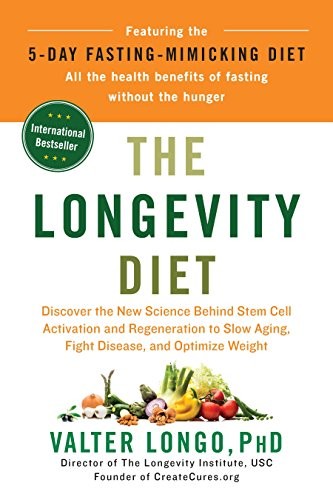
What is The Longevity Diet about?
The Longevity Diet is a science-based nutrition and longevity framework by biogerontologist Valter Longo, drawing on thirty years of aging research across basic science, clinical trials, and centenarian population studies. It presents a daily dietary pattern plus periodic fasting-mimicking cycles designed to activate stem cell regeneration, reduce disease markers, and extend healthspan.
About the author
Valter Longo is a professor of gerontology and biological sciences at the University of Southern California and director of the USC Longevity Institute. Born in Genoa, Italy, he grew up partly in Chicago before returning to pursue research on the genetics and biochemistry of aging. His lab pioneered the discovery that fasting-mimicking diets can trigger stem cell-based regeneration in mice and humans. Longo has published over 150 peer-reviewed papers, received NIH funding for multiple clinical trials on fasting and disease prevention, and donates all profits from his fasting-mimicking company (L-Nutra) to charity. He splits his time between USC and the IFOM cancer research institute in Milan. Explore all Valter Longo book summaries →
Key concepts at a glance
| Concept | What it means | Use it when |
|---|---|---|
| Fasting-Mimicking Diet (FMD) | 5-day low-calorie plant-based protocol that triggers fasting benefits without total food restriction | Quarterly or as prescribed for metabolic reset |
| IGF-1 Modulation | Keeping insulin-like growth factor in a healthy range by controlling protein intake | Daily protein decisions from age 18+ |
| Stem Cell Regeneration | The body rebuilds fresh cells from stem cell reserves during the re-feeding phase after fasting | Understanding why the FMD works at a cellular level |
| Autophagy | Cellular self-cleaning — damaged components are broken down and recycled during fasting | Days 3-5 of the FMD protocol |
| Five Pillars of Evidence | Basic research + epidemiology + clinical trials + centenarian studies + complex systems | Evaluating whether a health claim is well-supported |
| Pescatarian + Vegan Core | Plant-forward diet with fish 2-3x/week as the longevity-optimized eating pattern | Daily meal planning and grocery shopping |
| 12-Hour Eating Window | Time-restricted eating without extreme fasting — all meals within 11-12 hours | Setting meal timing each day |
| Age-Adjusted Protein | Low protein before 65 to suppress IGF-1; increase after 65 to prevent muscle loss | Adjusting macros at different life stages |
Part 1: The science of aging and why food is the master regulator
Longo opens by tracing his journey from studying aging in simple yeast cells to running clinical trials in humans. The through-line is a single discovery: organisms that receive fewer growth-promoting nutrients live dramatically longer. In yeast, reducing sugar and amino acids extended lifespan tenfold. In mice, similar nutrient restrictions reduced cancer, diabetes, and cognitive decline. The mechanism centers on IGF-1 — insulin-like growth factor 1 — which acts as a master growth switch. When IGF-1 is high, cells prioritize growth and reproduction. When it drops, cells shift into protection and repair mode.
This protection mode is what Longo calls the body entering a “shield” state. DNA repair enzymes activate. Damaged proteins are cleared through autophagy. The immune system recalibrates. And critically, stem cells — normally dormant — begin generating fresh replacement cells. The problem, Longo argues, is that the modern Western diet keeps IGF-1 chronically elevated through constant high-protein, high-sugar feeding. The body never enters repair mode. Damage accumulates. Diseases of aging emerge decades earlier than they should.
Longo introduces his “five pillars” framework for evaluating dietary evidence: basic research (what happens in cells and animal models), epidemiology (what populations that live longest actually eat), clinical trials (randomized controlled studies), centenarian studies (what people who reach 100+ have in common), and complex-systems analysis (how all the variables interact). He argues that most dietary advice fails because it relies on one or two pillars. His approach requires convergence across all five before he makes a recommendation.
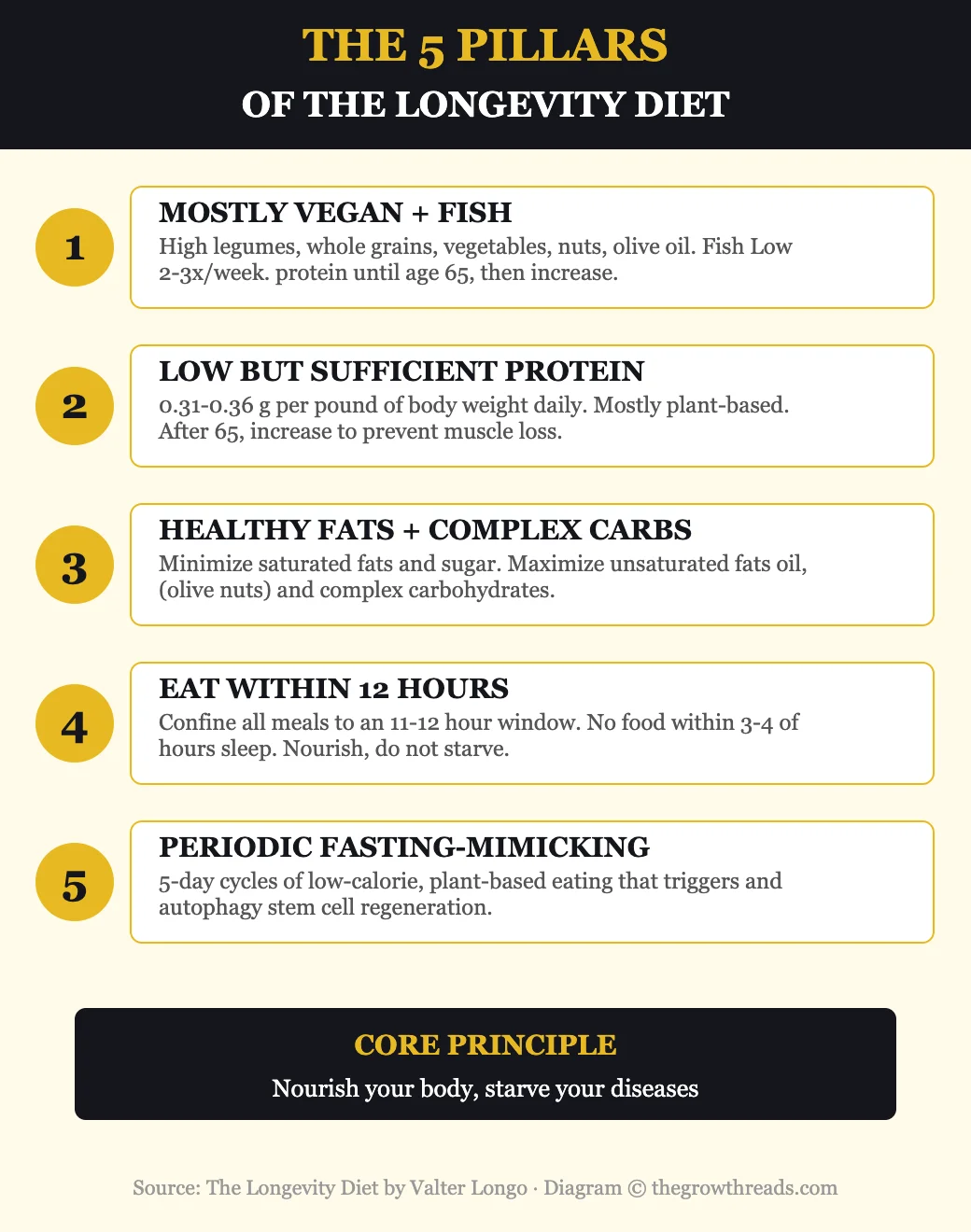
Part 2: The daily Longevity Diet — what to eat every day
The practical core of the book is a daily eating pattern modeled on the diets of the longest-lived populations on earth. Longo prescribes a mostly vegan base — high in legumes, whole grains, vegetables, nuts, and olive oil — with fish added two to three times per week. Red meat, processed meat, and added sugar are minimized. Dairy is kept low (the centenarian populations he studied consumed very little). The eating window is 11-12 hours, with no food for 3-4 hours before sleep.
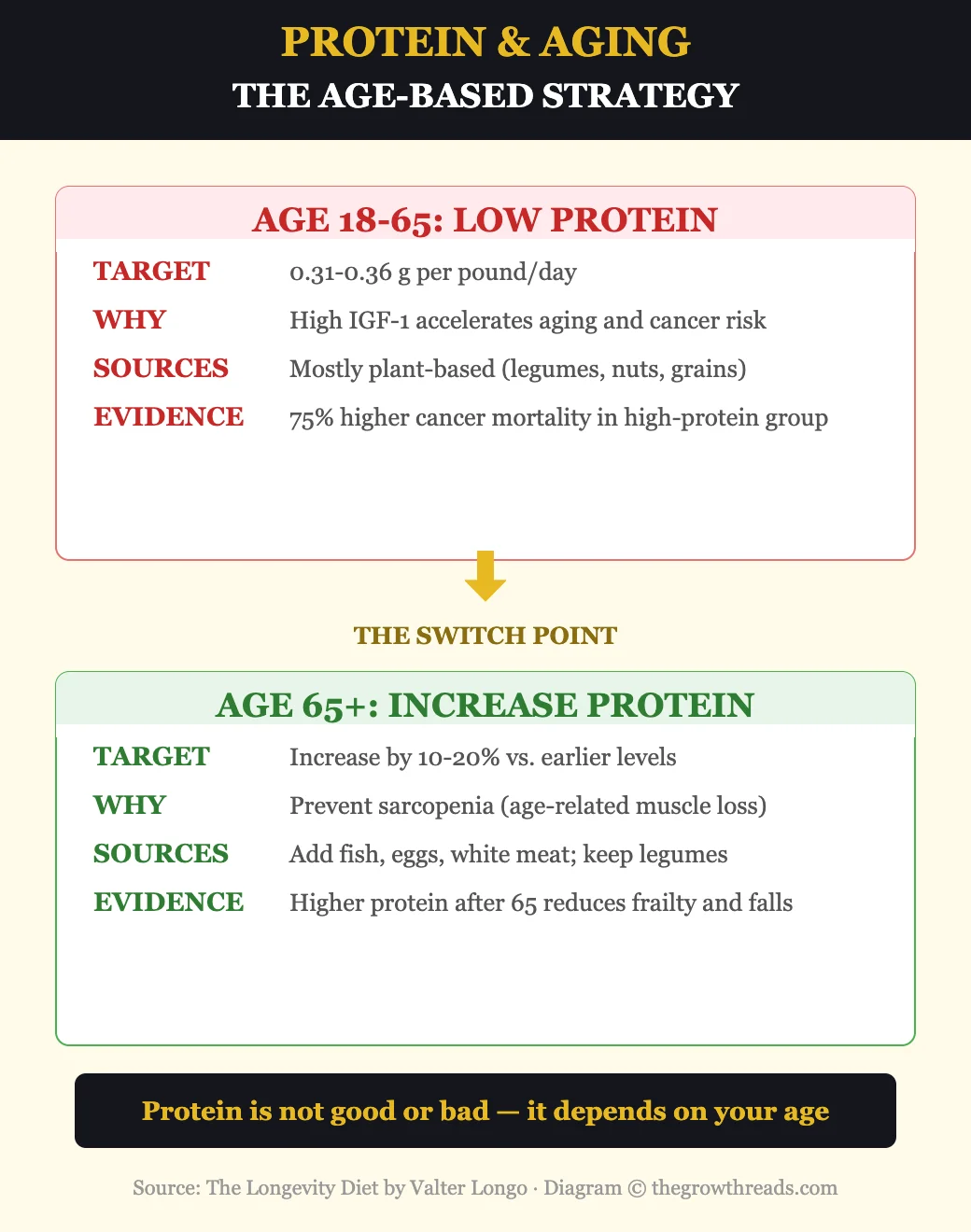
The protein recommendation is the book’s most distinctive feature. Longo argues that adults under 65 should consume only 0.31-0.36 grams of protein per pound of body weight per day — significantly lower than standard dietary guidelines and dramatically lower than what fitness culture promotes. His reasoning is backed by a large epidemiological study he co-authored, which found that high protein intake in people aged 50-65 was associated with a 75% increase in overall mortality and a fourfold increase in cancer death risk. The mechanism: high protein drives high IGF-1, which accelerates cell division and cancer growth.
But at age 65, the equation reverses. IGF-1 naturally declines with age, and the bigger risk becomes sarcopenia — age-related muscle loss that leads to frailty, falls, and loss of independence. After 65, Longo recommends increasing protein by 10-20%, adding more fish, eggs, and even some white meat to the base diet. This age-dependent protein strategy is one of the most nuanced positions in the nutrition literature.
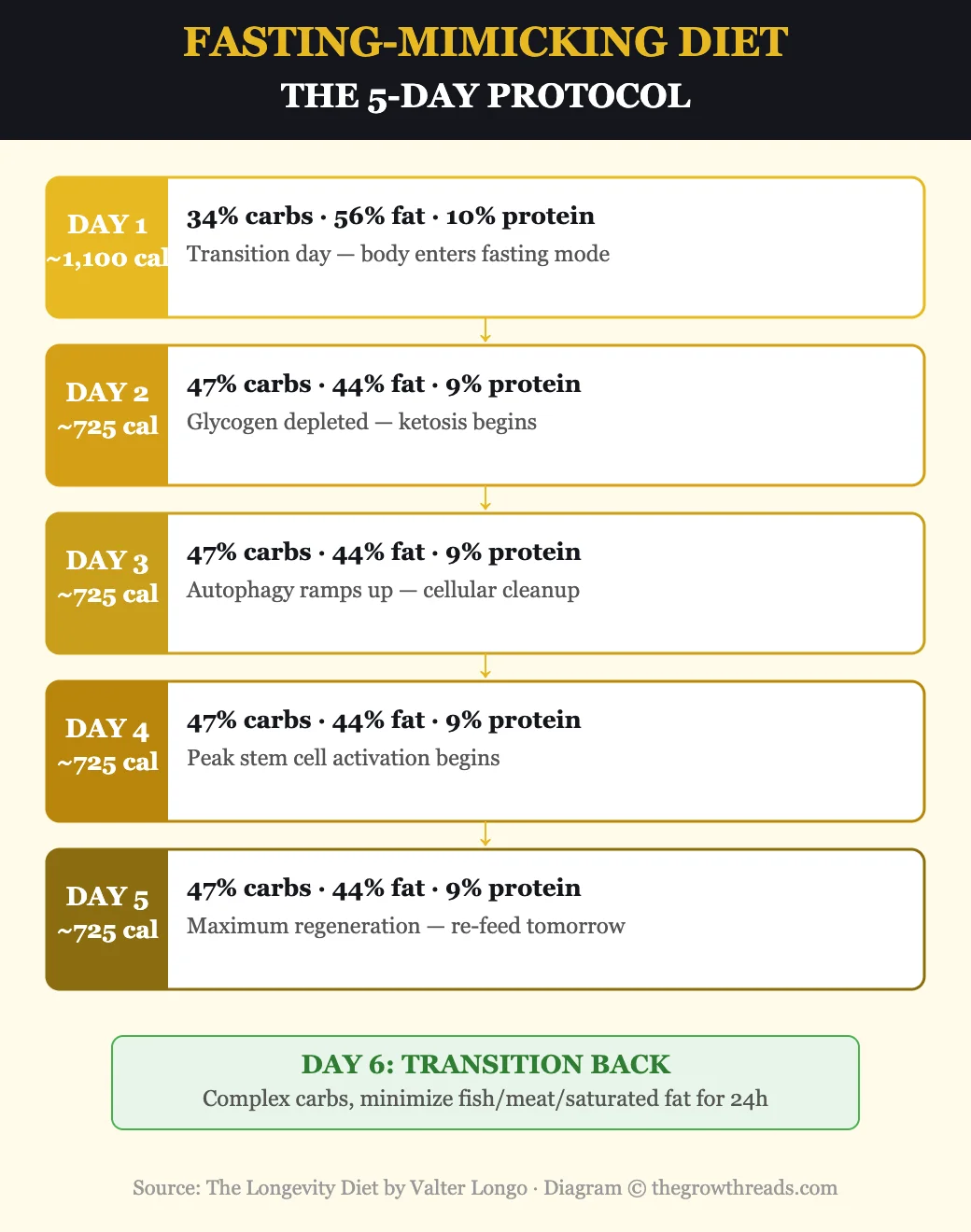
Part 3: The fasting-mimicking diet — the regeneration protocol
The fasting-mimicking diet (FMD) is Longo’s signature contribution to longevity science. Unlike water fasting or extreme caloric restriction, the FMD provides enough food (725-1,100 calories per day) to make the protocol tolerable and safe, while keeping macronutrients in a specific ratio that still triggers fasting physiology. Day 1 is a transition day at ~1,100 calories. Days 2-5 drop to ~725 calories with 47% carbs, 44% fat, and 9% protein — all plant-based.
What happens inside the body over these five days is remarkable. On Day 1, glycogen stores begin depleting as the body shifts from glucose to fat as its primary fuel. By Day 2, ketosis begins and the liver starts producing ketone bodies. On Day 3, autophagy — the cellular recycling process — ramps up significantly. Damaged mitochondria, misfolded proteins, and senescent cells are tagged for destruction. Days 4-5 are where the magic happens: stem cell populations activate, and the immune system begins regenerating from stem cell reserves.
But the regeneration does not happen during the fast — it happens during the re-feeding phase. When you resume normal eating on Day 6, the body uses the freshly activated stem cells to rebuild. New white blood cells replace old ones. Pancreatic beta cells regenerate. Neural progenitor cells activate in the hippocampus. It is this cycle of depletion and rebuilding that produces the anti-aging effect. Longo recommends healthy adults do the FMD once every one to six months, depending on health status and physician guidance.
Part 4: Disease prevention and the clinical evidence
The final section of the book applies the Longevity Diet framework to specific diseases: cancer, diabetes, cardiovascular disease, autoimmune conditions, and neurodegeneration. For each condition, Longo reviews the relevant basic science, then presents clinical trial data showing how the FMD affected biomarkers.
In cancer, the evidence is particularly striking. Longo’s lab demonstrated that fasting makes chemotherapy more effective while simultaneously protecting healthy cells — a phenomenon he calls “differential stress resistance.” Cancer cells, because they have lost normal growth regulation, cannot downshift into protection mode when nutrients are scarce. Healthy cells can. The result: fasting sensitizes tumors to treatment while reducing side effects. Clinical trials combining FMD cycles with chemotherapy showed improved outcomes, though Longo is careful to note these are adjunct therapies, not replacements for standard oncological care.
For diabetes, the clinical data showed that three monthly FMD cycles reduced fasting glucose, decreased IGF-1, lowered markers of inflammation (C-reactive protein), and reduced trunk body fat — all without the compliance challenges of daily caloric restriction. For cardiovascular disease, the reductions in blood pressure, cholesterol, and inflammatory markers were clinically significant. Longo argues that the FMD achieves metabolic improvements comparable to pharmaceutical interventions, but through cellular regeneration rather than symptom suppression.
This is not medical advice — always consult your physician before undertaking any fasting protocol, especially if you are managing a chronic condition.
Who is The Longevity Diet best for — and who should read something else first?
This book is ideal for health-conscious readers who want a comprehensive, research-backed framework for eating for longevity — especially those interested in the fasting and metabolic-health space. It is also excellent for anyone who has read Outlive or Lifespan and wants to go deeper on the nutrition side.
If you are primarily looking for weight loss, this is not the right entry point — try The Obesity Code first. If the fasting component feels too extreme, start with Glucose Revolution for a gentler approach to blood-sugar management. And if you want a broader overview of longevity science before diving into nutrition specifics, Lifespan provides the wider lens.
Questions to reflect on
- How much protein am I currently eating per day, and is it appropriate for my age bracket (under or over 65)?
- When was the last time I went more than 14 hours without eating — and how did my body respond?
- Which of my current dietary habits align with centenarian populations, and which ones contradict the evidence?
- Am I eating for longevity (cellular health) or for short-term performance — and do those goals conflict?
- Would I be willing to try a 5-day fasting-mimicking cycle with medical supervision? What is holding me back?
🔥 Ready to eat for a longer, healthier life?
Get Valter Longo’s research-backed Longevity Diet blueprint and learn the fasting-mimicking protocol used in clinical trials.
How to apply The Longevity Diet (7-day plan)
- Day 1 — Audit your current protein intake: Track everything you eat today and calculate your protein in grams. Compare it against Longo’s recommendation of 0.31-0.36g per pound of body weight (under 65) or 10-20% higher (over 65).
- Day 2 — Stock your Longevity Diet kitchen: Buy legumes (lentils, chickpeas, black beans), whole grains, nuts, olive oil, and vegetables. Plan three dinners this week that are plant-based with fish as the optional addition.
- Day 3 — Set your 12-hour eating window: Pick a consistent 12-hour eating window (e.g., 7am-7pm). No calories outside this window. No food 3-4 hours before bed.
- Day 4 — Cook your first Longevity Diet meal: Make a bean-and-vegetable-heavy dinner with olive oil as the primary fat. Notice how you feel compared to a typical high-protein, high-processed-food meal.
- Day 5 — Swap one protein source: Replace one animal protein serving with a plant-based alternative (lentil soup instead of chicken, bean tacos instead of beef). Track how your energy and digestion respond.
- Day 6 — Research the FMD: Read Longo’s clinical trial summaries (available at vfroundation.org). Discuss with your doctor whether a fasting-mimicking cycle is appropriate for your health situation.
- Day 7 — Design your monthly rhythm: Write down your daily Longevity Diet template (meals, timing, protein target) and decide on an FMD frequency (quarterly for healthy adults). Put the first FMD cycle on your calendar.
Frequently asked questions
What is the fasting-mimicking diet and how is it different from regular fasting?
The fasting-mimicking diet (FMD) is a 5-day protocol of low-calorie, plant-based eating (725-1,100 calories per day) designed to trigger the same cellular benefits as water fasting — autophagy, stem cell activation, and metabolic reset — while still providing enough nutrition to be safe and tolerable. Unlike water fasting, the FMD has been tested in randomized clinical trials and does not carry the same risks of muscle loss, electrolyte imbalance, or dangerous drops in blood pressure.
How often should I do the fasting-mimicking diet?
Longo recommends healthy adults with normal body weight do the FMD once every three to six months. People with higher risk factors (elevated IGF-1, metabolic syndrome, family history of cancer or diabetes) may benefit from monthly cycles for the first three months, then quarterly maintenance. Always consult your physician before starting, especially if you take medication or have a chronic condition.
Is The Longevity Diet the same as a vegan diet?
Not exactly. The Longevity Diet is predominantly plant-based but includes fish two to three times per week, making it closer to a pescatarian pattern. Longo chose this approach because the longest-lived populations (Okinawa, Sardinia, Loma Linda) consistently ate small amounts of fish alongside their plant-heavy diets. Pure veganism can work for longevity, but Longo notes it requires careful supplementation of B12, omega-3s, and potentially iron and zinc.
Why does protein advice change at age 65?
Before 65, high protein intake drives elevated IGF-1, which promotes cell growth and division — beneficial during childhood but associated with accelerated aging and cancer risk in adults. After 65, IGF-1 naturally declines, and the primary threat shifts from cancer to sarcopenia (muscle loss), frailty, and falls. Higher protein intake after 65 helps preserve muscle mass, bone density, and functional independence. The shift is not sudden — it is a gradual transition based on individual health markers.
Can I do the fasting-mimicking diet on my own?
Longo provides general macronutrient guidelines in the book (Day 1: ~1,100 cal; Days 2-5: ~725 cal, 47% carbs, 44% fat, 9% protein, all plant-based). Some people follow these guidelines with home-prepared meals. However, Longo developed a commercial product (ProLon) that provides pre-packaged FMD meals formulated to the exact specifications used in clinical trials. Whether DIY or packaged, medical supervision is recommended, especially for your first cycle.
What evidence supports The Longevity Diet?
Longo’s recommendations are backed by an unusually robust evidence base. Key studies include a 2015 Cell Metabolism paper linking protein intake to mortality risk in 6,381 adults, multiple mouse studies showing lifespan extension through FMD cycles, a 2017 randomized clinical trial in Science Translational Medicine demonstrating metabolic benefits of three FMD cycles in 100 participants, and extensive epidemiological data from centenarian populations in five global regions. The convergence across multiple evidence types is what distinguishes this work.
What should I read after The Longevity Diet?
For a broader longevity framework that includes exercise, sleep, and emotional health, read Outlive by Peter Attia. For the molecular biology of aging, try Lifespan by David Sinclair. For a deeper dive into fasting protocols, see The Complete Guide to Fasting by Jason Fung. And for optimizing blood sugar alongside the Longevity Diet, Glucose Revolution is an excellent companion.
Related summaries
- Outlive — Peter Attia’s comprehensive framework for extending healthspan through medicine, exercise, nutrition, sleep, and emotional health.
- Lifespan — David Sinclair’s molecular biology of why we age and what emerging science says we can do about it.
- The Complete Guide to Fasting — Jason Fung’s practical guide to intermittent and extended fasting for metabolic health.
- How Not to Die — Michael Greger’s evidence-based case for a whole-food, plant-based diet to prevent the leading causes of death.
📚 See all Health book summaries →
How we analyze books: We read every book cover to cover (no AI-generated summaries of summaries), cross-reference key claims with primary sources and later research, and test the practical advice against real-world application. Our 5-point rating weighs evidence quality, practical utility, writing clarity, originality, and lasting impact. Read our full methodology.