

⭐⭐⭐⭐ 4.4/5
One-liner: The definitive medical case for fasting as a therapeutic tool — covering intermittent, alternate-day, and extended fasting with practical protocols.
Best for: Anyone interested in fasting for weight loss, metabolic health, or disease prevention who wants the science explained by a practicing physician.
Reading time: ~5 hrs (304 pages)
Difficulty to apply: Moderate — protocols are clearly laid out, but extended fasts require medical awareness.
The Complete Guide to Fasting in one minute
Fasting is not starvation — it is the oldest dietary intervention in human history. Nephrologist Jason Fung argues that modern medicine has it backwards: instead of eating six small meals a day, humans are biologically designed for periods of feasting and fasting. Drawing on clinical experience treating thousands of patients with type 2 diabetes and obesity, Fung explains how fasting lowers insulin, triggers autophagy (cellular cleanup), promotes fat burning, and reverses metabolic disease. The book covers every fasting protocol from 16:8 intermittent fasting to multi-day extended fasts, with practical guidance on what to drink, how to break a fast, who should avoid fasting, and how to troubleshoot common problems.
Key takeaways
- Insulin is the master switch: Weight gain is primarily driven by chronically elevated insulin levels, not just caloric excess. Fasting is the most effective way to lower insulin.
- Fasting is not starvation: Starvation is involuntary and indefinite; fasting is voluntary and controlled. The body has evolved sophisticated mechanisms to thrive during fasting periods.
- Calories in, calories out is incomplete: The hormonal impact of food matters as much as the caloric content. Fasting addresses the hormonal root cause of obesity.
- Autophagy is your cellular cleanup crew: During fasting, cells break down and recycle damaged components — a process linked to longevity, cancer prevention, and brain health.
- Growth hormone surges during fasting: Fasting can increase growth hormone production by up to 2,000%, preserving muscle mass while burning fat.
- Type 2 diabetes can be reversed: Fung presents clinical evidence that therapeutic fasting can reduce or eliminate the need for diabetes medication in many patients.
- There is no single best fasting protocol: The optimal approach depends on your goals, health status, and lifestyle. Flexibility is key to long-term success.
- Hunger is not constant during fasting: Hunger comes in waves and typically diminishes after the first 24-48 hours. Staying busy and drinking fluids helps.
- What you drink matters: Water, tea, coffee (black), and bone broth are acceptable during fasts. Anything that spikes insulin breaks the fast.
- Fasting has a long medical and spiritual history: Every major religion and many traditional medical systems incorporate fasting, suggesting deep biological compatibility.
What is The Complete Guide to Fasting about?
The Complete Guide to Fasting presents the medical, historical, and practical case for using fasting as a therapeutic tool. Dr. Jason Fung draws on his clinical experience as a nephrologist treating patients with type 2 diabetes and kidney disease to explain how fasting lowers insulin, reverses metabolic dysfunction, triggers cellular repair through autophagy, and promotes sustainable fat loss. The book provides detailed protocols for every fasting method from intermittent to multi-day extended fasts.
About the author
Jason Fung, MD, is a Canadian nephrologist (kidney specialist) based in Toronto who has become one of the world’s leading advocates for therapeutic fasting and low-carbohydrate approaches to metabolic disease. He completed medical school at the University of Toronto and fellowship training at UCLA. His Intensive Dietary Management program has helped thousands of patients reverse type 2 diabetes through dietary intervention rather than medication escalation. His previous book, The Obesity Code, laid the scientific foundation by explaining how insulin drives obesity. The Complete Guide to Fasting is the practical companion, providing the protocols and troubleshooting guidance to implement what The Obesity Code teaches. Explore all Jason Fung book summaries →
Key concepts at a glance
| Concept | What it means | Use it when |
|---|---|---|
| Insulin hypothesis | Chronically high insulin causes weight gain, not just excess calories | Understanding why calorie-counting diets often fail long-term |
| Autophagy | Cellular self-cleaning process activated by fasting (18+ hours) | Seeking anti-aging, brain health, or cancer-prevention benefits |
| Fed vs fasted state | Your body is always in one or the other — they require different fuels | Understanding why constant snacking prevents fat burning |
| Intermittent fasting (16:8) | 16 hours fasting, 8-hour eating window daily | Starting fasting for the first time or maintaining weight loss |
| Extended fasting | Fasts lasting 24-72+ hours for deeper therapeutic benefits | Breaking weight-loss plateaus or addressing metabolic disease |
| Metabolic adaptation | Your metabolism slows with calorie restriction but NOT with fasting | Choosing between a low-calorie diet and fasting |
| Re-feeding syndrome | Dangerous electrolyte shifts when breaking a long fast too aggressively | Planning how to safely break an extended fast |
| Bone broth protocol | Using bone broth during fasts for electrolytes and satiety | Managing hunger and mineral balance during longer fasts |
Part 1: The Science of Fasting — Why It Works
Fung begins by dismantling the “calories in, calories out” model of obesity. While thermodynamics is technically correct, he argues it misses the regulatory role of hormones — particularly insulin. When you eat carbohydrates and protein, your pancreas releases insulin. Insulin tells your body to store energy as fat. When insulin is chronically elevated (from constant eating, high-carb diets, or insulin resistance), your body stays in storage mode and cannot effectively access stored fat.
This is why simply reducing calories often fails long-term. When you eat less but eat constantly (six small meals a day, as commonly recommended), insulin never drops low enough to unlock fat stores. Your body responds to the caloric deficit by reducing metabolic rate — you feel cold, tired, and hungry, but your weight plateaus. Fung cites the results of the Biggest Loser study, where contestants who lost weight through extreme calorie restriction regained it within years because their metabolisms had permanently slowed.
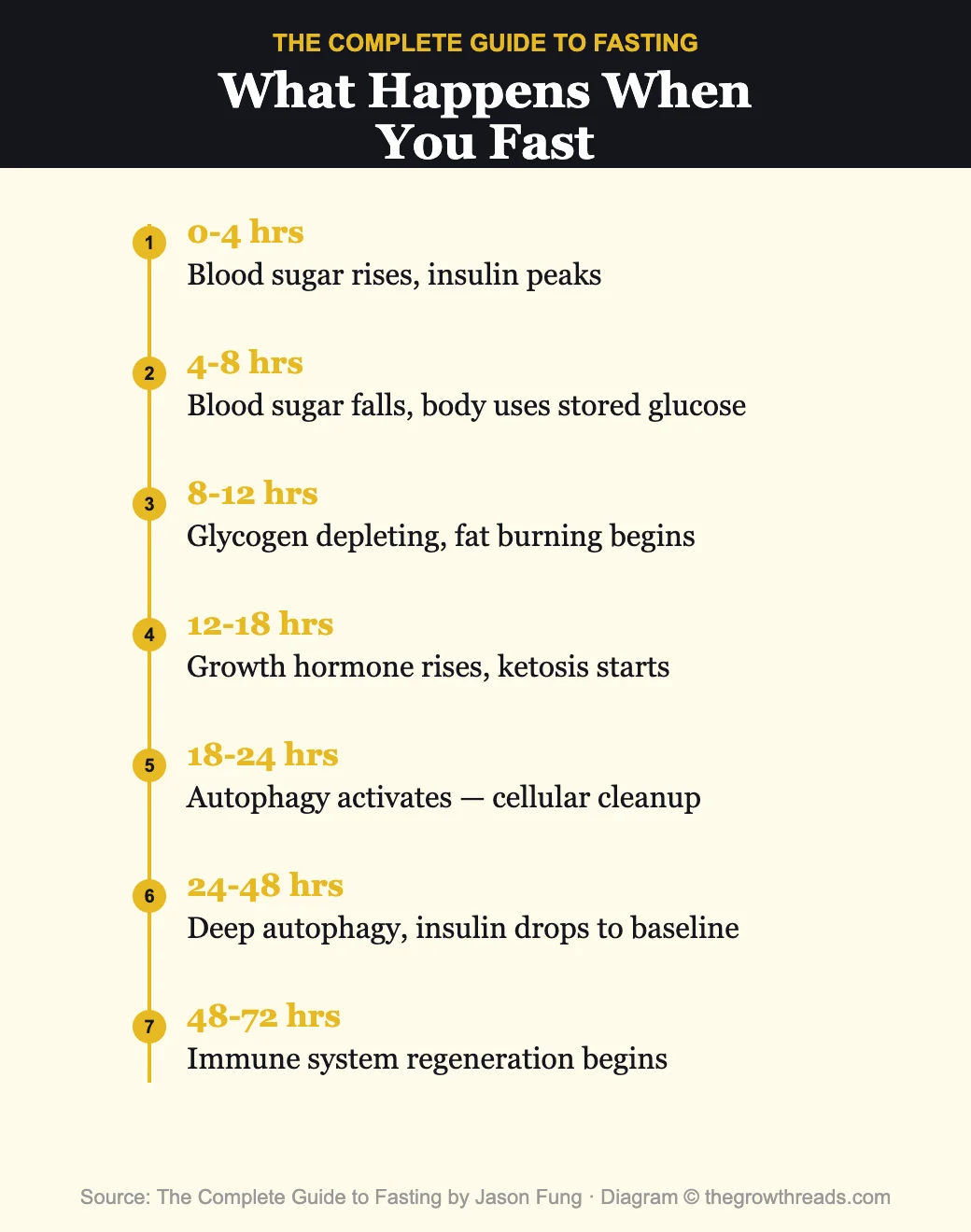
Fasting works differently because it addresses the hormonal root cause. When you stop eating entirely for a defined period, insulin drops rapidly. After about 12 hours, your body begins shifting from glucose burning to fat burning. By 18-24 hours, autophagy activates — cells start breaking down damaged proteins and recycling components, a process that Nobel Prize-winning research has linked to longevity and disease prevention. Growth hormone surges (up to 2,000% in some studies), preserving lean muscle mass while fat is burned.
Fung emphasizes that fasting is not the same as starvation. Starvation is involuntary, indefinite, and occurs when body fat is depleted. Fasting is voluntary, time-limited, and involves burning stored energy that your body specifically accumulated for this purpose. Humans evolved to fast — our ancestors did not have access to three meals a day plus snacks. The fed state, not the fasted state, is the evolutionary anomaly.
Part 2: The Protocols — How to Fast Safely
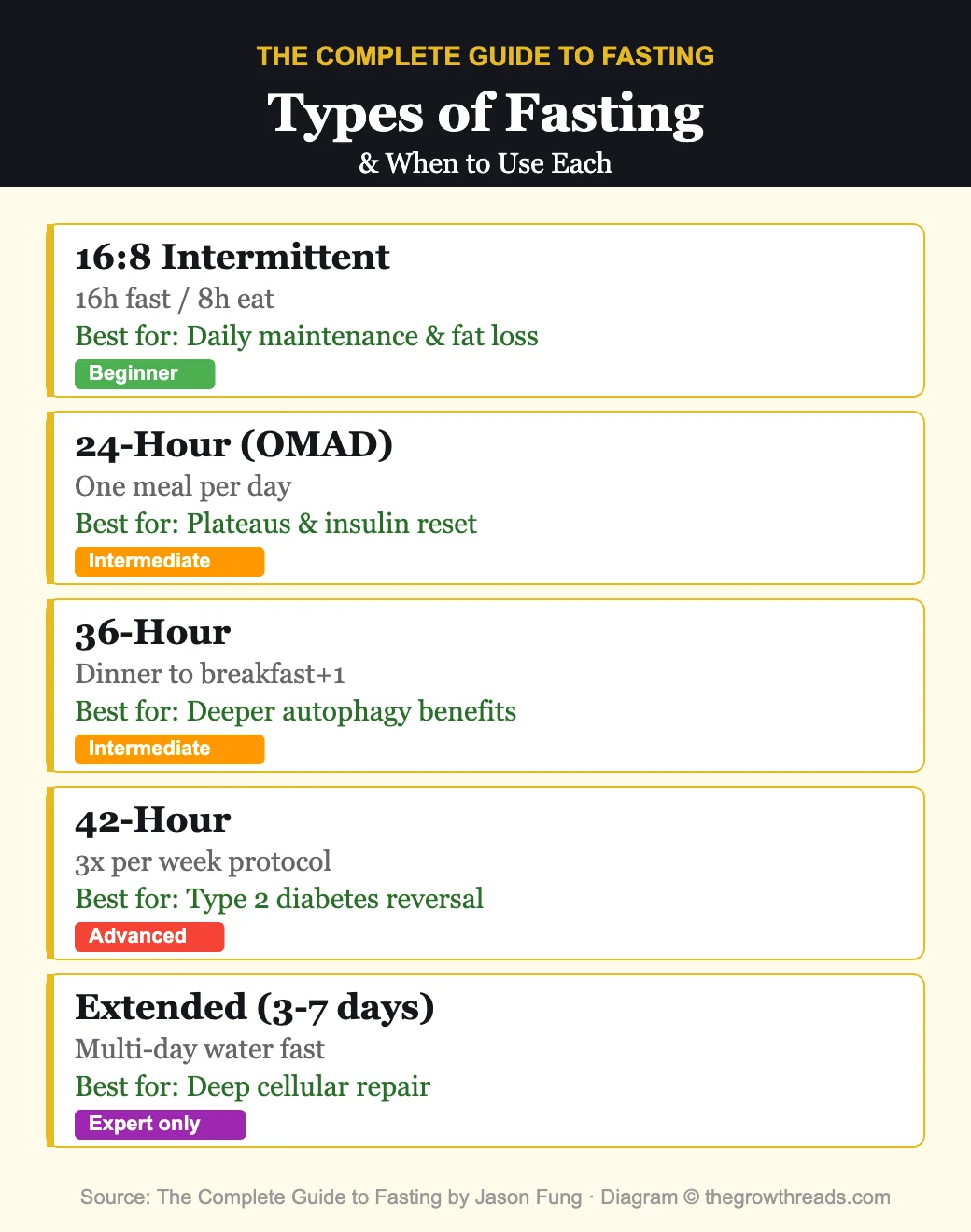
The practical core of the book covers every major fasting protocol in detail. Fung is refreshingly undogmatic — he does not prescribe a single best method but presents a toolkit that readers can customize based on their goals, experience, and medical situation.
The simplest entry point is 16:8 intermittent fasting: skip breakfast, eat lunch and dinner within an eight-hour window, and fast for the remaining sixteen hours (including sleep). Most people can adapt to this within a week. The next level is 24-hour fasting (one meal a day, or OMAD), which Fung uses frequently in his clinical practice for patients with type 2 diabetes. His 36-hour protocol (dinner on day one, skip all food on day two, breakfast on day three) delivers deeper autophagy benefits while remaining manageable for most people.
For more aggressive therapeutic goals, Fung describes 42-hour fasts done three times per week and extended fasts of three to seven days. He is careful to note that extended fasts require medical supervision, adequate hydration, and attention to electrolytes (sodium, potassium, magnesium). He recommends bone broth during longer fasts for both mineral replenishment and psychological comfort.
Breaking a fast properly is as important as the fast itself. Fung warns against re-feeding syndrome — a dangerous electrolyte shift that can occur when breaking an extended fast with a large, carbohydrate-heavy meal. He recommends starting with a small meal, chewing slowly, and avoiding processed carbohydrates for the first meal after a long fast. Nuts, avocado, eggs, and vegetables are ideal re-feeding foods.
Part 3: Fasting and Disease — Therapeutic Applications
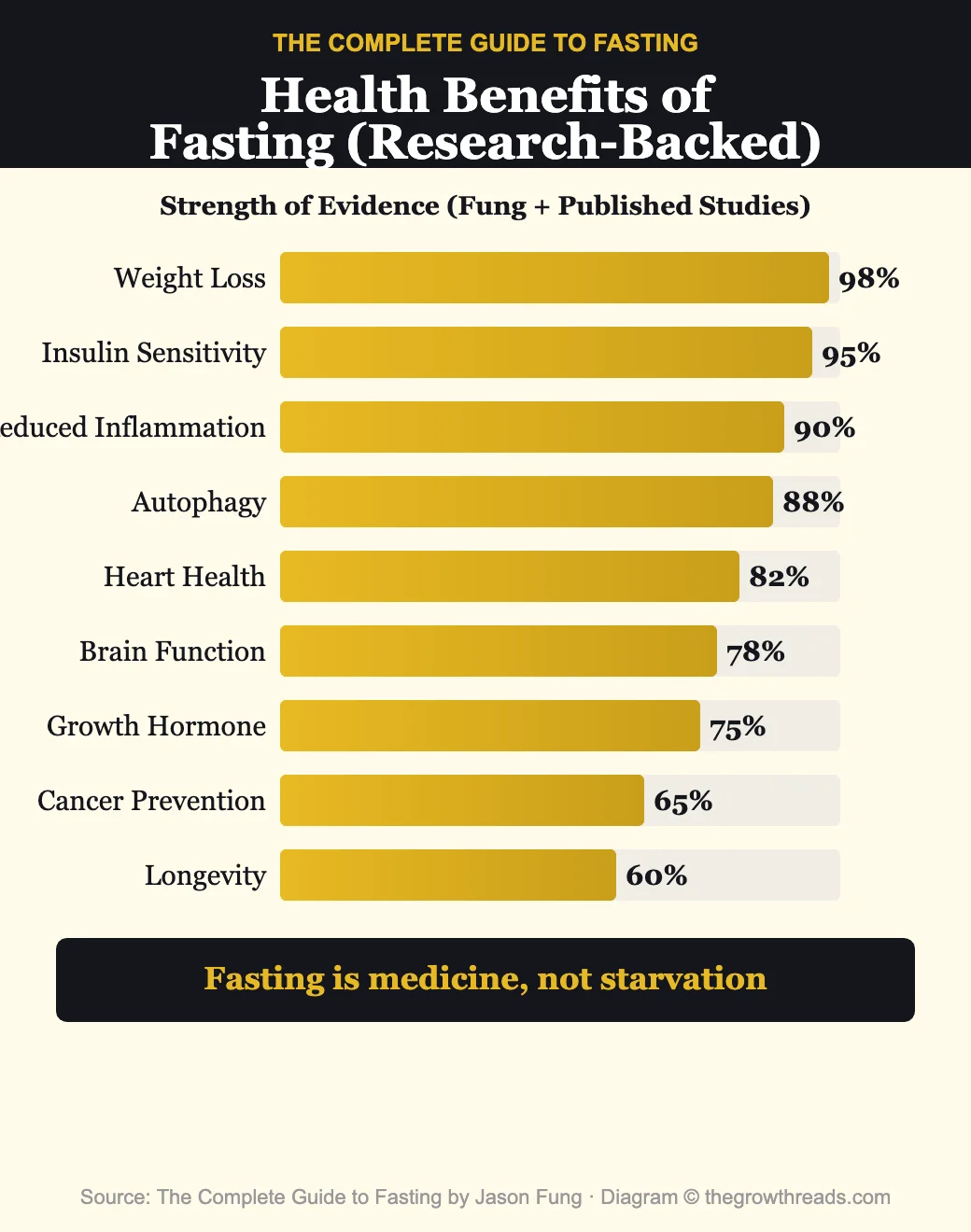
Fung presents his strongest clinical evidence for fasting as medicine in treating type 2 diabetes. He describes patients who had been on insulin for years, with escalating doses, who were able to reduce or discontinue their medication entirely after adopting therapeutic fasting protocols under his supervision. The logic is direct: type 2 diabetes is a disease of excess insulin and insulin resistance. If you lower insulin through fasting, you treat the root cause rather than masking it with more insulin.
Beyond diabetes, Fung surveys the research on fasting and cardiovascular health (improved blood pressure, reduced triglycerides, lower LDL), brain function (potential neuroprotective effects linked to ketone production and BDNF upregulation), cancer (tumor cells may be more vulnerable during fasting states because they cannot use ketones efficiently), and longevity (caloric restriction and fasting are the most consistently demonstrated life-extension interventions across species).
He acknowledges that much of this research is preliminary or derived from animal studies, particularly regarding cancer and longevity. But he argues that the risk-reward calculation is favorable: fasting costs nothing, has a long safety record in human history, and addresses the underlying metabolic dysfunction behind many modern chronic diseases. He does not suggest fasting as a replacement for cancer treatment but as a potential adjunct that deserves more clinical study.
Fung also addresses who should not fast: pregnant or breastfeeding women, children under 18, people who are severely underweight, and anyone with a history of eating disorders. He is unambiguous about these contraindications and recommends medical supervision for anyone with existing health conditions considering extended fasts.
Part 4: Practical Living — Making Fasting Sustainable
The final section addresses the lifestyle dimension of fasting. Fung is pragmatic about common obstacles: social pressure (“just have a bite”), workplace norms built around shared meals, family dynamics, and the fear of muscle loss.
On muscle loss, Fung presents evidence that fasting preserves lean mass better than caloric restriction, primarily because of the growth hormone surge during fasting. He cites studies showing that short-term fasting actually increases metabolic rate (your body ramps up adrenaline and cortisol to mobilize energy stores), in contrast to chronic calorie restriction, which suppresses it.
Exercise during fasting is not only safe but potentially beneficial, Fung argues, because training in a fasted state forces the body to burn fat more efficiently. He recommends lighter exercise during the first few fasts and building up intensity as the body adapts to metabolic flexibility.
The book includes practical recipes for bone broth and re-feeding meals, troubleshooting guides for common side effects (headaches, dizziness, constipation), and tips for managing fasting around work schedules and social commitments. Fung’s core advice is to start small, be flexible, and think of fasting as a skill that improves with practice rather than a rigid prescription.
Please note: this summary is for informational purposes only and is not medical advice. Consult your healthcare provider before starting any fasting protocol, especially if you have existing health conditions.
Who is The Complete Guide to Fasting best for — and who should read something else first?
This book is ideal for anyone curious about fasting who wants the full medical and practical picture from a credentialed physician. It is particularly valuable for people with type 2 diabetes or insulin resistance (with medical supervision), chronic dieters who have plateaued with calorie counting, and health enthusiasts who want to understand autophagy and metabolic flexibility.
If you want the scientific foundation before the practical protocols, start with The Obesity Code by the same author. If you are more interested in what to eat than when to eat, How Not to Die by Michael Greger focuses on whole-food plant-based nutrition. And if you prefer a broader longevity framework that includes fasting as one tool among many, Outlive by Peter Attia provides that comprehensive view.
Questions to reflect on
- How many hours per day do you currently spend in a fed state versus a fasted state? Could you extend your overnight fast by even two hours?
- Have you been relying on calorie restriction to manage weight? How has your metabolic rate responded over time?
- What role does insulin play in your current health picture? Have you had your fasting insulin levels tested?
- Which fasting protocol (16:8, 24-hour, 36-hour) seems most compatible with your schedule and lifestyle?
- What social or cultural norms around eating might create resistance to fasting — and how could you navigate them?
🔥 Ready to unlock the healing power of fasting?
Get the complete medical and practical guide to every fasting protocol.
How to apply The Complete Guide to Fasting (7-day plan)
- Day 1 — Establish your baseline: Track your current eating window. Note the time of your first and last bite of food. Most people eat for 15+ hours daily without realizing it.
- Day 2 — Push breakfast back two hours: If you normally eat at 7am, start at 9am. Drink black coffee or tea to manage morning hunger. This is your first step toward a 14:10 fast.
- Day 3 — Achieve a 16:8 window: Eat your first meal at noon and finish dinner by 8pm. You are now doing 16:8 intermittent fasting.
- Day 4 — Stock your fasting pantry: Buy quality tea, black coffee, mineral water, and bone broth ingredients. Remove snack foods from easy reach.
- Day 5 — Extend to 18 hours: Push lunch to 2pm while keeping dinner at 8pm. Notice how hunger comes in waves and passes without action.
- Day 6 — Plan your first 24-hour fast: Eat dinner tonight, then skip all food tomorrow until dinner. Drink water, tea, and bone broth as needed. Stay busy.
- Day 7 — Complete and reflect: Break your 24-hour fast with a small, nutrient-dense meal (eggs, avocado, vegetables). Journal how you felt. Decide on a sustainable weekly rhythm.
Frequently asked questions
Is The Complete Guide to Fasting the same as The Obesity Code?
No. The Obesity Code (2016) explains the science of why obesity is a hormonal problem driven by insulin, laying the theoretical foundation. The Complete Guide to Fasting (2016) is the practical companion that tells you exactly how to implement fasting — covering protocols, troubleshooting, safety guidelines, and recipes. Think of The Obesity Code as the “why” and this book as the “how.” Reading both gives you the complete picture, but either works as a standalone.
Does fasting cause muscle loss?
Fung argues that fasting preserves muscle better than chronic calorie restriction. During fasting, growth hormone increases dramatically (up to 2,000% in some studies), which protects lean mass while the body preferentially burns fat. Calorie restriction, by contrast, lowers growth hormone and metabolic rate, making muscle loss more likely. However, this applies to properly managed fasting with adequate protein intake during eating periods — not indefinite starvation.
Who should not fast?
Fung clearly identifies several groups who should avoid fasting: pregnant or breastfeeding women, children and teenagers under 18, people who are severely underweight or malnourished, and anyone with a history of eating disorders. He also recommends medical supervision for anyone with type 1 diabetes, those on blood sugar-lowering medications, and people with gout or other conditions that may be affected by metabolic changes during fasting.
What can you drink while fasting?
Water (still or sparkling), black coffee, unsweetened tea (green, black, herbal), and bone broth are all acceptable during fasting. The key principle is avoiding anything that significantly raises insulin. Artificial sweeteners are controversial — Fung generally recommends avoiding them during fasts because some may trigger an insulin response. Cream in coffee is a gray area that depends on how strict your fast needs to be for your goals.
How long should I fast for weight loss?
Fung recommends starting with 16:8 intermittent fasting daily as a baseline. If weight loss stalls, extend to 24-hour fasts two to three times per week. For more stubborn cases (especially with significant insulin resistance), 36 to 42-hour fasts may be needed. The best protocol is the one you can sustain consistently. Fung emphasizes that fasting should be flexible — some weeks you fast more, some less, depending on your body’s signals and your schedule.
Can fasting reverse type 2 diabetes?
Fung presents clinical evidence from his practice showing that many patients with type 2 diabetes have been able to reduce or discontinue insulin and diabetes medications after adopting therapeutic fasting protocols. He frames type 2 diabetes as a disease of excess insulin that can be reversed by lowering insulin through fasting. However, this should only be attempted under medical supervision, as medication doses must be adjusted as blood sugar improves to avoid dangerous hypoglycemia.
Is fasting safe for long periods?
Short-term fasting (up to 36 hours) is generally safe for healthy adults. Extended fasts beyond 48 hours carry more risk and should involve medical supervision. The primary concerns are electrolyte imbalances (sodium, potassium, magnesium), re-feeding syndrome when breaking the fast, and the impact on medications. Fung recommends supplementing electrolytes during extended fasts and breaking them gradually with small, low-carbohydrate meals. He also emphasizes that fasting should never be done by people who are already underweight.
Related summaries
- The Obesity Code Summary — Fung’s first book explaining why obesity is a hormonal problem
- Outlive Summary — Peter Attia’s comprehensive longevity framework that includes fasting
- Lifespan Summary — David Sinclair on the biology of aging and autophagy
- Glucose Revolution Summary — Practical glucose-management strategies that complement fasting
📚 Explore more in our Best Health Books collection.
Related Health Summaries
How Not to Age Summary & Review: The Science of Living Longer, Better
How Not to Diet Summary and Review
The Blue Zones Summary & Review: 9 Lessons From the World’s Longest-Lived People
The China Study Summary & Review: The Case for Plant-Based Eating
The Diabetes Code Summary and Review