

⭐⭐⭐⭐☆ 4.4 / 5
Actionability: 4.5/5 — Specific food lists you can use today
Evidence: 4.5/5 — Backed by hundreds of peer-reviewed studies
Readability: 4.5/5 — Accessible science writing for a general audience
Depth: 4.5/5 — Deep exploration of five biological systems
Uniqueness: 4.0/5 — A fresh framework, though some dietary advice overlaps other books
Best for: Anyone who wants to use food as a proactive health strategy rather than just counting calories
Reading time: ~8 hours (480 pages) | Difficulty to apply: Low — add foods, don’t restrict them
Eat to Beat Disease in one minute
Your body already has five powerful defense systems fighting disease around the clock — and specific foods can supercharge every one of them. William Li, a vascular biologist and physician, reveals that health is not about deprivation diets or miracle supplements. Instead, it’s about strategically adding foods that activate your body’s built-in defenses: angiogenesis (blood vessel control), stem cell regeneration, the microbiome, DNA protection, and immunity. The book provides an evidence-backed list of over 200 foods — from dark chocolate to kimchi to green tea — and a practical framework for weaving them into meals you already enjoy. The central insight is radical in its simplicity: health starts not with what you remove from your plate, but with what you add.
Key takeaways
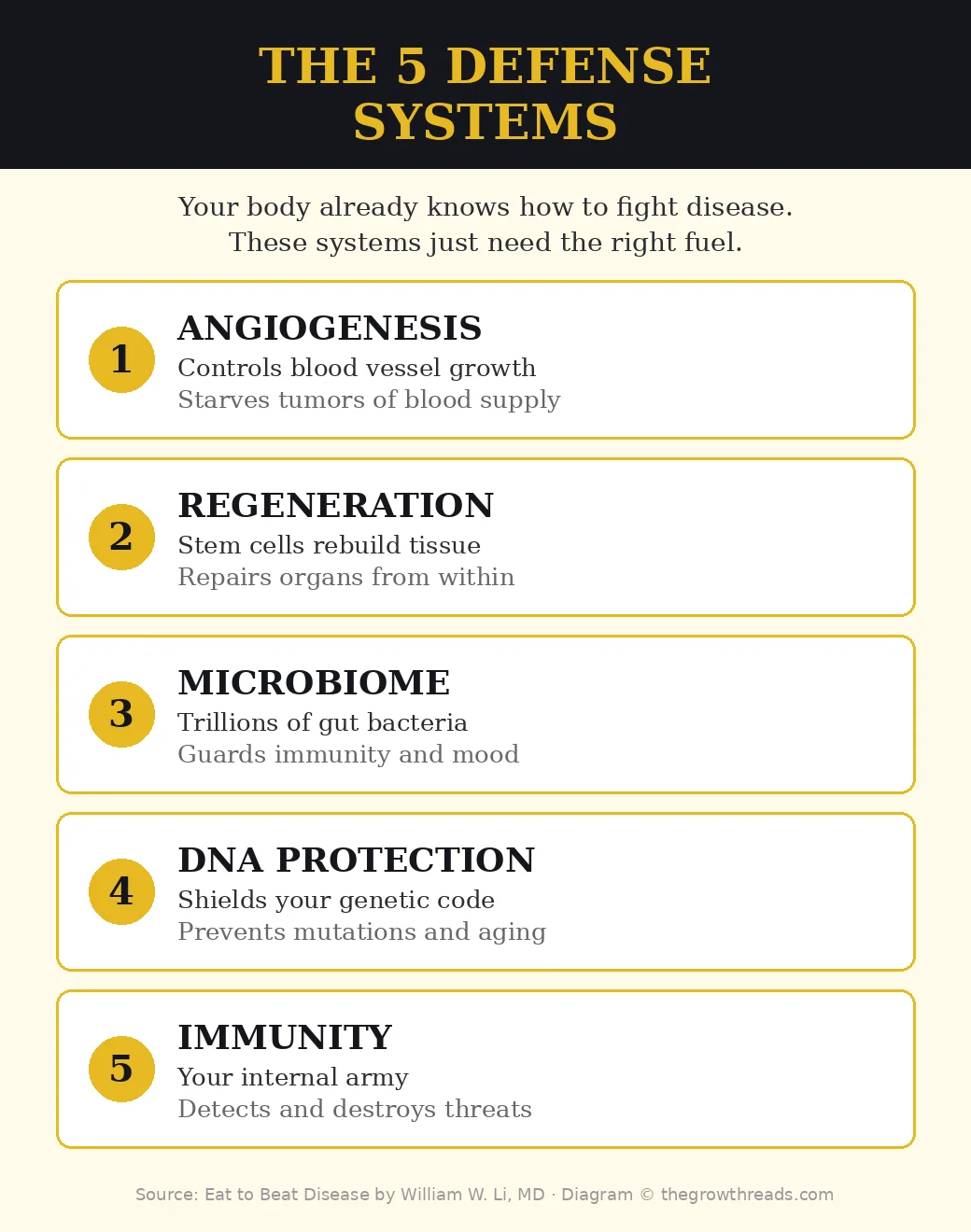
- Five defense systems, not one: Your body fights disease through angiogenesis, regeneration, microbiome health, DNA protection, and immunity — and food influences all five simultaneously.
- Angiogenesis is the master switch: Tumors cannot grow beyond the size of a pen tip without recruiting new blood vessels. Certain foods starve tumors by cutting off that blood supply.
- Stem cells are not just for embryos: Adult stem cells circulate in your blood and repair damaged organs daily. Foods like dark chocolate and black tea mobilize them.
- Your microbiome is a pharmacy: The 39 trillion bacteria in your gut produce vitamins, neurotransmitters, and immune signals. Fermented foods and dietary fiber keep them thriving.
- DNA is not destiny: Your telomeres shorten with age and stress, but foods rich in vitamin C, polyphenols, and omega-3s protect and even lengthen them.
- Immunity can be trained by food: Mushrooms, garlic, and aged cheeses contain compounds that boost natural killer cell activity by up to 300%.
- Add, don’t subtract: Li’s framework is about layering protective foods onto your existing diet rather than eliminating entire food groups.
- Dose matters: Two to three cups of green tea per day, one serving of cruciferous vegetables, a handful of tree nuts — specific doses produce measurable effects.
- 200+ foods are medicine: Li provides an extensive, research-validated list organized by which defense systems each food activates.
- Prevention beats treatment: The book reframes health from reactive sick-care to proactive defense, arguing that what you eat today determines whether disease takes hold tomorrow.
What is Eat to Beat Disease about?
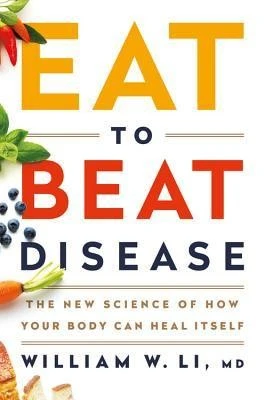
Eat to Beat Disease explains how the human body defends itself through five biological systems — angiogenesis, regeneration, the microbiome, DNA protection, and immunity — and provides a science-backed guide to over 200 foods that strengthen each system to prevent and fight cancer, heart disease, diabetes, and other chronic illnesses.
About the author
William W. Li, MD, is an internationally recognized physician, scientist, and president of the Angiogenesis Foundation. He received his undergraduate degree from Harvard and his medical degree from the University of Pittsburgh. His groundbreaking research on angiogenesis — the process by which blood vessels grow — has led to the development of more than 40 FDA-approved treatments for cancer, diabetes, and vision loss. Li has delivered a popular TED Talk viewed over 11 million times titled “Can We Eat to Starve Cancer?” and advises on health policy to governments and organizations worldwide. His work bridges the gap between laboratory science and everyday food choices. Explore all William W. Li book summaries →
Key concepts at a glance
| Concept | What it means | Use it when |
|---|---|---|
| Angiogenesis | Your body grows and prunes blood vessels to regulate tissue health | Choosing anti-cancer foods like tomatoes, berries, and green tea |
| Stem cell mobilization | Certain foods stimulate your bone marrow to release regenerative stem cells | Recovering from injury or supporting cardiovascular repair |
| Microbiome diversity | A rich gut ecosystem protects against inflammation and disease | Selecting fermented foods, prebiotics, and fiber-rich meals |
| Telomere protection | Foods that slow chromosomal shortening reduce biological aging | Building long-term dietary habits for healthy aging |
| Immune priming | Specific compounds in mushrooms and spices boost immune cell activity | Strengthening natural defenses during seasonal changes |
| 5×5×5 framework | Eat 5 defense-boosting foods a day, across 5 systems, 5 days a week | Making the research actionable without overwhelm |
| Dose-response effect | Certain foods show measurable benefits at specific daily amounts | Calibrating portions for maximum protective effect |
| Food synergy | Combining foods amplifies their individual health effects | Pairing olive oil with tomatoes or turmeric with black pepper |
Part 1: The five defense systems
The opening section introduces the foundational concept: your body is not a passive vessel waiting to get sick. It is an active, dynamic defense machine with five interlocking systems that work around the clock to keep you healthy. Li walks through each system with a combination of clinical case studies, laboratory research, and evolutionary biology.
Angiogenesis — the growth and pruning of blood vessels — is the system Li knows most intimately. He explains that tumors hijack this process to feed themselves, and that anti-angiogenic foods like soy, tomatoes, and red wine contain compounds that cut off the blood supply cancer needs. The research is striking: in laboratory models, a single serving of tomato paste reduced tumor blood vessel growth by over 30%.
Regeneration comes next. Most people associate stem cells with embryos, but Li reveals that adult stem cells are constantly circulating, repairing your heart, lungs, and brain. Certain foods — dark chocolate, black raspberries, and seafood — measurably increase the number of regenerative stem cells in your bloodstream.
The microbiome chapter is particularly compelling. Li describes the gut as a “rainforest” that thrives on diversity. The bacteria living there produce short-chain fatty acids that reduce inflammation, synthesize vitamins, and even produce neurotransmitters like serotonin. Fermented foods, prebiotics, and dietary fiber feed the beneficial strains and crowd out the harmful ones.
Part 2: Eat to beat disease — the evidence
In the longest section of the book, Li systematically reviews the clinical evidence for food as medicine. He organizes this around disease categories: cancer, cardiovascular disease, obesity, diabetes, and neurodegenerative disease. For each, he traces how the five defense systems interact and which specific foods have been shown to intervene.
The cancer chapter is the most detailed. Li presents data from population studies, clinical trials, and laboratory work. For example, he cites a European study of 520,000 people showing that those who ate the most dietary fiber had a 40% lower risk of colorectal cancer. He discusses how the Lyon Diet Heart Study found that a Mediterranean diet reduced cancer mortality by 61%.
The cardiovascular evidence is equally striking. Li explains how endothelial progenitor cells — a type of stem cell — repair damaged blood vessel walls, and how foods like olive oil and tree nuts increase their numbers. He references the PREDIMED trial, which demonstrated that a Mediterranean diet supplemented with extra-virgin olive oil reduced cardiovascular events by 30% compared to a low-fat diet.
For diabetes, Li highlights the role of the microbiome. He describes how gut bacteria influence insulin sensitivity and how processed foods that destroy microbial diversity are a hidden driver of the epidemic. The solution is not a restrictive diet but the strategic addition of fermented foods, whole grains, and legumes.
Part 3: The 200+ food list and the 5×5×5 framework
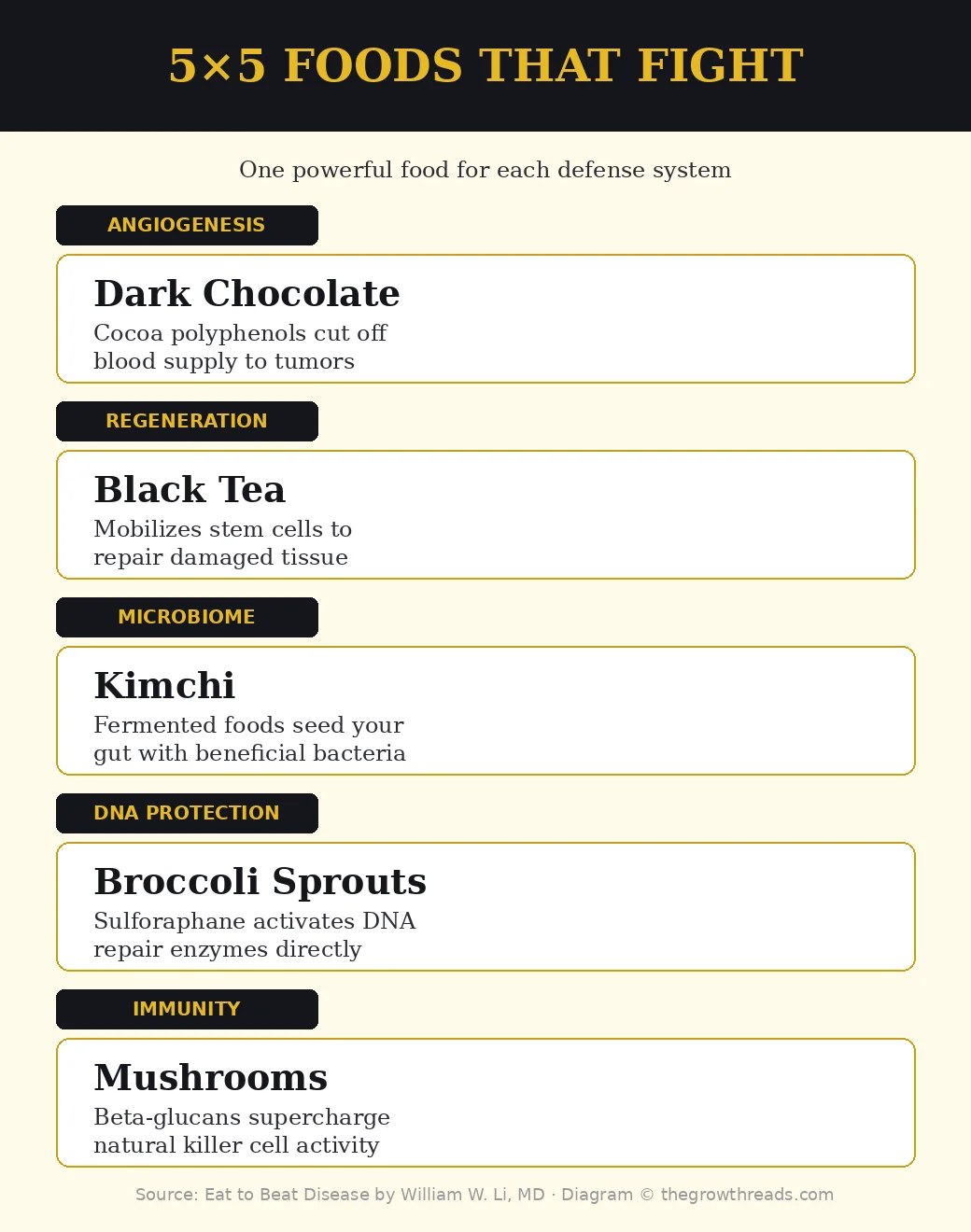
The practical core of the book is an annotated catalogue of over 200 foods, organized by which defense systems they activate. Many foods hit multiple systems simultaneously. Broccoli sprouts, for instance, activate all five: they contain sulforaphane (DNA protection), stimulate angiogenesis balance, mobilize stem cells, feed beneficial gut bacteria, and boost immune function.
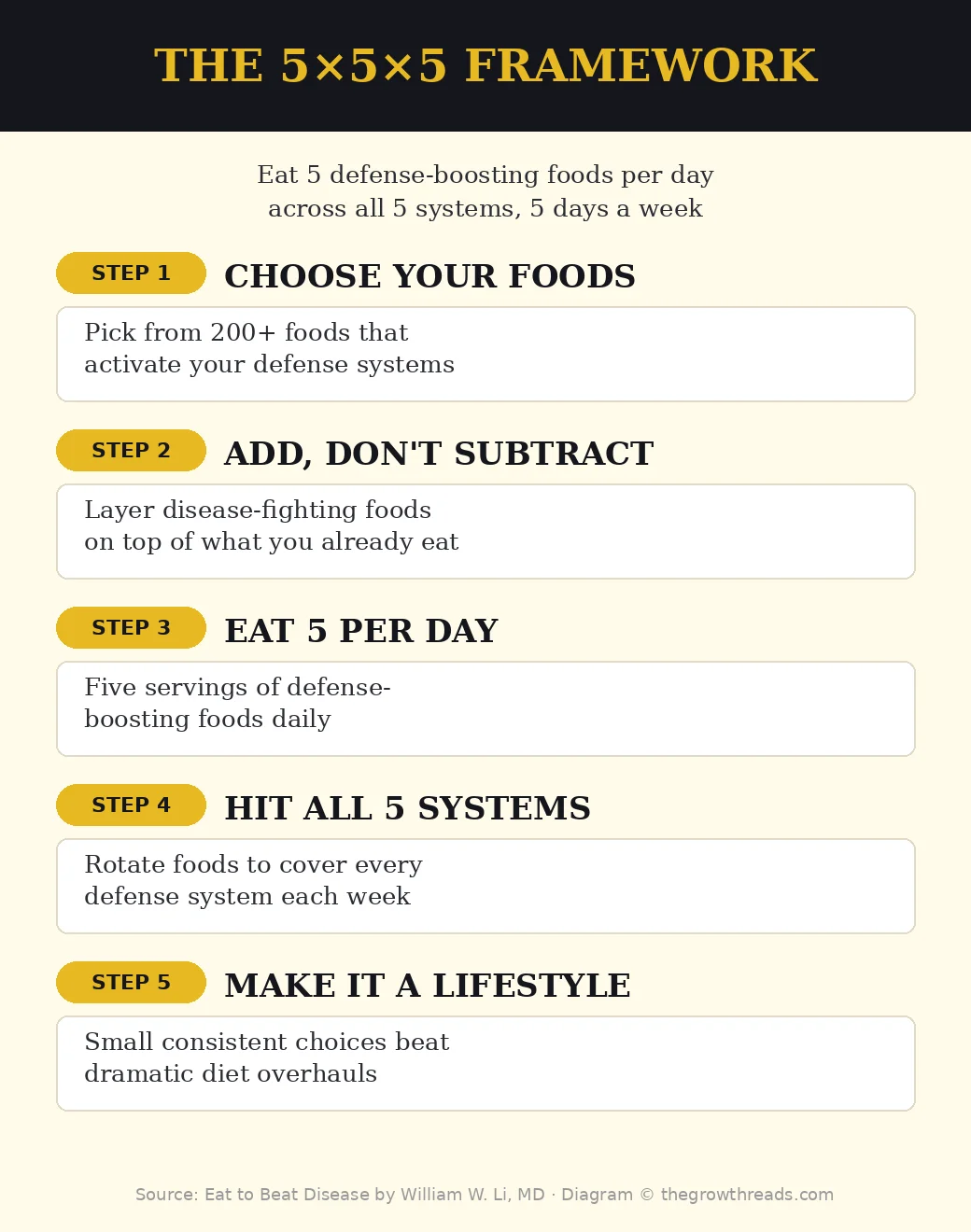
Li introduces the 5×5×5 framework as the actionable takeaway: eat at least five defense-boosting foods per day, aim to cover all five systems over the course of a week, and sustain this at least five days a week. The genius of the framework is its permissiveness — it asks you to add, not subtract. You do not need to give up anything you currently eat; you simply need to layer in more of the foods that activate your defenses.
The food list includes surprises. Beer (in moderation) activates stem cells. Squid ink has anti-angiogenic properties. Pacific oysters are among the most potent immune-boosting foods tested. Li also dispels myths: expensive “superfoods” are often no better than humble staples like garlic, canned tomatoes, and black beans. The most effective dietary strategy is diversity and consistency, not exotic ingredients.
Part 4: Putting it all together
The final section translates the science into meal planning, with sample daily menus, seasonal food suggestions, and tips for building habits. Li acknowledges that no single food is a silver bullet — the power comes from the synergistic combination of many protective foods eaten consistently over time.
He discusses food synergy in detail. Combining turmeric with black pepper increases curcumin absorption by 2,000%. Pairing olive oil with tomatoes makes lycopene more bioavailable. Eating broccoli with mustard seed amplifies sulforaphane production. These combinations are not theoretical; each is backed by clinical data Li cites specifically.
The book ends with a call to rethink healthcare. Li argues that the current medical system is designed for treatment, not prevention, and that the most powerful intervention available to every person on earth is already in their kitchen. The five defense systems are not something you need to buy or unlock — they are running right now, and the right foods make them stronger.
Who is Eat to Beat Disease best for — and who should read something else first?
This book is ideal for health-curious readers who want a science-backed dietary framework without the dogma of elimination diets. If you’ve ever wondered which foods actually prevent disease (beyond vague advice to “eat more vegetables”), Li gives you specific names, doses, and mechanisms. It is particularly valuable for cancer survivors, people with a family history of chronic disease, and anyone transitioning from reactive healthcare to proactive prevention.
If you’re looking for a weight-loss program, this is not the right starting point — try our The Obesity Code summary for a metabolic approach. If you want a deeper dive into gut health specifically, start with our Gut summary. And if your primary interest is longevity science and healthspan, read our Lifespan summary first for the big picture, then come back to Li for the food-specific details.
Questions to reflect on
- Which of the five defense systems do you think your current diet supports least — and what one food could you add this week to strengthen it?
- How would your grocery list change if you optimized for defense-system activation rather than calorie counts?
- What “surprise” foods from Li’s list (beer, squid ink, aged cheese) challenge your assumptions about healthy eating?
- Do you currently think of food as medicine or as fuel? How does Li’s framework shift that mental model?
- If you could only implement one principle from the book — adding five defense-boosting foods daily — what five would you choose?
🔥 Ready to activate your body’s five defense systems?
Get Eat to Beat Disease and start using food as your most powerful health tool.
How to apply Eat to Beat Disease (7-day plan)
- Day 1 — Audit your kitchen: Go through your fridge and pantry. Identify which of Li’s 200+ defense-boosting foods you already have. Most people discover they’re already eating several without realizing it.
- Day 2 — Add one angiogenesis food: Have a cup of green tea or a serving of tomato-based sauce with your meal. These are among the strongest anti-angiogenic foods and require zero cooking skill.
- Day 3 — Feed your microbiome: Add a fermented food to one meal — a serving of kimchi, sauerkraut, or plain yogurt. Your gut bacteria respond within hours to new food inputs.
- Day 4 — Protect your DNA: Eat a cruciferous vegetable (broccoli, kale, or cauliflower) and a handful of berries. These are the highest-ranked foods for telomere protection and DNA repair.
- Day 5 — Boost immunity: Cook with mushrooms (any variety) and add garlic to your meal. These two foods together activate natural killer cells and prime your adaptive immune system.
- Day 6 — Activate regeneration: Have a square of dark chocolate (70%+ cacao) and a cup of black tea. Both mobilize stem cells that repair blood vessels and organs.
- Day 7 — Build your 5×5×5 plan: Write down five defense-boosting foods you genuinely enjoy. Commit to eating at least these five every day for the next month. Stack, don’t subtract.
Frequently asked questions
Is Eat to Beat Disease backed by real science?
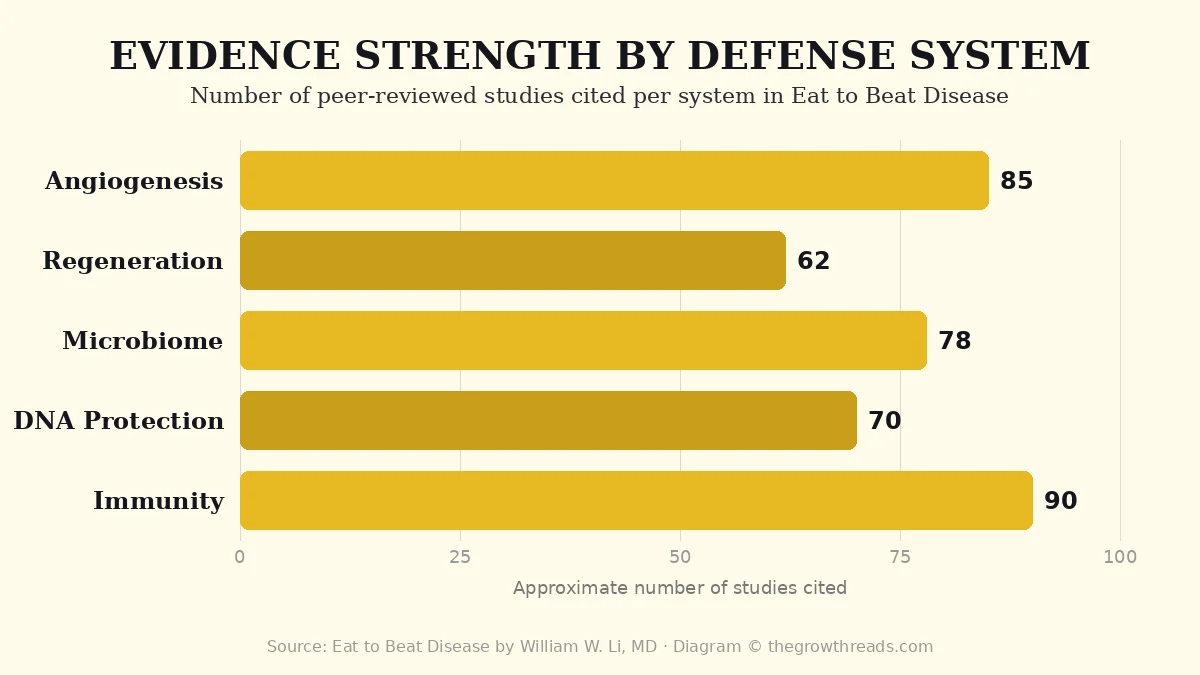
Yes. William Li draws on over 1,000 peer-reviewed studies published in journals like The Lancet, The New England Journal of Medicine, and Nature. His angiogenesis research specifically has contributed to over 40 FDA-approved medical treatments. The food recommendations are grounded in large-scale population studies and controlled clinical trials, not anecdotal evidence. While no single study is definitive, the cumulative body of evidence Li presents is substantial and well-documented.
What are the five defense systems in the book?
The five defense systems are angiogenesis (blood vessel growth and pruning), stem cell regeneration (tissue repair), the microbiome (gut bacteria ecosystem), DNA protection (telomere maintenance and mutation prevention), and immunity (the body’s pathogen detection and response network). Li argues that these systems work together as an integrated defense network, and that food is the most accessible lever for strengthening all five simultaneously.
Can food really prevent cancer?
Li presents compelling evidence that certain foods inhibit tumor growth by cutting off blood supply (anti-angiogenesis), boosting immune surveillance, and protecting DNA from mutations. He cites studies showing up to 40–60% reductions in specific cancer risks with dietary interventions. However, he is careful to position food as one powerful tool in prevention, not a replacement for medical screening or treatment. The strongest evidence is for prevention and risk reduction, not for curing existing advanced cancers.
What is the 5×5×5 framework?
The 5×5×5 framework is Li’s practical system: eat at least five defense-boosting foods per day, aim to activate all five defense systems over the course of a week, and sustain this habit at least five days per week. The beauty of the framework is that it is additive — you layer protective foods onto your existing diet rather than eliminating foods. This makes it far more sustainable than restrictive diets and aligns with the evidence that consistency matters more than perfection.
How is this different from other nutrition books?
Most nutrition books focus on macronutrients (carbs, fats, proteins) or elimination (cut sugar, go keto, avoid gluten). Li takes a completely different approach by focusing on biological defense mechanisms. Instead of asking “what should I stop eating?” the book asks “what can I add to strengthen my body’s built-in defenses?” This biological-systems framework is unique in the nutrition literature and gives readers a more empowering, less restrictive relationship with food.
Do I need to follow a specific diet to benefit?
No. Li explicitly rejects the idea that you need to follow any particular diet — Mediterranean, vegan, paleo, or otherwise. His framework works with any dietary pattern because it is additive. Whether you eat meat, are vegetarian, follow cultural dietary practices, or have food allergies, you can find defense-boosting foods on his 200+ list that fit your preferences. The key principle is diversity and consistency: eat a wide variety of protective foods regularly, and your defense systems respond.
What are the top 10 foods from the book?
While Li resists ranking foods (since different foods activate different systems), the most frequently cited across all five defenses include: green tea, broccoli sprouts, tomatoes, dark chocolate (70%+ cacao), extra-virgin olive oil, mushrooms (especially shiitake and maitake), garlic, blueberries, kimchi, and tree nuts (particularly walnuts). Many of these activate three or more defense systems simultaneously, making them efficient daily choices for maximum protective benefit.
Related summaries
- How Not to Die Summary — Michael Greger’s comprehensive guide to preventing the top 15 causes of death through whole-food, plant-based nutrition.
- The Obesity Code Summary — Jason Fung’s metabolic framework for understanding weight gain through the lens of insulin resistance.
- In Defense of Food Summary — Michael Pollan’s manifesto for escaping the Western diet and returning to real food.
- Lifespan Summary — David Sinclair’s exploration of why we age and how to slow it down at the cellular level.
📚 Explore more Health books
This summary is part of our Best Health Books collection — curated summaries of the most impactful books on nutrition, fitness, sleep, and longevity.