

⭐⭐⭐⭐ 4.2/5
One-liner: A bold, evidence-backed nutritional blueprint that argues most chronic disease is preventable through a plant-rich, nutrient-dense diet — and delivers a concrete six-week plan to prove it.
Best for: Anyone ready to overhaul their eating habits for long-term health, particularly those dealing with weight issues, high blood pressure, diabetes, or heart disease risk factors.
Reading time: ~6 hours (400 pages)
Difficulty to apply: High initially — the first two weeks require significant dietary changes — but the plan becomes intuitive after the palate reset period.
Note: This summary is for informational purposes. It is not medical advice. Consult your physician before making significant dietary changes.
Eat to Live in one minute
The standard Western diet is slowly killing us, and the solution is dramatically simpler than the diet industry wants you to believe. Dr. Joel Fuhrman’s core argument is built on a single equation: Health = Nutrients / Calories. The more micronutrients you consume per calorie, the healthier you become. He calls this approach “nutritarian” eating and centres it on vegetables, fruits, beans, nuts, and seeds — while drastically reducing animal products, refined grains, oils, and processed foods. The book presents extensive clinical evidence that this approach can reverse heart disease, diabetes, and autoimmune conditions while normalising weight without calorie counting. His six-week plan is designed to retrain your palate and demonstrate measurable results fast enough to sustain motivation.
Key takeaways
- Nutrient density is everything: The core formula H = N/C (Health equals Nutrients divided by Calories) means prioritising foods that pack the most vitamins, minerals, and phytochemicals per calorie.
- Vegetables are the foundation: Aim for one pound of raw vegetables and one pound of cooked vegetables daily — this single change drives most of the health benefits.
- Beans are the ultimate health food: At least one cup daily provides fibre, resistant starch, and protein while stabilising blood sugar and feeding beneficial gut bacteria.
- Most disease is food-created: Fuhrman presents evidence that heart disease, type 2 diabetes, and many cancers are primarily caused by the standard Western diet and can be reversed through nutritional intervention.
- Calorie counting is unnecessary: When you eat nutrient-dense foods, your body naturally calibrates appetite to an appropriate calorie level without conscious restriction.
- Animal products should be condiments: Limit to no more than two servings per week, or eliminate entirely for maximum benefit.
- Oil is not a health food: Even olive oil is a processed, calorie-dense food stripped of nutrients — eat whole olives, nuts, and seeds instead.
- Your palate will reset: After two to three weeks without processed foods, natural foods taste dramatically better — cravings for junk food diminish or disappear.
- The first two weeks are the hardest: Withdrawal symptoms (headaches, fatigue, irritability) from eliminating processed food are real but temporary, typically resolving within 7-14 days.
- Supplements cannot replace real food: Isolated nutrients do not replicate the complex synergies of whole foods — pills are no substitute for a vegetable-rich diet.
What is Eat to Live about?
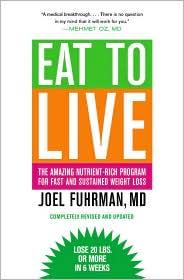
Eat to Live presents a nutritional approach centred on maximising micronutrient consumption per calorie. Dr. Fuhrman argues that most chronic disease — including heart disease, diabetes, and many cancers — is caused by nutrient-poor diets and can be reversed by eating predominantly vegetables, fruits, beans, nuts, and seeds while eliminating processed foods and sharply reducing animal products.
About the author
Joel Fuhrman, M.D., is a board-certified family physician who specialises in preventing and reversing disease through nutritional methods. A former world-class figure skater who recovered from a career-ending injury partly through nutritional intervention, Fuhrman completed his medical training at the University of Pennsylvania. He has published numerous peer-reviewed studies on the relationship between nutrient density and health outcomes, and his clinical practice has treated thousands of patients with dietary interventions. Eat to Live, first published in 2003 and revised in 2011, has sold over two million copies worldwide and established Fuhrman as one of the most influential voices in plant-based nutrition. Explore all Joel Fuhrman book summaries →
Key concepts at a glance
| Concept | What it means | Use it when |
|---|---|---|
| H = N/C | Health equals nutrients divided by calories — the core formula for food selection | Deciding what to eat at every meal |
| Nutritarian | A diet centred on the most nutrient-dense foods per calorie (greens, beans, fruits, nuts, seeds) | You want a label for the overall eating philosophy |
| ANDI Score | Aggregate Nutrient Density Index — rates foods from 1 to 1000 based on micronutrient content per calorie | Comparing food choices at the grocery store |
| Toxic Hunger | Withdrawal symptoms (headaches, fatigue) mistaken for real hunger when your body is processing low-quality food | You feel “hungry” shortly after eating processed foods |
| True Hunger | Genuine hunger signals (throat sensation, enhanced taste) that appear only when the body actually needs fuel | You want to distinguish real hunger from cravings |
| The Salad Is the Main Dish | A giant salad with beans, nuts, and seeds should be the centrepiece of lunch or dinner, not a side | Planning daily meals |
| G-BOMBS | Greens, Beans, Onions, Mushrooms, Berries, Seeds — the six most health-promoting food categories | Stocking your kitchen with the highest-impact foods |
Part 1: The case against the modern diet
Fuhrman opens with a stark statistical portrait: Americans consume 62% of their calories from processed foods and another 25.5% from animal products, leaving only about 12% for unrefined plant foods — and half of that is white potatoes. He argues this ratio is the primary driver of the chronic disease epidemic, not genetics, not ageing, and not bad luck.
He presents epidemiological data from populations around the world where chronic diseases like heart disease and cancer are virtually absent. The common thread is not low fat or low carb or any specific macronutrient ratio — it is extremely high consumption of vegetables, fruits, and legumes. The Okinawans, certain rural Chinese populations, and traditional Mediterranean communities all share this pattern despite otherwise different diets.
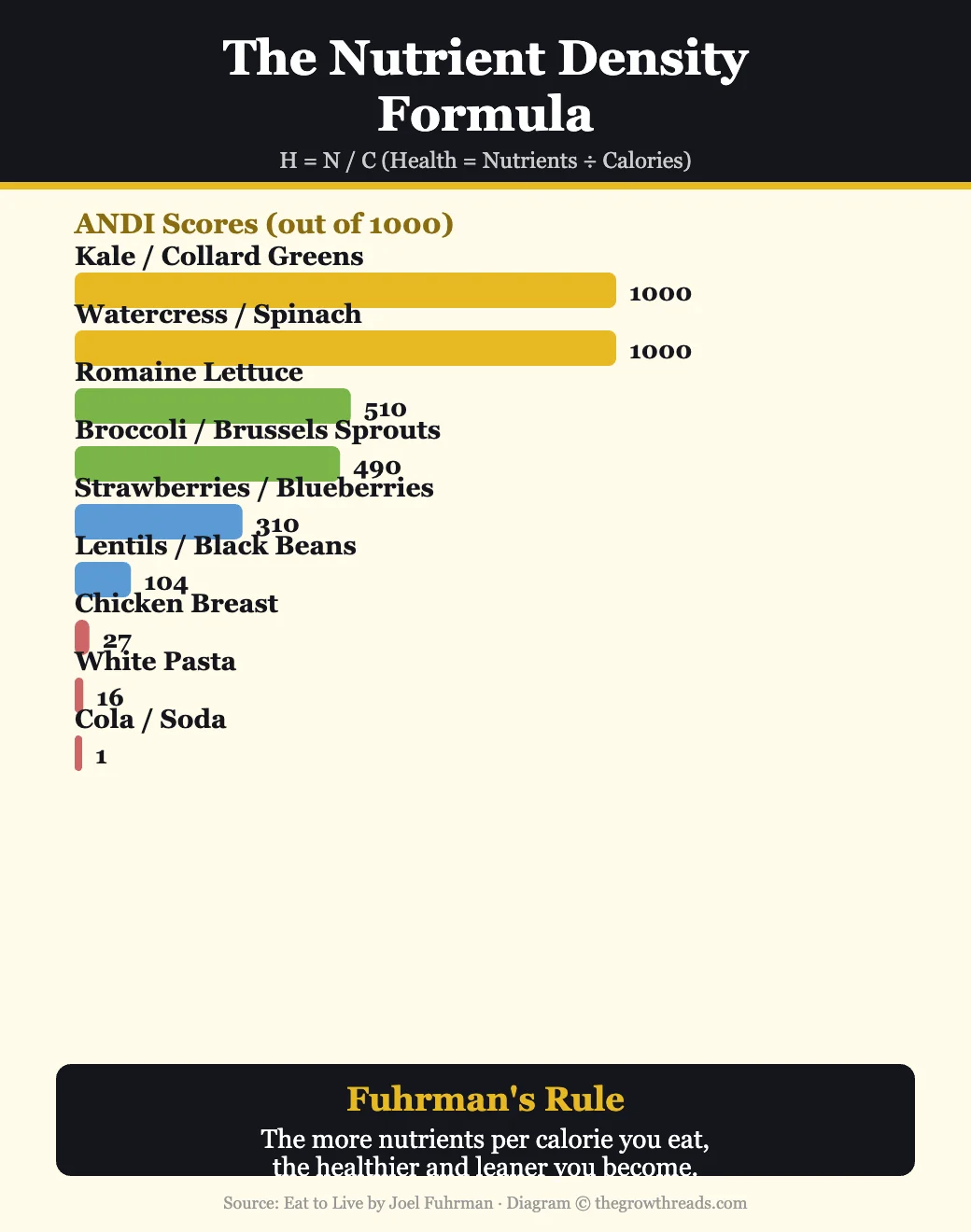
Fuhrman introduces his central equation: H = N/C. Health is determined by the ratio of micronutrients (vitamins, minerals, phytochemicals, antioxidants) to calories. A food that delivers enormous nutritional value with relatively few calories — like kale, spinach, or broccoli — supports health. A food that delivers many calories with few nutrients — like white bread, soda, or processed cheese — degrades it.
He supports this with his ANDI (Aggregate Nutrient Density Index) scoring system, which rates foods from 1 to 1000. Leafy greens score 1000. Berries and cruciferous vegetables score 300-700. Beans score around 100. Chicken scores 27. White pasta scores 16. The visual impact of seeing these numbers side by side is one of the most compelling parts of the book.
Part 2: The nutritarian plate and daily targets
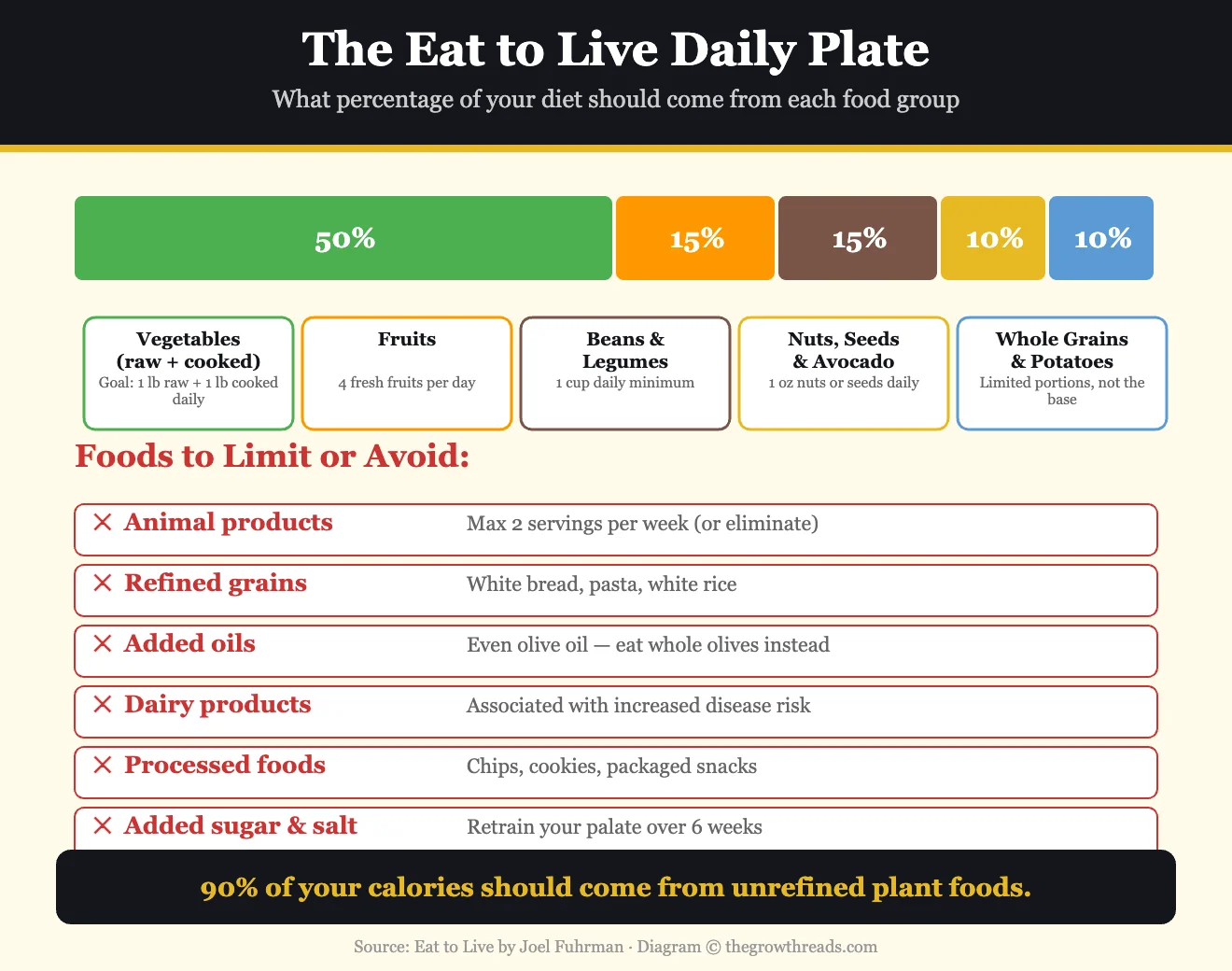
The practical core of the book is Fuhrman’s daily eating template. Unlike most diet plans that focus on what to eliminate, Fuhrman emphasises what to include — and in what proportions. His target: 90% or more of calories from unrefined plant foods.
The daily targets are specific and measurable. One pound (about 450g) of raw vegetables per day, primarily as a large salad that serves as the main dish at lunch or dinner. One pound of cooked vegetables per day, with an emphasis on cruciferous vegetables (broccoli, cauliflower, cabbage, Brussels sprouts) for their cancer-fighting compounds. At least one cup of beans or legumes daily. Four servings of fresh fruit. One ounce of raw nuts or seeds.
Fuhrman introduces his G-BOMBS acronym — Greens, Beans, Onions, Mushrooms, Berries, and Seeds — as the six most health-promoting food categories. He presents research showing that each of these categories has specific disease-fighting properties: greens protect against cardiovascular disease, beans stabilise blood sugar, onions and mushrooms have anti-cancer properties, berries protect the brain, and seeds provide essential fatty acids.
The “foods to avoid” list is equally specific: all processed foods, white flour products, sugar, oil (including olive oil — he recommends eating whole olives instead), dairy products, and more than two servings of animal products per week (or none for those with serious health conditions). He addresses the olive oil question head-on: oil is a processed food with 120 calories per tablespoon and essentially zero micronutrients. The nutrients people associate with olive oil come from the olive itself, which also contains fibre and hundreds of phytochemicals that are lost in processing.
Part 3: Toxic hunger, true hunger, and the six-week reset
One of Fuhrman’s most original contributions is his distinction between “toxic hunger” and “true hunger.” He argues that what most people experience as hunger — headaches, irritability, stomach growling, fatigue — is not genuine hunger at all. These are withdrawal and detoxification symptoms that occur when the body is processing the byproducts of low-quality food. He calls this cycle “toxic hunger.”
True hunger, by contrast, is a sensation felt in the throat and chest (not the stomach), accompanied by heightened taste sensitivity and a general sense of readiness to eat rather than desperation. Most people on a standard diet have never experienced true hunger because they eat again before toxic hunger symptoms subside.
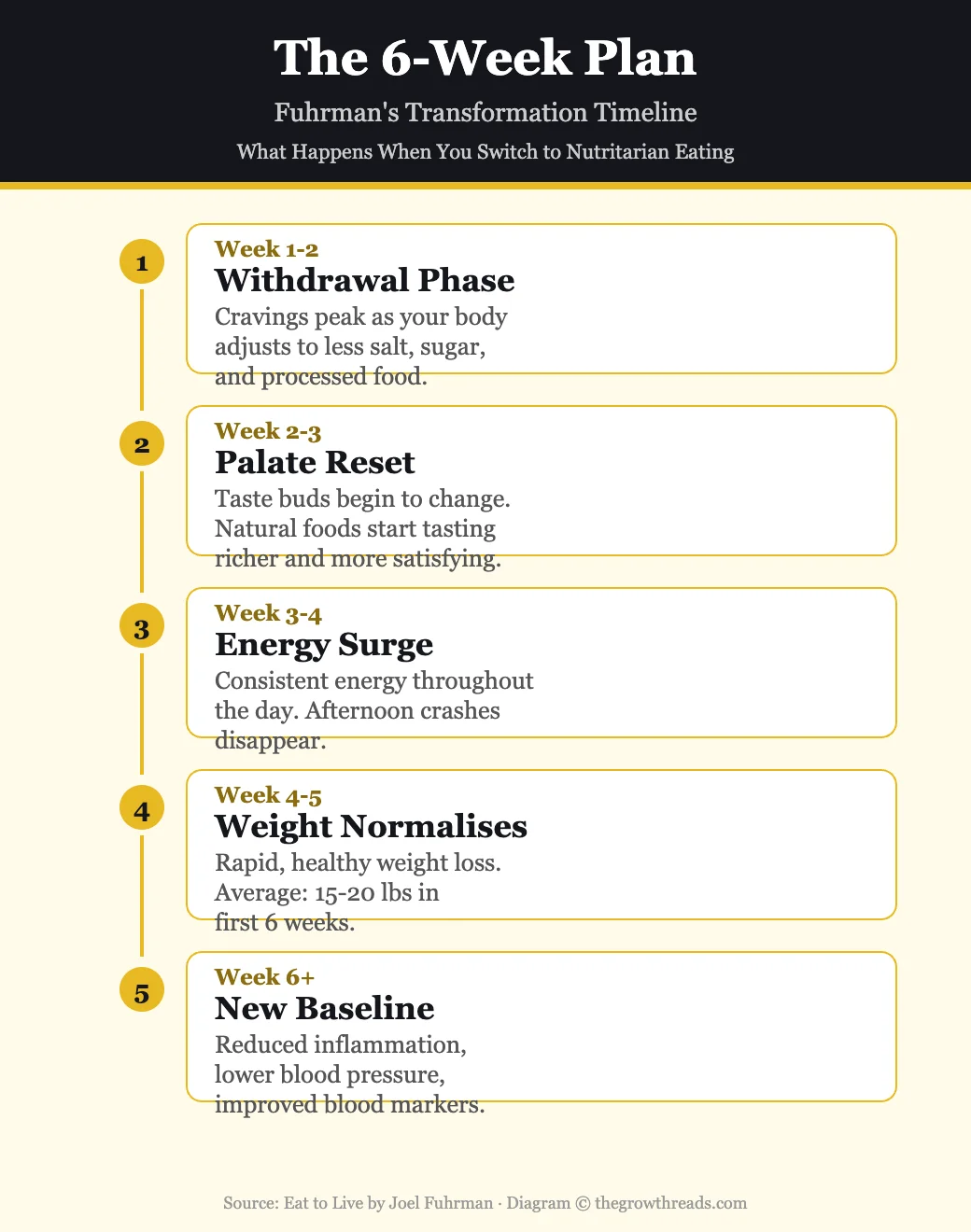
The six-week plan is designed to break this cycle. The first two weeks are typically the most difficult: patients report headaches, fatigue, irritability, and intense cravings as their bodies adjust. Fuhrman compares this to caffeine withdrawal — uncomfortable but temporary and a sign that the body is healing. By weeks two to three, the palate begins to reset. Foods that previously tasted bland (raw vegetables, unsalted beans) start tasting rich and satisfying. By week four, most patients report consistent energy, reduced inflammation, and significant weight loss — typically 15 to 20 pounds in the first six weeks without calorie counting.
Fuhrman presents case studies from his clinical practice: patients who reversed type 2 diabetes within weeks, eliminated blood pressure medication within months, and resolved autoimmune conditions that conventional medicine had declared permanent. He acknowledges these are his best outcomes, not typical results, but argues that the underlying mechanism — reducing inflammation and oxidative stress through nutrient-dense eating — is well-supported by peer-reviewed research.
Who is Eat to Live best for — and who should read something else first?
This book is ideal for anyone with a serious health condition (heart disease, type 2 diabetes, hypertension, autoimmune conditions) who wants a food-based intervention backed by clinical evidence. It is also excellent for people frustrated by the diet industry’s conflicting advice who want a clear, bright-line set of rules rather than vague “eat better” guidelines.
If you are looking for a gentler, more flexible introduction to plant-based eating, start with In Defense of Food by Michael Pollan. If you want to understand how blood sugar affects health without a complete dietary overhaul, try Glucose Revolution by Jessie Inchauspé first.
Questions to reflect on
- What percentage of your current diet comes from unrefined plant foods? How does this compare to Fuhrman’s 90% target?
- Think about the last time you felt “hungry.” Was it true hunger (throat sensation, enhanced taste) or toxic hunger (headache, irritability, stomach discomfort)?
- Which of Fuhrman’s G-BOMBS (Greens, Beans, Onions, Mushrooms, Berries, Seeds) are already part of your regular diet, and which are missing?
- If you adopted the “salad is the main dish” principle for one meal per day, what would that look like practically?
- What processed foods do you currently eat daily that you could replace with whole-food alternatives during a two-week experiment?
🔥 Ready to transform your health through food?
Get Fuhrman’s nutrient-density blueprint and start the six-week plan that has helped millions reverse disease and lose weight permanently.
How to apply Eat to Live (7-day plan)
- Day 1 — Stock your kitchen: Buy the G-BOMBS: a large bag of mixed greens, canned beans (3 varieties), onions, a box of mushrooms, fresh berries, and a bag of raw walnuts or sunflower seeds. Remove one processed food from your pantry.
- Day 2 — Make the salad the main dish: Prepare a massive salad with greens, beans, seeds, and a nut-based dressing for lunch or dinner. Aim for it to be the largest single portion on your plate.
- Day 3 — Track your vegetables: Measure your vegetable intake today. Are you hitting one pound raw and one pound cooked? Most people are shocked at how far off they are.
- Day 4 — Eliminate one processed food: Choose one daily processed food (bread, crackers, cereal, chips) and replace it with a whole food alternative for the rest of the week.
- Day 5 — Cook a big batch of beans: Prepare a large pot of lentil soup, black bean chilli, or chickpea stew. Having ready-made bean dishes in the fridge makes hitting the one-cup daily target effortless.
- Day 6 — Notice your hunger signals: Before eating, pause and ask: “Am I feeling true hunger (throat, taste) or toxic hunger (headache, stomach, irritability)?” Simply noticing the difference is the first step.
- Day 7 — Plan your first full nutritarian week: Using this week’s experience, map out seven days of meals where the salad is the main dish, beans appear daily, and at least 80% of your calories come from unrefined plant foods.
Frequently asked questions
What is the main idea of Eat to Live?
The main idea is that health is determined by the ratio of micronutrients to calories in your diet (H = N/C). By eating predominantly nutrient-dense plant foods — vegetables, fruits, beans, nuts, and seeds — while eliminating processed foods and minimising animal products, you can prevent and reverse most chronic diseases while achieving and maintaining a healthy weight without calorie counting.
What is the nutritarian diet?
The nutritarian diet is Joel Fuhrman’s eating approach that prioritises foods with the highest micronutrient content per calorie. It centres on large quantities of vegetables (especially greens), fruits, beans, nuts, and seeds while strictly limiting or eliminating processed foods, refined grains, oils, dairy, and most animal products. The name comes from “nutrient” + “arian” — someone who makes food choices based primarily on nutrient density.
Does the Eat to Live diet really work for weight loss?
Fuhrman reports that patients following the plan typically lose 15 to 20 pounds in the first six weeks without calorie counting. The mechanism is straightforward: nutrient-dense plant foods are so high in volume and fibre relative to their calorie content that you naturally eat fewer calories while feeling full. Multiple clinical studies on high-nutrient-density diets support this effect, though individual results vary based on starting weight and adherence.
What are G-BOMBS in the Eat to Live diet?
G-BOMBS stands for Greens, Beans, Onions, Mushrooms, Berries, and Seeds — the six food categories Fuhrman identifies as having the most powerful disease-fighting properties. Each category has specific benefits: greens protect against cardiovascular disease, beans stabilise blood sugar, onions and mushrooms have anti-cancer properties, berries protect the brain, and seeds provide essential fatty acids and lignans.
Is Eat to Live the same as a vegan diet?
Not exactly. While the nutritarian diet is overwhelmingly plant-based, Fuhrman does not make an ethical argument for veganism. He permits small amounts of animal products (up to two servings per week) for those who want them, though he recommends eliminating them entirely for people with serious health conditions. The key difference from typical veganism is the emphasis on nutrient density — a vegan diet of processed foods and refined grains would not qualify as nutritarian.
Why does Fuhrman say to avoid olive oil?
Fuhrman argues that olive oil is a processed food: it contains 120 calories per tablespoon with essentially zero micronutrients, fibre, or phytochemicals. The health benefits commonly attributed to olive oil actually come from the whole olive, which contains fibre and hundreds of protective compounds lost during oil extraction. He recommends eating whole olives, nuts, and avocados instead — getting the fats along with the full nutritional package.
How long does it take to see results on the Eat to Live plan?
Most people experience a difficult adjustment period of one to two weeks (headaches, cravings, fatigue) as the body withdraws from processed foods. By weeks two to three, the palate resets and natural foods start tasting better. By week four, most people report increased energy, reduced inflammation, and noticeable weight loss. Fuhrman recommends committing to at least six full weeks to experience the complete transformation.
Related summaries
- In Defense of Food by Michael Pollan — The philosophical case for whole-food eating: “Eat food, not too much, mostly plants.”
- Glucose Revolution by Jessie Inchauspé — How to optimise blood sugar through meal sequencing and food choices.
- How Not to Die by Michael Greger — A comprehensive review of the evidence for plant-based diets in preventing the top causes of death.
- The Obesity Code by Jason Fung — A complementary perspective on weight loss through hormonal (insulin) management.
📚 Explore more Health books: See our full curated list at Best Health Books to Read in 2026.
Related Health Summaries
The Blood Sugar Solution Summary and Review
The Blue Zones Summary & Review: 9 Lessons From the World’s Longest-Lived People
The Longevity Diet Summary & Review: Valter Longo’s Science-Backed Plan for Living Longer
The Wim Hof Method Summary & Review: Breathe, Embrace the Cold, Transform Your Health
Why Zebras Don’t Get Ulcers Summary & Review: The Biology Behind Chronic Stress