

★★★★★ 4.0/5 — A compelling, well-researched guide to eating for brain health that turns nutritional neuroscience into grocery-list simplicity.
Best for: Anyone worried about cognitive decline, brain fog, or wanting to optimize mental performance through diet.
Reading time: ~6 hours (352 pages)
Difficulty to apply: Moderate — requires meaningful dietary changes, but the Genius Plan makes it systematic.
Genius Foods in one minute
What you eat directly shapes how well your brain works — and most modern diets are slowly destroying it. Max Lugavere wrote Genius Foods after watching his mother develop a rare form of dementia in her fifties. That personal urgency drives every page of this book, which translates hundreds of nutritional neuroscience studies into a practical eating plan built around ten brain-boosting foods. The core argument: the standard Western diet — loaded with processed seed oils, refined grains, and sugar — creates chronic inflammation that degrades cognitive function decades before any diagnosis. By replacing those foods with nutrient-dense alternatives and adopting key lifestyle habits around sleep, exercise, and stress, you can protect and even enhance your brain at any age.
Key takeaways
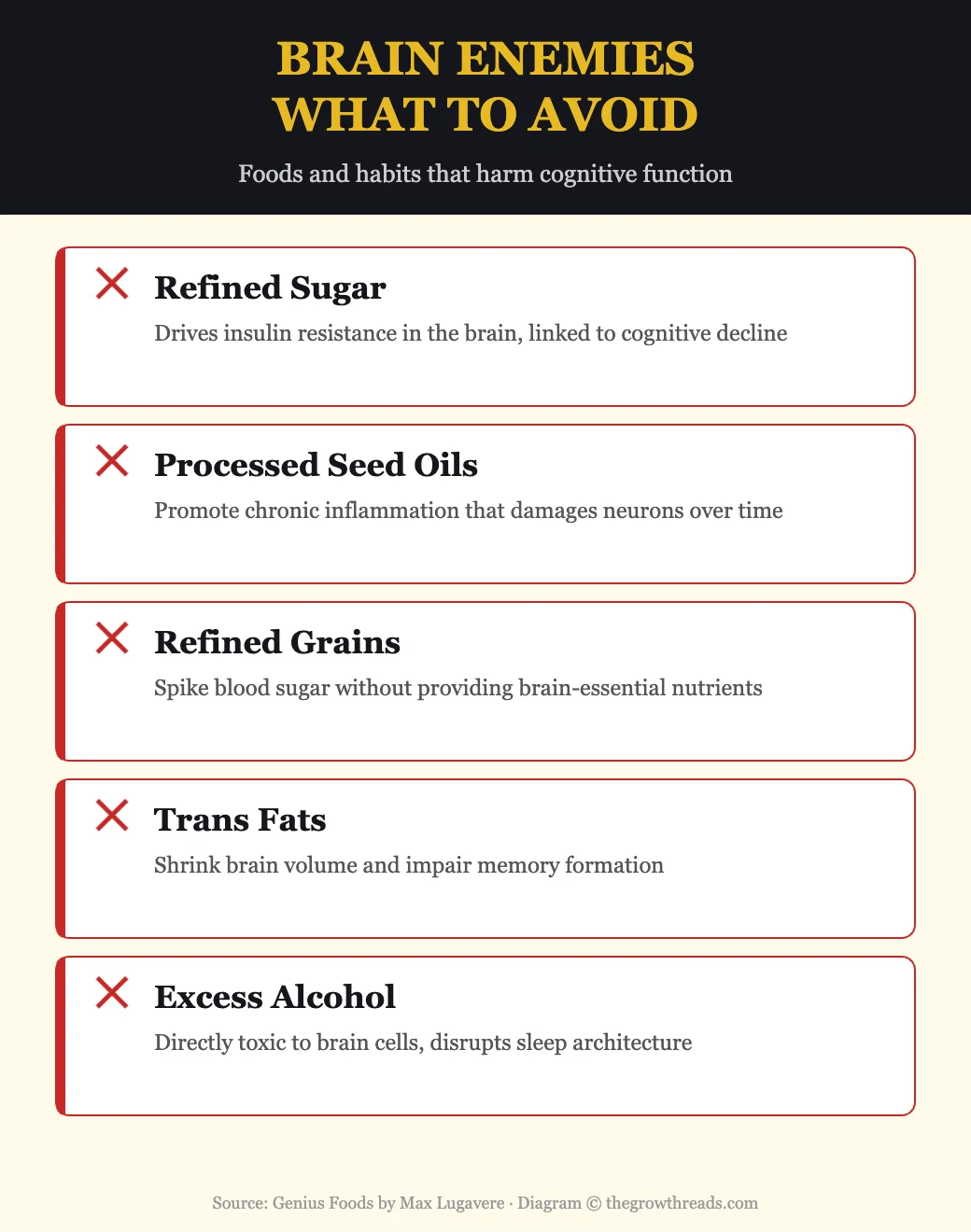
- Your brain is under dietary siege: The modern food supply — particularly processed oils, refined carbohydrates, and added sugars — promotes chronic neuroinflammation that accelerates cognitive decline.
- Extra-virgin olive oil is the single best brain food: Its polyphenols cross the blood-brain barrier and directly protect neurons from oxidative damage.
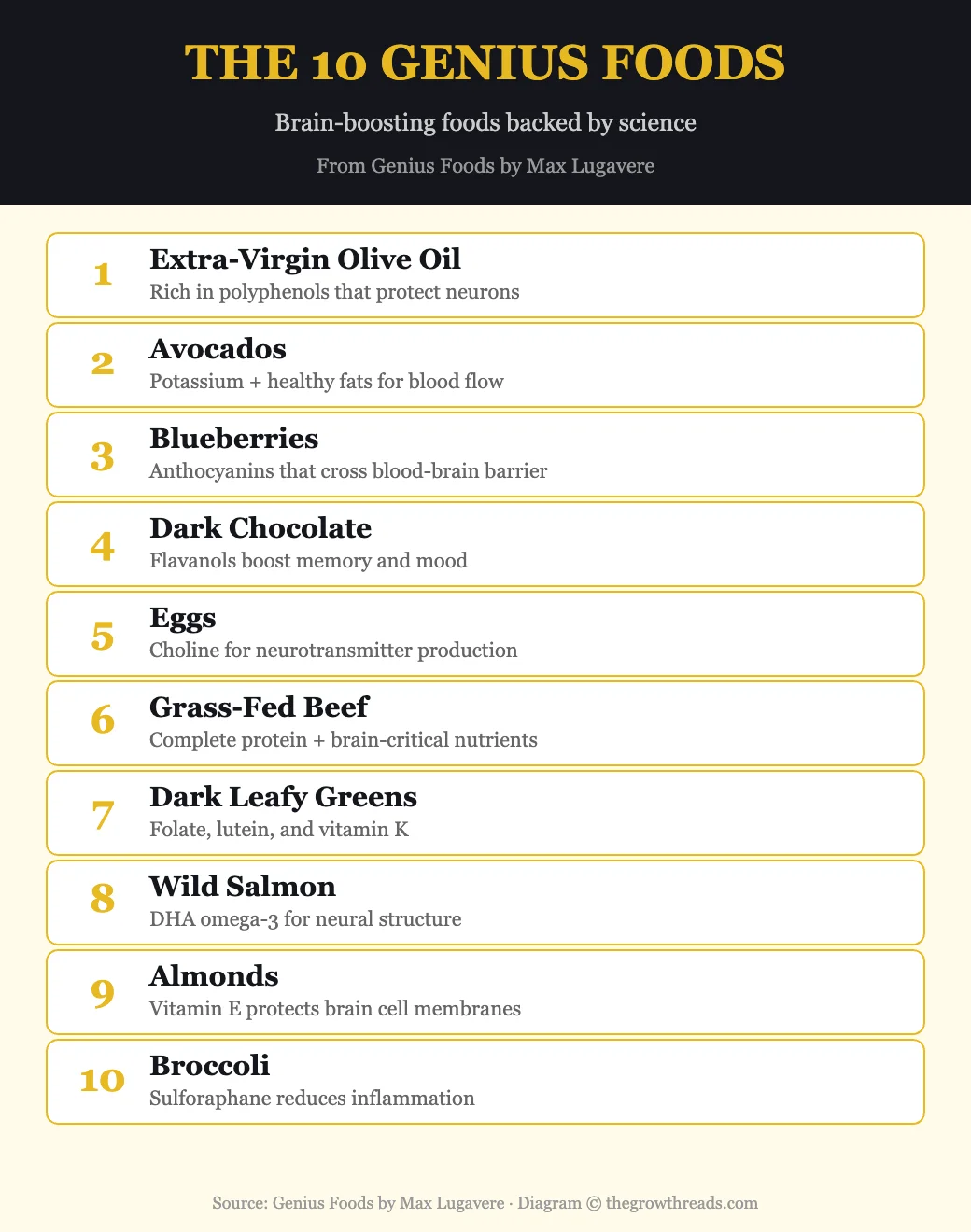
- Ten specific foods form the foundation: Olive oil, avocados, blueberries, dark chocolate, eggs, grass-fed beef, dark leafy greens, wild salmon, almonds, and broccoli each target different aspects of brain health.
- Processed seed oils are a hidden danger: Canola, soybean, corn, and sunflower oils — ubiquitous in restaurant and packaged food — promote the inflammatory cascade that damages brain tissue.
- Blood sugar control is brain protection: Chronically elevated insulin impairs the brain’s ability to clear amyloid plaques, a hallmark of Alzheimer’s disease.
- Time-restricted eating amplifies brain benefits: Confining eating to a 12-to-16-hour window triggers autophagy — cellular cleanup that removes damaged proteins from neurons.
- Exercise is the most powerful neuroprotective tool: Aerobic exercise produces BDNF (brain-derived neurotrophic factor), essentially fertilizer for new brain cell growth.
- Sleep is when your brain detoxifies: The glymphatic system clears metabolic waste during deep sleep — chronic sleep deprivation allows neurotoxins to accumulate.
- Your gut directly talks to your brain: The gut-brain axis means that gut inflammation from poor diet translates into brain inflammation and mood disruption.
- Dementia is not inevitable: While genetics load the gun, lifestyle pulls the trigger. Up to 40% of dementia cases may be preventable through dietary and lifestyle intervention.
What is Genius Foods about?
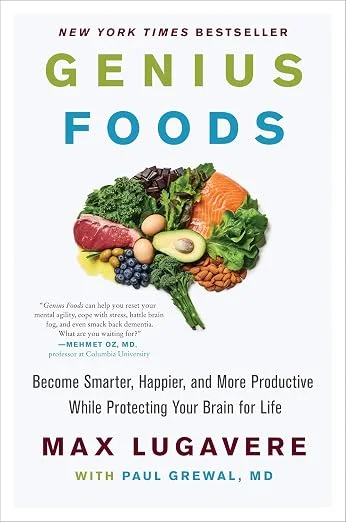
Genius Foods is a nutritional neuroscience book that identifies ten specific foods scientifically shown to protect and enhance brain function. Lugavere combines research on inflammation, insulin resistance, and neuroplasticity with a practical eating plan — the Genius Plan — designed to reduce cognitive decline risk, improve memory, boost mood, and sharpen focus through dietary and lifestyle changes.
About the author
Max Lugavere is a health and science journalist, filmmaker, and New York Times bestselling author. His interest in brain health became deeply personal when his mother, Kathy, was diagnosed with a rare form of dementia called Lewy body dementia at age 58. That experience sent Lugavere on a years-long investigation into the links between diet, lifestyle, and brain disease. He consulted with leading neurologists and nutritional researchers worldwide, eventually producing the documentary Bread Head and this book. He co-authored Genius Foods with Dr. Paul Grewal, an internal medicine physician specializing in metabolic health. Lugavere continues to write and podcast about the intersection of food and cognitive performance. Explore all Max Lugavere book summaries →
Key concepts at a glance
| Concept | What it means | Use it when |
|---|---|---|
| The 10 Genius Foods | Specific nutrient-dense foods that protect and enhance brain function | Building your weekly grocery list |
| Neuroinflammation | Chronic brain inflammation driven by diet, the root cause of cognitive decline | Understanding why processed food harms your brain |
| The Genius Plan | A 14-day reset combining all dietary and lifestyle recommendations | Starting your brain-health transformation |
| Gut-Brain Axis | The bidirectional communication between gut microbiome and brain | Connecting digestive issues to brain fog and mood |
| BDNF | Brain-Derived Neurotrophic Factor — a protein that grows new brain cells | Understanding why exercise is neuroprotective |
| Time-Restricted Eating | Confining meals to a daily window to trigger cellular cleanup | Adding intermittent fasting to your routine |
| Glymphatic System | The brain’s waste-clearance system that activates during deep sleep | Prioritizing sleep quality for brain health |
| Insulin Resistance in the Brain | How chronically elevated blood sugar impairs brain function | Motivating blood sugar management |
Part 1: The dietary assault on your brain
Lugavere opens with a sobering reality check: the modern food environment is, from a neurological perspective, a slow-motion catastrophe. The brain, which accounts for only 2% of body weight but consumes 20-25% of daily calories, is exquisitely sensitive to the quality of fuel it receives. And the fuel most people are providing — refined vegetable oils, processed carbohydrates, and foods stripped of their original nutritional complexity — promotes a state of chronic low-grade inflammation that is now recognized as a precursor to virtually every neurodegenerative disease.
The most provocative claim in this section is about processed seed oils. Lugavere argues that the dramatic increase in consumption of oils from canola, soybean, corn, and sunflower — which now constitute the largest source of calories in many Western diets — has fundamentally altered the ratio of omega-6 to omega-3 fatty acids in our bodies. This imbalance promotes inflammatory signaling throughout the body, including the brain. He traces the history of how these oils, originally developed for industrial lubrication, were rebranded as “heart healthy” through aggressive food industry lobbying, despite limited evidence of benefit and growing evidence of harm.
He connects this to insulin resistance, which he frames not just as a metabolic problem but a brain problem. When blood sugar is chronically elevated, insulin receptors in the brain become desensitized. This matters because insulin in the brain helps clear amyloid beta — the protein that forms the plaques characteristic of Alzheimer’s disease. Some researchers now refer to Alzheimer’s as “Type 3 diabetes,” a framing Lugavere endorses. The practical implication: managing blood sugar through diet is one of the most powerful things you can do to protect your brain decades before any symptoms appear.
Part 2: The ten genius foods and why they work
The heart of the book is a deep dive into ten specific foods that Lugavere argues should form the foundation of a brain-protective diet. What distinguishes this from a typical “superfoods” list is the mechanistic detail: for each food, he explains precisely which compounds cross the blood-brain barrier, what they do once they get there, and what the clinical evidence shows.
Extra-virgin olive oil sits at the top. Its polyphenols — particularly oleocanthal — have been shown to help clear amyloid plaques, reduce neuroinflammation, and protect the blood-brain barrier’s integrity. Lugavere emphasizes “extra-virgin” because refined olive oil has had most of these compounds stripped out during processing. He recommends using it as a finishing oil and primary cooking fat, replacing seed oils entirely.
Wild salmon and eggs provide critical building blocks. Salmon’s DHA (docosahexaenoic acid) is a structural component of brain cell membranes — your brain is literally built from this fat. Eggs provide choline, the precursor to acetylcholine, the neurotransmitter most closely associated with memory and learning. Lugavere pushes back against decades of anti-egg messaging, citing research showing that dietary cholesterol has minimal impact on blood cholesterol and that the brain depends on cholesterol for synaptic function.
Blueberries and dark chocolate represent the brain-boosting potential of plant compounds. Blueberry anthocyanins are among the few dietary compounds that cross the blood-brain barrier in significant quantities, where they accumulate in regions associated with memory and learning. Dark chocolate’s flavanols improve blood flow to the brain and have been shown in clinical trials to enhance cognitive performance in aging adults.
The remaining five — avocados, grass-fed beef, dark leafy greens, almonds, and broccoli — round out the list by targeting potassium balance, complete amino acid profiles, folate and vitamin K status, vitamin E protection, and sulforaphane-mediated detoxification. Together, the ten foods address virtually every known nutritional requirement of the brain.
Part 3: Beyond food — the complete brain-protection protocol
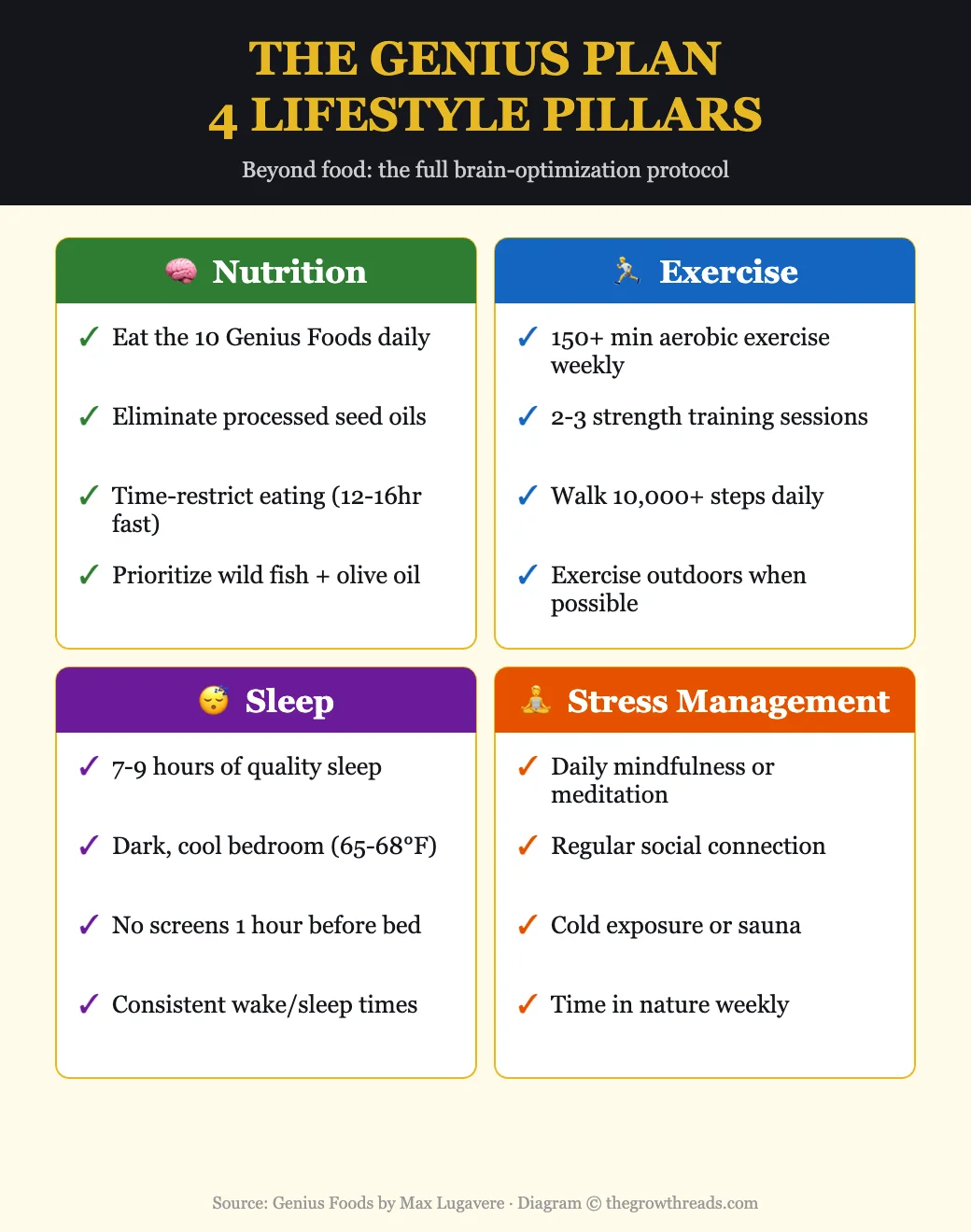
Lugavere is clear that food alone is not enough. The second half of the book expands into what he calls the Genius Plan — a lifestyle protocol that combines nutrition with exercise, sleep optimization, and stress management. Each pillar is grounded in neuroscience rather than wellness platitudes.
On exercise, he highlights BDNF (brain-derived neurotrophic factor), a protein that promotes the growth of new neurons and strengthens existing synaptic connections. Aerobic exercise — particularly sustained moderate-intensity activity like brisk walking, cycling, or swimming — triggers the most significant BDNF release. He recommends at least 150 minutes of aerobic activity per week, supplemented by two to three resistance training sessions, which have their own neuroprotective benefits through improved insulin sensitivity and reduced systemic inflammation.
The sleep chapter introduces the glymphatic system — the brain’s dedicated waste-clearance mechanism that activates primarily during deep sleep. During waking hours, metabolic byproducts including amyloid beta accumulate between brain cells. During deep sleep, brain cells shrink by up to 60%, allowing cerebrospinal fluid to flush these toxins out. Chronic sleep deprivation means this cleanup never fully happens. Lugavere argues that the link between poor sleep and Alzheimer’s risk is one of the most underappreciated findings in modern neuroscience.
He also covers the gut-brain axis — the bidirectional communication system between the gut microbiome and the central nervous system. About 90% of the body’s serotonin is produced in the gut, and gut inflammation can trigger neuroinflammation through the vagus nerve. This means that digestive problems are often brain problems in disguise. Lugavere recommends fermented foods, prebiotic fiber, and the elimination of artificial sweeteners and emulsifiers that disrupt gut barrier function.
Part 4: The Genius Plan — putting it all together
The final section translates everything into a 14-day implementation protocol. Lugavere provides meal plans, shopping lists, and cooking strategies designed to make the transition manageable rather than overwhelming. The approach is progressive: the first week focuses on elimination (removing processed oils, refined grains, and added sugars), while the second week focuses on addition (incorporating all ten genius foods and establishing exercise, sleep, and stress-management routines).
He acknowledges that perfection is not the goal. The brain benefits of dietary change operate on a spectrum — eating more wild salmon and olive oil while eating less fried food in refined seed oils will produce measurable improvements even if you never achieve a “perfect” diet. This pragmatic stance makes the book more accessible than stricter nutritional protocols, though Lugavere does urge readers to be more aggressive about eliminating processed oils, which he considers the single highest-impact change most people can make.
The plan also includes guidance on supplementation — specifically vitamin D, magnesium, and omega-3 fatty acids — where dietary intake alone may not meet the brain’s needs, particularly for people living in northern latitudes with limited sun exposure or those who cannot eat fish regularly. He is careful to position supplements as a complement to, not a replacement for, whole-food nutrition.
Who is Genius Foods best for — and who should read something else first?
This book is ideal for anyone experiencing brain fog, worried about family history of dementia, or simply wanting to optimize their cognitive performance through nutrition. It is especially valuable for people who already eat relatively well but want to understand the specific mechanisms behind brain-protective nutrition. If you are a parent, the insights about childhood brain development and dietary foundations are compelling reasons to read this early.
If your primary concern is weight loss rather than cognitive optimization, start with The Obesity Code — it addresses metabolism more directly. And if you want a broader overview of brain maintenance that extends beyond nutrition into social connection and purpose, Keep Sharp by Sanjay Gupta takes a wider lens.
Questions to reflect on
- How much of my current diet consists of the processed seed oils Lugavere identifies as the biggest brain threat — and what would it take to replace them with olive oil?
- Which of the ten Genius Foods am I already eating regularly, and which three could I add this week?
- Am I treating sleep as a luxury or as the brain-detoxification process the science says it is?
- Has anyone in my family experienced cognitive decline, and what does Lugavere’s research suggest I can do about my own risk starting now?
- How might improving my diet affect not just my long-term brain health but my daily energy, mood, and mental clarity?
🔥 Ready to eat your way to a sharper brain?
Lugavere’s 10 Genius Foods give you a science-backed grocery list for lifelong cognitive health.
How to apply Genius Foods (7-day plan)
- Day 1 — Audit your kitchen oils: Check every cooking oil, dressing, and condiment for soybean, canola, corn, and sunflower oil. Replace them with extra-virgin olive oil and avocado oil for high-heat cooking.
- Day 2 — Stock the Genius Foods: Buy wild salmon, extra-virgin olive oil, avocados, blueberries, eggs, dark leafy greens, almonds, broccoli, and dark chocolate (85%+ cacao). Plan meals around these for the week.
- Day 3 — Eliminate added sugar for 24 hours: Read labels and avoid anything with added sugar. Notice how this one change affects your energy and mental clarity by the end of the day.
- Day 4 — Start time-restricted eating: Begin by confining meals to a 12-hour window (e.g., 7am to 7pm). This is the gentlest entry into the fasting benefits Lugavere describes.
- Day 5 — Add brain-boosting exercise: Do 30 minutes of moderate aerobic exercise — a brisk walk, bike ride, or swim. Focus on the fact that you are literally growing new brain cells through BDNF release.
- Day 6 — Optimize your sleep environment: Set your bedroom to 65-68°F, remove all screens one hour before bed, and aim for a consistent bedtime. This activates the glymphatic cleanup system Lugavere describes.
- Day 7 — Cook the signature Genius meal: Prepare a meal featuring wild salmon with extra-virgin olive oil, a large salad of dark leafy greens with avocado and almonds, and blueberries with dark chocolate for dessert. This single meal contains seven of the ten Genius Foods.
Frequently asked questions
Is Genius Foods based on real science or is it another fad diet book?
Genius Foods is grounded in peer-reviewed nutritional neuroscience research, and Lugavere cites hundreds of studies throughout the book. It was co-authored with Dr. Paul Grewal, an internal medicine physician. That said, some of the stronger claims — particularly about processed seed oils — represent one interpretation of the evidence that not all nutritional researchers agree on. The core recommendations (eat whole foods, prioritize omega-3s, limit sugar, exercise, sleep well) are supported by broad scientific consensus. The book is substantially more evidence-based than most popular nutrition books, though readers should understand that nutritional science is still evolving.
What are the 10 Genius Foods?
The ten Genius Foods are: extra-virgin olive oil, avocados, blueberries, dark chocolate (85%+ cacao), eggs, grass-fed beef, dark leafy greens (kale, spinach, collards), wild salmon, almonds, and broccoli. Each was selected for specific compounds that cross the blood-brain barrier or support neurological function through mechanisms like reducing inflammation, providing structural fatty acids, supplying neurotransmitter precursors, or delivering antioxidants that protect brain cell membranes. Lugavere recommends incorporating all ten into your weekly diet rather than focusing on any single food.
Can Genius Foods actually prevent Alzheimer’s disease?
Lugavere does not claim the diet will prevent Alzheimer’s with certainty, but he presents evidence suggesting that dietary and lifestyle interventions can significantly reduce risk. Research suggests up to 40% of dementia cases may be attributable to modifiable risk factors including diet, exercise, sleep, and social engagement. The FINGER trial in Finland demonstrated that a multi-domain intervention (diet, exercise, cognitive training, vascular risk management) improved or maintained cognitive function in at-risk older adults. The Genius Foods approach aligns with these interventions. However, genetics still play a role, and no diet guarantees prevention.
How is Genius Foods different from Grain Brain?
Both books link diet to brain health, but they differ in emphasis and tone. David Perlmutter’s Grain Brain focuses primarily on the dangers of gluten and carbohydrates, advocating for a high-fat, very low-carb approach. Lugavere takes a more balanced position — he agrees that refined grains and sugar are harmful but does not demonize all carbohydrates. He includes starchy vegetables and fruits like blueberries in his plan. Lugavere also places more emphasis on specific protective foods and provides a more comprehensive lifestyle protocol covering sleep, exercise, and stress. Genius Foods is generally considered the more moderate and practically actionable of the two.
Are processed seed oils really that bad for you?
This is one of the more debated claims in the book. Lugavere argues that high consumption of omega-6-rich seed oils (canola, soybean, corn, sunflower) promotes chronic inflammation by skewing the omega-6 to omega-3 ratio in cell membranes. Some researchers support this view, pointing to the dramatic increase in seed oil consumption over the past century and its correlation with rising rates of chronic disease. Others argue that the evidence is more nuanced and that moderate seed oil consumption is not inherently harmful. What is broadly agreed upon is that replacing seed oils with extra-virgin olive oil provides clear health benefits, which is Lugavere’s practical recommendation regardless of the debate.
What is the Genius Plan and how long does it take?
The Genius Plan is a 14-day reset protocol at the end of the book. The first week focuses on eliminating brain-damaging foods (processed oils, refined grains, added sugars) while the second week focuses on incorporating all ten Genius Foods and establishing exercise, sleep, and stress-management routines. Lugavere designs it as a structured starting point rather than a permanent rigid plan. After the 14 days, the goal is to maintain the core principles flexibly. Most readers report noticing improvements in energy, mental clarity, and mood within the first week of implementation.
Is this book suitable for vegetarians or vegans?
Partially. Six of the ten Genius Foods are plant-based (olive oil, avocados, blueberries, dark chocolate, dark leafy greens, almonds, broccoli), and eggs are acceptable for vegetarians. However, wild salmon and grass-fed beef are core recommendations, and Lugavere argues strongly for the brain benefits of animal-sourced DHA and complete proteins. He does not provide a dedicated vegetarian protocol, though he acknowledges that algae-based DHA supplements can partially substitute for fish. Strict vegans would need to modify the plan significantly and may want to pair this book with a plant-based nutrition guide that addresses the same micronutrient targets from different sources.
Related summaries
- Keep Sharp by Sanjay Gupta — a broader brain-health guide covering social connection and purpose alongside diet and exercise.
- Grain Brain by David Perlmutter — the more aggressive anti-carb take on the diet-brain connection.
- Why We Sleep by Matthew Walker — the definitive deep dive on sleep’s role in brain health.
- Best Health Books — our complete ranked guide to health and wellness reading.
Related Health Summaries
How Not to Die Summary & Review: The Daily Dozen That Could Save Your Life
The Obesity Code Summary & Review: Why Insulin Controls Your Weight, Not Willpower
The Telomere Effect Summary & Review: The Nobel Prize Science of Slowing Biological Aging
The Wim Hof Method Summary & Review: Breathe, Embrace the Cold, Transform Your Health
Why Zebras Don’t Get Ulcers Summary & Review: The Biology Behind Chronic Stress