

Productivity
The 8th Habit Summary & Review: Find Your Voice, Then Help Others Find Theirs
The 8th Habit summary: Stephen R. Covey’s case that effectiveness is now the floor — find your voice, then inspire others to…
Read Summary →
"The educator who built effectiveness on character, not just technique."
Stephen R. Covey was an educator and author whose book, The 7 Habits of Highly Effective People, became one of the most influential personal-development books of the 20th century, selling tens of millions of copies. Rather than offering quick productivity tricks, Covey built his framework around character and principles, arguing that lasting effectiveness comes from an inside-out transformation of habits and paradigms rather than surface-level technique. His seven habits move from personal mastery (being proactive, beginning with the end in mind, putting first things first) to interpersonal effectiveness (thinking win-win, seeking first to understand then to be understood, synergizing) and finally to ongoing renewal (sharpening the saw). Covey's core insight — that people don't see the world as it objectively is, but as they are conditioned to see it — underlies the entire framework's emphasis on shifting perception before attempting to change behavior.
Our in-depth summaries and reviews of his work
The 8th Habit summary: Stephen R. Covey’s case that effectiveness is now the floor — find your voice, then inspire others to…
Read Summary →
A deep summary and review of Stephen R. Covey's The 7 Habits of Highly Effective People — the character-based framework for moving…
Read Summary →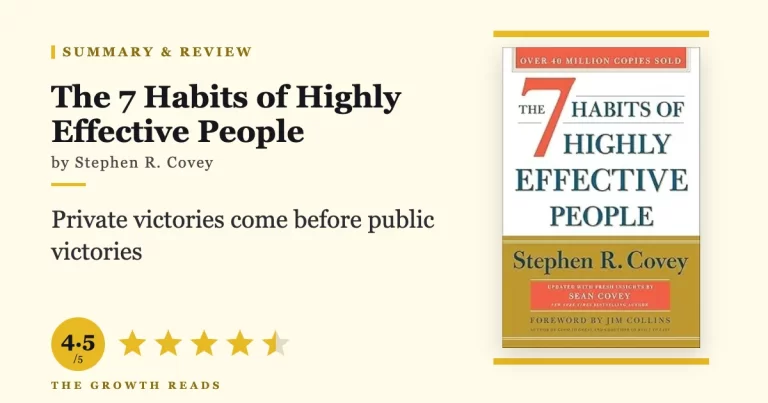
Effectiveness is character, not tricks. Our full 7 Habits of Highly Effective People summary covers Covey's seven habits, the time management matrix,…
Read Summary →Covey's foundational premise is that perception is conditioned, not objective — meaning real change requires shifting how we see situations before we can change how we respond to them.
Covey urges readers to define a clear, deliberate vision of what they want to achieve before acting, so daily choices stay aligned with a larger purpose rather than drifting reactively.
Covey argues most people listen with the intent to reply rather than to truly understand, and that genuine interpersonal effectiveness requires reversing that habit.
The 8th habit is unique contribution: talent, passion, need, and conscience overlapping — then helping other people find that same overlap.
"Most people do not listen with the intent to understand; they listen with the intent to reply."— The 7 Habits of Highly Effective People
"Treat a man as he is and he will remain as he is. Treat a man as he can and should be and he will become as he can and should be."— The 7 Habits of Highly Effective People
"We see the world, not as it is, but as we are — or, as we are conditioned to see it."— The 7 Habits of Highly Effective People
"Find your voice and inspire others to find theirs."— The 8th Habit
The 8th Habit summary: Stephen R. Covey’s case that effectiveness is now the floor — find your voice, then inspire others to find theirs, and move from output to unique contribution.
A deep summary and review of Stephen R. Covey's The 7 Habits of Highly Effective People — the character-based framework for moving from dependence through independence to interdependence.
Effectiveness is character, not tricks. Our full 7 Habits of Highly Effective People summary covers Covey's seven habits, the time management matrix, FAQs and a 7-day plan.
