Health
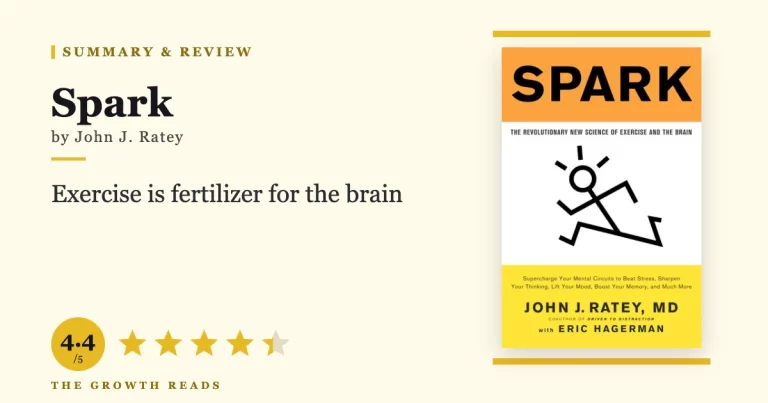
Spark Summary & Review: The Science of Exercise and the Brain
John Ratey's neuroscience proof that exercise transforms your brain: BDNF, Naperville experiment, exercise vs antidepressants, and a 7-day brain fitness plan.
Read Summary →"The Harvard psychiatrist who showed that exercise can rival medication for treating anxiety and depression."
John J. Ratey is an American psychiatrist and clinical professor at Harvard Medical School whose book "Spark: The Revolutionary New Science of Exercise and the Brain" made the case that physical activity is one of the most powerful, underused tools for mental health. Drawing on neuroscience research into how exercise affects neurotransmitters, neurogenesis, and stress hormones, Ratey argued that aerobic activity can be as effective as medication for conditions like anxiety and depression, and profiled schools and treatment programs that used exercise to measurably improve student performance and patient outcomes. "Spark," published in 2008, helped popularize the now well-established link between physical movement and cognitive and emotional health.
Our in-depth summaries and reviews of his work
John Ratey's neuroscience proof that exercise transforms your brain: BDNF, Naperville experiment, exercise vs antidepressants, and a 7-day brain fitness plan.
Read Summary →Ratey cites research showing aerobic activity can help the hippocampus regrow after being shrunk by chronic stress, reversing damage rather than just preventing it.
Ratey presents exercise as a legitimate, evidence-backed intervention for mood disorders, capable of producing effects comparable to certain psychiatric medications.
Ratey frames aerobic movement as the biological trigger our brains evolved to expect, igniting processes that strengthen neural connections and metabolic function.
"What it means is that you have the power to change your brain. All you have to do is lace up your running shoes."— Spark
"Exercise is as effective as certain medications for treating anxiety and depression."— Spark
"At every level, from the microcellular to the psychological, exercise not only wards off the ill effects of chronic stress; it can also reverse them."— Spark
"What makes aerobic exercise so powerful is that it's our evolutionary method of generating that spark."— Spark
John Ratey's neuroscience proof that exercise transforms your brain: BDNF, Naperville experiment, exercise vs antidepressants, and a 7-day brain fitness plan.